How Drifting Works: Throttle, Steering, Handbrake and Clutch Kick (Redlined 101, Ep 23)
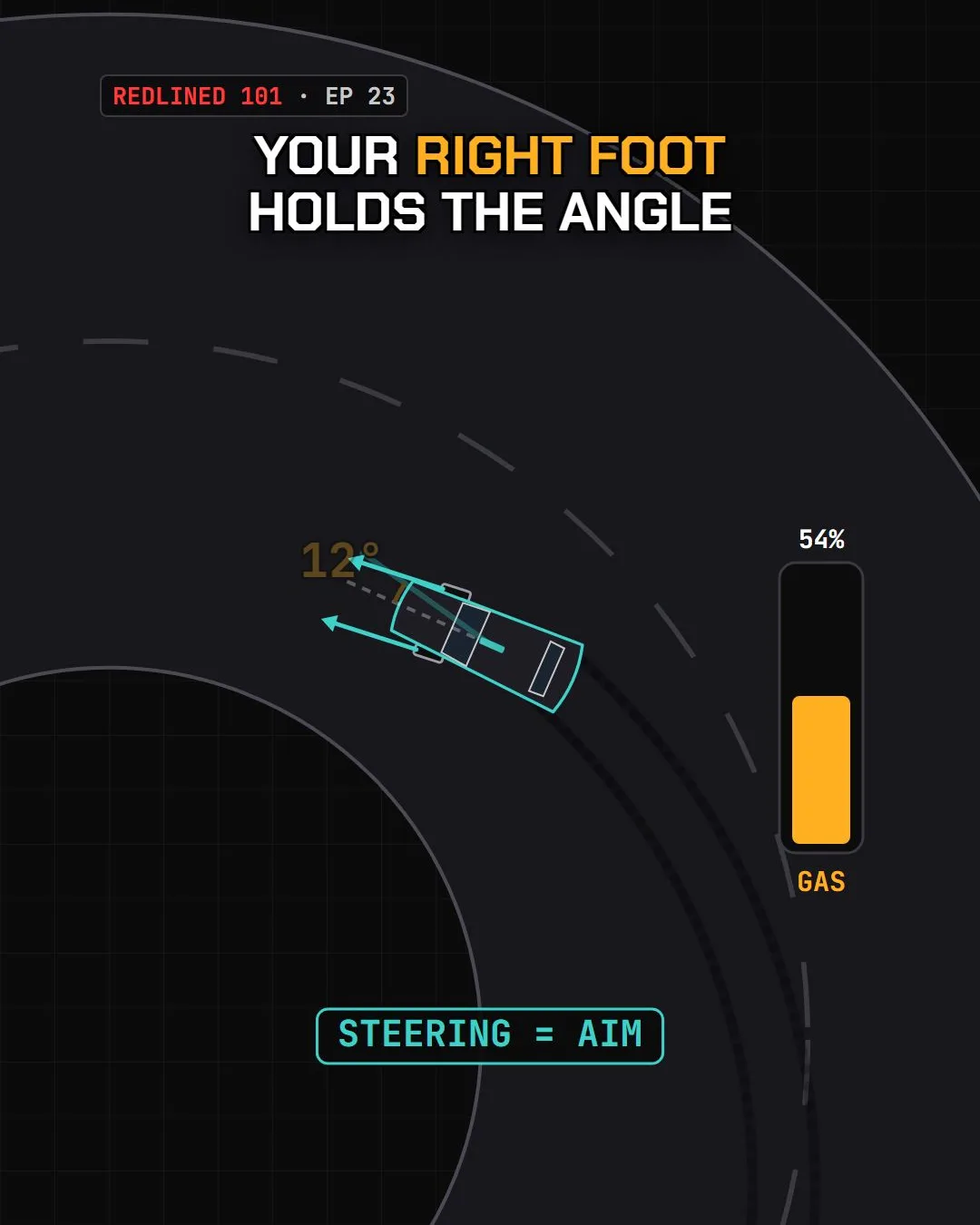
Same car. Same corner. One spins out. One holds it sideways the whole way around. So what's holding it: the steering wheel, or your right foot? One of them does all the work, and it's not the one most people think.
Watch Redlined 101, Ep 23 on Instagram →
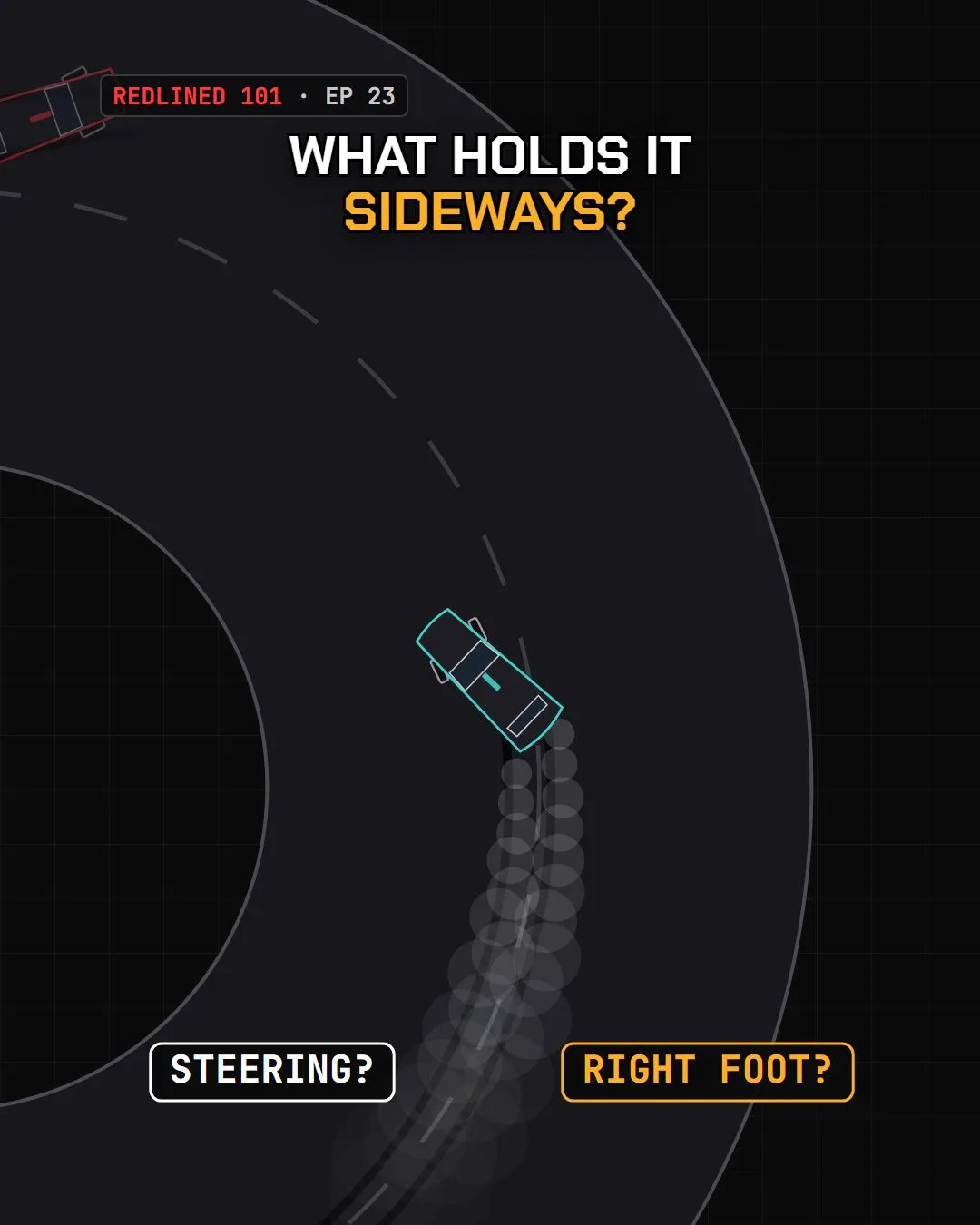
What a drift needs
A drift is the rear of the car sliding wider than the front, held there on purpose. The rear tires are spinning and sliding sideways at the same time, and the driver keeps it balanced all the way through the corner.
That needs power at the rear wheels, which is why drift cars are almost always rear-wheel drive (FWD vs RWD vs AWD covers why). It also needs both rear wheels driven: with an open diff, the inside wheel just spins on its own. That's why drift builds run a limited-slip or welded diff (Ep 18).
Why a loose rear stays loose
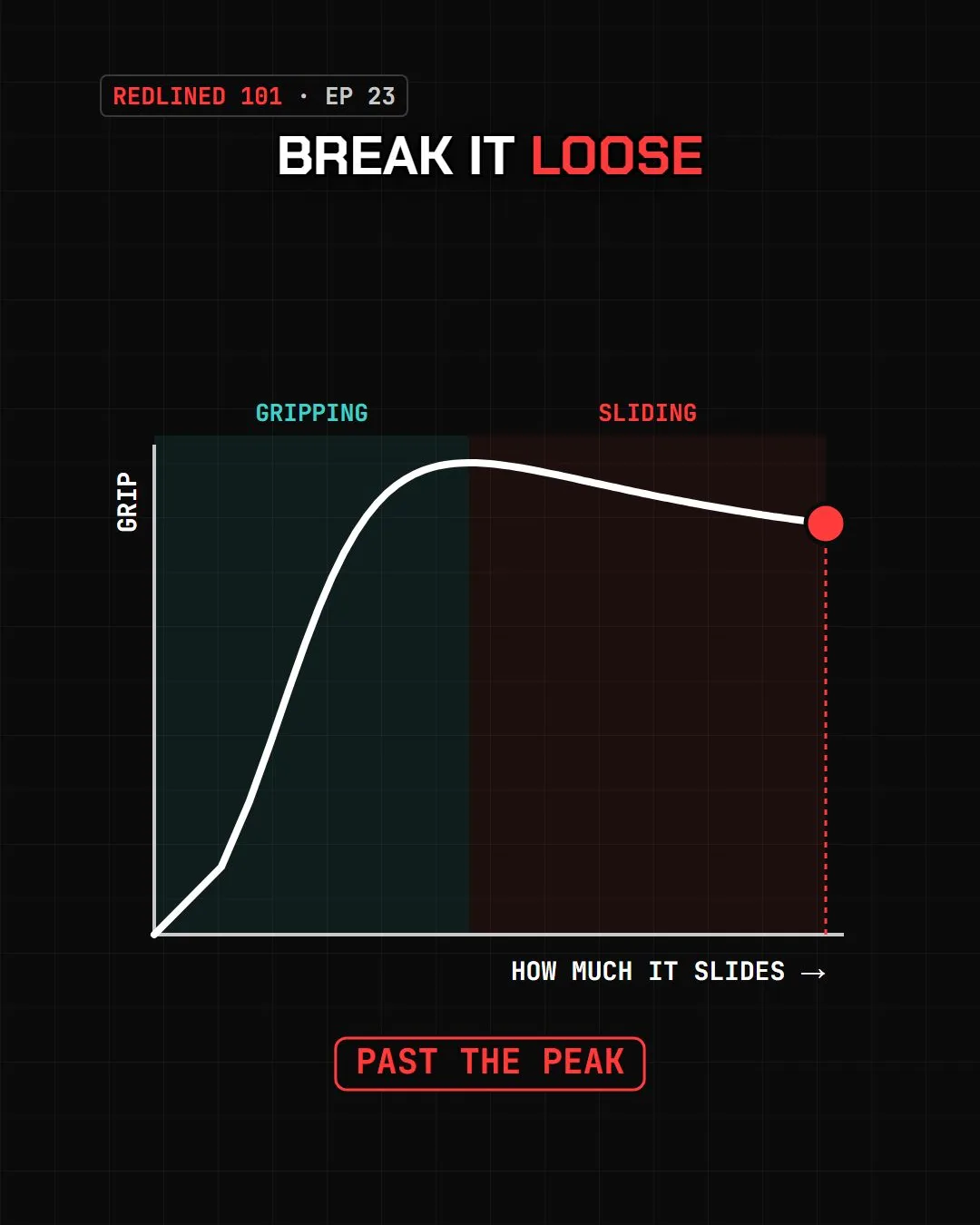
Start with one tire. Push it sideways, and its grip climbs, peaks, then drops once it starts to slide. The angle between where the tire points and where it's actually traveling is called the slip angle, and the grip curve follows it:
- A little slip angle: the tire flexes and grips harder and harder.
- At the peak: as much sideways grip as that tire has.
- Past the peak: the tire slides, and grip falls away.
So a sliding tire grips less than a gripping one. That's the whole reason drifting works. Once the rear lets go, it's on the wrong side of the peak, and it wants to stay loose. You don't have to fight to keep it sliding. You have to control how much.
The question: lift mid-drift
So you're sideways, and you lift right off the gas. Does the car straighten out, or spin?
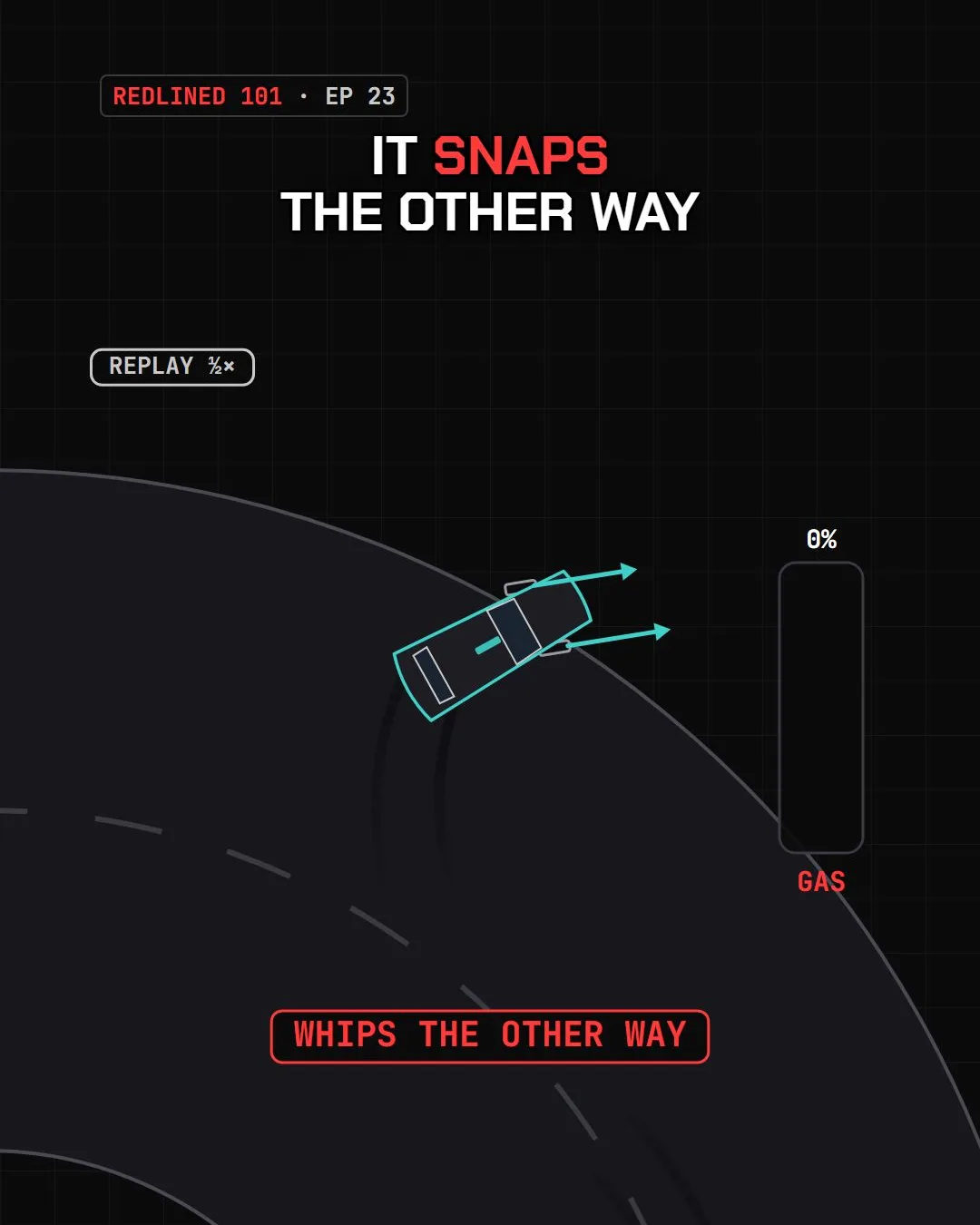
The answer: neither. It snaps
It snaps the other way.
Here's the sequence. While you're drifting, your front wheels are turned the other way, into the slide: that's countersteer. Lift off the gas, and the rear tires stop spinning. They drop back under their peak and grab. But your front wheels are still pointed the other way, so the car whips toward them.
That's the snap in every drift fail: the car swings back hard the other way. It's also why "just lift" is the wrong instinct once you're sideways.
Your right foot holds the angle
So what holds the drift? Your right foot.
A tire only has so much grip to go around. A spinning tire is using a lot of it just turning the road under it, so it has less left for holding the car sideways. That gives you a throttle dial for angle:
- More throttle: more wheelspin, less side grip at the rear, more angle.
- Less throttle: the rear bites, and the car straightens.
The steering just aims. It points the front tires where you're going. It doesn't decide how sideways you are; the throttle does.
Breaking it loose: clutch kick or handbrake
Getting it loose is the easy part. It's the bit everyone has seen in an empty parking lot. There are two classic ways in:
- Clutch kick: with the throttle down, dip the clutch and let it back out fast. The engine revs up while the clutch is in, and when it bites, that burst of revs spins the rear tires.
- Handbrake: yank it, and the rear wheels lock.
Either way, the rear tires go past their peak, onto the sliding side of the curve. From there, your right foot takes over. Getting loose is the start of a drift, not the drift.
The limit: steering lock
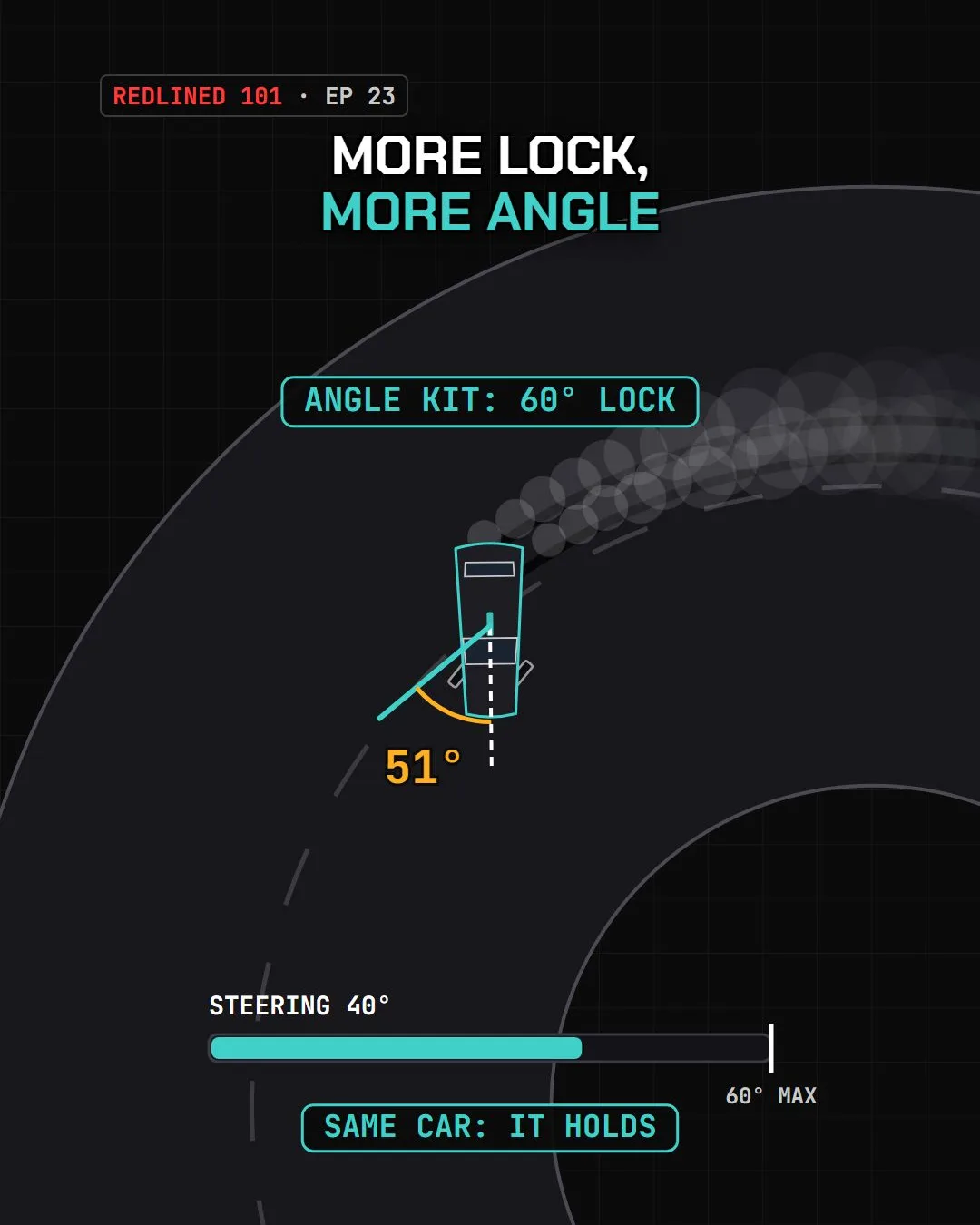
But steering has a limit. The front wheels can only turn so far: that maximum is the steering lock. The more sideways the car is, the more countersteer it takes to keep the fronts pointed down the road.
Past about fifty degrees of drift angle, stock steering runs out of lock. The fronts can't point where the car is going any more, and the car spins.
That's what angle kits fix. They change the steering parts so the front wheels can turn further. The one in the episode gives 60 degrees of lock. Same car, same angle, more lock: it holds.
Cheat sheet
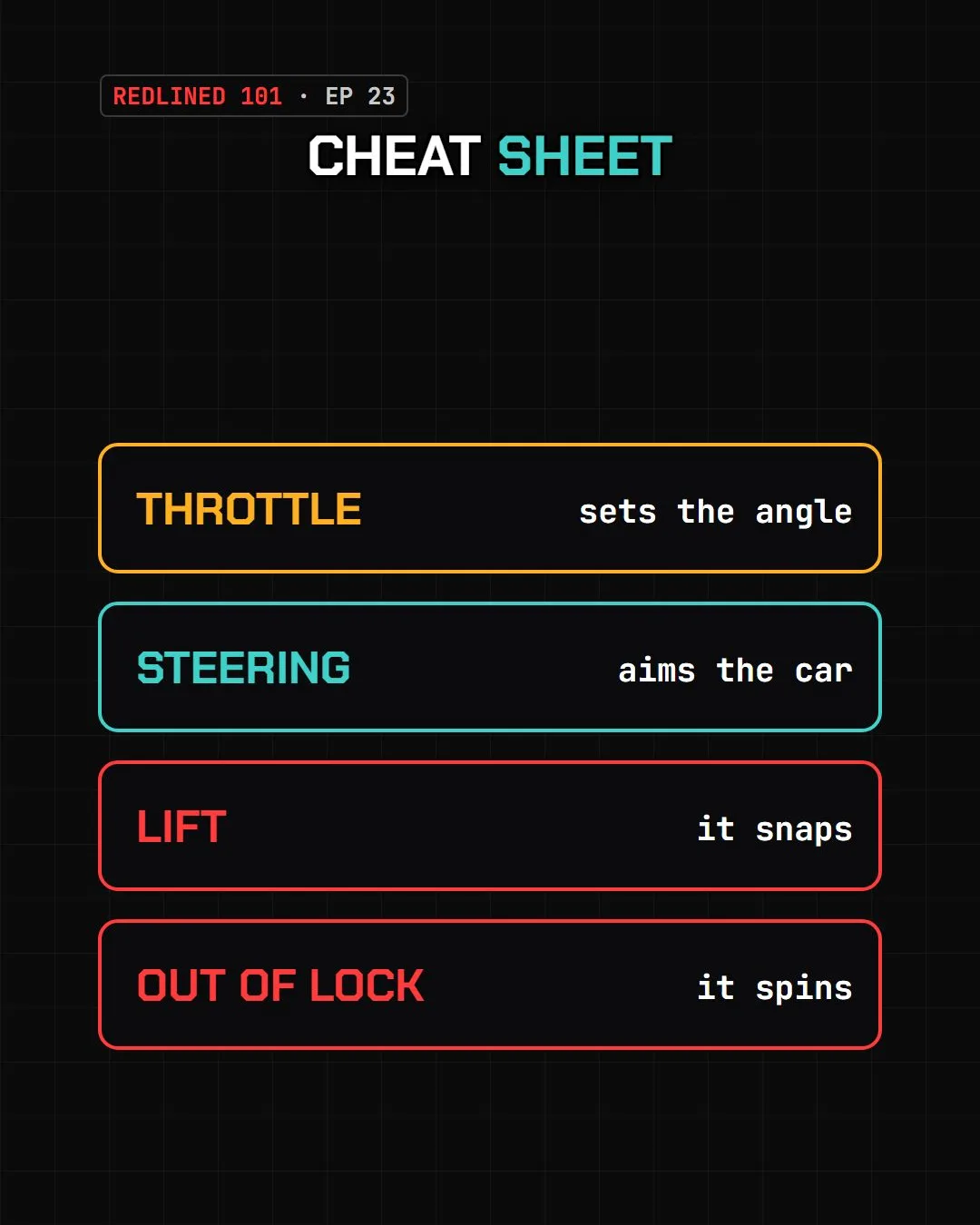
- Throttle sets the angle. More gas, more angle. Less gas, it straightens.
- Steering aims. It points the front tires where you're going.
- Lift, and it snaps. The rear grabs while the fronts are still turned.
- Run out of lock, and it spins. Angle kits add lock.
Why one car spins and one holds it
Put the pieces together and every way a drift ends early comes down to one of these:
- Too much throttle: more wheelspin means more angle, and more angle means more countersteer. Keep adding gas and you either pass the point where the fronts can follow, or the rear just comes all the way around. It spins.
- Too little throttle: the rear tires slow down, drop back under their peak and bite. The car straightens out and the drift is over. Not a crash, just a short drift.
- Lifting completely: the rear grabs hard while the fronts are still turned the other way. It snaps.
- Out of lock: the angle gets bigger than the steering can follow. It spins.
The car that holds it the whole way around is the one where the driver keeps the throttle in the window between those, and lets the steering do nothing but aim.
Where to practice
Everything above is a skid you're choosing to have, so do it where that's allowed: a skid pad, a track day, or an organized drift event, with run-off room and nobody coming the other way.
Recap
- A tire's grip climbs, peaks, then drops when it slides; a loose rear wants to stay loose.
- Lifting mid-drift makes the rear grab while the fronts point the other way, so it snaps.
- Throttle holds the angle; steering aims.
- Clutch kick spins the rear tires, the handbrake locks them: both just get it loose.
- Past about 50 degrees, stock steering runs out of lock; angle kits add more.
So could your car hold a drift, or would it spin?
Next episode: should you warm up your car?
Frequently asked questions
Do you drift with the steering wheel or the throttle?
The throttle. More gas spins the rear tires more, which costs them side grip and adds angle; less gas lets them bite and straightens the car. The steering aims the front tires where you're going.
What happens if you lift off the gas in a drift?
The car snaps the other way. The rear tires stop spinning and grab, but the front wheels are still turned into the slide, so the car whips toward them. That snap is behind most drift fails.
Clutch kick or handbrake: which is better for starting a drift?
Both do the same job. A clutch kick uses a burst of revs to spin the rear tires; the handbrake locks them. Either way the rear goes past its peak grip, and then the throttle takes over.
What does a drift angle kit do?
It gives the front wheels more steering lock. Past about 50 degrees of drift angle, stock steering runs out of lock and the car spins; with more lock, the same car can hold it.
Why does a sliding tire have less grip?
A tire's grip climbs as it is pushed sideways, peaks, then drops once it starts to slide. So a sliding tire grips less than one that is still gripping, which is why a rear that lets go tends to stay loose.
Official merch
Shop the club merch
3 Pedals 0 F*cks Manual Transmission on a Unisex Oversized Heavyweight T-Shirt, black
Unisex Oversized Heavyweight T-Shirt
from $38.49
Pork Roll, Egg, Cheese & Boost – Jersey Breakfast on a Unisex Oversized Heavyweight T-Shirt, black
Unisex Oversized Heavyweight T-Shirt
from $32.99
My Toxic Trait: One More Project Car on a Unisex Oversized Heavyweight T-Shirt, black
Unisex Oversized Heavyweight T-Shirt
from $32.99
+1000 Aura – Exhaust Flames Car Shirt on a Unisex Oversized Heavyweight T-Shirt, white
Unisex Oversized Heavyweight T-Shirt
from $32.99
Unc Can Still Heel-Toe – Manual Driver Shirt on a Unisex Oversized Heavyweight T-Shirt, black
Unisex Oversized Heavyweight T-Shirt
from $32.99
But Officer The Sign Said Slide It on a Unisex Oversized Heavyweight T-Shirt, white
Unisex Oversized Heavyweight T-Shirt
from $32.99
Redlined Car Club Est. 2023 Brushmark on a Unisex Oversized Heavyweight T-Shirt, black
Unisex Oversized Heavyweight T-Shirt
from $32.99
Car Guy By Definition on a Unisex Oversized Heavyweight T-Shirt, black
Unisex Oversized Heavyweight T-Shirt
from $32.99
Tokyo Retro Vibes on a Unisex Oversized Heavyweight T-Shirt, black
Unisex Oversized Heavyweight T-Shirt
from $32.99
BOSOZOKU CARSPANK ボ — ソ — 族 — 車 の ス パ ン ク on a Unisex Oversized Heavyweight T-Shirt, black
Unisex Oversized Heavyweight T-Shirt
from $32.99
Coilovers > 401K – Funny Car Guy on a Unisex Oversized Heavyweight T-Shirt, black
Unisex Oversized Heavyweight T-Shirt
from $32.99
Can't Pump Gas, Can Swap A Motor – NJ Car Guy on a Unisex Oversized Heavyweight T-Shirt, black
Unisex Oversized Heavyweight T-Shirt
from $32.99




More from the club
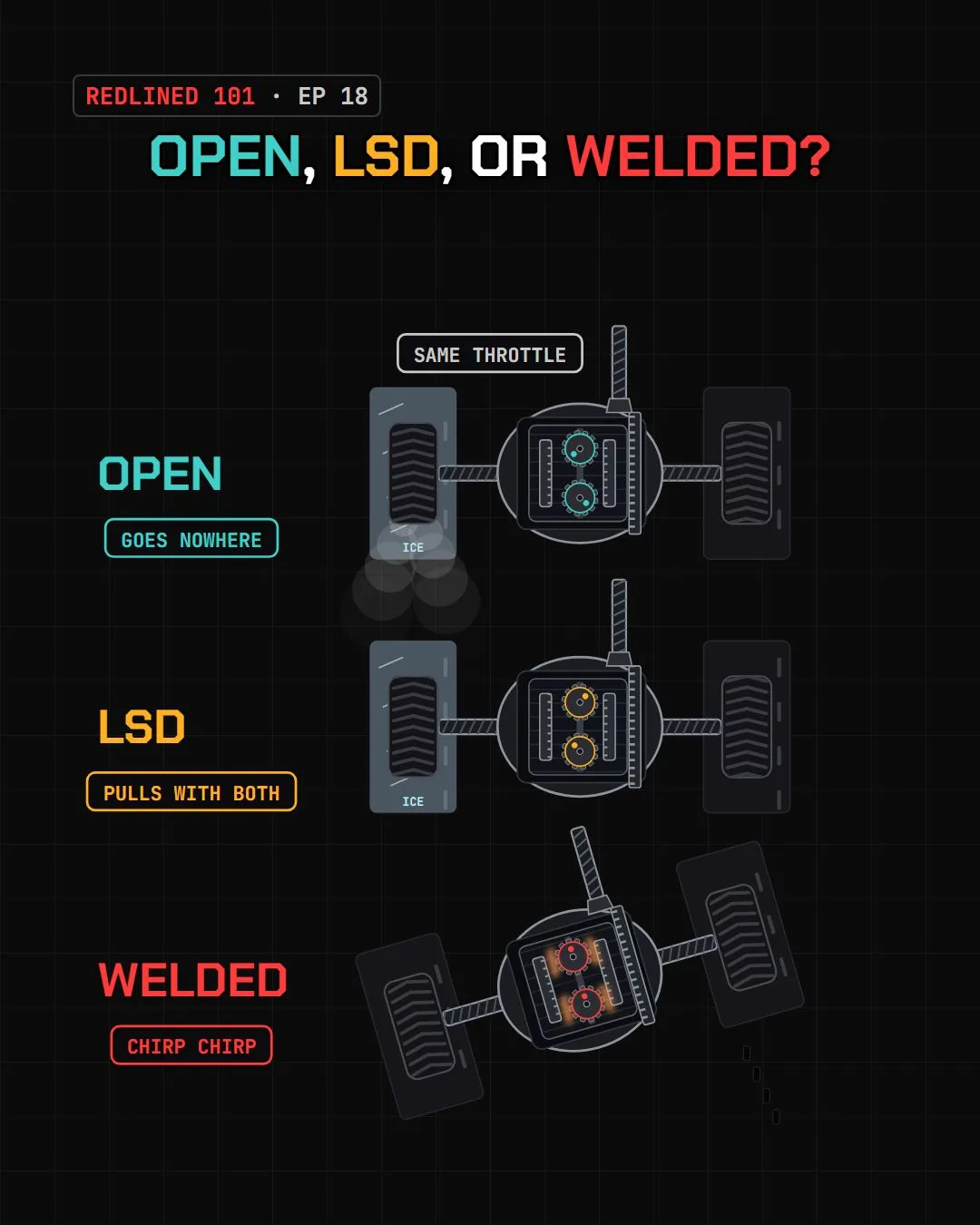
Open Diff vs Limited-Slip vs Welded Diff: What's the Difference? (Redlined 101, Ep 18)
How an open differential splits torque and why one tire on ice stops you, clutch-type vs gear-type (Torsen) limited-slip and the one-wheel-in-the-air test, and why a welded diff drifts well but chirps in every parking lot.
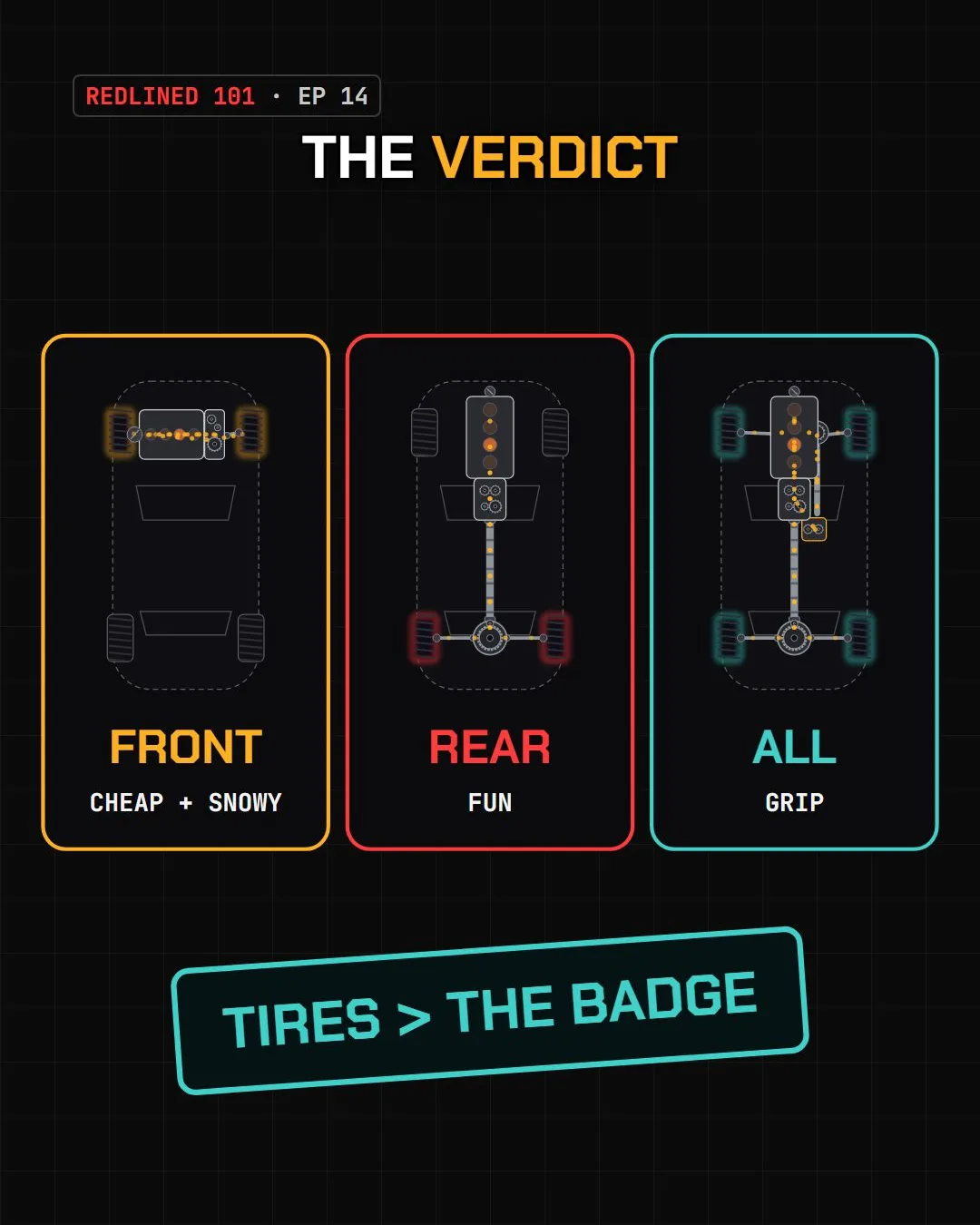
FWD vs RWD vs AWD: Which Is Best for Corners, Launches and Snow? (Redlined 101, Ep 14)
How front, rear and all-wheel drive split the work between four contact patches, why FWD understeers and RWD oversteers, why AWD does not stop shorter on ice, and why winter tires matter more than the badge.
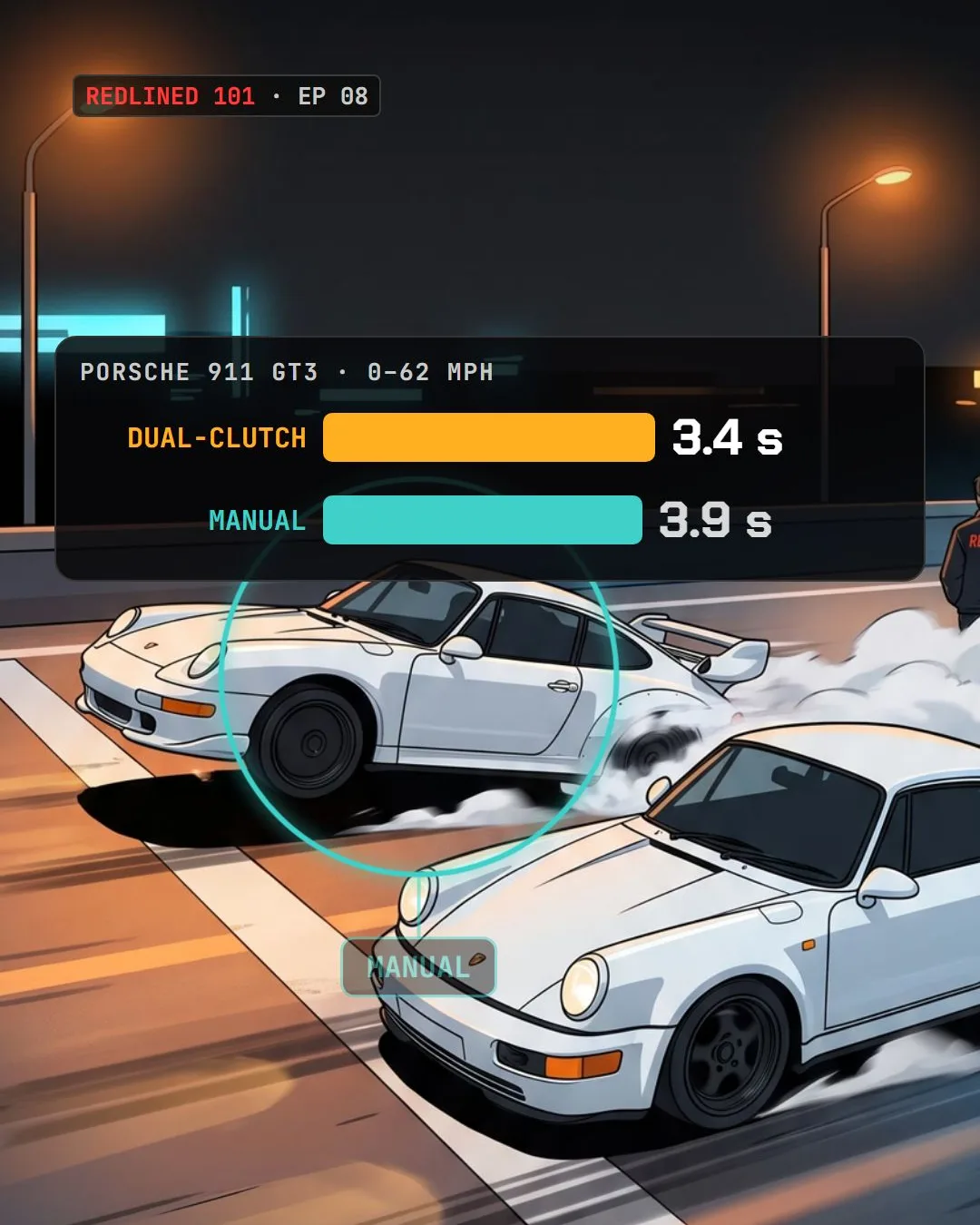
Manual vs Paddle Shift: Is a Dual-Clutch Faster Than a Stick? (Redlined 101, Ep 08)
Manual vs paddle shift: how a stick shift and a dual-clutch gearbox change gear, why one shift takes two to four tenths and the other about a tenth, the 911 GT3 proof, and why the stick is still simpler and cheaper.