Should You Warm Up Your Car in Winter? Idling vs Driving Off (Redlined 101, Ep 24)
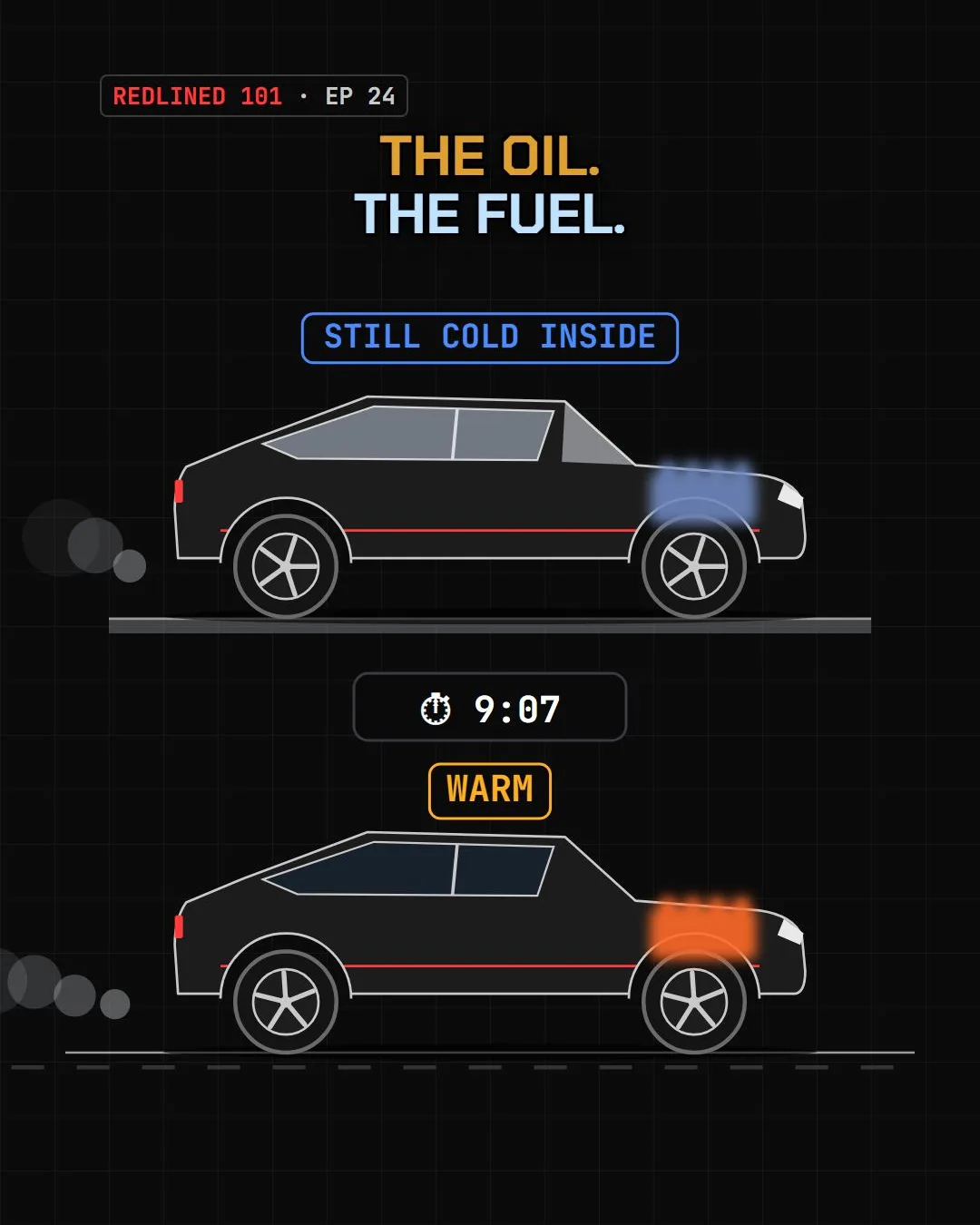
Warm it up, or just drive? Same frozen morning, same engine. One car idles ten minutes in the driveway. The other drives off after thirty seconds. Only one of them is actually warm inside. Two things decide it: the oil, and the fuel.
Watch Redlined 101, Ep 24 on Instagram →
#1: The oil
First, the oil. Cold oil is honey from the fridge. It's thick, and it doesn't want to move.
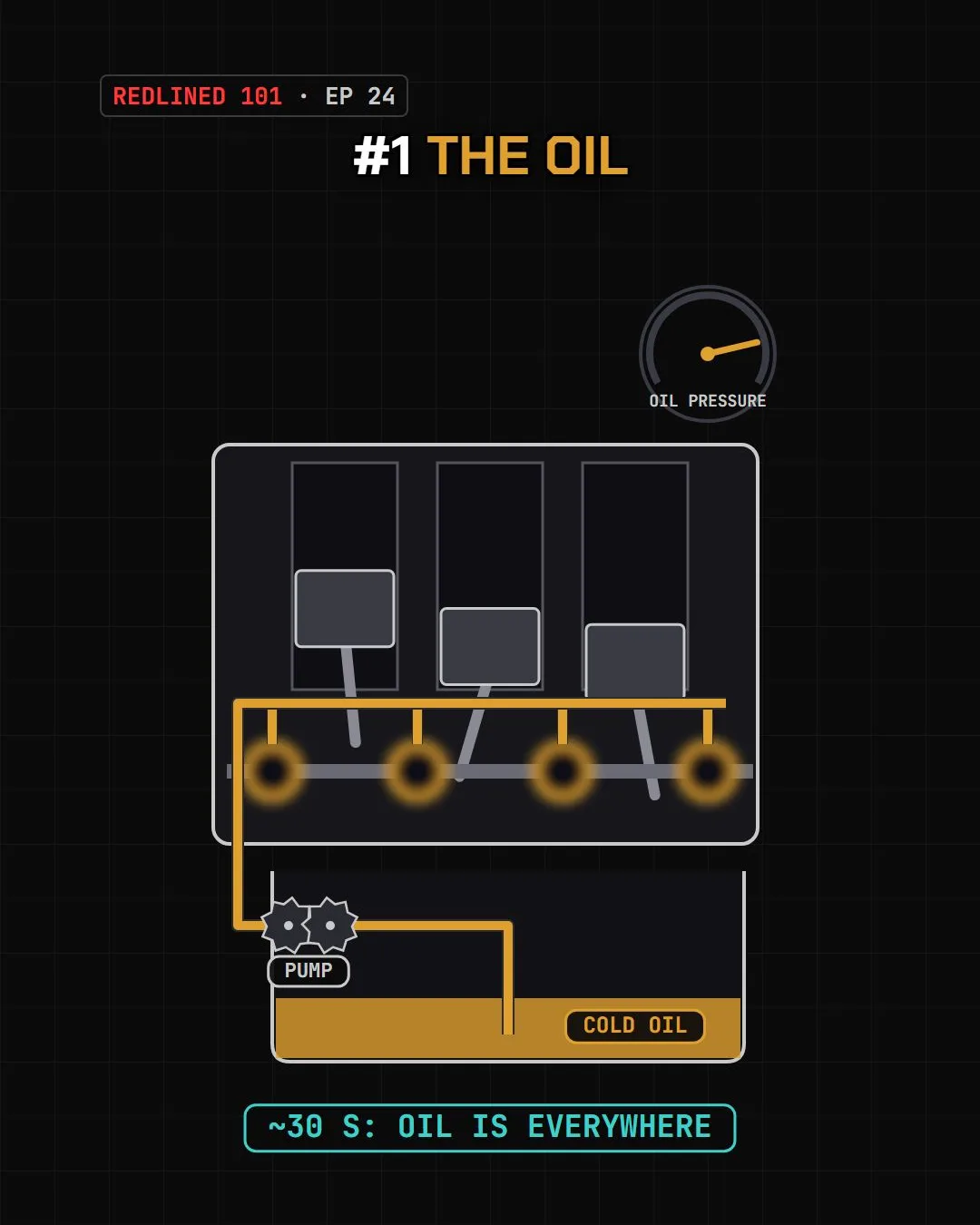
When you start the engine, the oil pump pulls oil up from the oil pan at the bottom of the engine and pushes it through passages to every bearing: the crankshaft, the rods, the camshafts. Those bearings run on a thin film of oil, and until it arrives, they're running on what was left from last time.
Pushing honey-thick oil around that circuit takes a little longer than with warm oil. But it takes seconds, not minutes. So give it about thirty seconds before you pull away. That part, the warm-up crowd gets right.
The question: idle or drive?
So after those thirty seconds: idle ten more minutes, or drive off gently. Which one warms up faster? And one of them does something worse.
The answer: driving
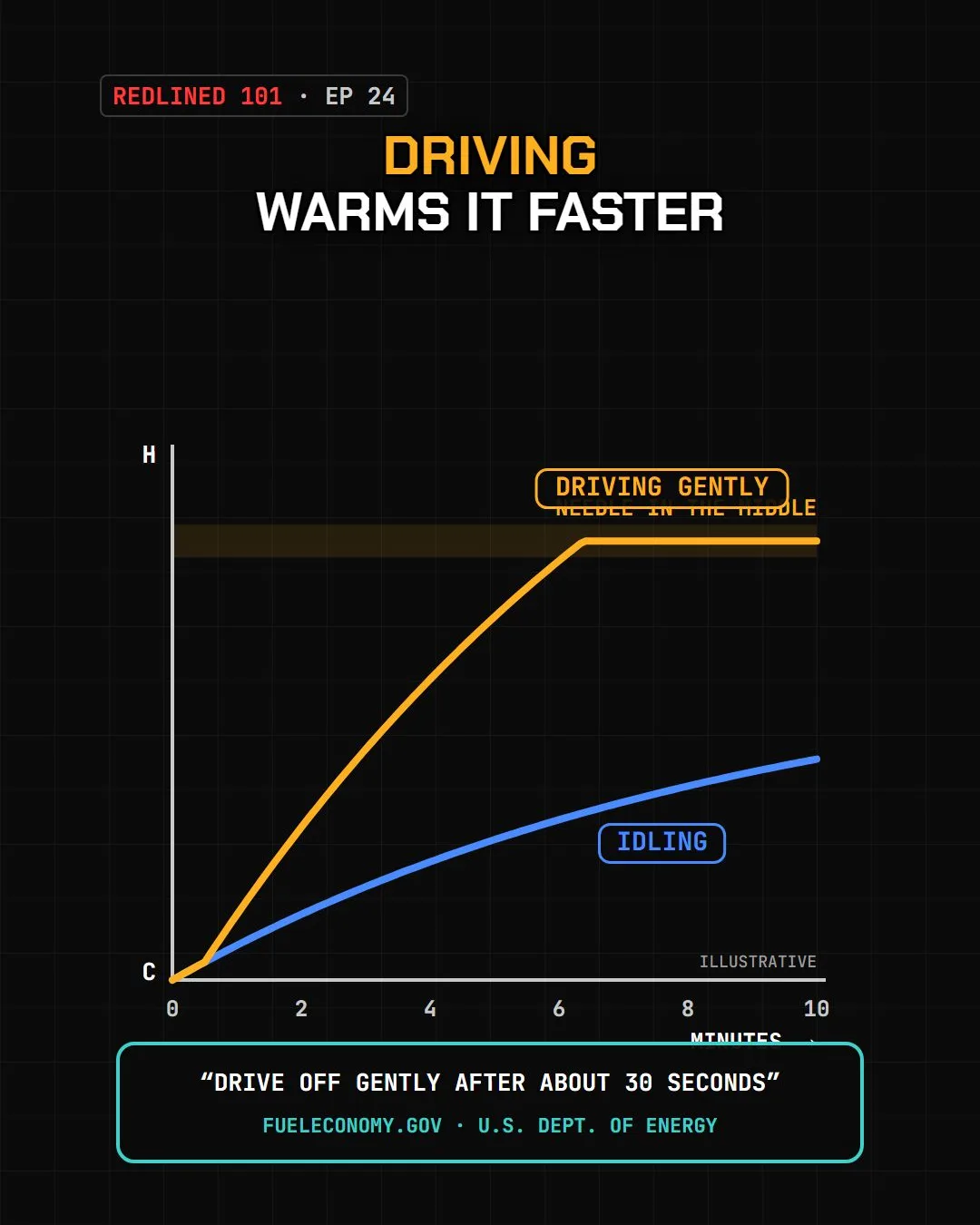
Driving warms it up faster.
Engine heat comes from burning fuel. At idle, the engine barely sips, like a pot on the lowest flame on the stove. You can wait a long time for that pot to boil. Drive off gently and the engine has real work to do, so it burns more fuel, makes more heat, and warms up faster.
This isn't just a car-guy opinion. Even the Department of Energy says most carmakers recommend driving off gently after about thirty seconds.
Gently is the key word. You're putting a light load on it, not testing it.
#2: The fuel
Now the worse part.
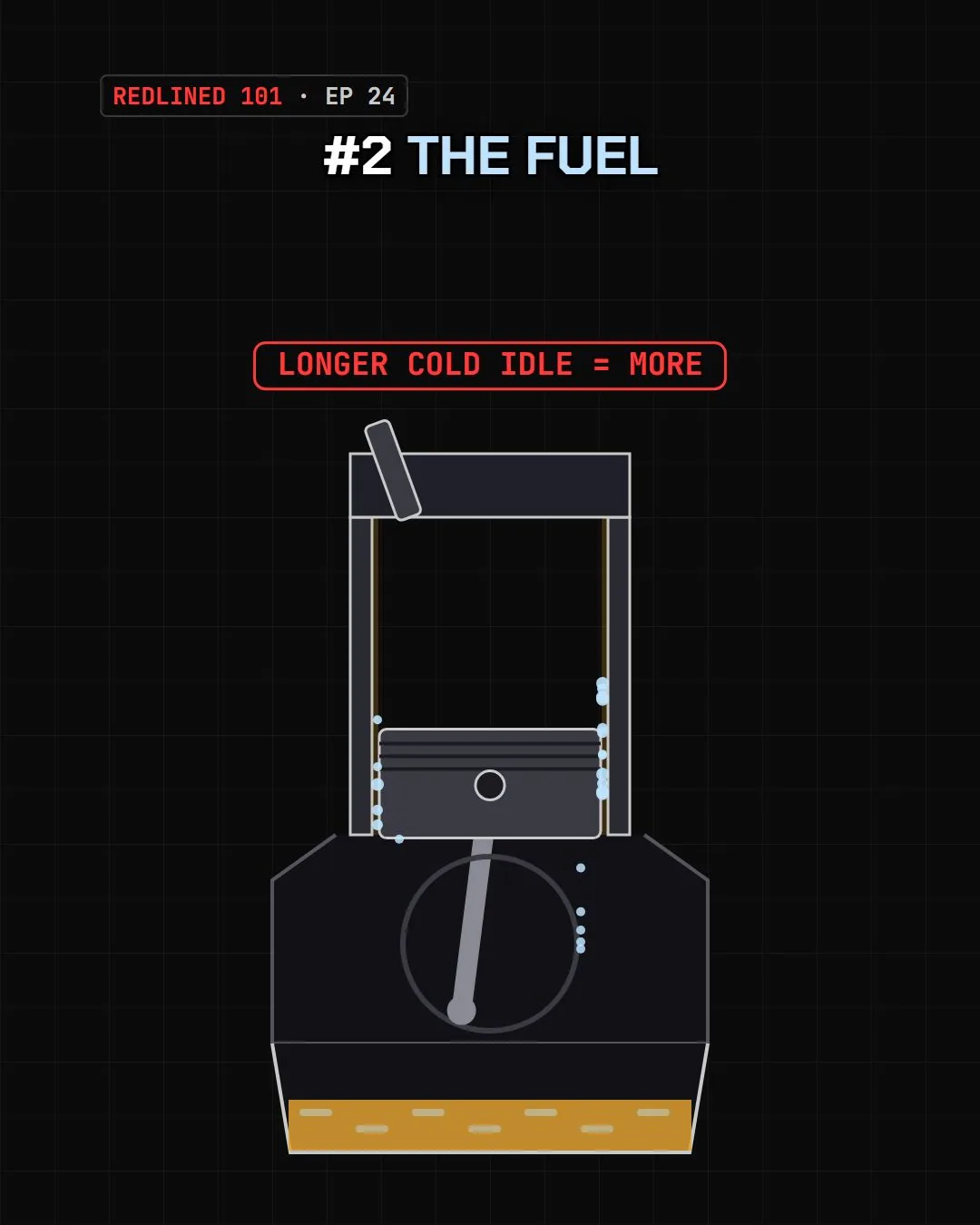
Breathe on a cold window, and your breath beads up on the glass instead of staying as vapor. A cold cylinder does the same thing to fuel.
Fuel only burns properly as a vapor mixed with air. In a cold cylinder, it can't all turn to vapor, so the engine computer adds extra fuel to make sure there's enough vapor to run. That's normal cold-start behavior.
The problem is where the leftover fuel goes:
- Some of it lands on the cylinder wall.
- There, it rinses off the oil film that protects the piston rings and the bore.
- Then it drips down into your oil pan, thinning the oil.
The longer it idles cold, the longer that goes on. Ten minutes in the driveway is ten minutes of it. Driving gently gets the cylinders warm, and out of that state, sooner.
Revving it cold isn't a flex
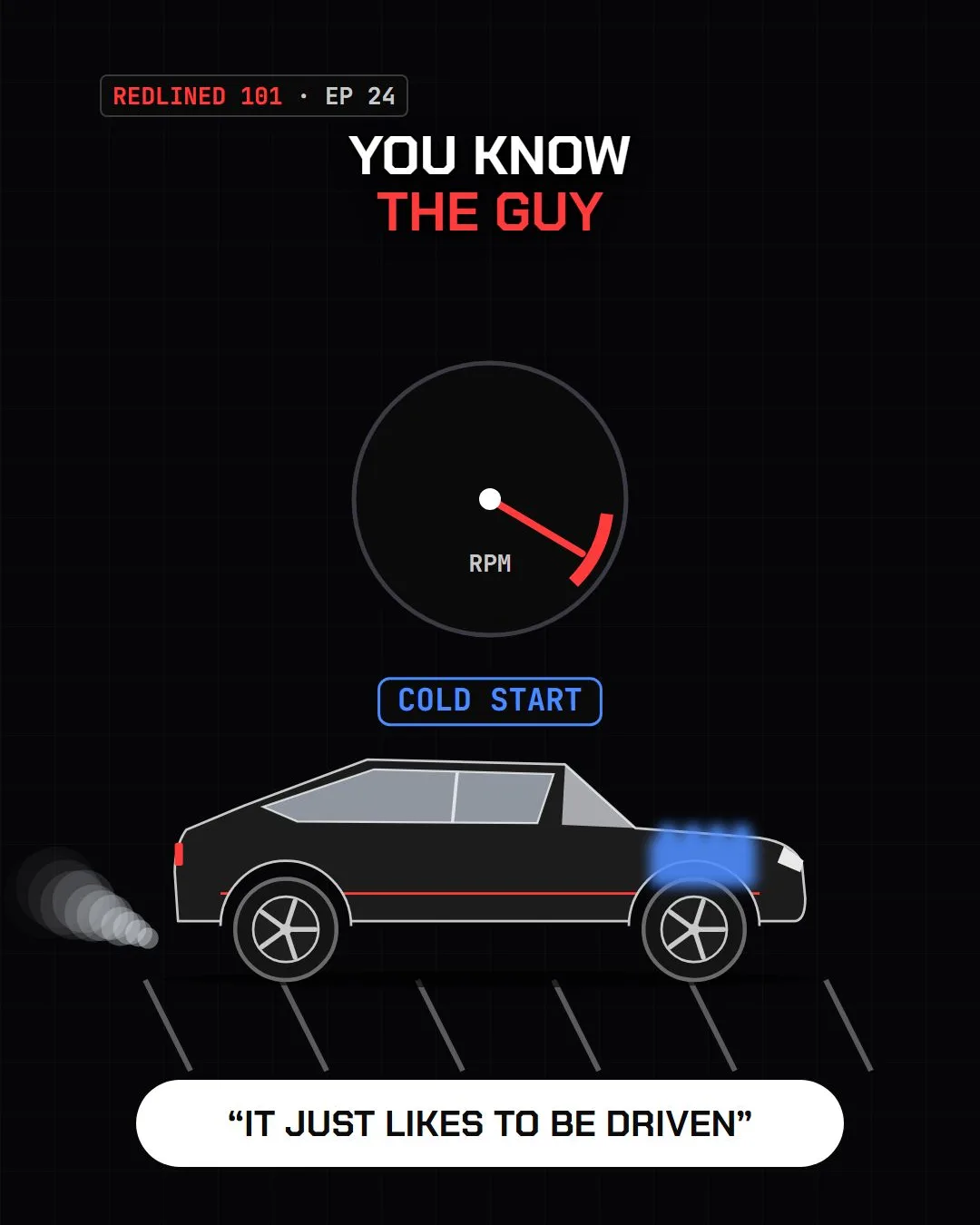
And revving it cold isn't a flex. It's the most expensive sound at the meet. You know the guy: cold start, straight off the limiter, then tells everyone it just likes to be driven.
Everything above is happening in that engine at the same time: thick oil still working its way around, fuel on the cylinder walls, and now high rpm on top of it.
#3: Built engines need longer
If your engine's built, it matters even more.
Forged pistons are common in built and high-boost engines because they're tough. But they grow more with heat than cast pistons do, so they're fitted looser in the bore to leave room for that growth.
- Cold, a forged piston is smaller than its bore and rocks. That's the clatter you hear on a cold start, often called piston slap.
- Warm, it grows to fit, and the noise goes away.
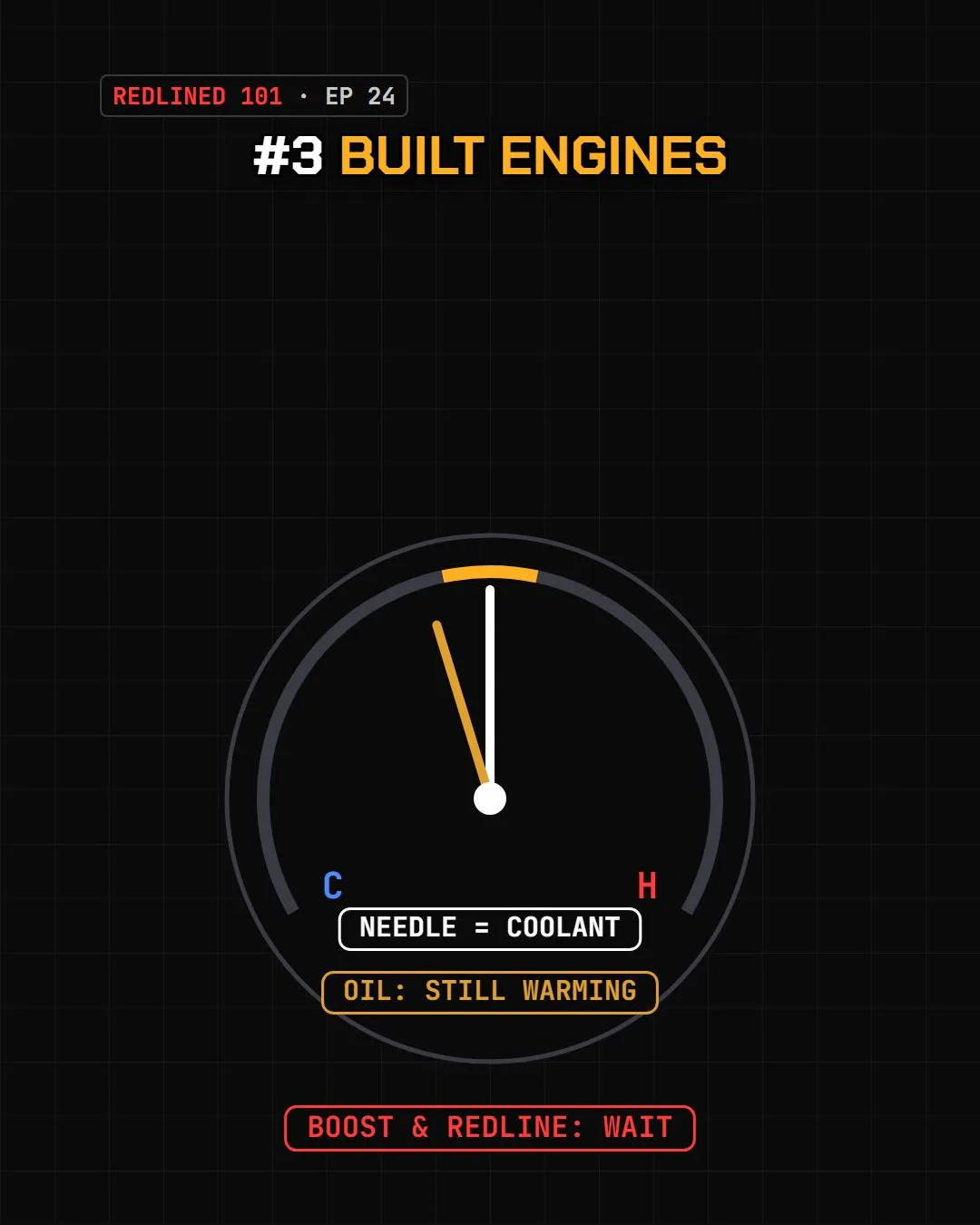
There's a second trap. Your temp needle reads the coolant, not the oil. The coolant warms up first; the oil warms up after it. So when the needle hits the middle, the oil isn't there yet.
So give it a few more minutes before boost or redline. Turbo builds especially: boost is load, and load on a cold engine is exactly what you're trying to avoid. (More on boost and turbo sizing in Ep 17.)
Three things people get wrong
Put the episode together and three common habits fall apart:
- "Idling warms it up." It does, slowly. An idling engine is the pot on the lowest flame; a gently driven one is on a real burner.
- "Revving it warms it faster." It makes more heat, but it does it while the oil is thick, the cylinders are wet with fuel, and a built engine's pistons are still loose. That's the expensive way to warm up.
- "The needle's in the middle, so it's warm." The coolant is. The oil is still catching up.
What "drive gently" means
Gentle means a light right foot and moderate revs: pull away normally, shift early if it's a manual, and save hard acceleration, boost and the top of the rev range for later. You're giving the engine enough load to make heat, not asking it for everything it has.
Cheat sheet
- Start it up.
- Thirty seconds: scrape the windows while the oil gets around.
- Drive gently.
- No boost, no redline till the temperature needle's in the middle.
- Then give the oil a few more minutes.
The W in 5W-30
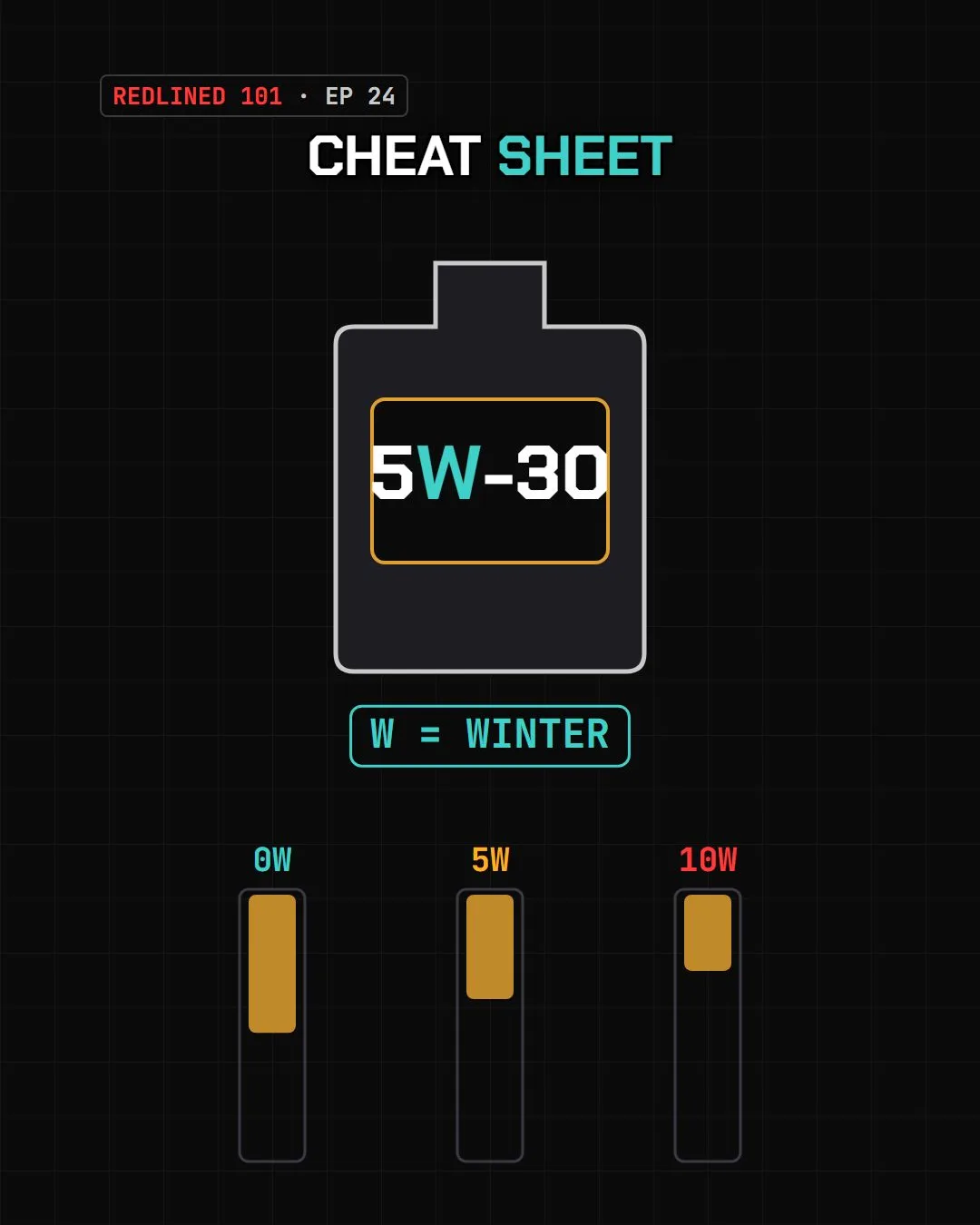
And the W in 5W-30? It stands for winter. The number before the W is the oil's cold-weather grade: the lower that number, the better it flows cold. A 0W oil flows better on a frozen morning than a 10W. The number after the dash, the 30, is how thick the oil stays once it's hot.
Use the grade your owner's manual or engine builder specifies; the point is that a winter morning is when that first number earns its keep.
Recap
- Oil reaches every bearing in seconds: give it about thirty.
- Driving gently warms the engine faster than idling.
- Cold idling washes fuel past the oil film and into the oil pan.
- Built engines clatter cold and need a few more minutes before boost or redline; the oil lags the needle.
- The W is for winter: lower flows better cold.
So what's yours: thirty seconds, or ten minutes in the driveway?
Next episode: manual vs automatic vs CVT vs dual-clutch.
Frequently asked questions
How long should you warm up your car in winter?
About thirty seconds, then drive off gently. That is enough time for the oil to reach every bearing, and the Department of Energy says most carmakers recommend driving off gently after about thirty seconds. Skip boost and redline until the temperature needle is in the middle.
Is it bad to idle your car to warm it up?
Long cold idling warms the engine slower than driving, and while the engine is cold it runs extra fuel, some of which washes oil off the cylinder walls and drips into the oil pan. The longer it idles cold, the longer that goes on.
Why does my engine clatter when it is cold?
On engines with forged pistons, the pistons grow more with heat, so they are fitted looser. Cold, they rock in the bore and make that clatter; warm, they grow to fit.
Is the engine warm when the temperature gauge is in the middle?
The coolant is. The gauge reads coolant temperature, and the oil warms up after it, so give a built or boosted engine a few more minutes of gentle driving before you use boost or redline.
What does the W in 5W-30 mean?
Winter. The number before the W is the oil's cold-weather grade: the lower it is, the better the oil flows when the engine is cold.
Official merch
Shop the club merch
3 Pedals 0 F*cks Manual Transmission on a Unisex Oversized Heavyweight T-Shirt, black
Unisex Oversized Heavyweight T-Shirt
from $38.49
Pork Roll, Egg, Cheese & Boost – Jersey Breakfast on a Unisex Oversized Heavyweight T-Shirt, black
Unisex Oversized Heavyweight T-Shirt
from $32.99
My Toxic Trait: One More Project Car on a Unisex Oversized Heavyweight T-Shirt, black
Unisex Oversized Heavyweight T-Shirt
from $32.99
+1000 Aura – Exhaust Flames Car Shirt on a Unisex Oversized Heavyweight T-Shirt, white
Unisex Oversized Heavyweight T-Shirt
from $32.99
Unc Can Still Heel-Toe – Manual Driver Shirt on a Unisex Oversized Heavyweight T-Shirt, black
Unisex Oversized Heavyweight T-Shirt
from $32.99
But Officer The Sign Said Slide It on a Unisex Oversized Heavyweight T-Shirt, white
Unisex Oversized Heavyweight T-Shirt
from $32.99
Redlined Car Club Est. 2023 Brushmark on a Unisex Oversized Heavyweight T-Shirt, black
Unisex Oversized Heavyweight T-Shirt
from $32.99
Car Guy By Definition on a Unisex Oversized Heavyweight T-Shirt, black
Unisex Oversized Heavyweight T-Shirt
from $32.99
Tokyo Retro Vibes on a Unisex Oversized Heavyweight T-Shirt, black
Unisex Oversized Heavyweight T-Shirt
from $32.99
BOSOZOKU CARSPANK ボ — ソ — 族 — 車 の ス パ ン ク on a Unisex Oversized Heavyweight T-Shirt, black
Unisex Oversized Heavyweight T-Shirt
from $32.99
Coilovers > 401K – Funny Car Guy on a Unisex Oversized Heavyweight T-Shirt, black
Unisex Oversized Heavyweight T-Shirt
from $32.99
Can't Pump Gas, Can Swap A Motor – NJ Car Guy on a Unisex Oversized Heavyweight T-Shirt, black
Unisex Oversized Heavyweight T-Shirt
from $32.99






More from the club
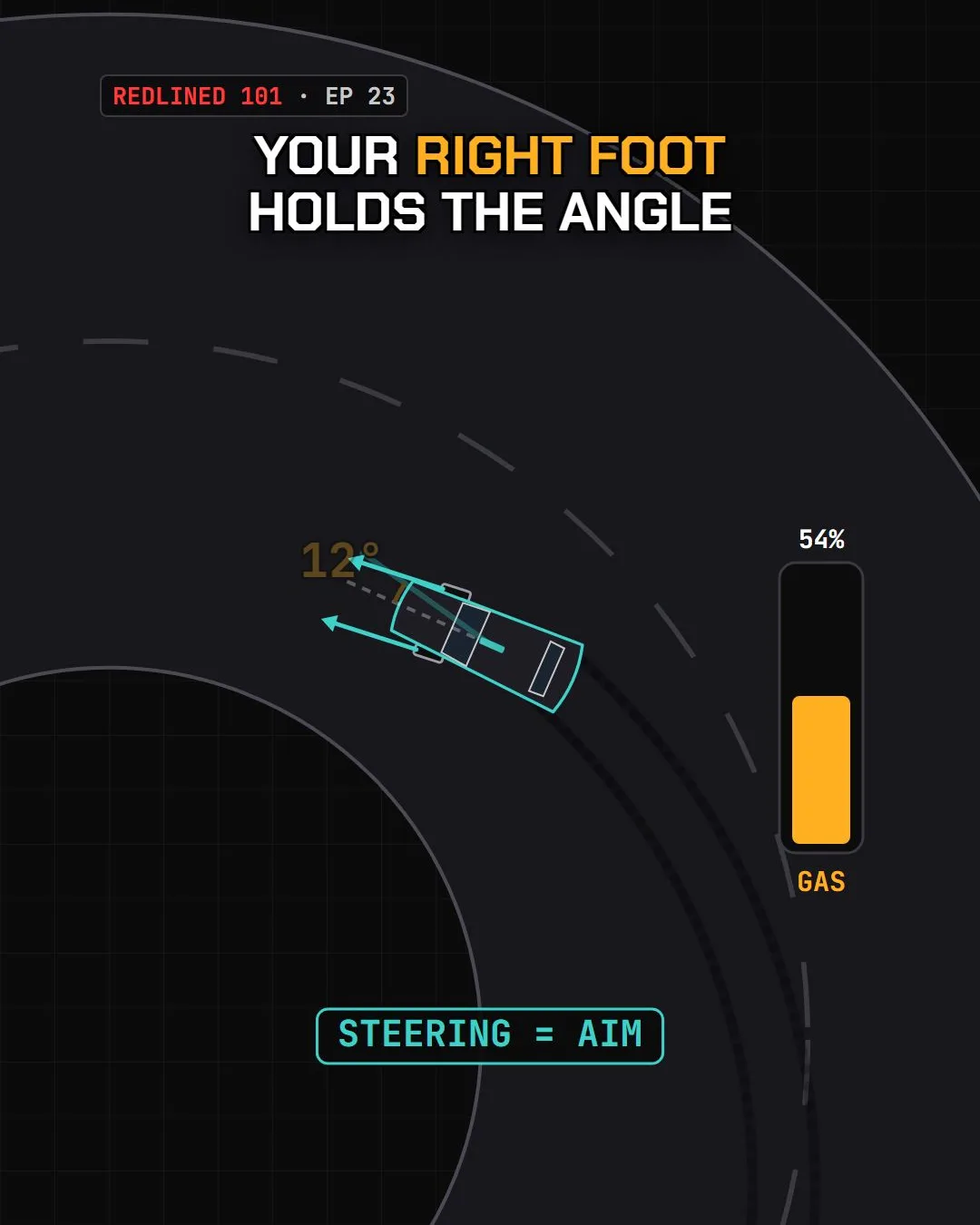
How Drifting Works: Throttle, Steering, Handbrake and Clutch Kick (Redlined 101, Ep 23)
Why a sliding tire wants to stay loose, why lifting off the gas snaps the car the other way, how the throttle holds the drift angle, clutch kick vs handbrake, and why steering lock and angle kits set the limit.
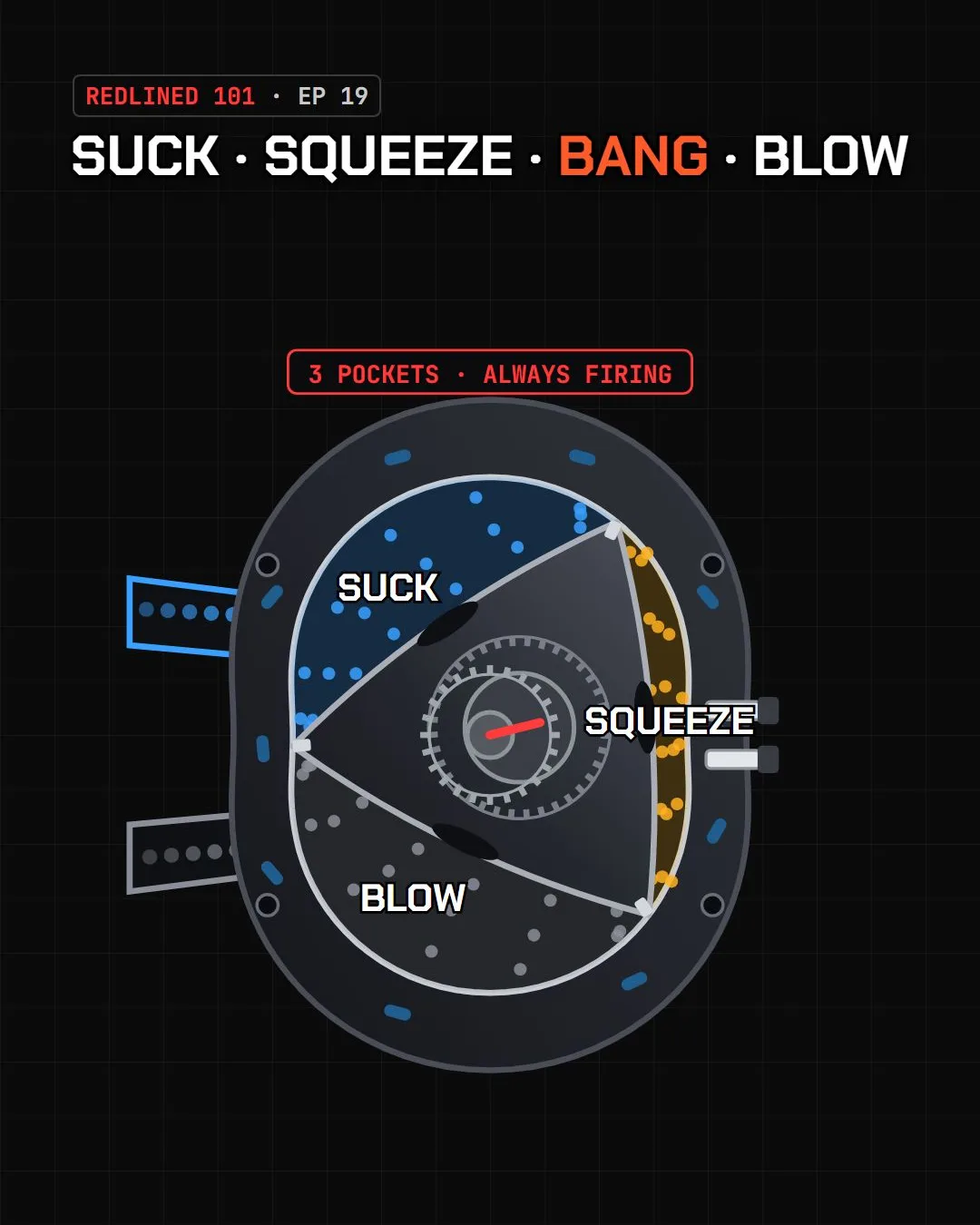
How a Rotary Engine Works: No Pistons, Apex Seals and Burning Oil (Redlined 101, Ep 19)
How a rotary (Wankel) engine makes power with a spinning triangle instead of pistons, why it has three main moving parts and revs to 9,000, why apex seals wear and it burns oil by design, and why 1.3 liters breathes like 2.6.
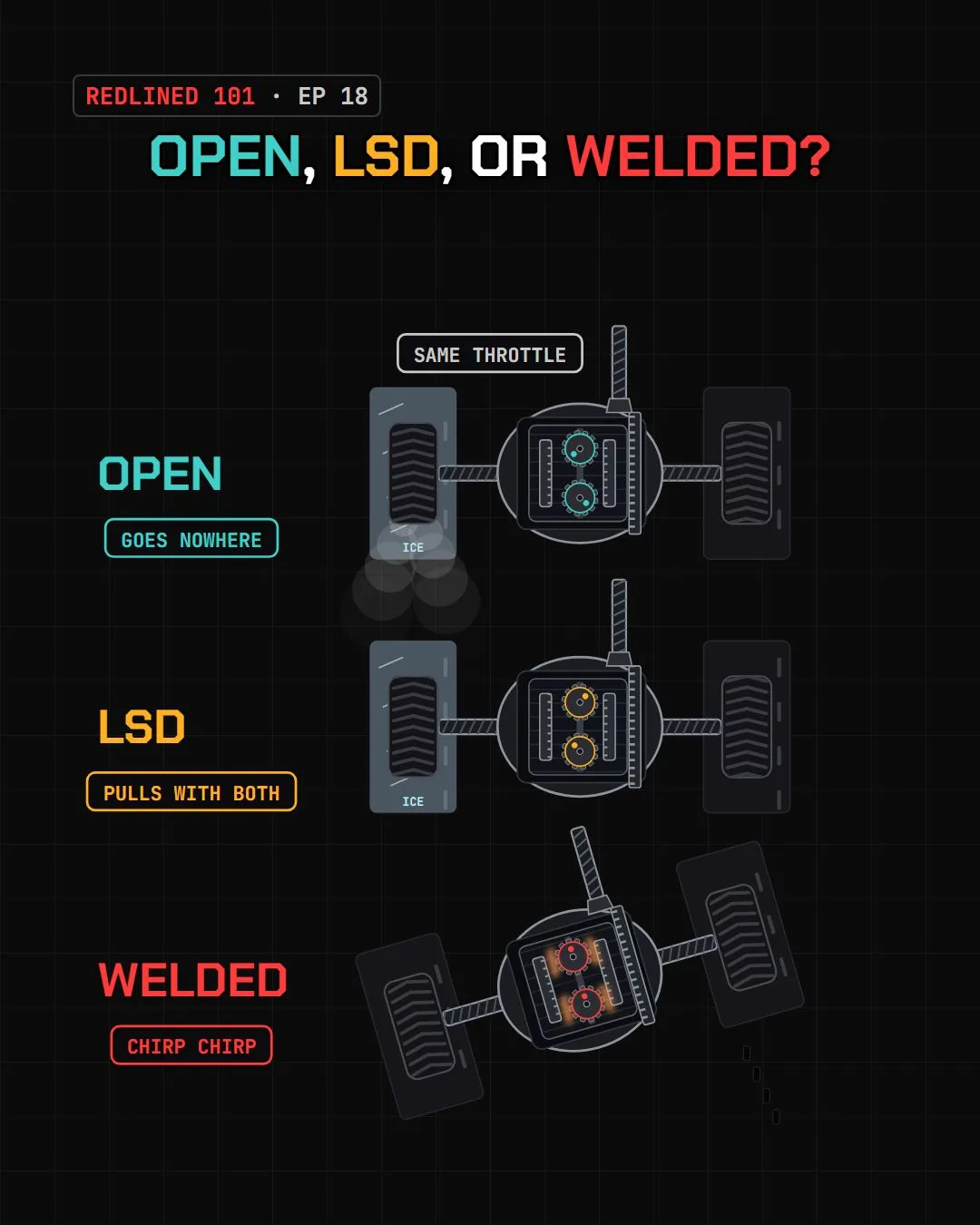
Open Diff vs Limited-Slip vs Welded Diff: What's the Difference? (Redlined 101, Ep 18)
How an open differential splits torque and why one tire on ice stops you, clutch-type vs gear-type (Torsen) limited-slip and the one-wheel-in-the-air test, and why a welded diff drifts well but chirps in every parking lot.