FWD vs RWD vs AWD: Which Is Best for Corners, Launches and Snow? (Redlined 101, Ep 14)
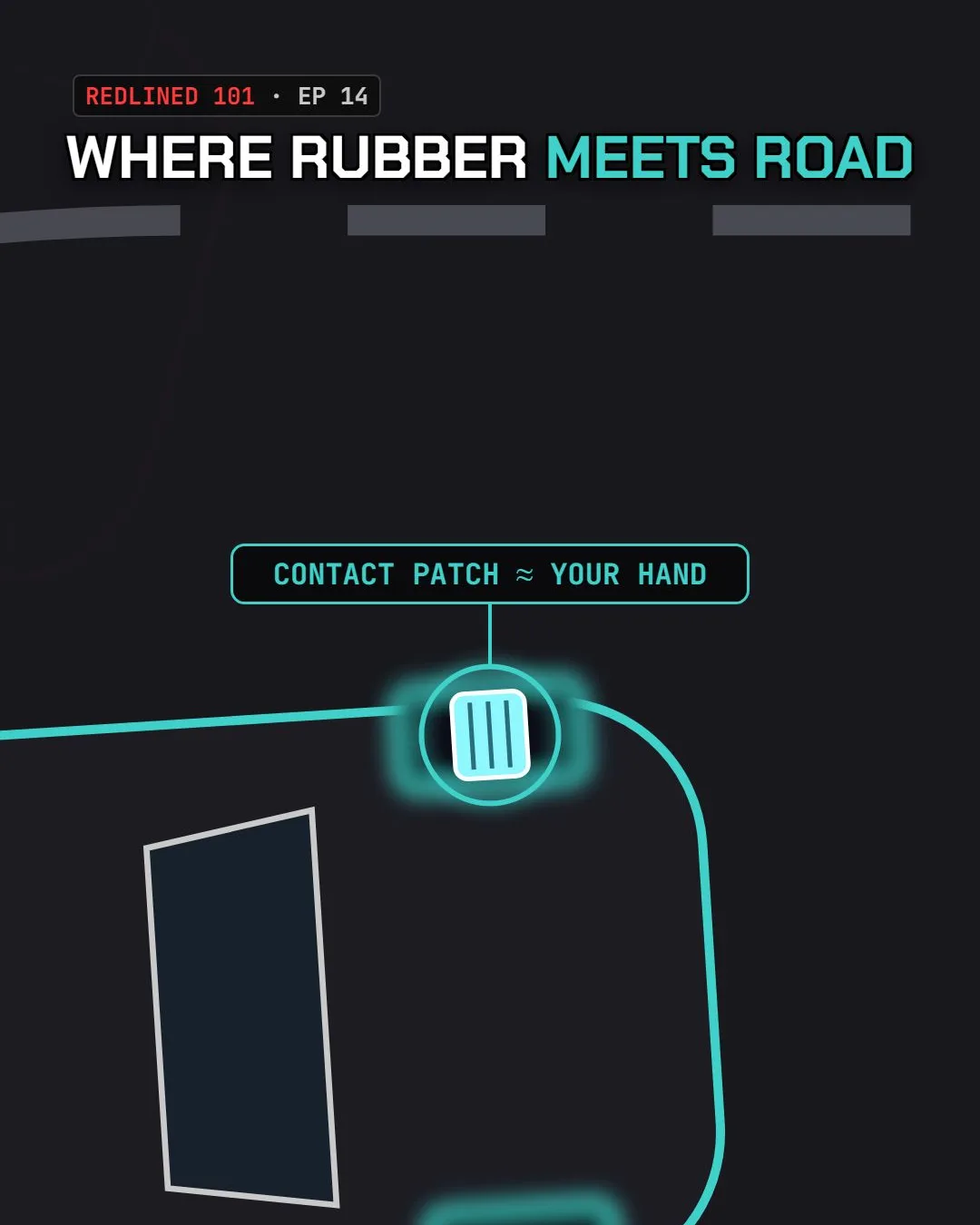
Front, rear, or all-wheel drive? Same corner, same throttle: one pushes wide, one swings its tail, one just grips. It all comes down to four contact patches, the four small pieces of rubber, each roughly the size of your hand, where the tires actually meet the road.
One circle of grip per tire
Before the drivetrains, one idea makes all of this make sense. Each tire gets one circle of grip. Think of it as a budget. The tire can spend that grip on steering, on accelerating, on braking, or on a mix, but the total can't go past the edge of the circle. Ask for more than the circle holds, and the tire slides.
How big the circle is depends on the tire, the road, and how much weight is pressing that tire down. Which tires get asked to do what depends on which wheels are driven. That's the whole difference between front, rear and all-wheel drive.
Front-wheel drive: it pushes wide
Front-wheel drive packs it all up front: the engine, the gearbox and the differential all sit at the nose, driving the front wheels. It's compact and cheap to build, and it puts weight over the driven wheels.
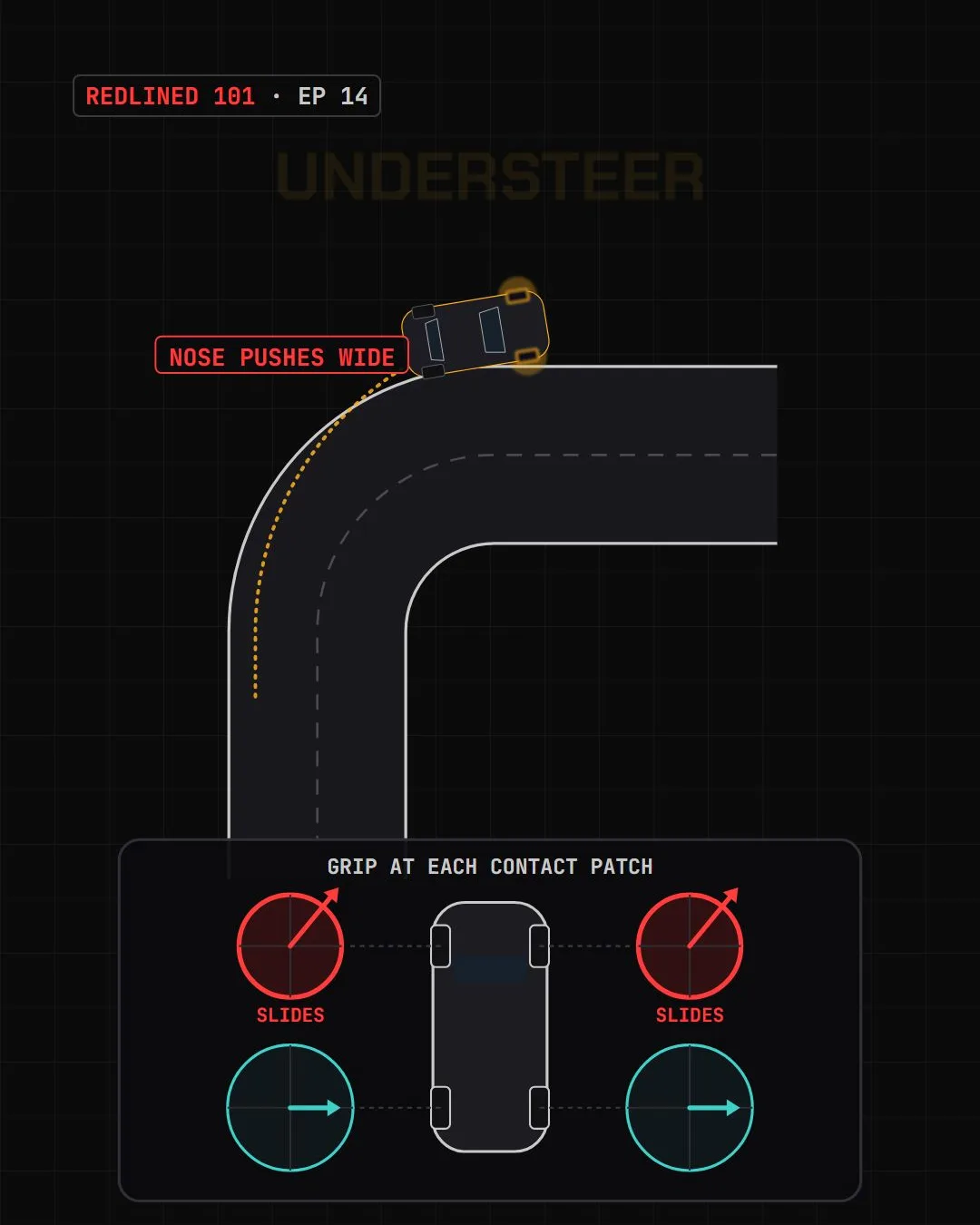
But it means the front tires have to steer and pull at once. Both jobs come out of the same circle of grip. Turn into a corner and floor it mid-corner, and the front circles overflow: there isn't enough grip for the turning and the pulling together. The fronts slide, and the nose pushes wide, toward the outside of the corner.
That's understeer: the car turns less than you're steering.
Rear-wheel drive: it swings its tail
Rear-wheel drive sends a driveshaft from the gearbox back to a differential at the rear wheels. Now the jobs split: the front tires steer, the rear tires push.
When you get on the gas, weight shifts back onto the rear. More weight on the rear tires means bigger rear circles, and the car launches hard.
But the rear circles still have an edge. Too much throttle overflows the rear, and the tail swings out. That's oversteer: the car turns more than you're steering, because the back is sliding around the front. It's also the reason drifting exists. (More on that in how drifting works.)
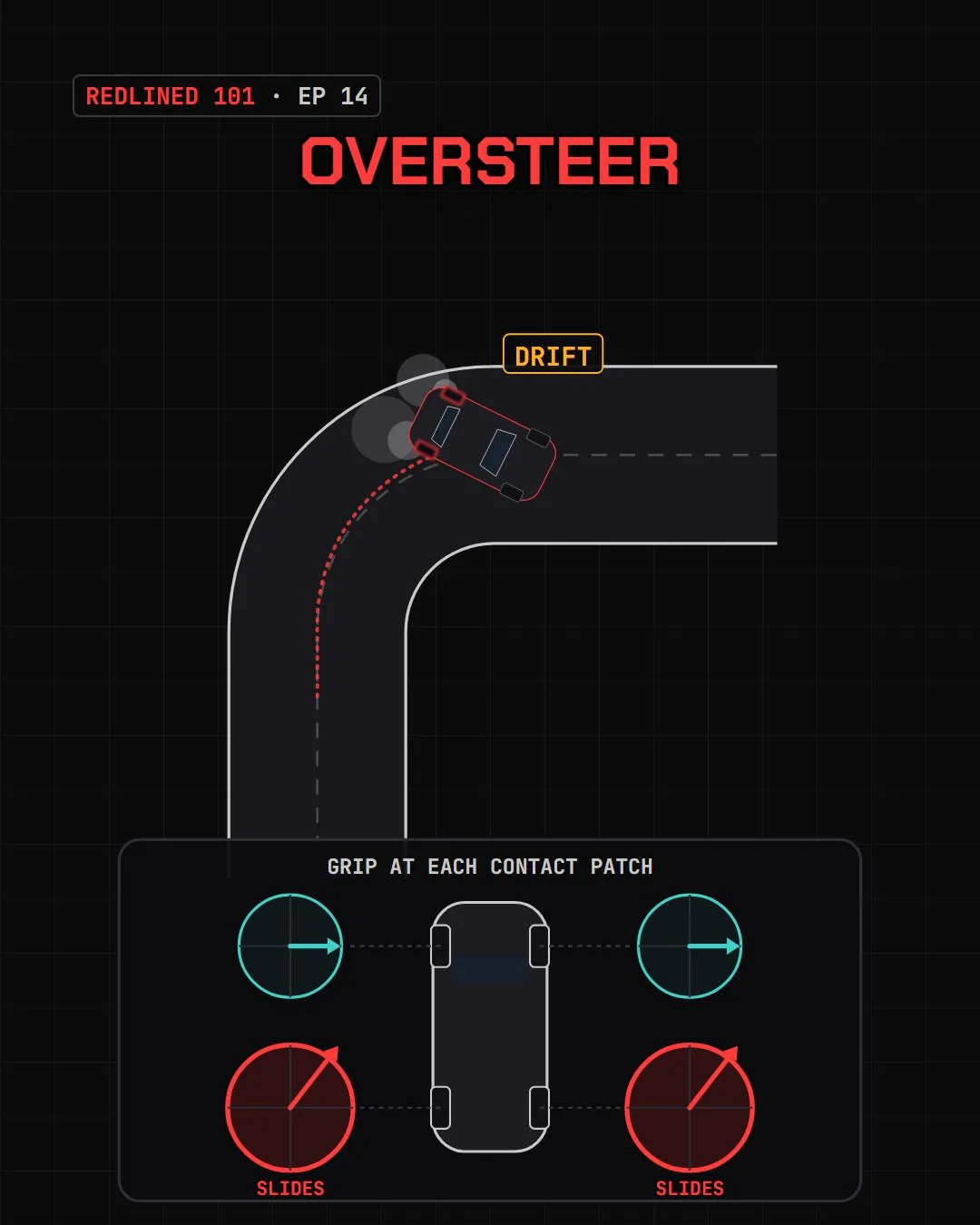
All-wheel drive: it just grips
All-wheel drive adds a transfer case and a second driveshaft, so the engine can drive both ends of the car. Now the push is spread over four circles instead of two. Each tire only has to deliver part of the power, so every tire has grip to spare for steering.
That gives you the best launch and the most grip in rain and snow when you're accelerating. The price is more weight and more parts: more to buy, more to maintain, and more mass for the car to carry everywhere.
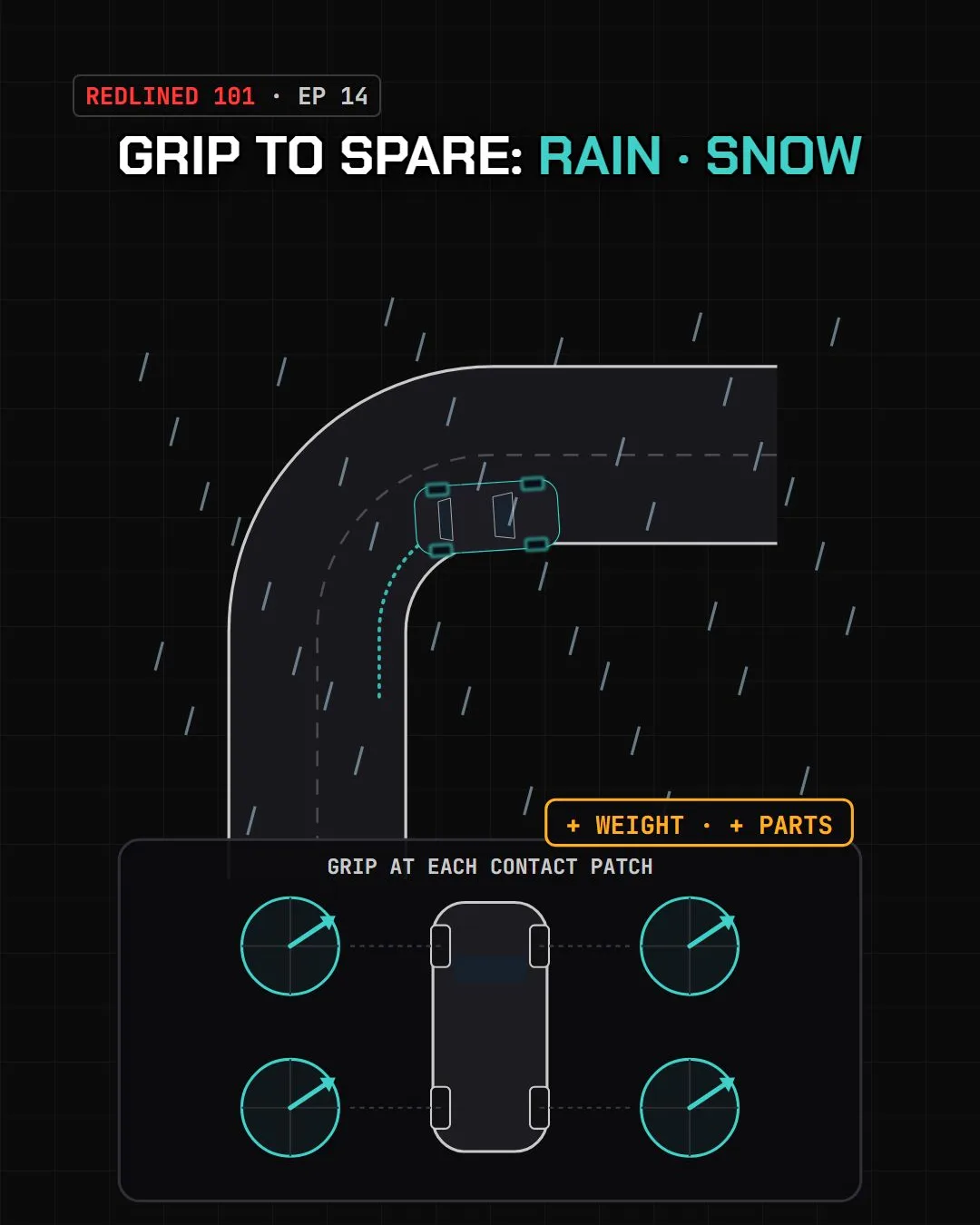
The ice test: who stops shortest?
So on ice, brakes on: which one stops shortest?
None of them. Every car brakes with all four wheels, whatever drives it. The brakes don't care which wheels the engine turns. On the same tires, on the same ice, all three slide the same distance.
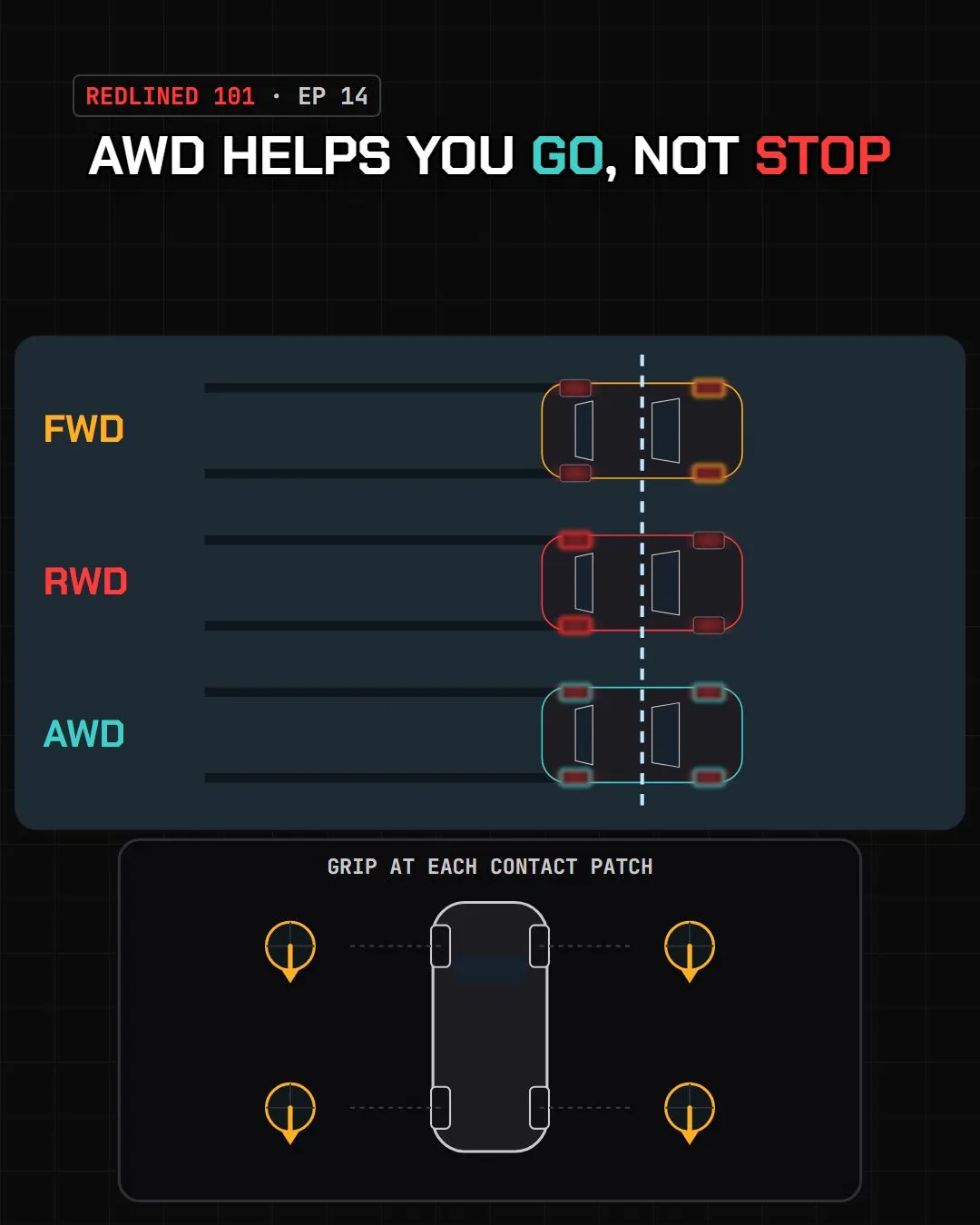
That's the part people miss. All-wheel drive helps you go, not stop. It gets you moving from a standstill in the snow better than anything else, but it adds nothing when it's time to brake.
So that friend who says all-wheel drive means he doesn't need winter tires? He's the one sliding through the stop sign.
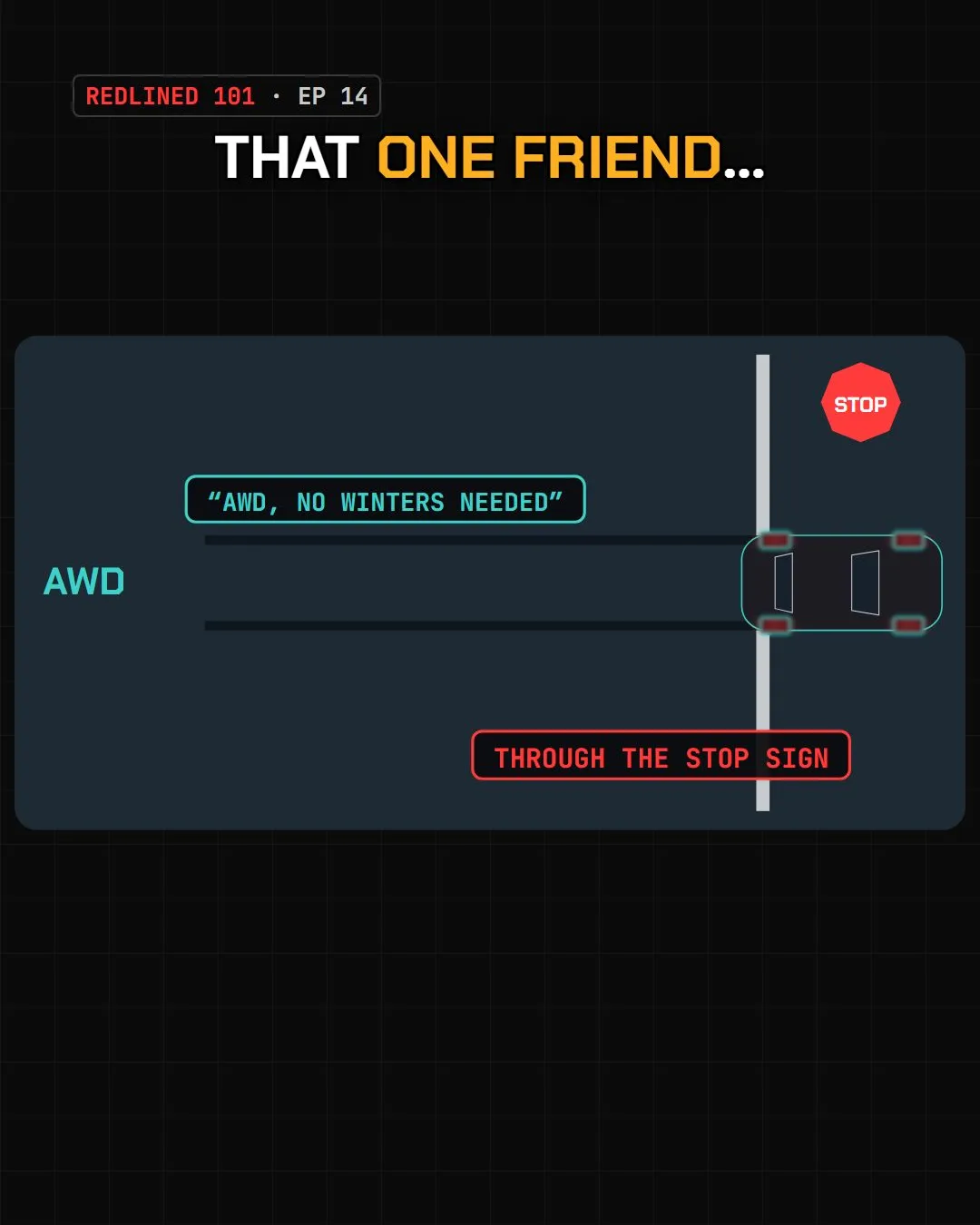
The fix: winter tires
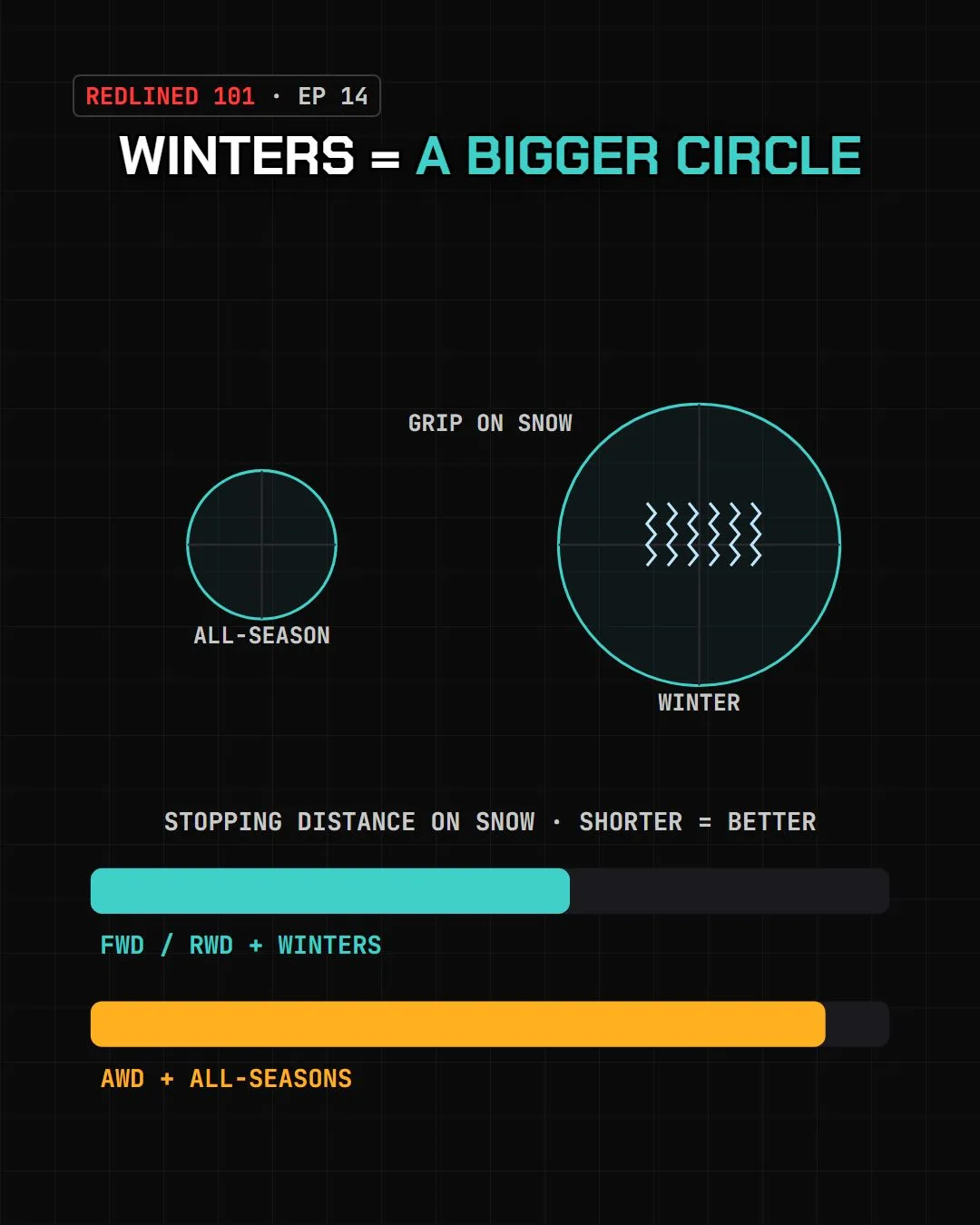
Winter tires make every circle bigger. Their softer rubber stays grippy in the cold, and the tread is made for snow, so every tire has more grip to spend, on going, turning and stopping. (Tire types are covered in our tire guide.)
That's why front or rear-wheel drive on winters stops and turns better in snow than all-wheel drive on all-seasons. The drivetrain only decides which tires push. The tires decide how much grip every corner of the car has.
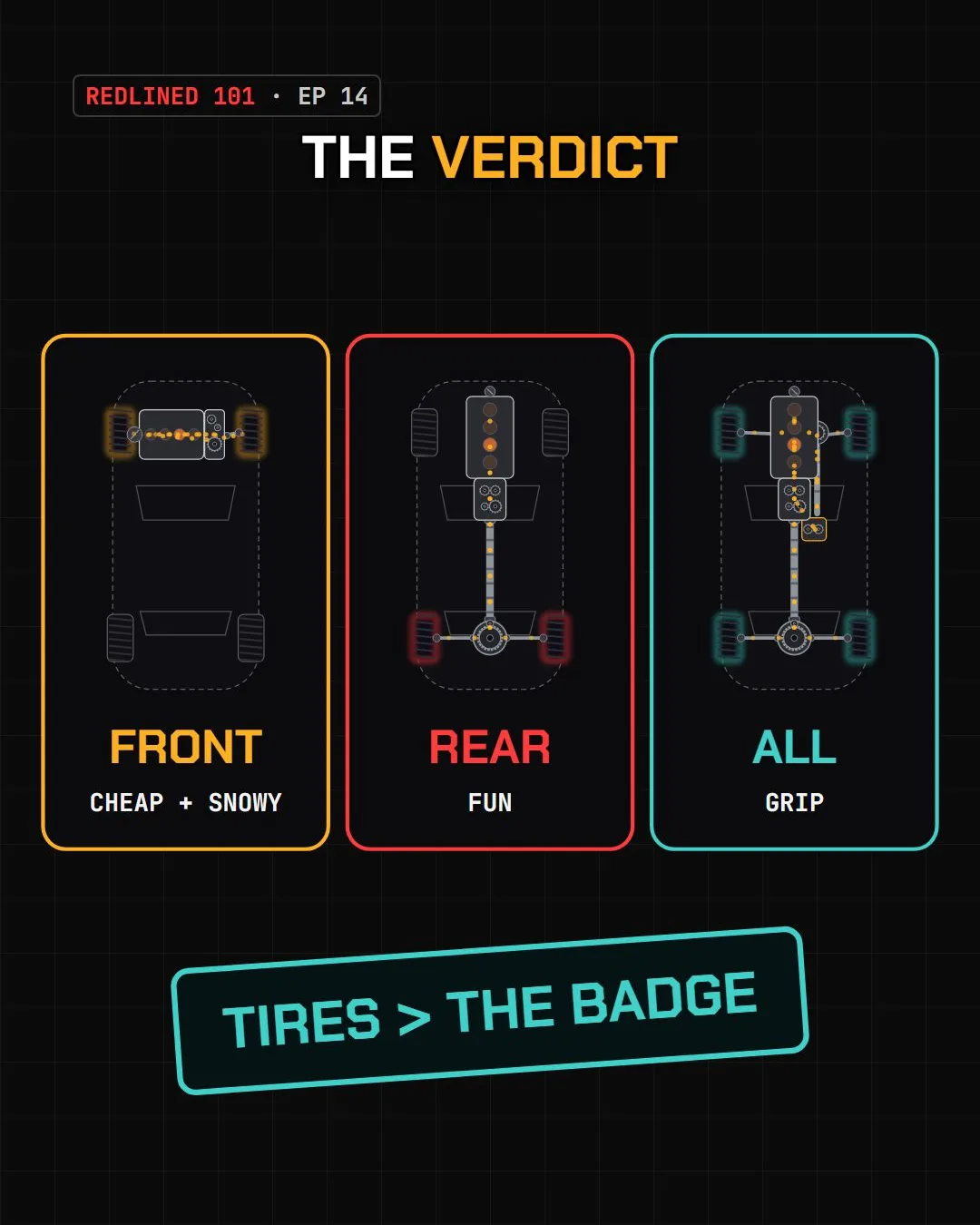
The verdict
- Front-wheel drive for cheap and snowy: simple, light on parts, and good in the snow on the right tires.
- Rear-wheel drive for fun: the steering and the pushing are split, and the tail can be steered with the throttle.
- All-wheel drive for grip: the best launch and the most traction when you're accelerating in bad weather.
And the tires matter more than the badge.
Recap
- Each tire has one circle of grip, shared between steering, accelerating and braking.
- FWD asks the fronts to do two jobs, so it understeers when you overdo the throttle.
- RWD splits the jobs and launches hard, but too much throttle means oversteer.
- AWD spreads the push over four tires for the best launch and grip, at the cost of weight and parts.
- Every car brakes with all four wheels: AWD helps you go, not stop.
- Winter tires beat the drivetrain in snow.
What do you drive, and would you swap it?
Next episode: horsepower vs torque.
Frequently asked questions
Is FWD, RWD or AWD best in snow?
All-wheel drive gets you moving best, but tires matter more than the drivetrain. Front or rear-wheel drive on winter tires stops and turns better in snow than all-wheel drive on all-seasons.
Does all-wheel drive help you stop on ice?
No. Every car brakes with all four wheels, so front, rear and all-wheel drive cars on the same tires slide the same distance. All-wheel drive helps you go, not stop.
Why do front-wheel-drive cars understeer?
The front tires have to steer and pull at the same time, and each tire only has one circle of grip. Floor it mid-corner and the front tires run out of grip first, so the nose pushes wide.
Why do rear-wheel-drive cars oversteer?
The rear tires do the pushing. Give it too much throttle and the rear tires run out of grip, so the tail swings out. That is oversteer, and it is the reason drifting exists.
Do I need winter tires if I have all-wheel drive?
Yes, if you drive in real winter conditions. All-wheel drive does not add grip for braking or turning; winter tires do, on every car.
Official merch
Shop the club merch
3 Pedals 0 F*cks Manual Transmission on a Unisex Oversized Heavyweight T-Shirt, black
Unisex Oversized Heavyweight T-Shirt
from $38.49
Pork Roll, Egg, Cheese & Boost – Jersey Breakfast on a Unisex Oversized Heavyweight T-Shirt, black
Unisex Oversized Heavyweight T-Shirt
from $32.99
My Toxic Trait: One More Project Car on a Unisex Oversized Heavyweight T-Shirt, black
Unisex Oversized Heavyweight T-Shirt
from $32.99
+1000 Aura – Exhaust Flames Car Shirt on a Unisex Oversized Heavyweight T-Shirt, white
Unisex Oversized Heavyweight T-Shirt
from $32.99
Unc Can Still Heel-Toe – Manual Driver Shirt on a Unisex Oversized Heavyweight T-Shirt, black
Unisex Oversized Heavyweight T-Shirt
from $32.99
But Officer The Sign Said Slide It on a Unisex Oversized Heavyweight T-Shirt, white
Unisex Oversized Heavyweight T-Shirt
from $32.99
Redlined Car Club Est. 2023 Brushmark on a Unisex Oversized Heavyweight T-Shirt, black
Unisex Oversized Heavyweight T-Shirt
from $32.99
Car Guy By Definition on a Unisex Oversized Heavyweight T-Shirt, black
Unisex Oversized Heavyweight T-Shirt
from $32.99
Tokyo Retro Vibes on a Unisex Oversized Heavyweight T-Shirt, black
Unisex Oversized Heavyweight T-Shirt
from $32.99
BOSOZOKU CARSPANK ボ — ソ — 族 — 車 の ス パ ン ク on a Unisex Oversized Heavyweight T-Shirt, black
Unisex Oversized Heavyweight T-Shirt
from $32.99
Coilovers > 401K – Funny Car Guy on a Unisex Oversized Heavyweight T-Shirt, black
Unisex Oversized Heavyweight T-Shirt
from $32.99
Can't Pump Gas, Can Swap A Motor – NJ Car Guy on a Unisex Oversized Heavyweight T-Shirt, black
Unisex Oversized Heavyweight T-Shirt
from $32.99




More from the club
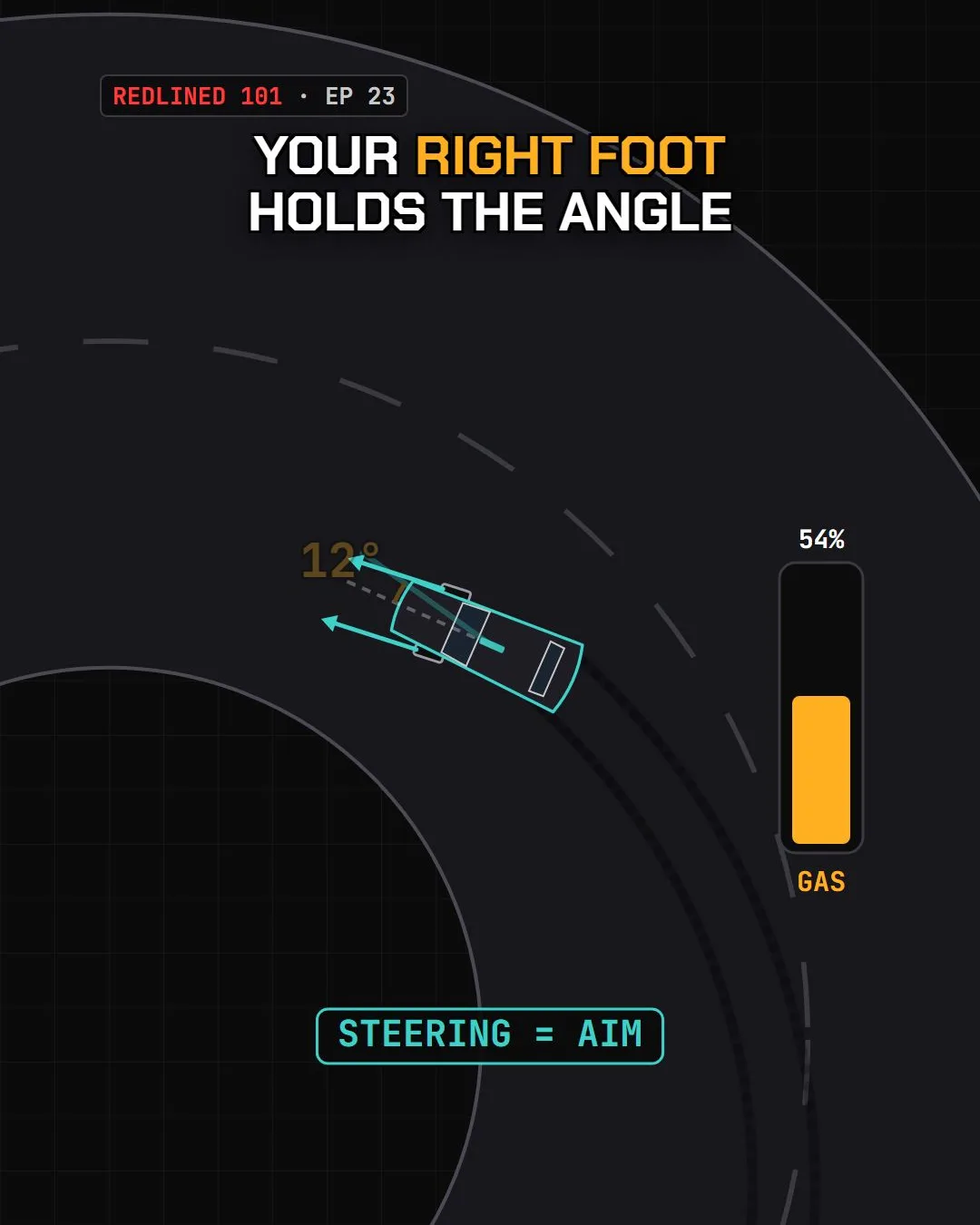
How Drifting Works: Throttle, Steering, Handbrake and Clutch Kick (Redlined 101, Ep 23)
Why a sliding tire wants to stay loose, why lifting off the gas snaps the car the other way, how the throttle holds the drift angle, clutch kick vs handbrake, and why steering lock and angle kits set the limit.
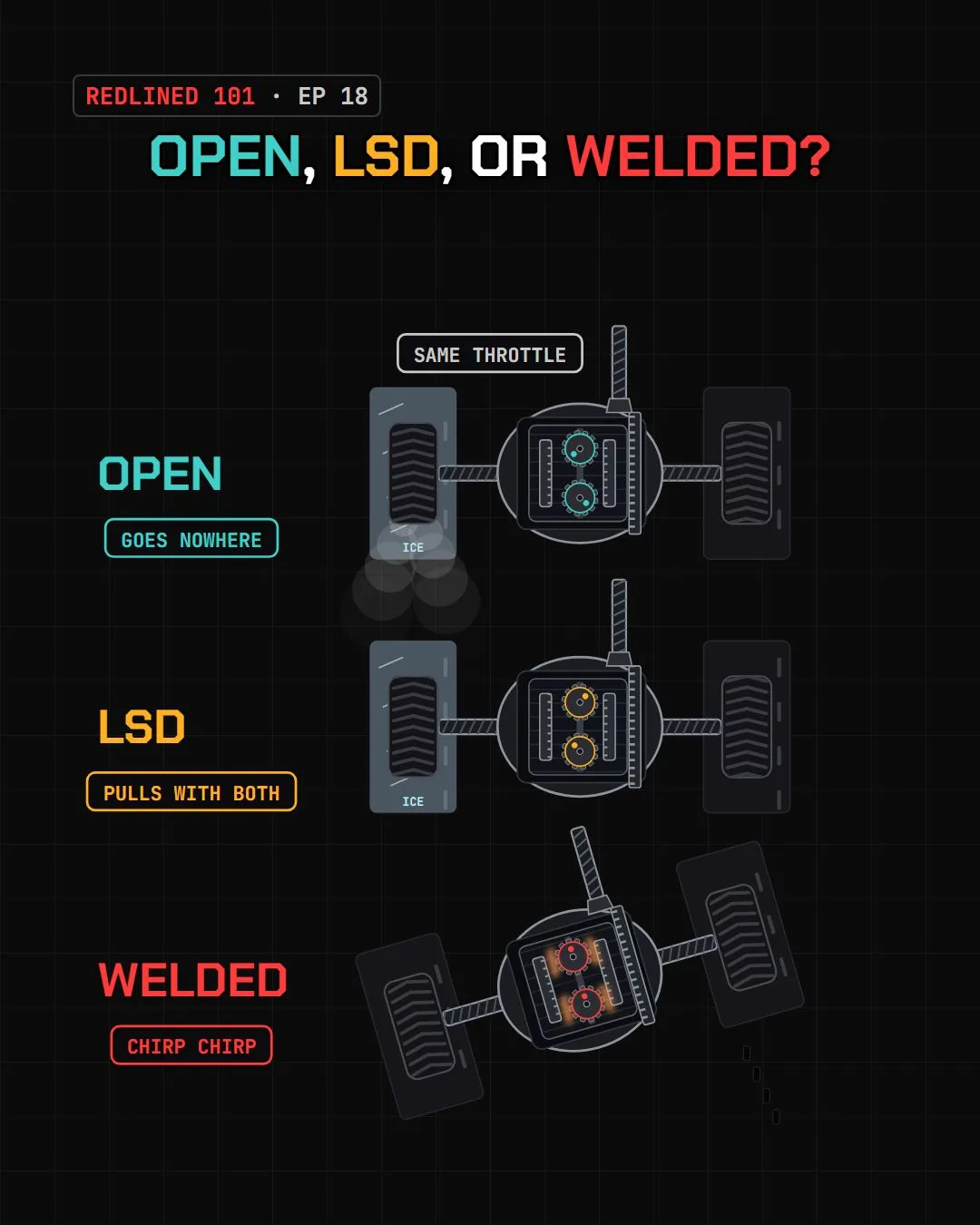
Open Diff vs Limited-Slip vs Welded Diff: What's the Difference? (Redlined 101, Ep 18)
How an open differential splits torque and why one tire on ice stops you, clutch-type vs gear-type (Torsen) limited-slip and the one-wheel-in-the-air test, and why a welded diff drifts well but chirps in every parking lot.
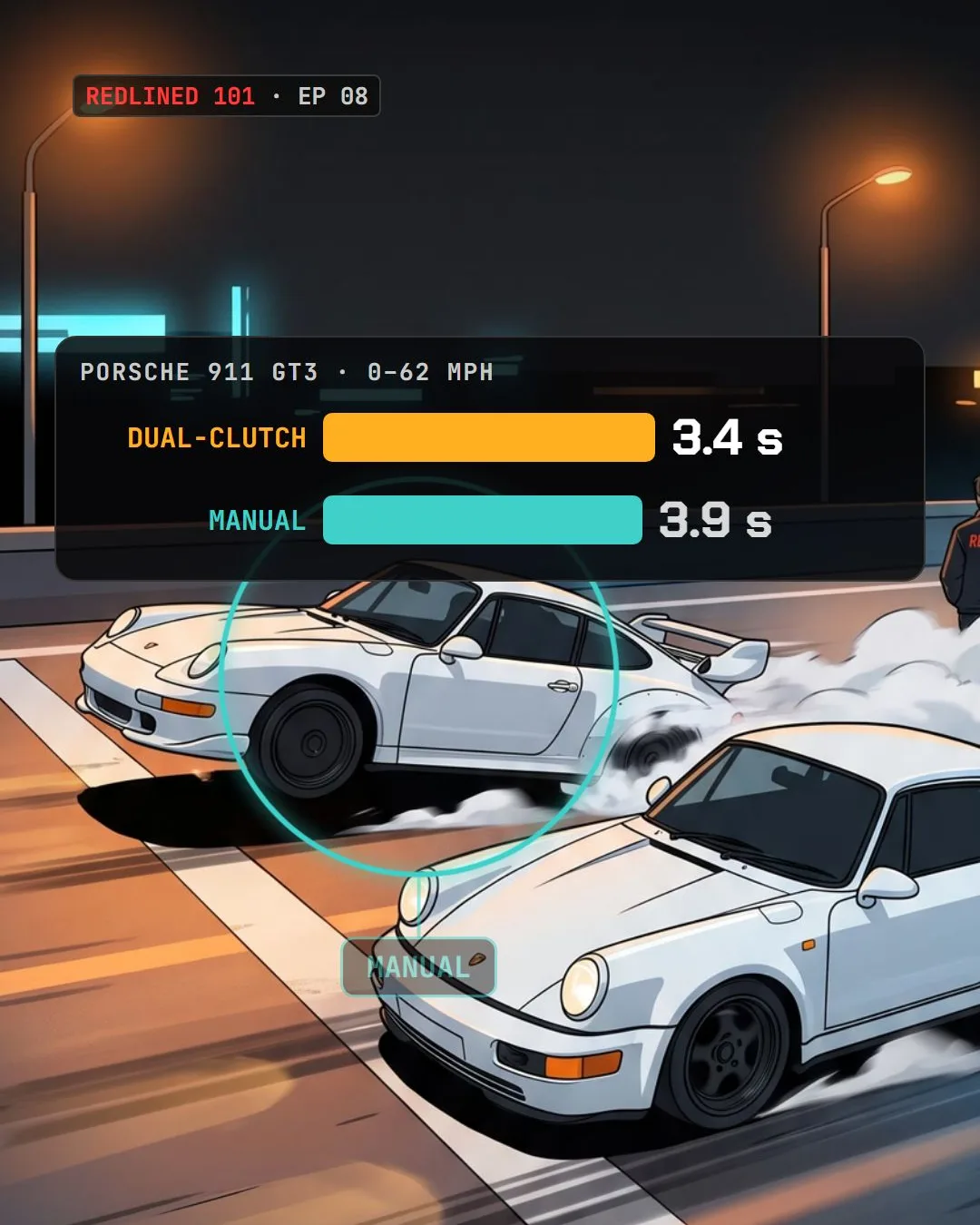
Manual vs Paddle Shift: Is a Dual-Clutch Faster Than a Stick? (Redlined 101, Ep 08)
Manual vs paddle shift: how a stick shift and a dual-clutch gearbox change gear, why one shift takes two to four tenths and the other about a tenth, the 911 GT3 proof, and why the stick is still simpler and cheaper.