Powder Coated Brake Calipers: 5 Reasons to Do It, and How It's Done
Want to know the secret to making your ride truly unforgettable? It's all in the details. Freshly coated calipers behind a set of open-spoke wheels are one of the cheapest ways to make a build look finished, and done properly they protect the part as well as dress it up. Here's the case for doing it, the way the club put it on Instagram, and exactly how our sponsor FAPAUTO does the job.
What powder coating actually is
Powder coating is a finish applied as a free-flowing, dry powder rather than a liquid paint. The powder is sprayed on electrostatically, so it clings to the part, and then cured with heat. A common cure is around 200 °C (392 °F) of part temperature for about ten minutes, with newer powders curing nearer 160 °C (320 °F). The result is a finish that is generally more durable than conventional paint. Because there's no solvent, powder can be built up thicker without running or sagging, and it releases little or no volatile organic compounds.
That's why caliper coating is a strip-down job rather than a quick spray: the metal has to be bare and clean for the powder to bond, and the part has to go in an oven.
Aesthetics 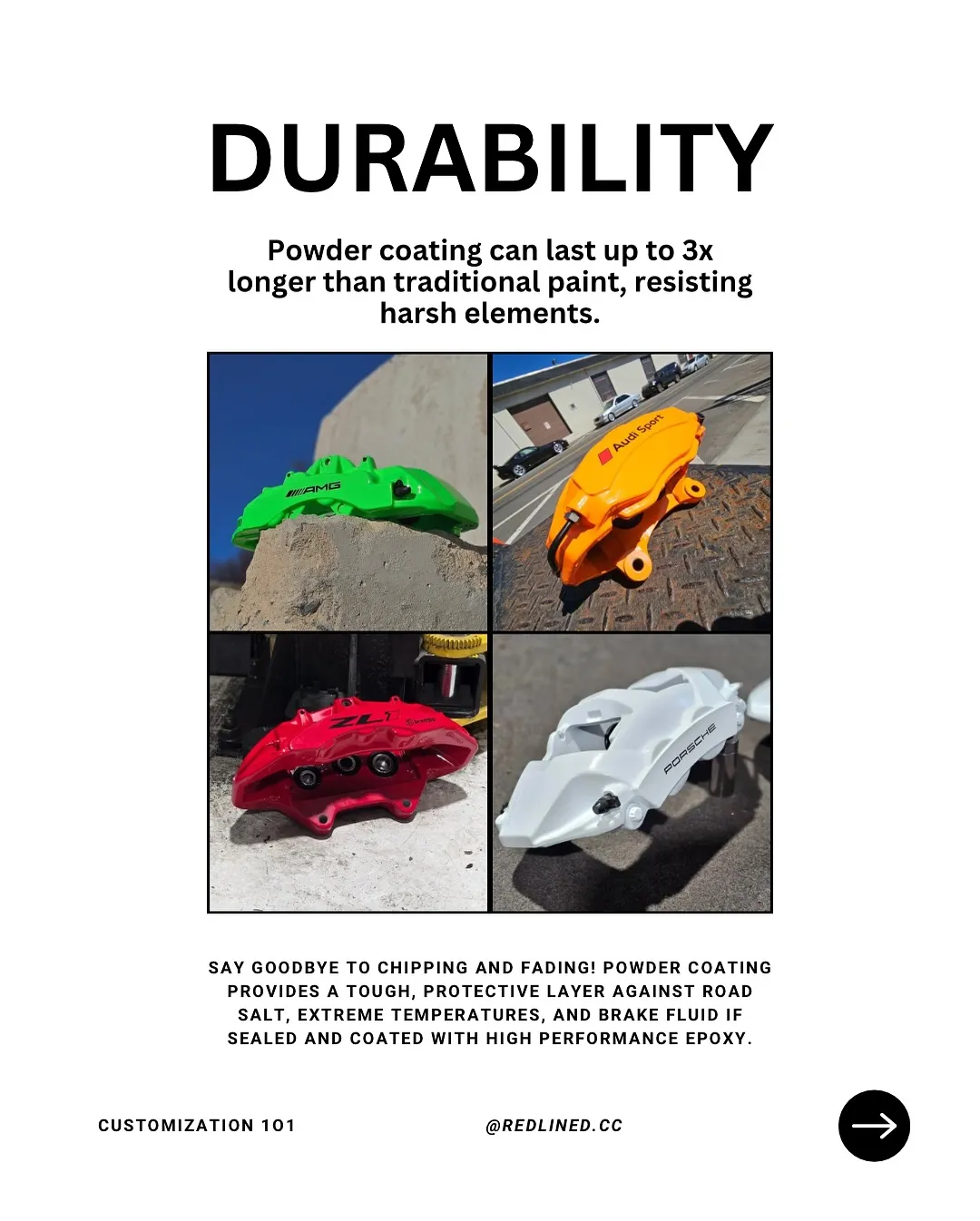
Durability 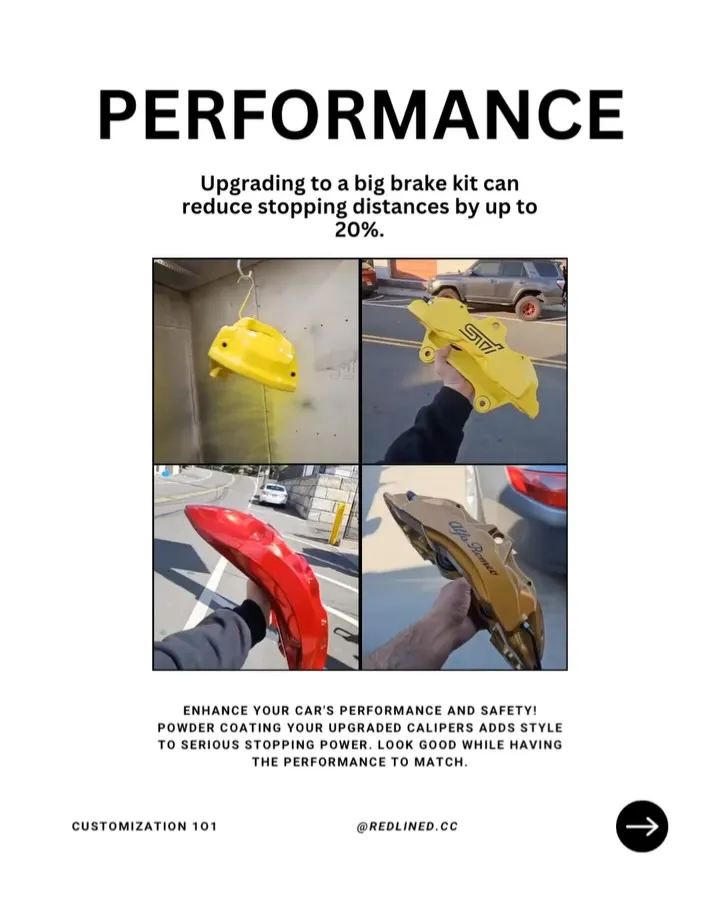
Performance 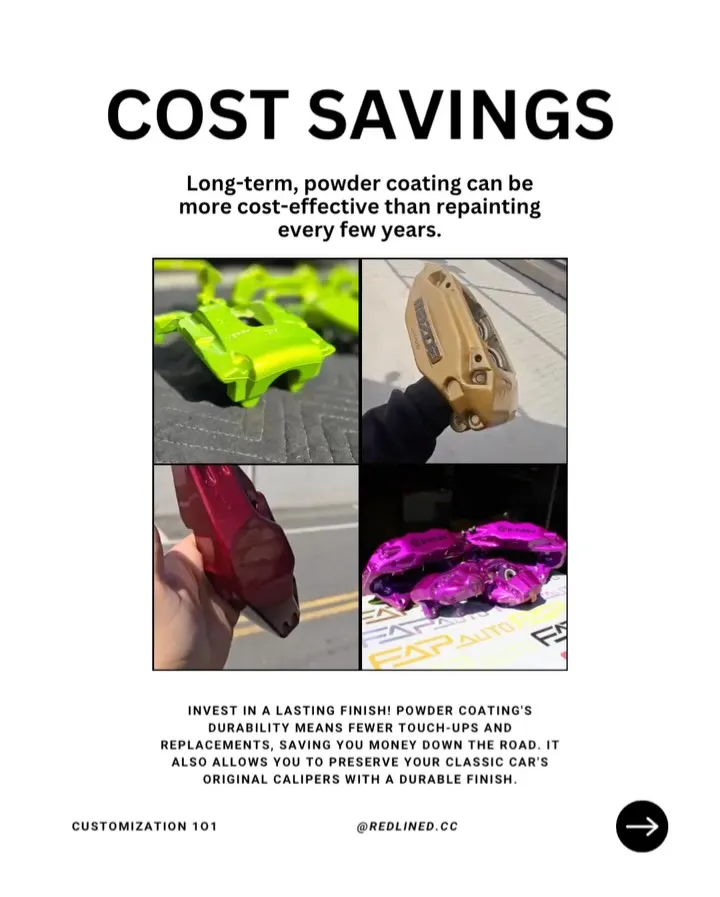
Cost savings 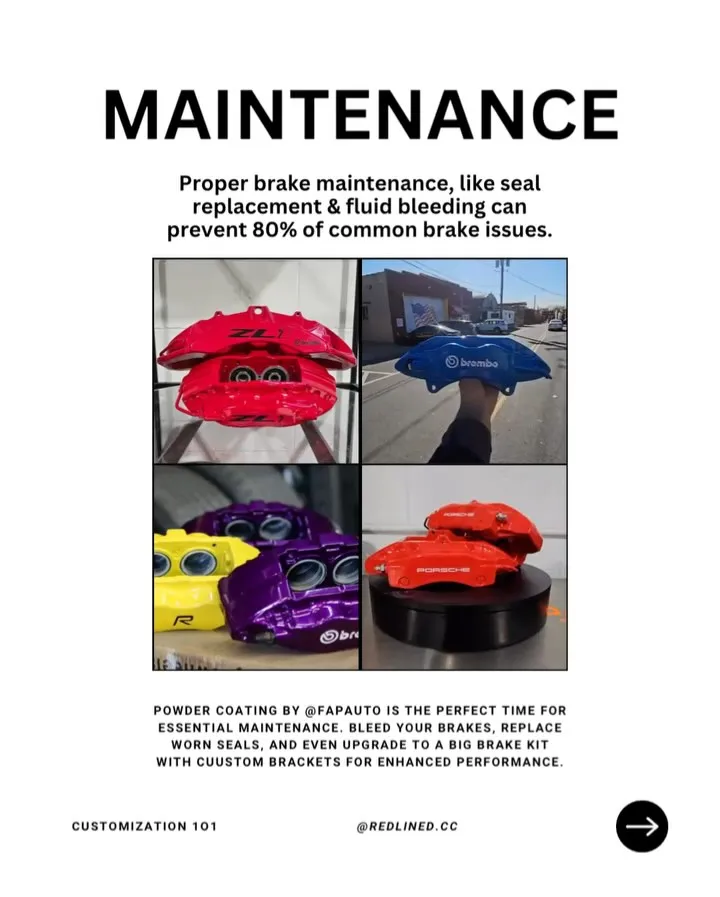
Maintenance 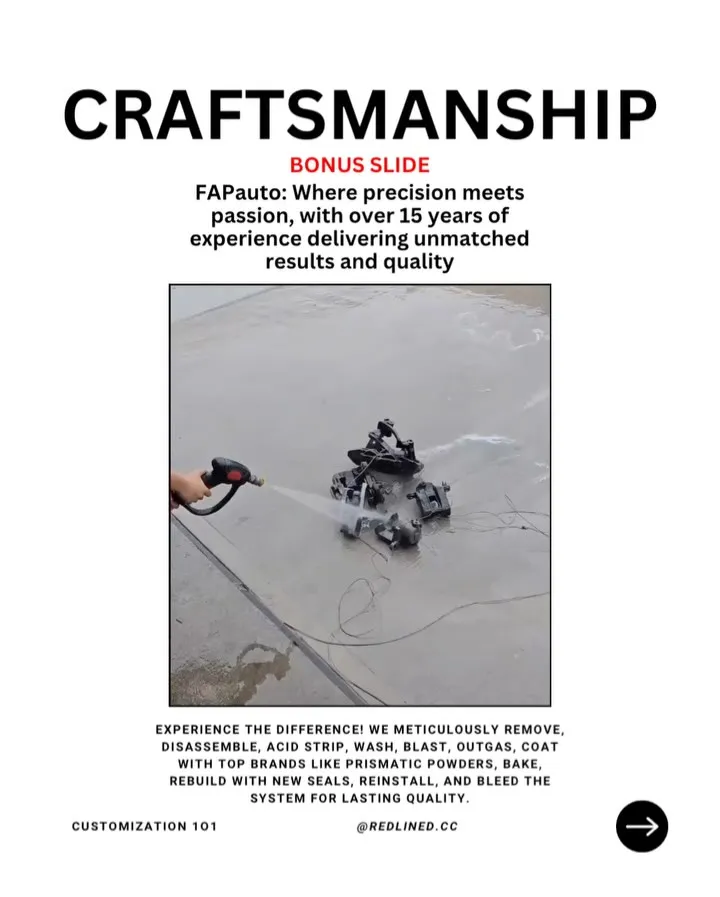
Craftsmanship: the bonus slide
5 reasons to powder coat your calipers
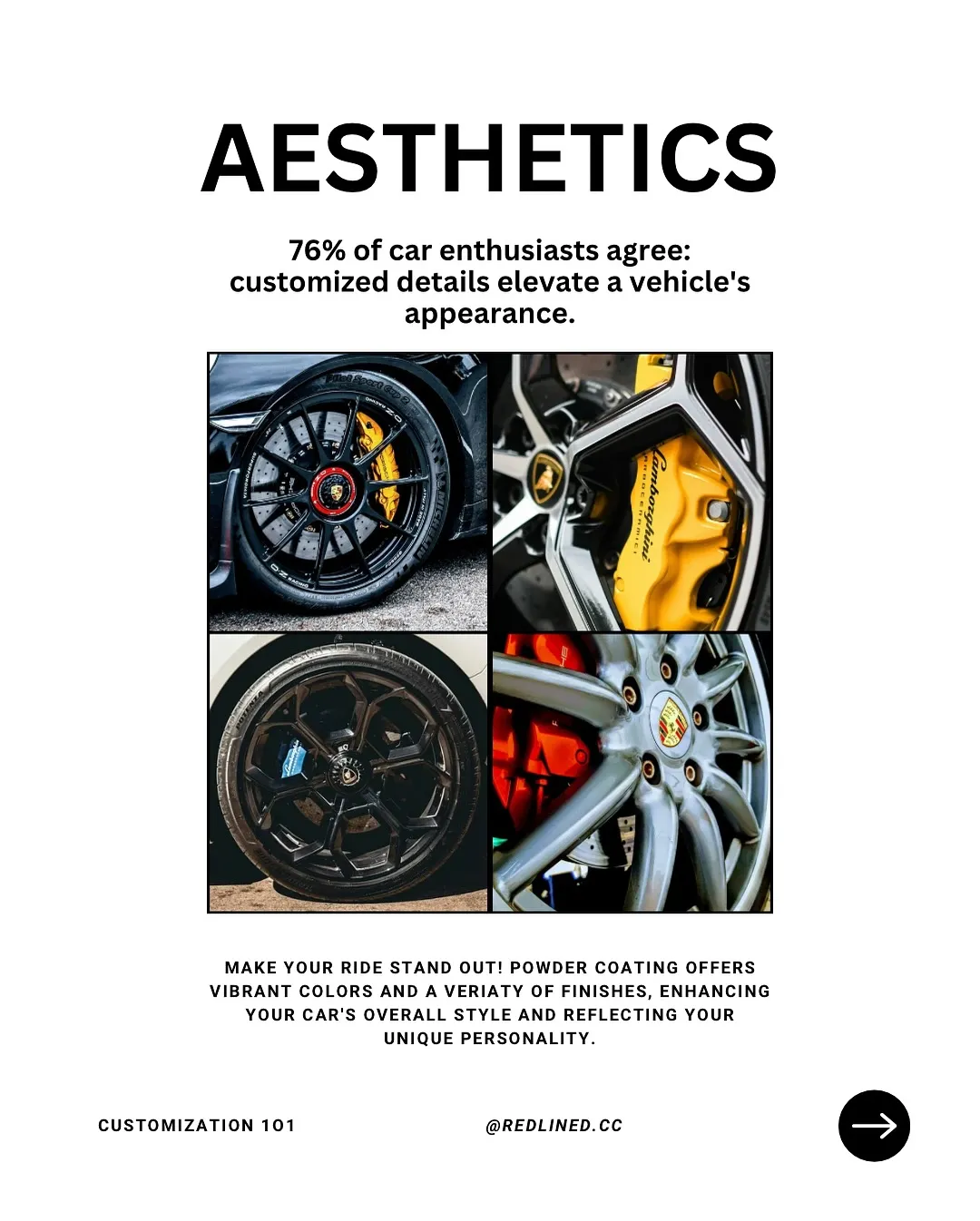
1. Aesthetics
Make your ride stand out! Powder coating offers vibrant colors and a variety of finishes, enhancing your car's overall style and reflecting your unique personality.
2. Durability
Say goodbye to chipping and fading! Powder coating provides a tough, protective layer against road salt, extreme temperatures, and brake fluid if sealed and coated with high performance epoxy. On a car that sees New Jersey winters, road salt is the enemy of everything under the wheel wells.
3. Performance
Enhance your car's performance and safety! Powder coating your upgraded calipers adds style to serious stopping power. Look good while having the performance to match. If you're already fitting a big brake kit, coating the new calipers is the natural time to pick the color.
4. Cost savings
Invest in a lasting finish! Powder coating's durability means fewer touch-ups and replacements, saving you money down the road. It also allows you to preserve your classic car's original calipers with a durable finish.
5. Maintenance
Powder coating is the perfect time for essential maintenance. The calipers are already off the car and apart, so bleed your brakes, replace worn seals, and even upgrade to a big brake kit with custom brackets for enhanced performance.
How FAPAUTO does it
At FAPAUTO's powder coating shop (@fapowdercoating), calipers get expert care from start to finish:
- Remove the calipers from the car.
- Disassemble each caliper.
- Acid strip and wash the old finish off.
- Blast the metal clean.
- Outgas, so trapped contaminants don't bubble through the finish later.
- Coat with top brands like Prismatic Powders.
- Bake to cure the coat.
- Rebuild with new seals, reinstall, and bleed the system.
FAPAUTO is the official sponsor of the Redlined Car Club and does performance parts, fender rolling and powder coating out of northern New Jersey.
Choosing a caliper color
Caliper color is a small detail that does a lot of work, so pick it with the whole car in mind:
- Red is the classic performance cue and works on almost any body color.
- Yellow is loud, especially behind dark wheels; it's the color plenty of high-end brake brands are known for.
- Black keeps it subtle and hides brake dust.
- Body-matched or wheel-matched colors look deliberate on a car with a clear color scheme.
- Contrast with your wheels. Calipers disappear behind dark, busy spokes, so pick a color that stands out against the wheel, not just the paint.
Caring for coated calipers
Coated calipers are easy to keep clean. Rinse brake dust off regularly with a pH-neutral wheel cleaner and a soft brush, never a stiff wire brush. When pads or rotors are replaced, make sure the technician doesn't pry against the coated surfaces with metal tools. And keep brake fluid away from the finish: it's harsh on most coatings, so any spill during a fluid change should be rinsed off right away.
Painting vs powder coating calipers
High-temperature caliper paint is the DIY option: cheap and doable at home without taking the brakes apart, but it chips more easily, and masking around the pistons and seals is fiddly. Powder coating needs the caliper stripped, coated, baked and rebuilt with new seals, which is a professional job, but the finish is far tougher and lasts.
More from the garage
Picking out a suspension to go with those calipers? Read the club's take on coilovers for every budget, from BC Racing to Öhlins.
Official merch
Gear for the garage
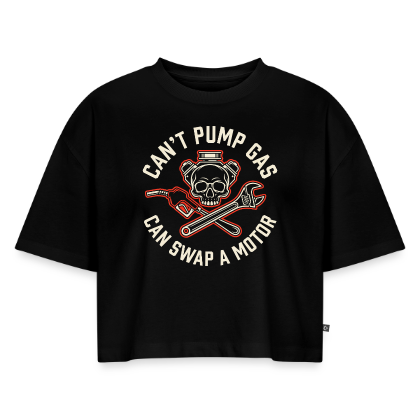
Can't Pump Gas, Can Swap A Motor – NJ Car Guy on a Unisex Oversized Heavyweight T-Shirt, black
Unisex Oversized Heavyweight T-Shirt
from $39.49
Can't Pump Gas, Can Swap A Motor – NJ Car Guy on a Washed Unisex T-Shirt, mineral navy
Washed Unisex T-Shirt
from $27.99
Can't Pump Gas, Can Swap A Motor – NJ Car Guy on a Men's Premium T-Shirt, black
Men's Premium T-Shirt
from $27.99
Can't Pump Gas, Can Swap A Motor – NJ Car Guy on a Women's Cropped T-Shirt, black
Women's Cropped T-Shirt
from $28.49
Can't Pump Gas, Can Swap A Motor – NJ Car Guy on a Champion Women’s Cropped T-Shirt, black
Champion Women’s Cropped T-Shirt
from $26.99
Can't Pump Gas, Can Swap A Motor – NJ Car Guy on a Stanley/Stella Blaster Oversized T-Shirt, black
Stanley/Stella Blaster Oversized T-Shirt
from $27.49
Can't Pump Gas, Can Swap A Motor – NJ Car Guy on a Women's Oversized Organic Cropped T-Shirt, black
Women's Oversized Organic Cropped T-Shirt
from $23.99
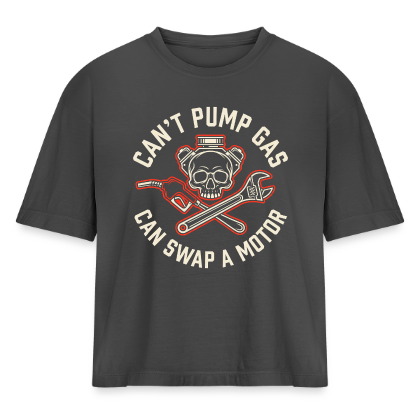
Can't Pump Gas, Can Swap A Motor – NJ Car Guy on a Women's Heavyweight Cropped T-Shirt, anthracite grey
Women's Heavyweight Cropped T-Shirt
from $25.99
Can't Pump Gas, Can Swap A Motor – NJ Car Guy on a Heavyweight Unisex Hoodie by Gildan, black
Heavyweight Unisex Hoodie by Gildan
from $49.99
Can't Pump Gas, Can Swap A Motor – NJ Car Guy on a Unisex Crewneck Sweatshirt, black
Unisex Crewneck Sweatshirt
from $42.99
Can't Pump Gas, Can Swap A Motor – NJ Car Guy on a Oversized Hooded Sweatshirt, black
Oversized Hooded Sweatshirt
from $59.49
Can't Pump Gas, Can Swap A Motor – NJ Car Guy on a Oversized Unisex Short Sleeve Sweatshirt, black
Oversized Unisex Short Sleeve Sweatshirt
from $42.49


 View on Instagram
Sources
- "Powder coating", Wikipedia: application, curing temperatures and properties.
Frequently asked questions
Is it worth powder coating brake calipers?
For a lasting finish, yes. Powder coating is tougher than caliper paint against heat, chips and brake dust, though it requires the calipers to be removed, stripped and rebuilt.
Does powder coating affect brake performance?
Done properly, no. The calipers are rebuilt with new seals and the friction surfaces are not coated, so braking is unaffected.
What color should I powder coat my calipers?
Choose a color that contrasts with your wheels so it shows through the spokes: red and yellow are classic, black is subtle, and matched colors suit a clear color scheme.
Can I paint brake calipers myself?
Yes, with high-temperature caliper paint, but it chips more easily than powder coat and masking around the seals takes care.
More from the club
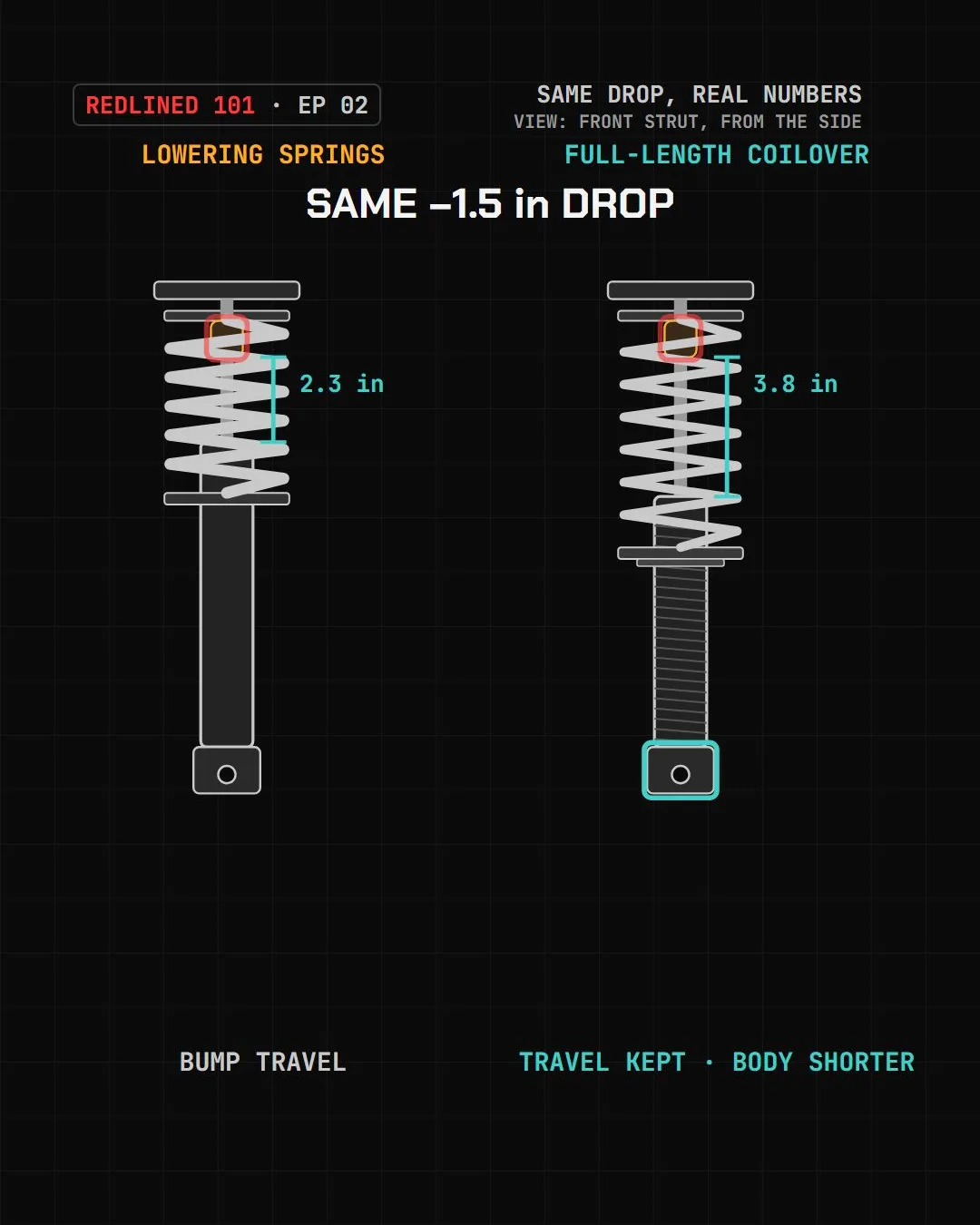
Lowering Springs vs Coilovers vs Air Suspension: Which Should You Run? (Redlined 101, Ep 02)
Lowering springs, coilovers or air? How springs and dampers split the work, why springs on factory shocks ride bouncy, static vs air, what each costs, and why controlled beats stiff.
Coilovers for Every Budget: BC Racing vs Fortune Auto vs HKS vs Öhlins
What coilovers are, what you can adjust, and the club’s picks from budget to elite (BC Racing, Fortune Auto, HKS and Öhlins), plus a pro tip for a fresh install.
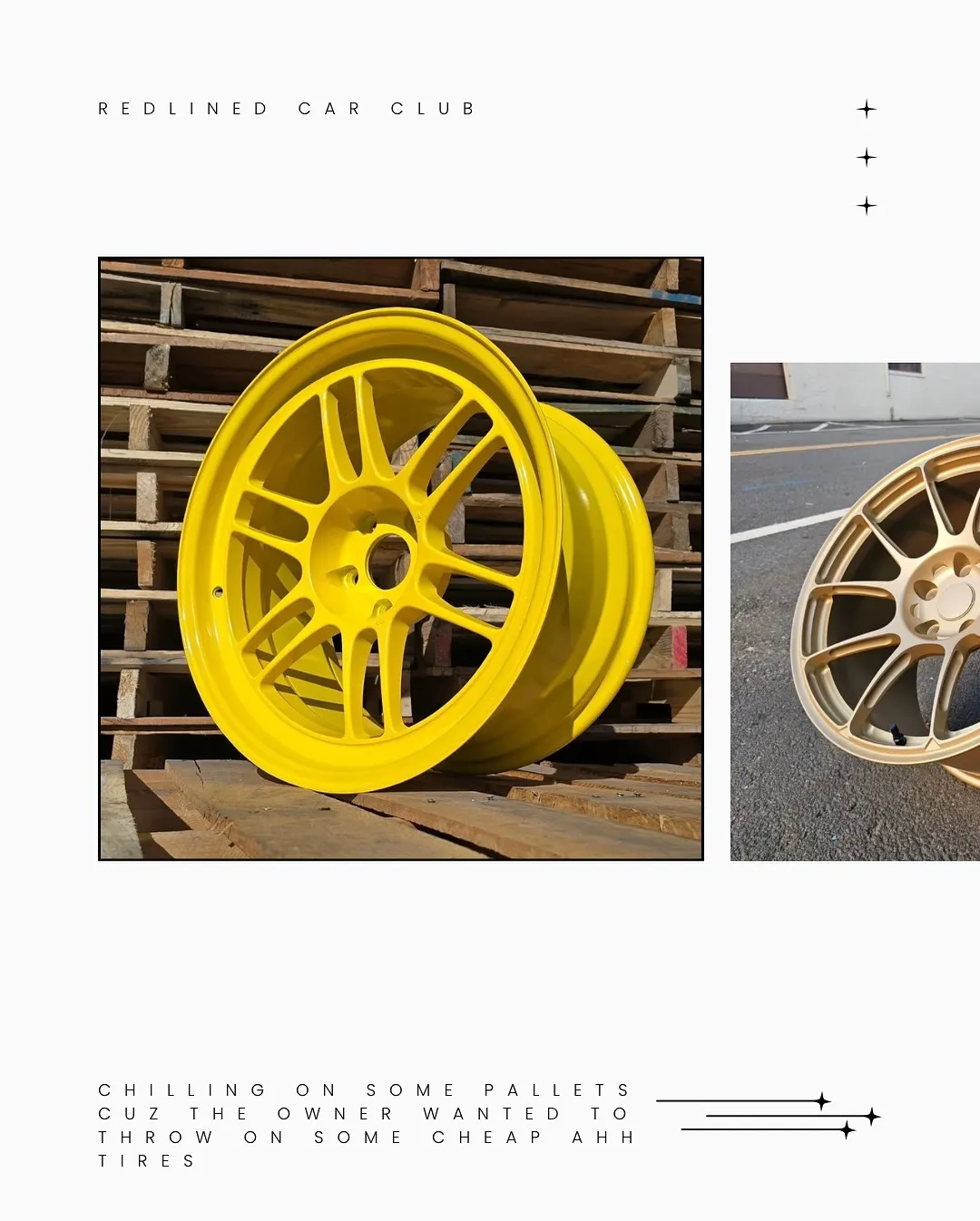
Powder-Coated Wheels: Why the Club Swears by It (and What FAPAUTO Has Been Coating)
Why powder coating beats paint on wheels and calipers, how the work gets done at FAPAUTO in New Jersey, and a look at the wheels and Brembo calipers that have come out of the booth.