
Blow-Off Valve vs Turbo Flutter: Pssh or Stu-tu-tu? (Redlined 101, Ep 13)
Pssh, or stu-tu-tu? Same car, same turbo, same lift off the gas. Two completely different sounds, and one valve decides which one you get. If you're new to how a turbo makes boost, turbo vs supercharger covers the basics; this post is about what happens to that boost the moment you lift.
 Watch on Instagram
The pressure: air with nowhere to go
Here's why there's a sound at all. A turbo uses exhaust to spin a compressor wheel, and that wheel packs air into the pipes between the turbo and the engine. That packed air is boost: air above atmospheric pressure, waiting at the throttle to be let in.
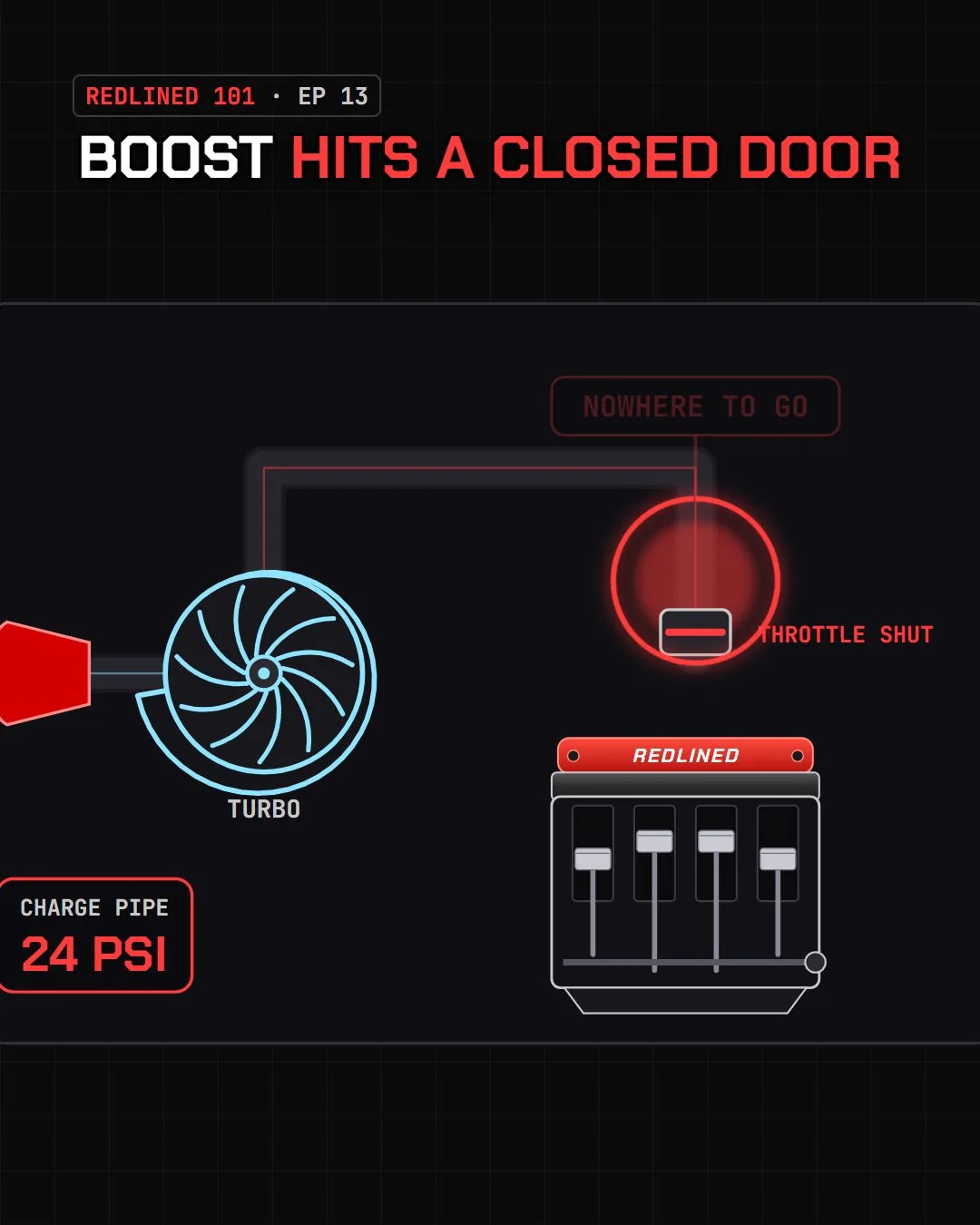
Now lift off the gas. The throttle snaps shut. But the turbo is still spinning, and the pipes are still full of pressurized air. That air slams into a closed door, with nowhere to go.
Something has to give. What gives depends on the valve.
The pssh: a blow-off valve
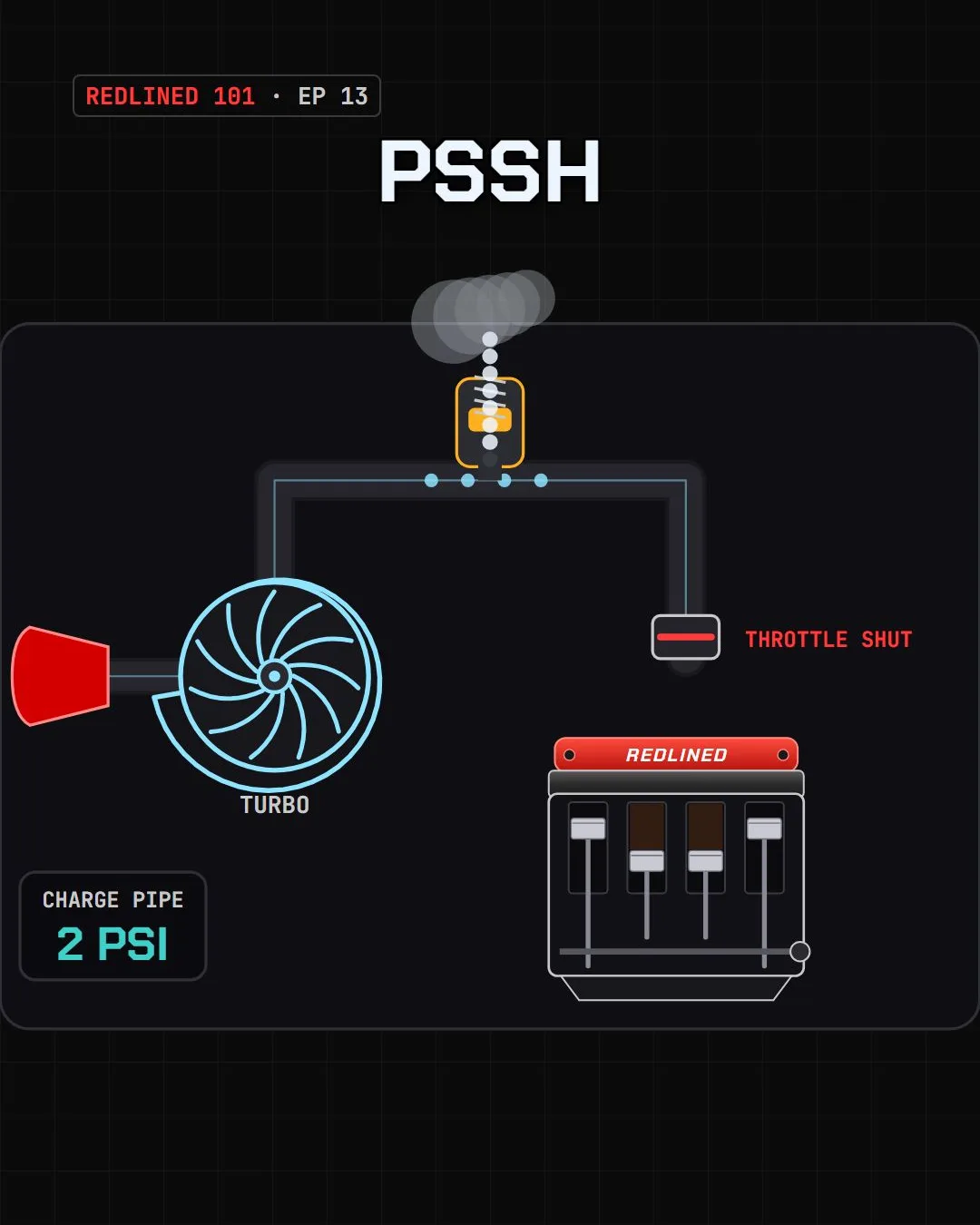
A blow-off valve sits on the pipe before the throttle. It opens the instant you lift and vents that pressure out into the air. That's the pssh: boost escaping to the atmosphere through the valve.
It's the sound everybody associates with turbo cars, and it's the reason a lot of people buy one.
The factory version: a diverter valve
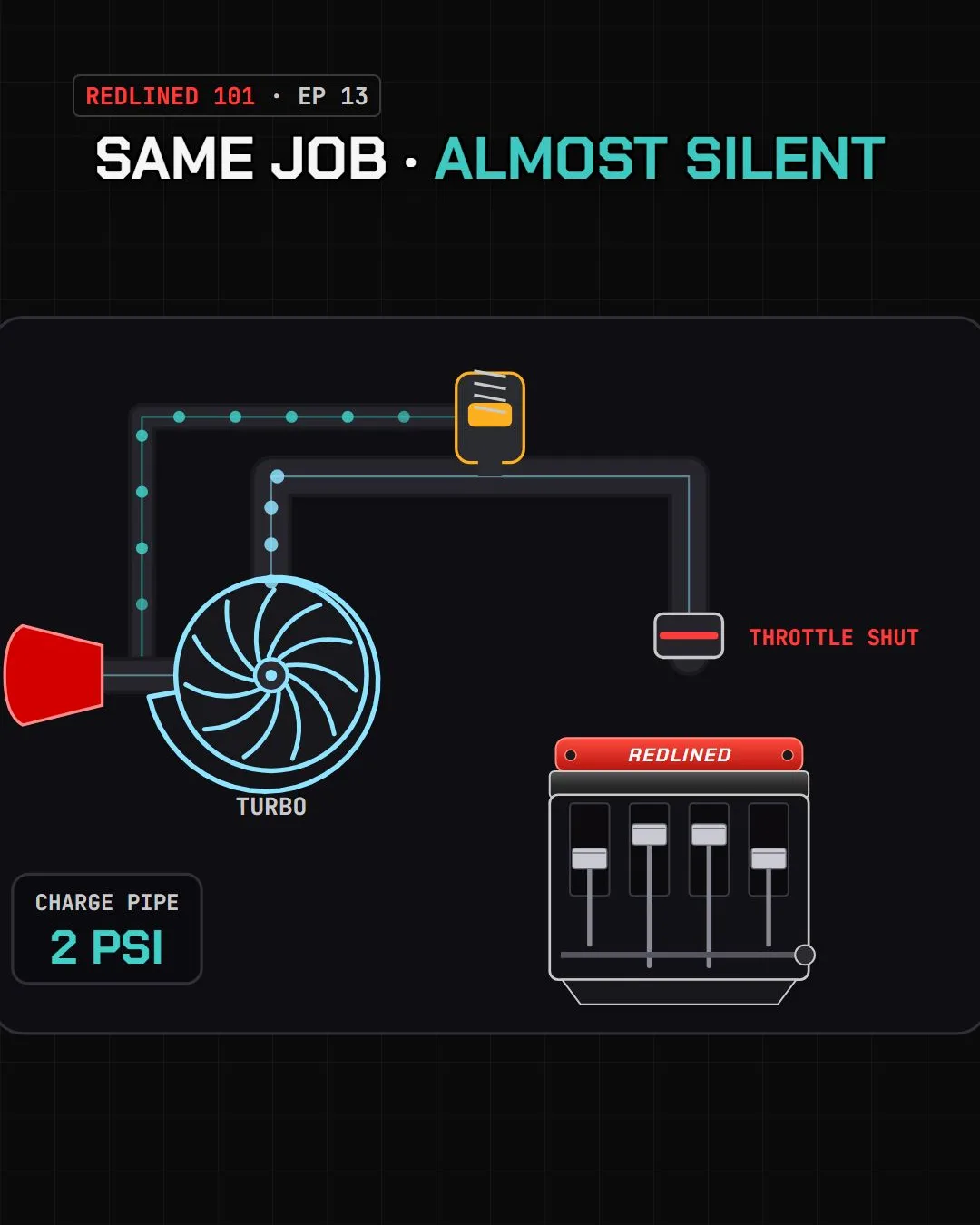
Most factory turbo cars don't go pssh. They use a quiet version: a diverter valve. It opens at the same moment and does the same job, but instead of venting to the air, it sends the air back into the intake, before the turbo, so it goes round again.
Same job, almost no sound. The pressure is released either way; the only question is whether you hear it.
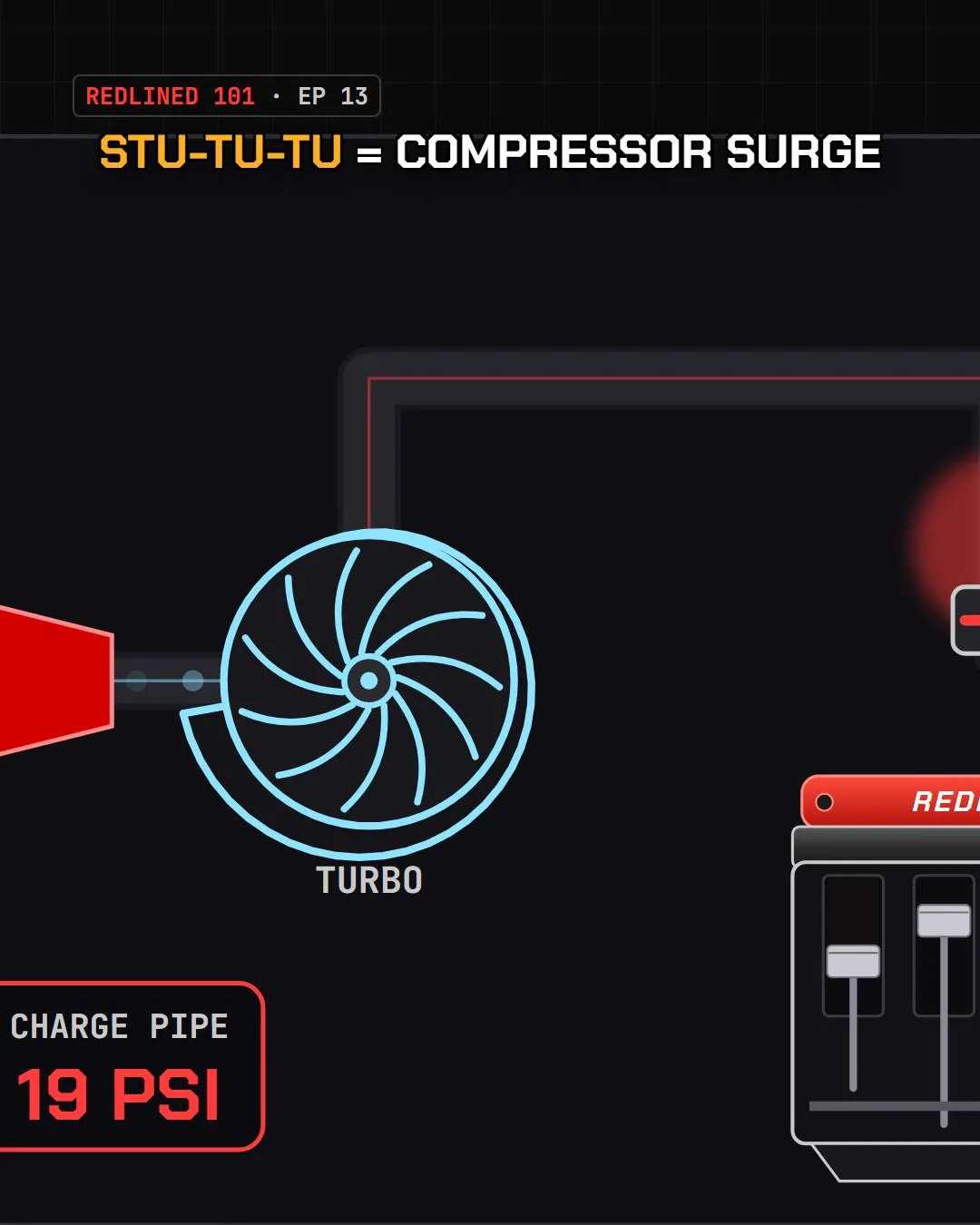
The stu-tu-tu: compressor surge
Now take the valve away, or fit one that stays shut. The trapped air still has to go somewhere, and the only way out is back the way it came. It shoves backward through the compressor wheel while that wheel is still spinning forward.
The wheel can't push air against that. Its airflow stalls, the pressure drops a little, the wheel catches and pushes again, and the pressure builds back up. It stalls and restarts, over and over. That rapid fluttering is the stu-tu-tu, and its proper name is compressor surge.
So: pssh, or stu-tu-tu? Which one would you run?
The catch: surge costs turbo life
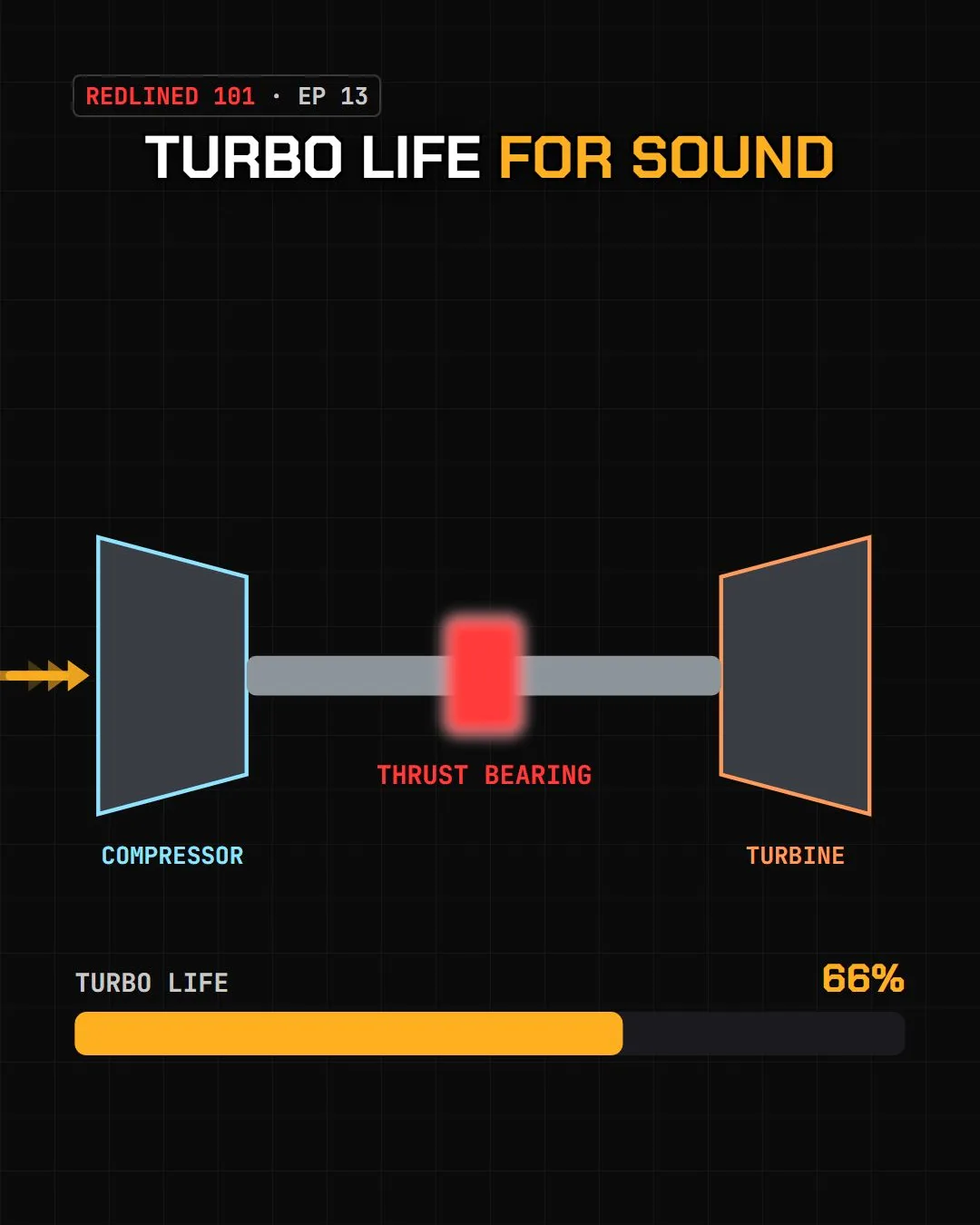
Every one of those stalls is a shove on the compressor wheel, the wrong way. Every surge hammers the turbo's thrust bearing, the bearing that keeps the spinning shaft from moving back and forth along its length.
If you do it on purpose, every lift, every shift, you're trading turbo life for sound.
Venting isn't free either
So a valve that vents to the air is the answer? Not always. It depends on how your engine works out its fuel.
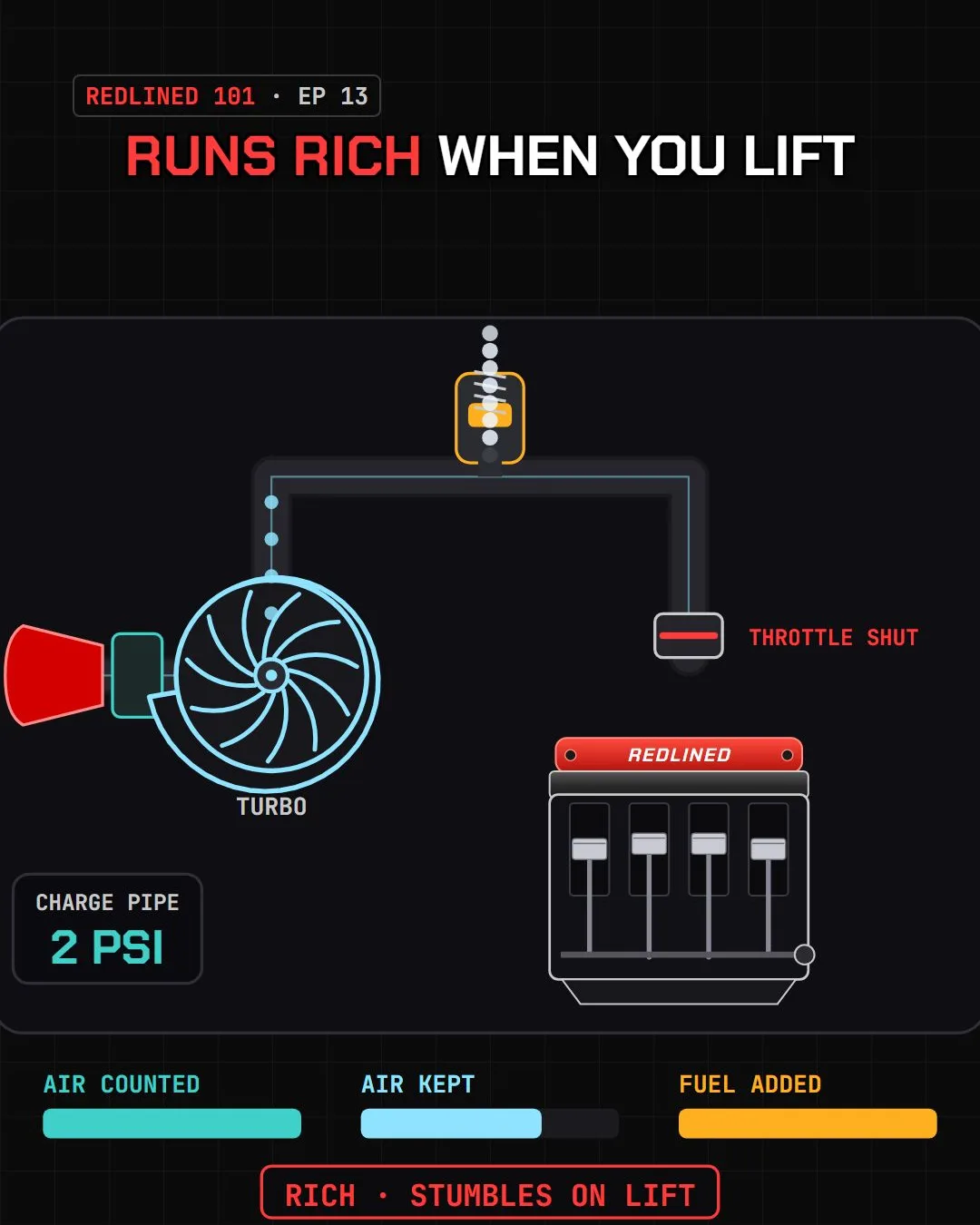
Many engines measure the airflow coming in, with a sensor before the turbo, and add fuel to match. That sensor has already counted the air that's now in the pipes. If a blow-off valve vents that air to the atmosphere, the engine has already added fuel for air that just left. The air never reaches the cylinders, but the fuel does.
The result: the engine can run rich (too much fuel for the air) and stumble when you lift. A diverter valve doesn't have this problem on those engines, because the air it releases goes back into the intake and still ends up in the engine.
You know the guy with the loud blow-off valve whose car hiccups between every shift? Now you know why.
Side by side: the three ways a lift can sound
Put the three setups next to each other and the trade-offs are clear:
- Blow-off valve (vent to air): the loud pssh. The trapped boost is released, so the turbo is spared the surge. But on an engine that measures airflow, the vented air was already counted, so it can run rich and stumble on lift.
- Diverter valve (back to the intake): the factory choice. The boost is released and the air stays in the system, so the turbo is spared and the engine gets the air it already fueled for. The cost is the sound: almost none.
- No valve, or one that stays shut: the stu-tu-tu. Nothing releases the boost, so the air goes back through the compressor, and every lift hammers the thrust bearing.
None of this changes how much power the car makes at full throttle. It's all about what happens in the moment after you lift: what you hear, what the turbo goes through, and how smoothly the engine carries on.
Recap: pssh vs stu-tu-tu
- Boost gets trapped when the throttle snaps shut. Something has to release it.
- A blow-off valve vents it to the air: the pssh.
- A diverter valve, the usual factory part, sends it back into the intake: same job, almost silent.
- No valve, or one that stays shut: the air goes back through the spinning compressor, and you get compressor surge, the stu-tu-tu.
- Surge hammers the thrust bearing. On purpose, it's turbo life for sound.
- Venting to the air on an engine that measures airflow can make it run rich and stumble on lift.
Next episode: front, rear or all-wheel drive.
Frequently asked questions
What is the difference between a blow-off valve and a diverter valve?
Both open when you lift off the throttle to release the trapped boost. A blow-off valve vents it to the outside air, which makes the pssh. A diverter valve, which most factory turbo cars use, sends it back into the intake, so it does the same job almost silently.
What is turbo flutter (stu-tu-tu)?
It is compressor surge. With no valve to release the pressure, the air shoves backward through the compressor wheel while it is still spinning. The wheel stalls and restarts over and over, which makes the stu-tu-tu sound.
Is turbo flutter bad for the turbo?
Yes. Every surge hammers the turbo's thrust bearing. Doing it on purpose trades turbo life for sound.
Why does my car stumble after installing a blow-off valve?
If your engine measures airflow, it has already added fuel for the air the valve just vented. That air never reaches the engine, so the mixture runs rich and the car can stumble or hiccup when you lift.
Official merch
Shop the club merch
3 Pedals 0 F*cks Manual Transmission on a Unisex Oversized Heavyweight T-Shirt, black
Unisex Oversized Heavyweight T-Shirt
from $38.49
Pork Roll, Egg, Cheese & Boost – Jersey Breakfast on a Unisex Oversized Heavyweight T-Shirt, black
Unisex Oversized Heavyweight T-Shirt
from $32.99
My Toxic Trait: One More Project Car on a Unisex Oversized Heavyweight T-Shirt, black
Unisex Oversized Heavyweight T-Shirt
from $32.99
+1000 Aura – Exhaust Flames Car Shirt on a Unisex Oversized Heavyweight T-Shirt, white
Unisex Oversized Heavyweight T-Shirt
from $32.99
Unc Can Still Heel-Toe – Manual Driver Shirt on a Unisex Oversized Heavyweight T-Shirt, black
Unisex Oversized Heavyweight T-Shirt
from $32.99
But Officer The Sign Said Slide It on a Unisex Oversized Heavyweight T-Shirt, white
Unisex Oversized Heavyweight T-Shirt
from $32.99
Redlined Car Club Est. 2023 Brushmark on a Unisex Oversized Heavyweight T-Shirt, black
Unisex Oversized Heavyweight T-Shirt
from $32.99
Car Guy By Definition on a Unisex Oversized Heavyweight T-Shirt, black
Unisex Oversized Heavyweight T-Shirt
from $32.99
Tokyo Retro Vibes on a Unisex Oversized Heavyweight T-Shirt, black
Unisex Oversized Heavyweight T-Shirt
from $32.99
BOSOZOKU CARSPANK ボ — ソ — 族 — 車 の ス パ ン ク on a Unisex Oversized Heavyweight T-Shirt, black
Unisex Oversized Heavyweight T-Shirt
from $32.99
Coilovers > 401K – Funny Car Guy on a Unisex Oversized Heavyweight T-Shirt, black
Unisex Oversized Heavyweight T-Shirt
from $32.99
Can't Pump Gas, Can Swap A Motor – NJ Car Guy on a Unisex Oversized Heavyweight T-Shirt, black
Unisex Oversized Heavyweight T-Shirt
from $32.99






More from the club
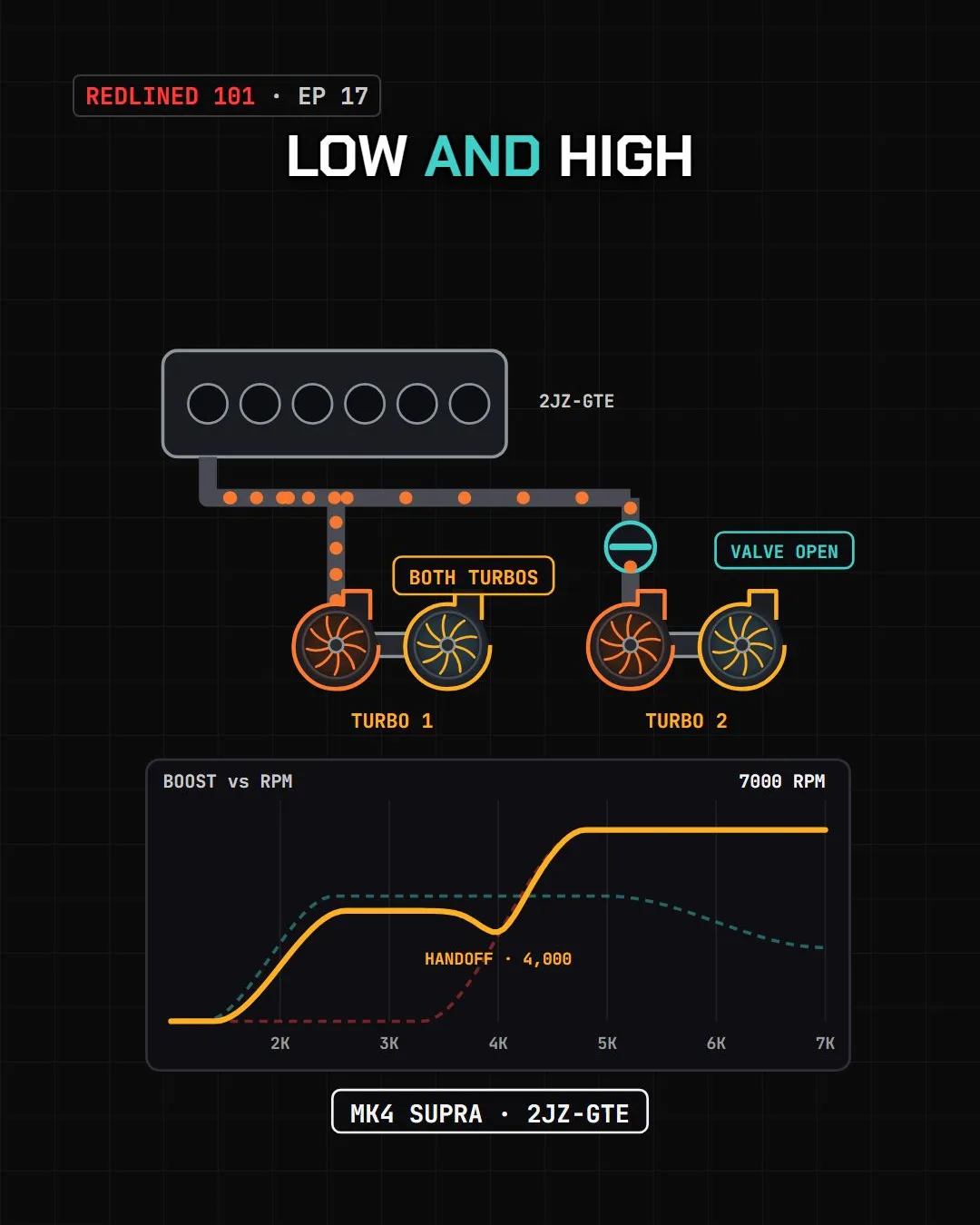
Small Turbo vs Big Turbo vs Twin Turbo: Lag, Spool and Sequential Twins (Redlined 101, Ep 17)
Why a small turbo boosts instantly but runs out of breath, why a big turbo lags then pulls hardest, how sequential twins like the MK4 Supra's 2JZ get both, and why so many tuners swap to one big single.
Intake vs Exhaust vs Tune: Which Car Mods Actually Add Horsepower? (Redlined 101, Ep 11)
What a cold air intake, a cat-back exhaust and an ECU tune really do on the dyno, why builds go in stages, how tires and weight make a car faster for free, and the catch that comes with more power.
Turbo vs Supercharger: What's the Difference and Which Is Better? (Redlined 101, Ep 07)
Turbo vs supercharger: what boost is, the one thing that separates them (exhaust or a belt off the crank), why that changes how each one feels and sounds, and which one fits a daily driver or an instant-punch build.