Intake vs Exhaust vs Tune: Which Car Mods Actually Add Horsepower? (Redlined 101, Ep 11)
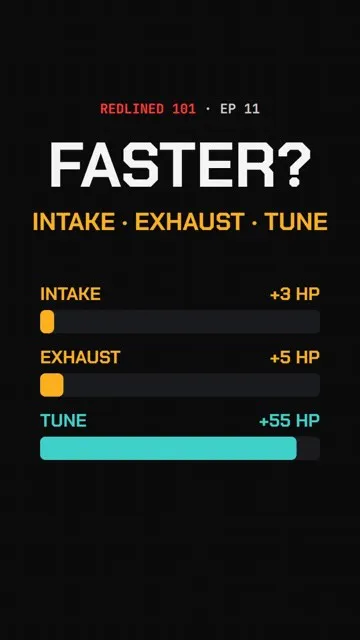
Intake, exhaust, or tune? Same car, three mods: two mostly add noise, one adds real power. Here's the ranking, and why the loudest car at the meet usually isn't the fastest.
 Watch on Instagram
The intake: mostly sound
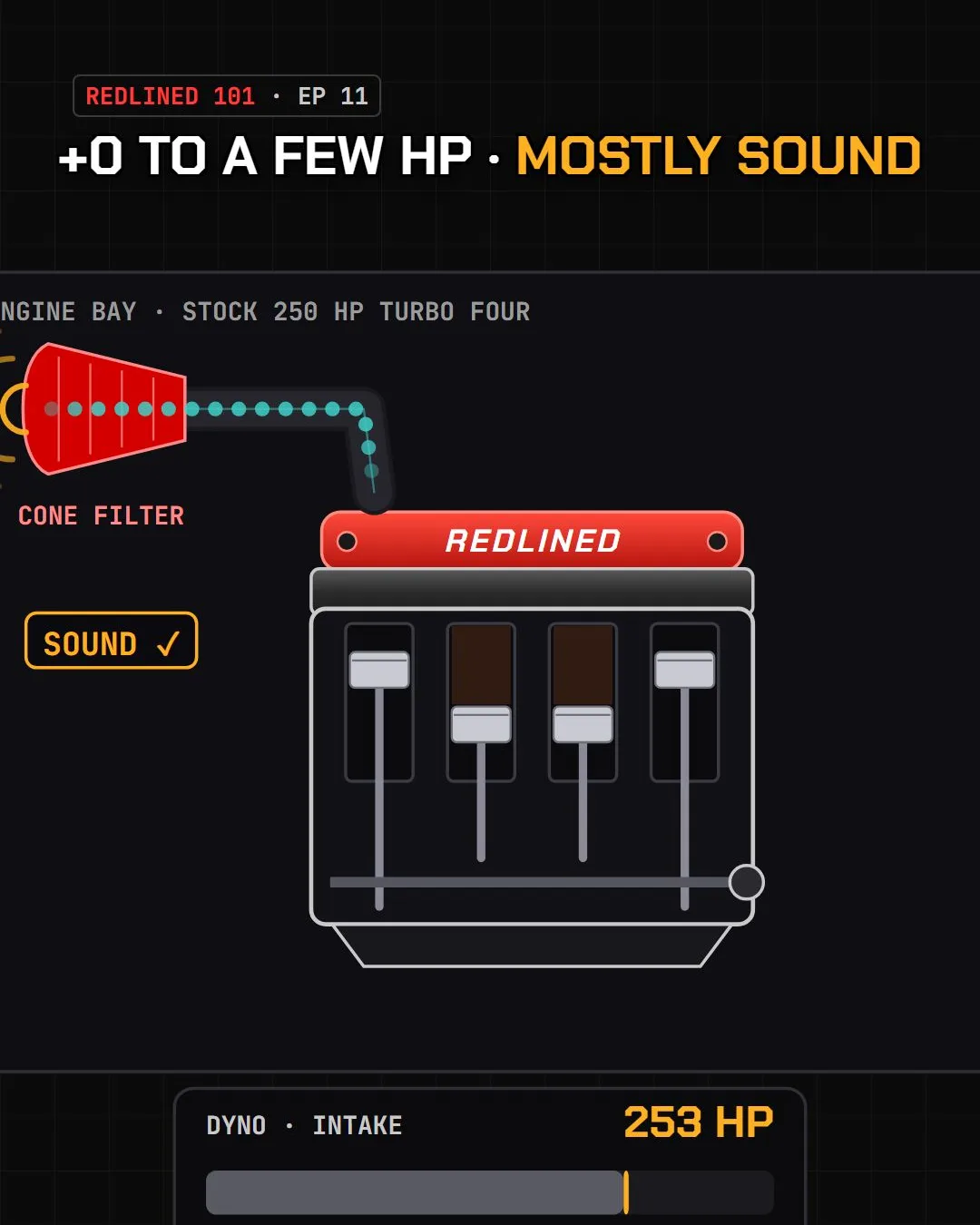
A cold air intake swaps the factory airbox for an open cone filter, usually on a smoother pipe. It looks like it should flow more air, and it does. The problem is that a stock engine already gets all the air it can use. The factory airbox was sized for the factory engine, so it isn't what's holding it back.
So on the dyno, a cold air intake on a stock engine is worth a few horsepower, sometimes zero. What you really bought is the sound: the induction noise you hear when you open the throttle.
That's not a reason never to fit one. It's a reason to know what you're paying for.
The exhaust: mostly louder
Next, the exhaust. A cat-back replaces everything after the catalytic converter: the pipes, the resonator and the muffler, all the way to the tips. You get bigger pipes and freer flow.
And on a stock engine, the result is the same story again: only a few horsepower. Mostly, a cat-back makes the car louder. (The different ways to make it louder, and what each one does, are in our post on muffler, resonator and straight-pipe deletes.)
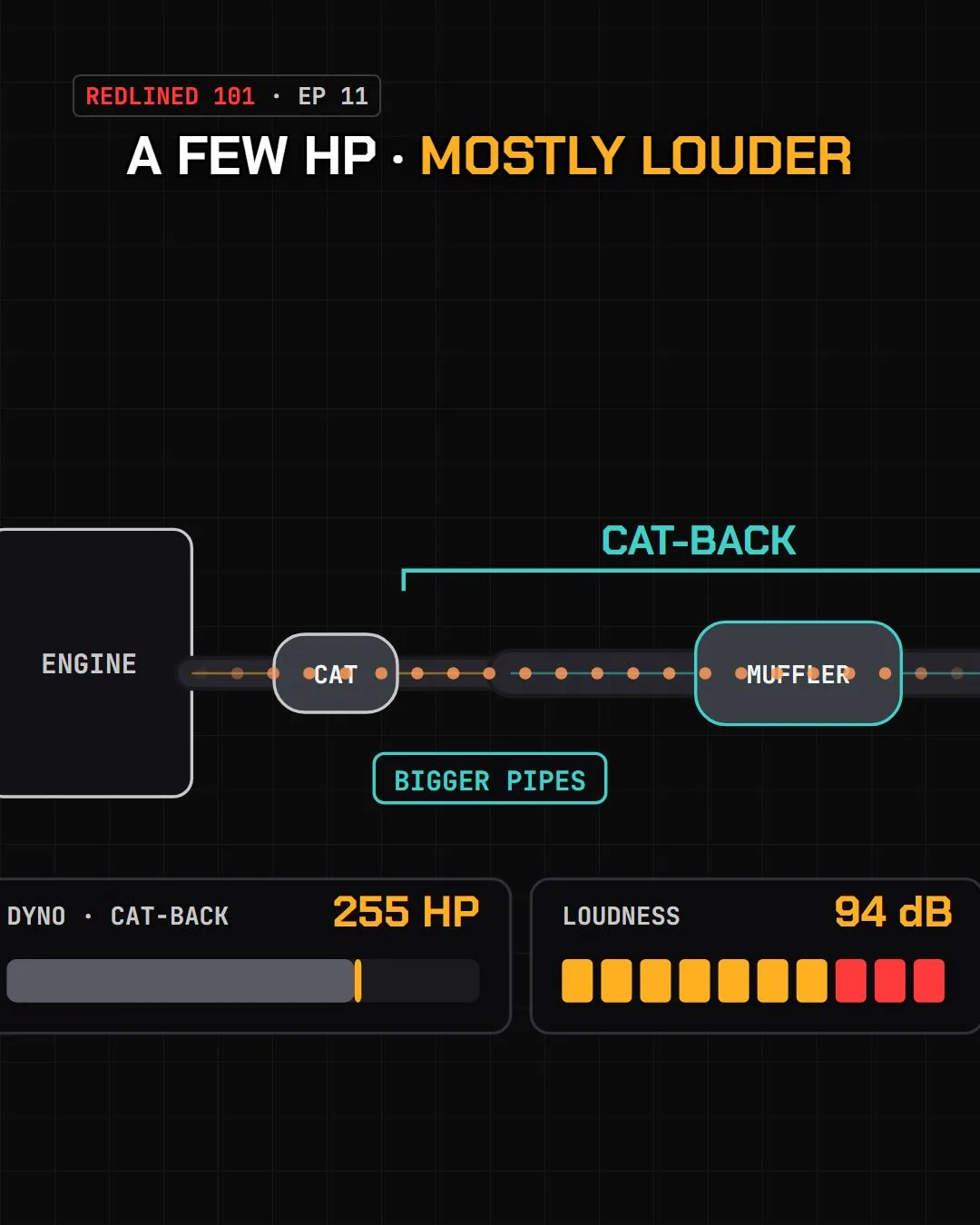
The tune: real power
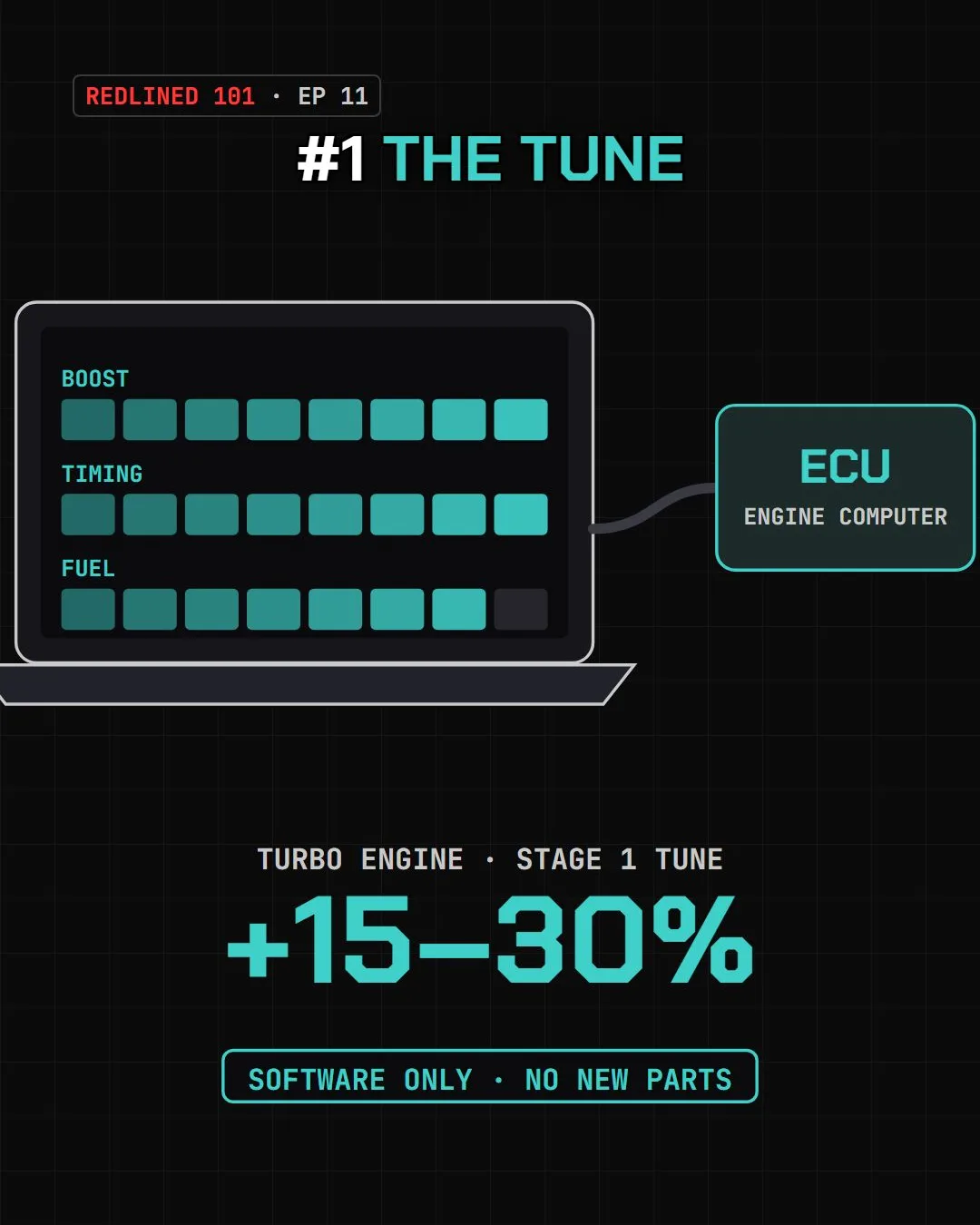
Then the tune. A tune rewrites the engine computer, the ECU that decides how the engine runs. A tune changes three things:
- More boost: the turbo is allowed to push more air into the engine.
- More timing: the spark fires at a point that makes more power from each combustion.
- More fuel: to match the extra air, so the mixture stays safe.
On a turbo engine, that's often fifteen to thirty percent more power, from software alone. No new parts. Turbo engines respond so well because the turbo can simply be told to make more boost. (If you're not sure how a turbo makes boost in the first place, start with turbo vs supercharger.)
So: would you rather have the sound, or the speed?
Why builds go in stages
This is why builds go in stages, and why the order matters.
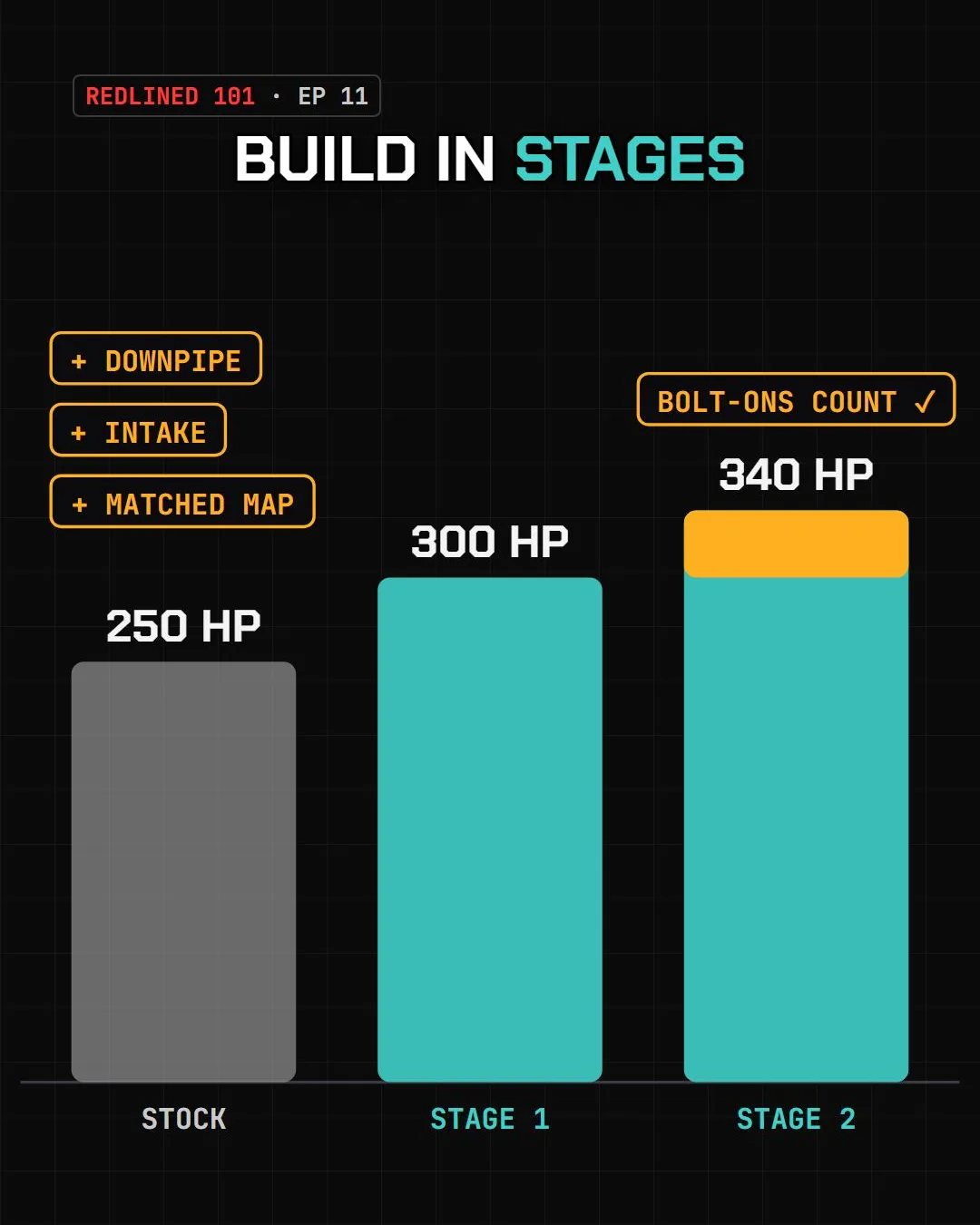
- Stage one is the tune. Software only, on the otherwise stock car. This is where the big, cheap gain is.
- Stage two adds hardware, typically a downpipe (the pipe that carries exhaust away from the turbo) and an intake, together with a map built for them.
Now the bolt-ons finally pay off. On a stock tune, the engine computer doesn't ask for more air, so parts that flow more air have nothing to do. With a map written to use them, the engine can actually take advantage of the freer flow. Parts and tune work together; on their own, the parts are mostly noise.
Faster isn't only power
And faster isn't only about the engine.
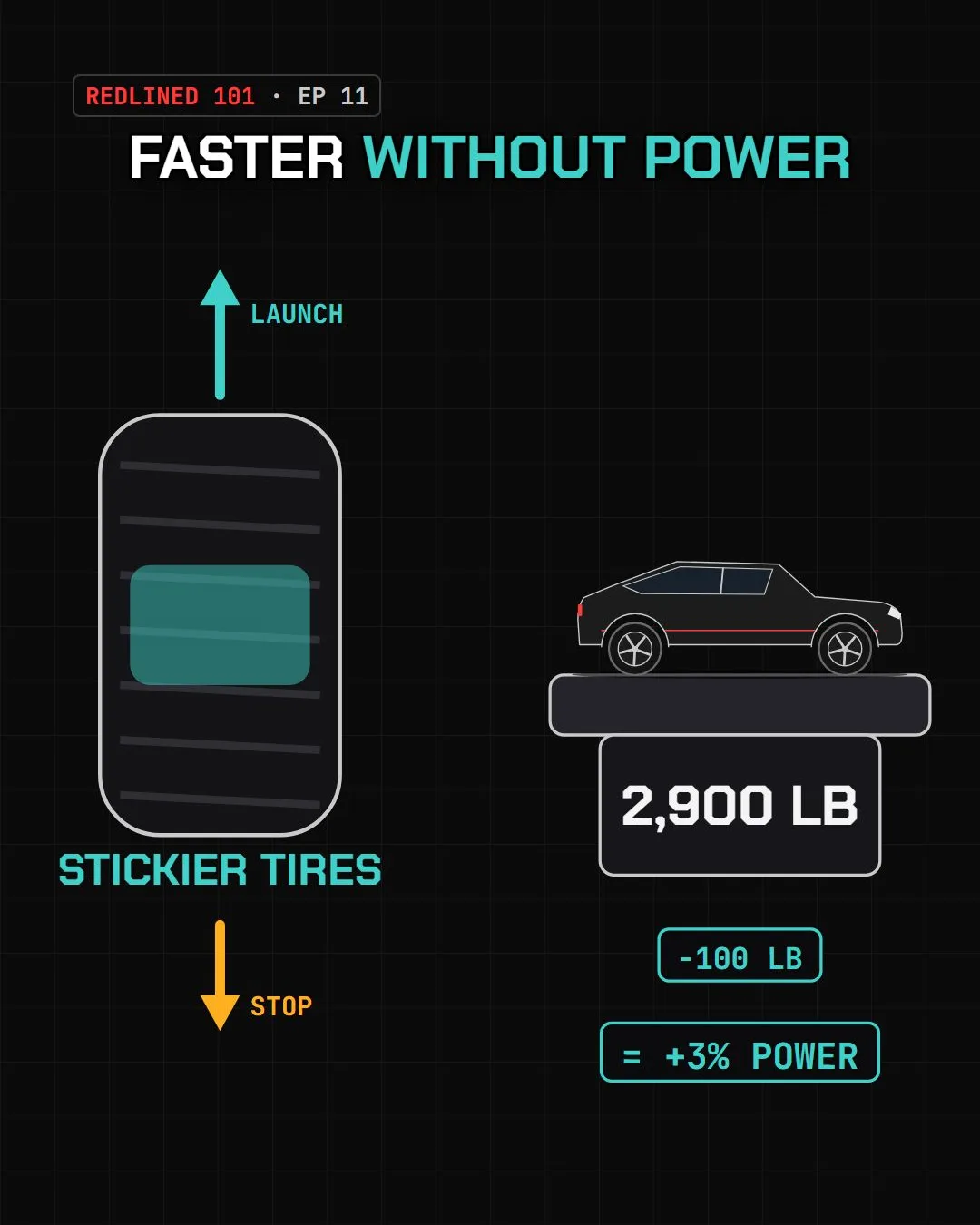
- Stickier tires launch harder and stop harder. More grip means you can use more of the power you already have, and brake later. (Our tire guide covers tire types.)
- Weight is free speed in the other direction. What matters for acceleration is power-to-weight: how much power each pound of car gets. Take a hundred pounds off a three thousand pound car, and it's like three percent more power, without touching the engine.
Neither of those shows up on a dyno sheet, but both show up on a stopwatch.
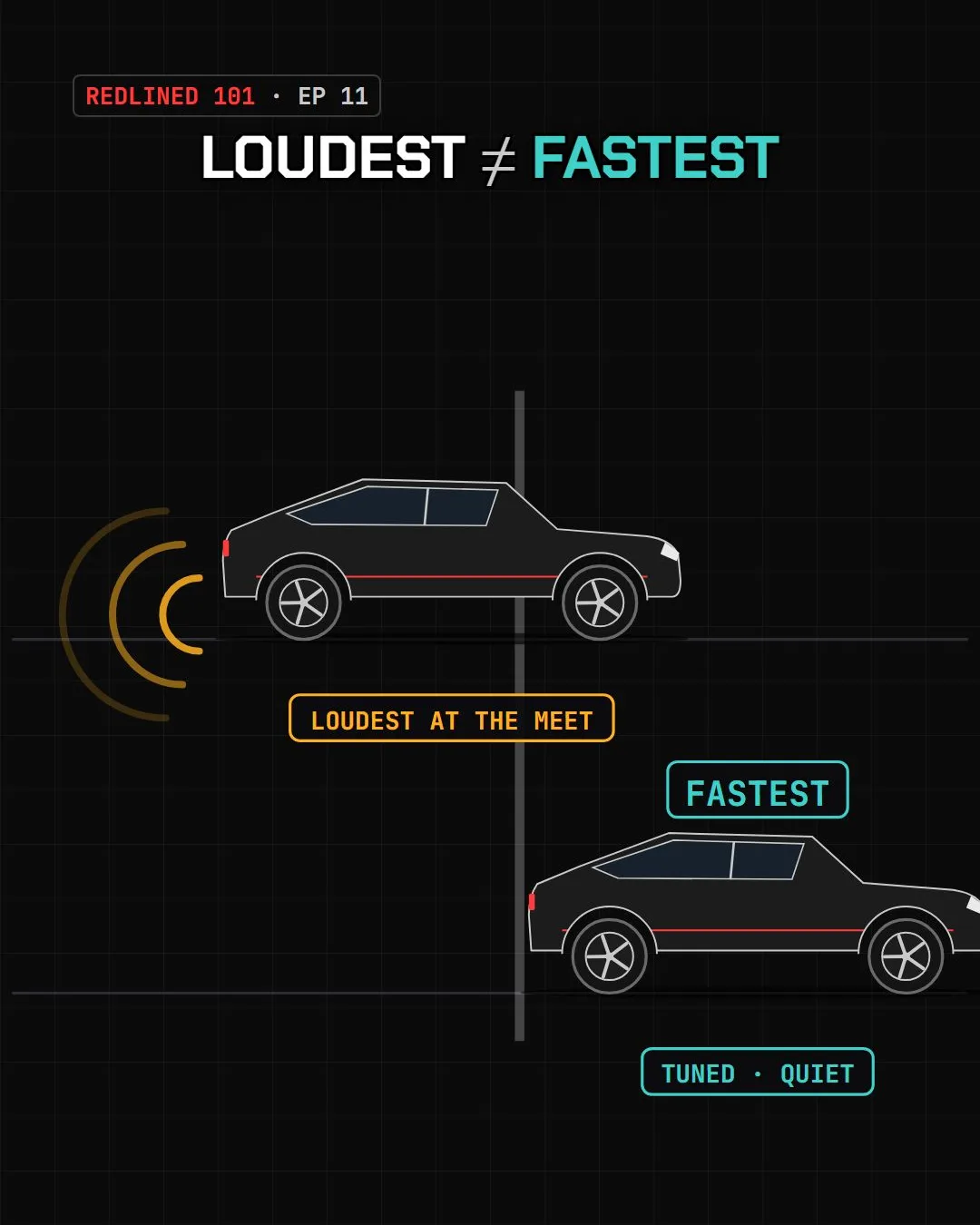
You know the guy with the loudest car at the meet? Now you know why it isn't the fastest. Intake and exhaust on a stock engine change the sound far more than the speed. The quiet car with a tune can be the one that walks away.
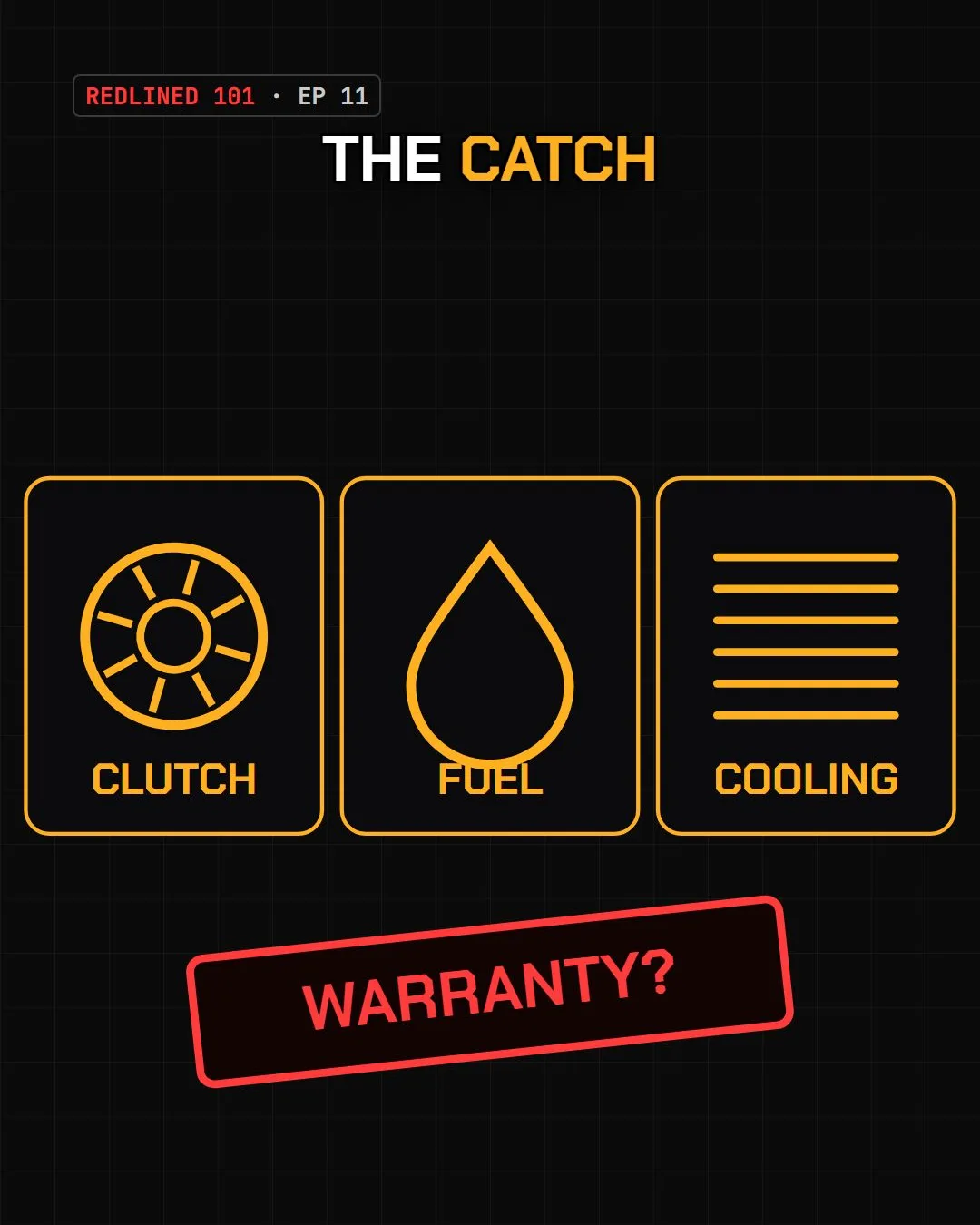
The catch: more power, more stress
More power isn't free. Every part of the car that handles that power has to keep up:
- The clutch has to hold the extra torque without slipping.
- The fuel system has to supply the extra fuel the tune asks for.
- The cooling has to carry away the extra heat.
And a tune changes how the engine runs, so it can void your warranty. Check before you flash the engine computer, and plan the supporting parts along with the power.
So should you skip the intake and exhaust?
Not necessarily. Just buy them for the right reason.
- If you want the sound, an intake and a cat-back give you exactly that, and there's nothing wrong with a car that sounds the way you like.
- If you want the speed, start with the tune, then add parts with a map built for them, so each one actually does something.
- If you want both, that's what stage two is: the parts for the flow, and the map that turns them into power.
What doesn't work is bolting on an intake and an exhaust and expecting the car to feel transformed. On a stock engine, it mostly won't.
Recap: the ranking
- The tune: real power, often fifteen to thirty percent on a turbo engine.
- Tires and weight: faster launches, stops and acceleration without more power.
- Intake and exhaust on a stock engine: a few horsepower, mostly sound. They pay off once a map is built for them.
- Then budget for the catch: clutch, fuel and cooling, and know your warranty.
Next episode: you lowered it, so why does it still lean?
Frequently asked questions
Does a cold air intake add horsepower?
On a stock engine, usually only a few horsepower, sometimes none, because the factory airbox already supplies all the air the stock engine can use. The biggest change is the intake sound. It helps more once a tune asks the engine for more air.
How much horsepower does a cat-back exhaust add?
On a stock engine, a few horsepower. A cat-back replaces the pipes, resonator and muffler after the catalytic converter, so the main difference is that the car gets louder.
What is the best first mod for horsepower?
On a turbo engine, the tune. Rewriting the engine computer for more boost, timing and fuel is often worth fifteen to thirty percent more power with no new parts. That is why it is usually stage one.
What is the difference between stage 1 and stage 2?
Stage one is a tune on an otherwise stock car. Stage two adds hardware, typically a downpipe and an intake, together with a map written for those parts, so the bolt-ons finally make real power.
Will a tune void my warranty?
It can. A tune changes how the engine runs, and more power puts more stress on the clutch, fuel system and cooling, so check your warranty terms before you flash the engine computer.
Official merch
Shop the club merch
3 Pedals 0 F*cks Manual Transmission on a Unisex Oversized Heavyweight T-Shirt, black
Unisex Oversized Heavyweight T-Shirt
from $38.49
Pork Roll, Egg, Cheese & Boost – Jersey Breakfast on a Unisex Oversized Heavyweight T-Shirt, black
Unisex Oversized Heavyweight T-Shirt
from $32.99
My Toxic Trait: One More Project Car on a Unisex Oversized Heavyweight T-Shirt, black
Unisex Oversized Heavyweight T-Shirt
from $32.99
+1000 Aura – Exhaust Flames Car Shirt on a Unisex Oversized Heavyweight T-Shirt, white
Unisex Oversized Heavyweight T-Shirt
from $32.99
Unc Can Still Heel-Toe – Manual Driver Shirt on a Unisex Oversized Heavyweight T-Shirt, black
Unisex Oversized Heavyweight T-Shirt
from $32.99
But Officer The Sign Said Slide It on a Unisex Oversized Heavyweight T-Shirt, white
Unisex Oversized Heavyweight T-Shirt
from $32.99
Redlined Car Club Est. 2023 Brushmark on a Unisex Oversized Heavyweight T-Shirt, black
Unisex Oversized Heavyweight T-Shirt
from $32.99
Car Guy By Definition on a Unisex Oversized Heavyweight T-Shirt, black
Unisex Oversized Heavyweight T-Shirt
from $32.99
Tokyo Retro Vibes on a Unisex Oversized Heavyweight T-Shirt, black
Unisex Oversized Heavyweight T-Shirt
from $32.99
BOSOZOKU CARSPANK ボ — ソ — 族 — 車 の ス パ ン ク on a Unisex Oversized Heavyweight T-Shirt, black
Unisex Oversized Heavyweight T-Shirt
from $32.99
Coilovers > 401K – Funny Car Guy on a Unisex Oversized Heavyweight T-Shirt, black
Unisex Oversized Heavyweight T-Shirt
from $32.99
Can't Pump Gas, Can Swap A Motor – NJ Car Guy on a Unisex Oversized Heavyweight T-Shirt, black
Unisex Oversized Heavyweight T-Shirt
from $32.99





More from the club
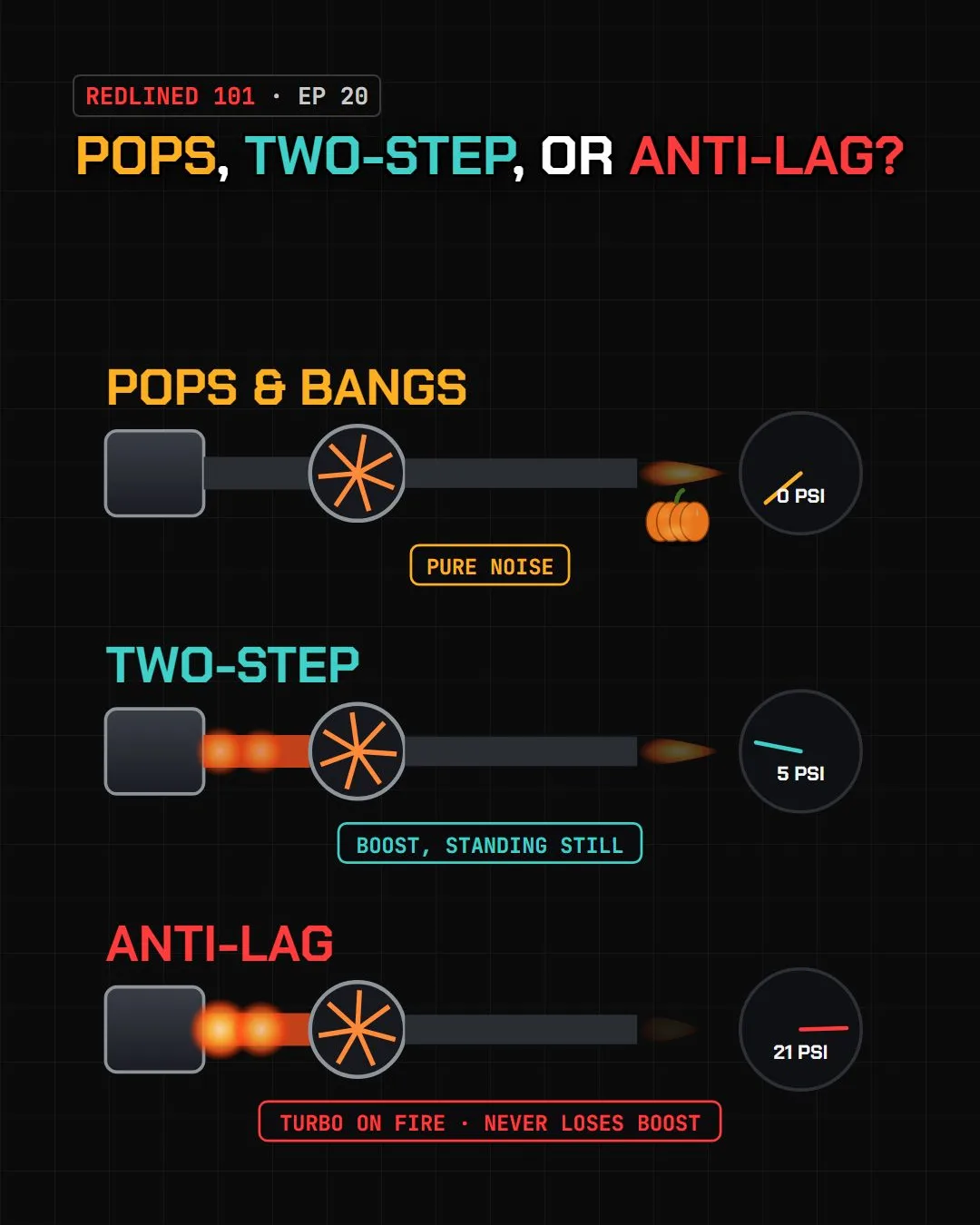
Anti-Lag vs Two-Step vs Pops and Bangs: What's the Difference? (Redlined 101, Ep 20)
Why a pops-and-bangs tune is pure noise with zero boost, how a two-step launch limiter builds boost standing still, how real rally anti-lag keeps the turbo spinning off the gas, and what all that fire costs.
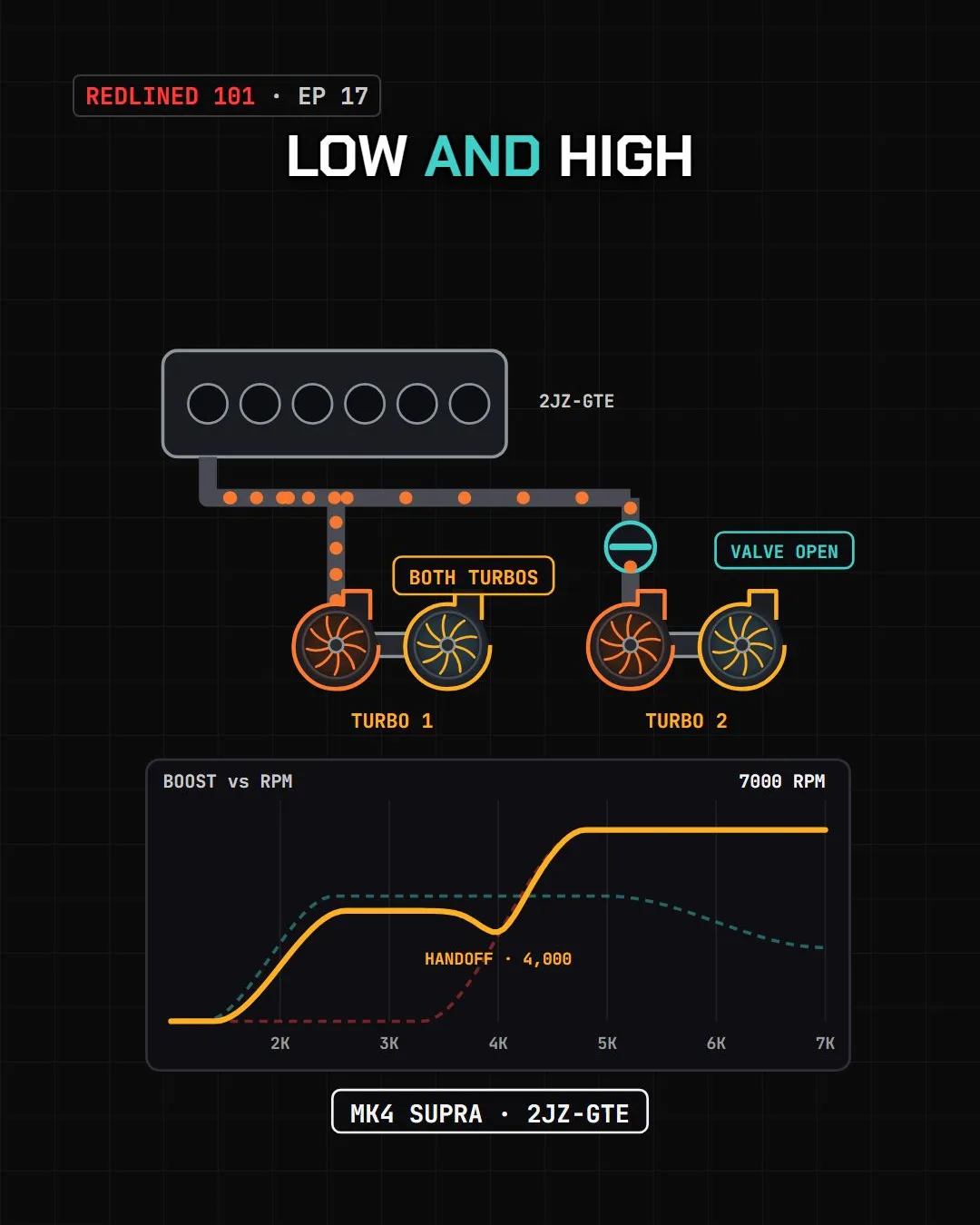
Small Turbo vs Big Turbo vs Twin Turbo: Lag, Spool and Sequential Twins (Redlined 101, Ep 17)
Why a small turbo boosts instantly but runs out of breath, why a big turbo lags then pulls hardest, how sequential twins like the MK4 Supra's 2JZ get both, and why so many tuners swap to one big single.
Blow-Off Valve vs Turbo Flutter: Pssh or Stu-tu-tu? (Redlined 101, Ep 13)
Why a turbo car makes a sound when you lift, how a blow-off valve and a diverter valve vent boost, what compressor surge (turbo flutter) is, what it costs the turbo, and why a loud blow-off valve can make a car stumble.