Wing vs Spoiler: What's the Difference, and Does a Wing Actually Work? (Redlined 101, Ep 21)
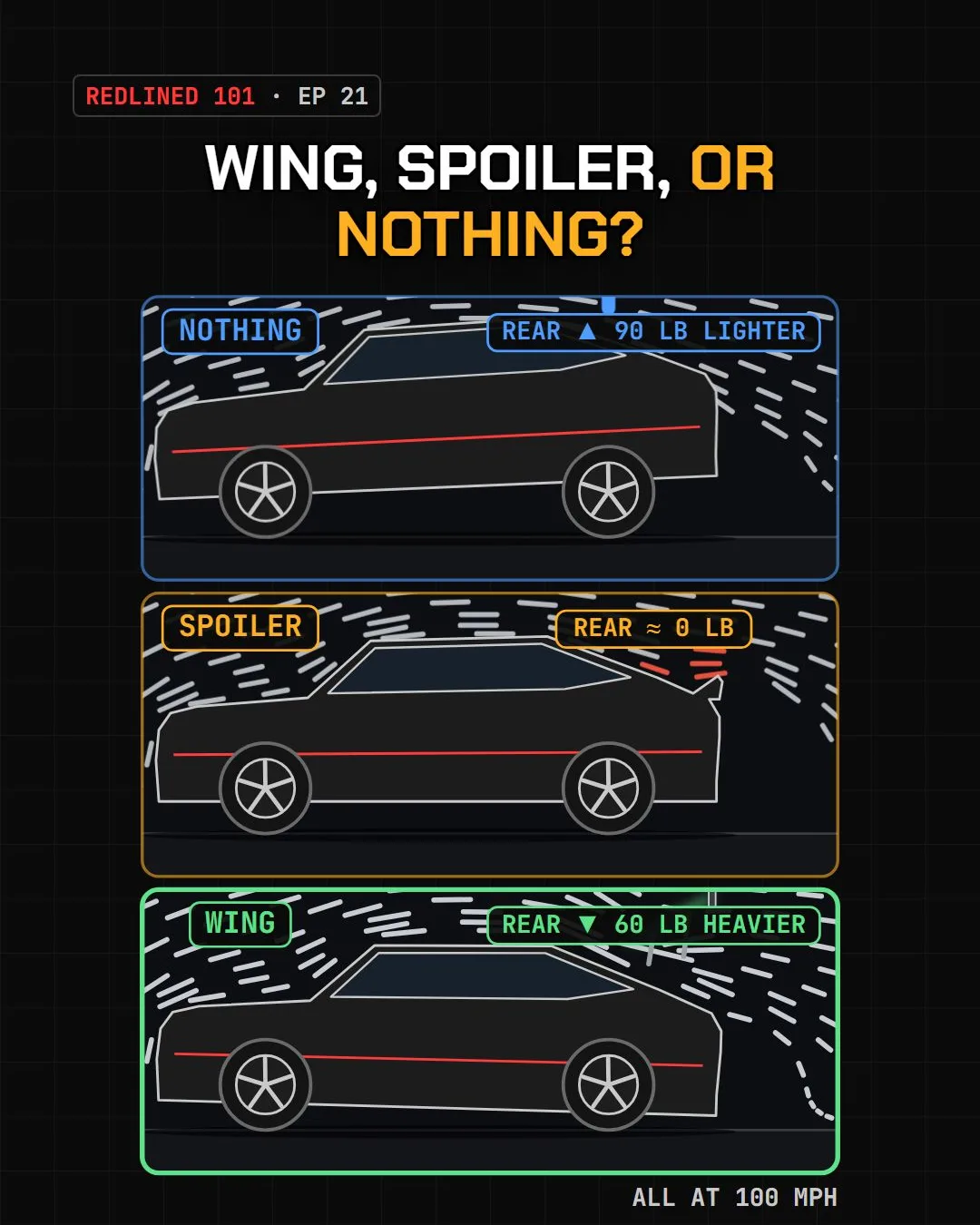
Wing, spoiler, or nothing? Same car, a hundred miles an hour. One gets lighter, one stays planted, and one gets shoved into the road. But crank that wing too far, and it quits. Here's what each one actually does to the back of your car, and why the most aggressive-looking setting is the worst one.
 Watch on Instagram
Nothing: your roof is already a wing
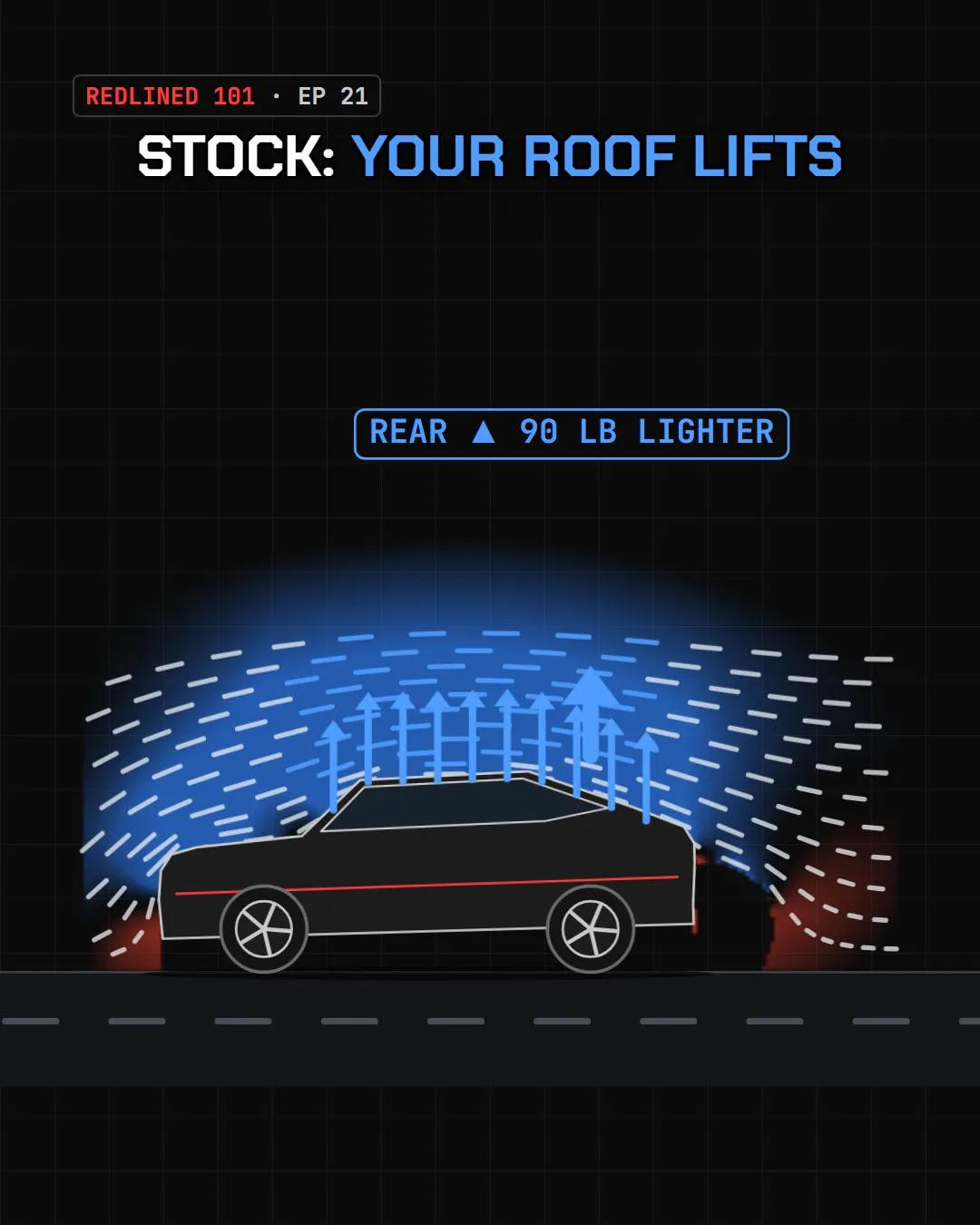
The lighter car is the stock one, with a clean trunk. That surprises people, because nothing is bolted on to make it lighter. The culprit is the roof.
Look at a car from the side. The roof is curved on top and the underside of the car is roughly flat. That's the shape of an airplane wing, the right way up. Air bending over the curved top speeds up, and fast air presses less. It's the same reason a shower curtain sucks in at you: the moving air from the shower is at lower pressure than the still air outside, so the curtain gets pushed toward it.
So the roof makes lift. Not much, but enough to matter: at 100 mph the rear of this car is about ninety pounds lighter than it is parked.
Why care? Your tires grip harder the harder they're pressed into the road. Take weight off the rear and the rear tires have less to work with, right when you're going fastest. That's the floaty, nervous feeling some cars get at highway speed and above.
The spoiler: a dam
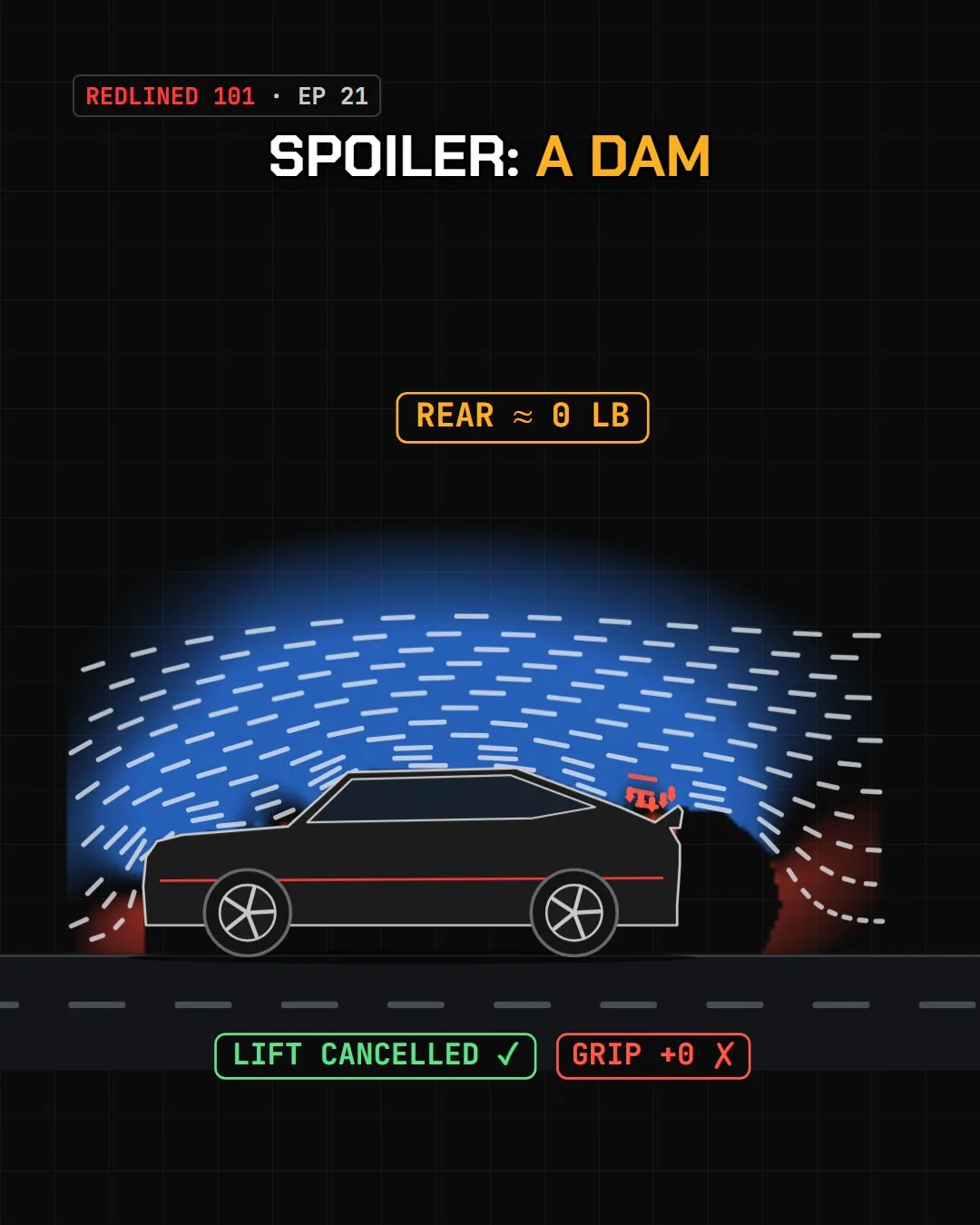
The planted car has a spoiler. A spoiler is a dam: a lip across the back of the trunk that blocks the air flowing off the roof. The air piles up against it, and that slow, piled-up air presses down on the trunk lid.
That pressure cancels the lift. The rear goes from ninety pounds lighter back to about where it started. The name says it all: it spoils the airflow that was lifting the car.
What it doesn't do is add grip. A spoiler gets you back to zero; it doesn't push past it. It kills the float, and that's its whole job.
The question: flat or cranked?
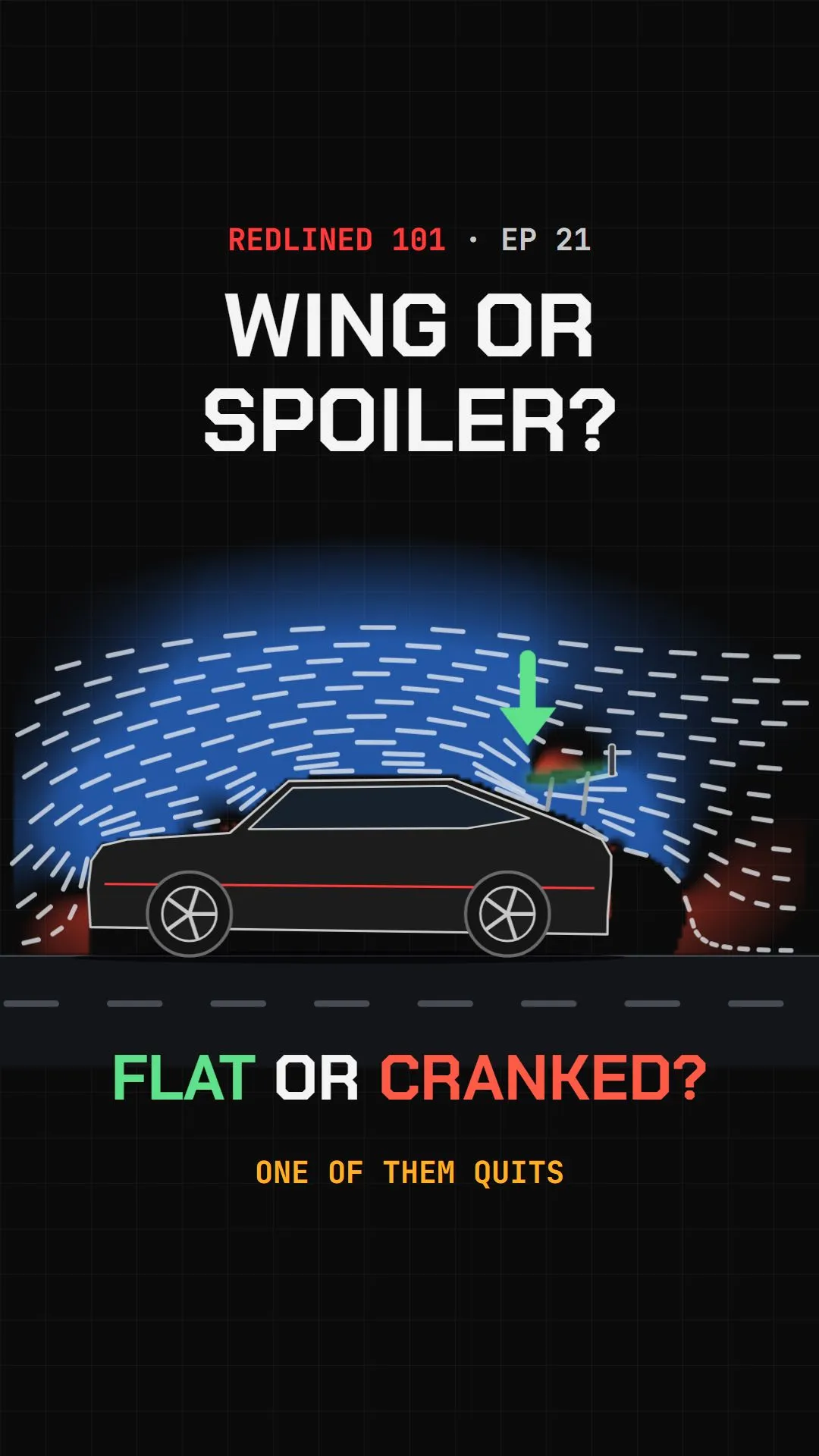
So here's the real debate. What grips harder: a wing set almost flat, or one cranked all the way up? Most people guess cranked, because more angle looks like more wing. Hold that thought.
The wing: an airplane wing, flipped upside down
The car getting shoved into the road has a wing. A wing is an airplane wing flipped upside down, held up on stands so it sits in the air coming off the roof instead of on the trunk. Zoom in and three things are happening at once:
- On top, the air hits the wing and slows down. Slow air means high pressure, pushing down.
- Underneath, the air speeds up around the curve. Fast air means low pressure, pulling down.
- Behind, the wing throws the air up. Push air up, and the air pushes the wing, and the car, down.
That push is downforce. At 100 mph it takes the rear of the car from ninety pounds lighter to sixty pounds heavier. That's a swing of about 150 pounds, all of it pressing the rear tires into the road, which means more grip in fast corners and under braking.
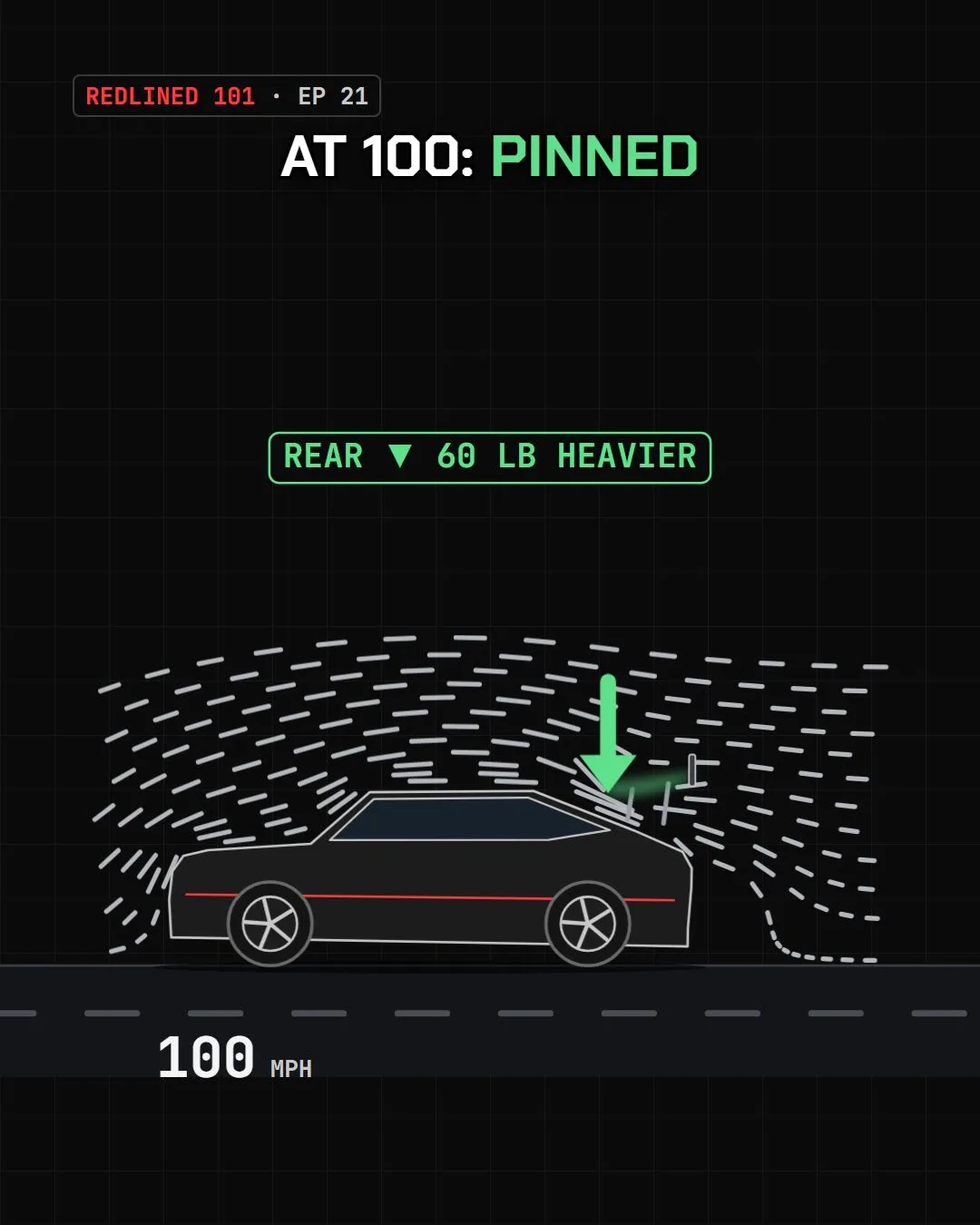
That 150 pounds goes through the wing's stands into whatever they're bolted to, which is why a proper wing needs solid mounts.
One more thing worth knowing: a wing adds grip only at the back, so at speed the car's balance shifts rearward: more stable, and less willing to turn in, because the front hasn't gained anything. That's why race cars with big wings also run front splitters.
The stall: why cranked quits
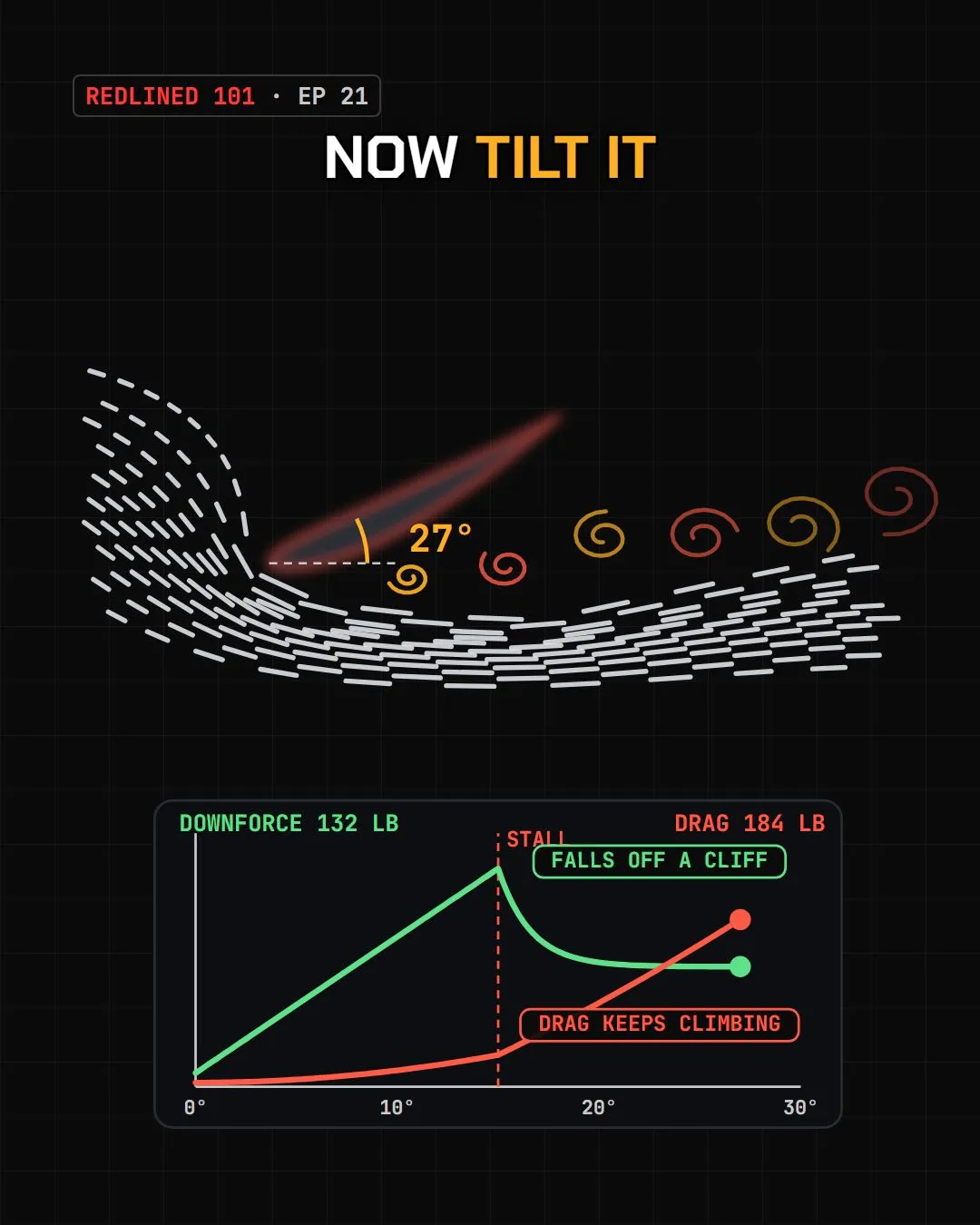
Now tilt the wing. That tilt against the oncoming air is its angle of attack. More angle, more push, up to about fifteen degrees.
Past that, the air underneath can't follow the curve any more. It tears off the surface and tumbles in a messy wake. That's a stall, exactly what happens when a plane climbs too steep. Two things happen at once:
- The downforce falls off a cliff.
- The drag keeps climbing.
Drag is the force pushing back against the car as it moves through the air. It costs you speed, acceleration and fuel. A stalled wing gives you all of the drag and little of the push.
Every meet has one: the wing cranked all the way up, because it looks aggressive. That's not a wing any more. It's a parachute.
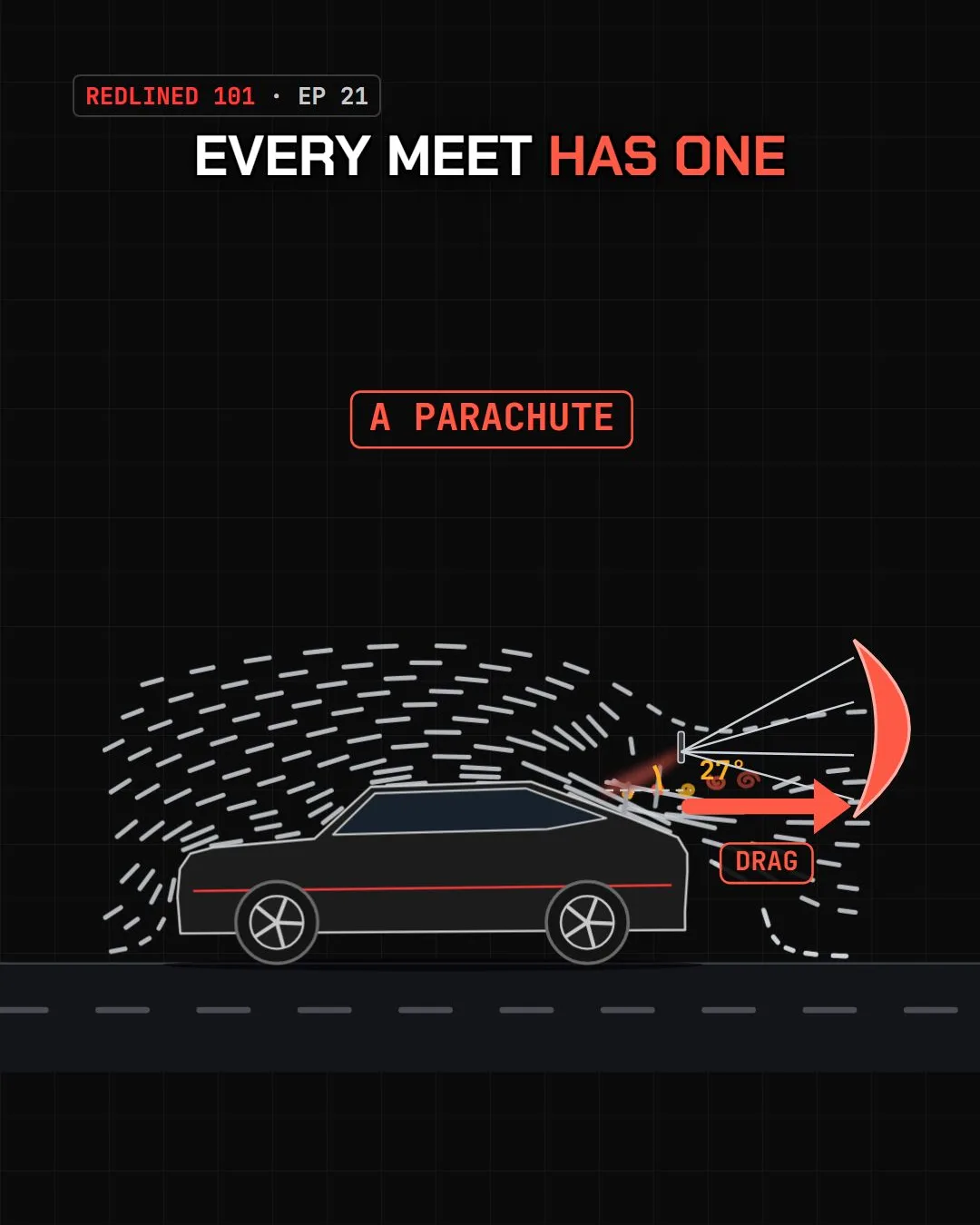
So the answer to the question: the flatter wing grips harder. Not dead flat, but well short of cranked.
It's all speed: twice as fast, four times the push
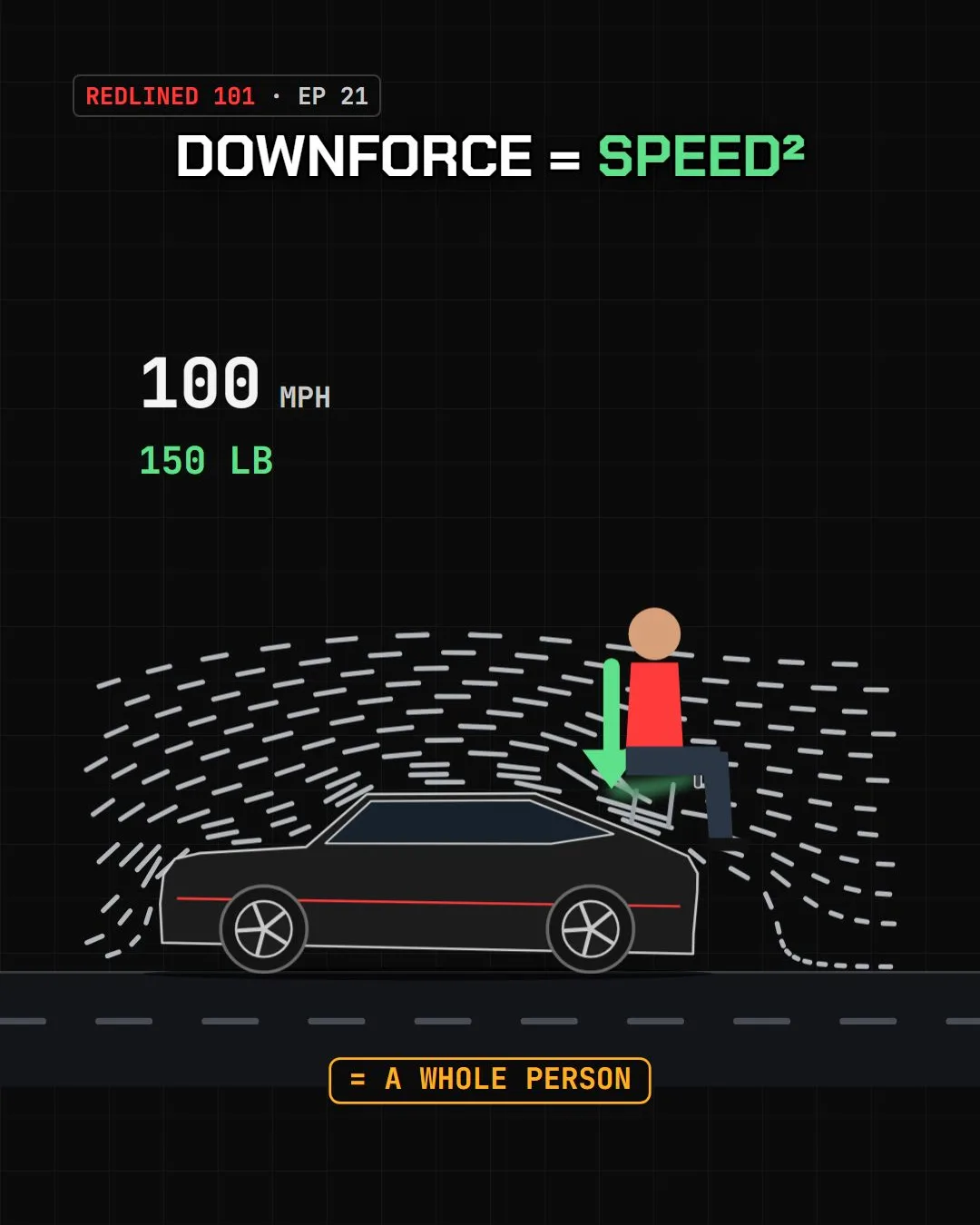
Here's the part that decides whether a wing does anything on your car. Downforce, like lift and drag, grows with the square of speed. Twice as fast, four times the push.
Put the wing's push in things you could set on your trunk:
- At 30 mph: a bowling ball. At under a third of the speed, you get under a tenth of the push: about 14 pounds.
- At 60 mph: a sack of dog food, about 54 pounds.
- At 100 mph: a whole person, the full 150 pounds or so.
The lift from a stock roof scales the same way, which is why none of this matters much around town. At 30 mph nothing is lifting your car in any way you'd notice, and nothing on the trunk is pushing it down either.
The verdict
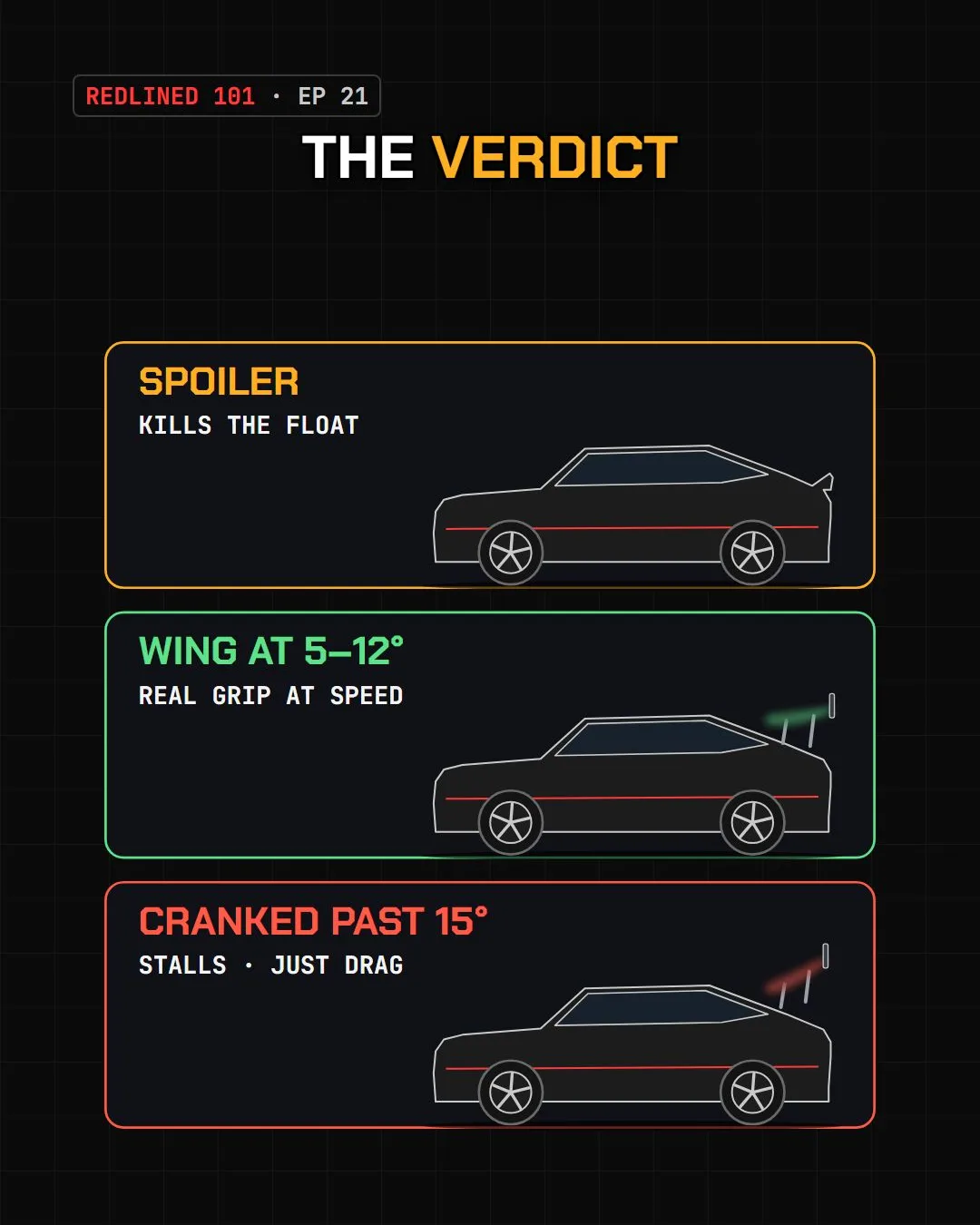
- Spoiler: kills the float. It cancels the lift from the roof and stops the rear going light at speed. It adds no grip.
- Wing: real grip, at real speed and the right angle. Set below the stall, it presses the car down.
- Wing cranked past the stall: just drag. A parachute that looks fast.
So what's on yours: a wing, a spoiler, or a clean trunk? Any of the three is a fine answer, as long as you know which job it's doing.
Recap
- Stock: the curved roof makes lift; the rear is about 90 lb lighter at 100 mph.
- Spoiler: a dam that cancels the lift. Back to zero, no extra grip.
- Wing: an upside-down airplane wing. From 90 lb lighter to about 60 lb heavier at 100 mph.
- Angle: more push up to about 15 degrees, then it stalls into pure drag.
- Speed: twice as fast, four times the push. A wing earns its keep at real speed.
Next episode: muffler delete vs resonator delete vs straight pipe.
Frequently asked questions
What is the difference between a wing and a spoiler?
A spoiler sits on the trunk and blocks the air like a dam, which cancels the lift a car makes at speed but adds no grip. A wing is an upside-down airplane wing on stands; it actually pushes the car down, which adds grip at speed.
Does a spoiler add downforce?
Not in the sense people mean. A spoiler cancels the lift from the curved roof, taking the rear from lighter back to roughly neutral. It stops the rear going floaty at speed, but it does not push the car down past that.
Does a wing work at street speeds?
Barely. Downforce grows with the square of speed, so a wing that pushes like a whole person at 100 mph pushes about like a bowling ball at 30. It does real work at real speed.
What angle should a rear wing be set at?
Below the stall. More angle adds push up to about 15 degrees; past that the air tears off the underside and the wing stalls, losing downforce while drag keeps climbing. The episode's verdict puts the useful range at about 5 to 12 degrees.
Is a wing cranked all the way up better?
No. Cranked past the stall, a wing makes less downforce and much more drag. It looks aggressive, but it works like a parachute.
Official merch
Shop the club merch
3 Pedals 0 F*cks Manual Transmission on a Unisex Oversized Heavyweight T-Shirt, black
Unisex Oversized Heavyweight T-Shirt
from $38.49
Pork Roll, Egg, Cheese & Boost – Jersey Breakfast on a Unisex Oversized Heavyweight T-Shirt, black
Unisex Oversized Heavyweight T-Shirt
from $32.99
My Toxic Trait: One More Project Car on a Unisex Oversized Heavyweight T-Shirt, black
Unisex Oversized Heavyweight T-Shirt
from $32.99
+1000 Aura – Exhaust Flames Car Shirt on a Unisex Oversized Heavyweight T-Shirt, white
Unisex Oversized Heavyweight T-Shirt
from $32.99
Unc Can Still Heel-Toe – Manual Driver Shirt on a Unisex Oversized Heavyweight T-Shirt, black
Unisex Oversized Heavyweight T-Shirt
from $32.99
But Officer The Sign Said Slide It on a Unisex Oversized Heavyweight T-Shirt, white
Unisex Oversized Heavyweight T-Shirt
from $32.99
Redlined Car Club Est. 2023 Brushmark on a Unisex Oversized Heavyweight T-Shirt, black
Unisex Oversized Heavyweight T-Shirt
from $32.99
Car Guy By Definition on a Unisex Oversized Heavyweight T-Shirt, black
Unisex Oversized Heavyweight T-Shirt
from $32.99
Tokyo Retro Vibes on a Unisex Oversized Heavyweight T-Shirt, black
Unisex Oversized Heavyweight T-Shirt
from $32.99
BOSOZOKU CARSPANK ボ — ソ — 族 — 車 の ス パ ン ク on a Unisex Oversized Heavyweight T-Shirt, black
Unisex Oversized Heavyweight T-Shirt
from $32.99
Coilovers > 401K – Funny Car Guy on a Unisex Oversized Heavyweight T-Shirt, black
Unisex Oversized Heavyweight T-Shirt
from $32.99
Can't Pump Gas, Can Swap A Motor – NJ Car Guy on a Unisex Oversized Heavyweight T-Shirt, black
Unisex Oversized Heavyweight T-Shirt
from $32.99




More from the club
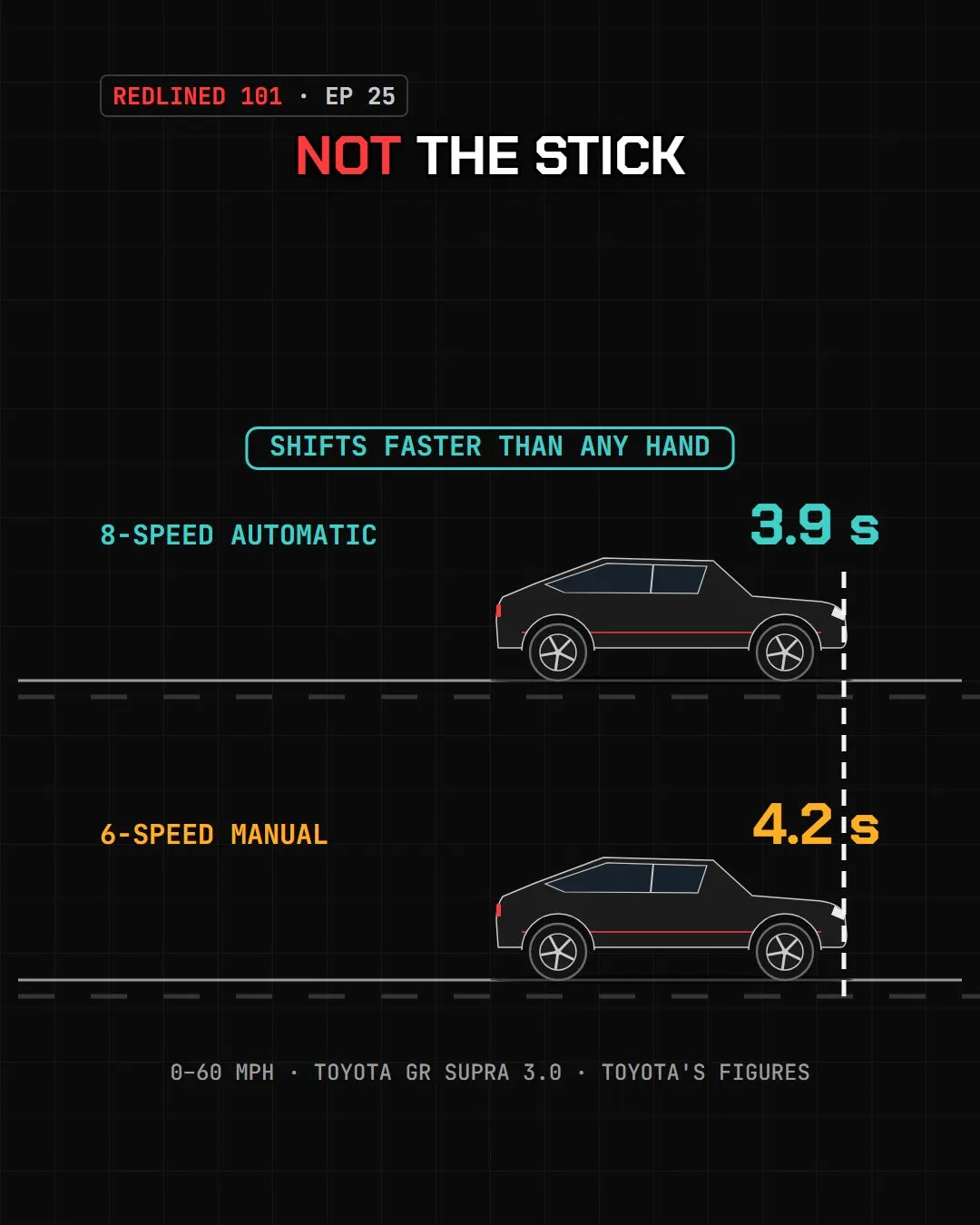
Manual vs Automatic vs CVT vs Dual-Clutch: Which Is Fastest? (Redlined 101, Ep 25)
How a manual, a torque-converter automatic, a CVT and a dual-clutch each work, which one gets to 60 first (Toyota's Supra figures), the catch with each, and which to pick for speed, fun, towing or fuel.
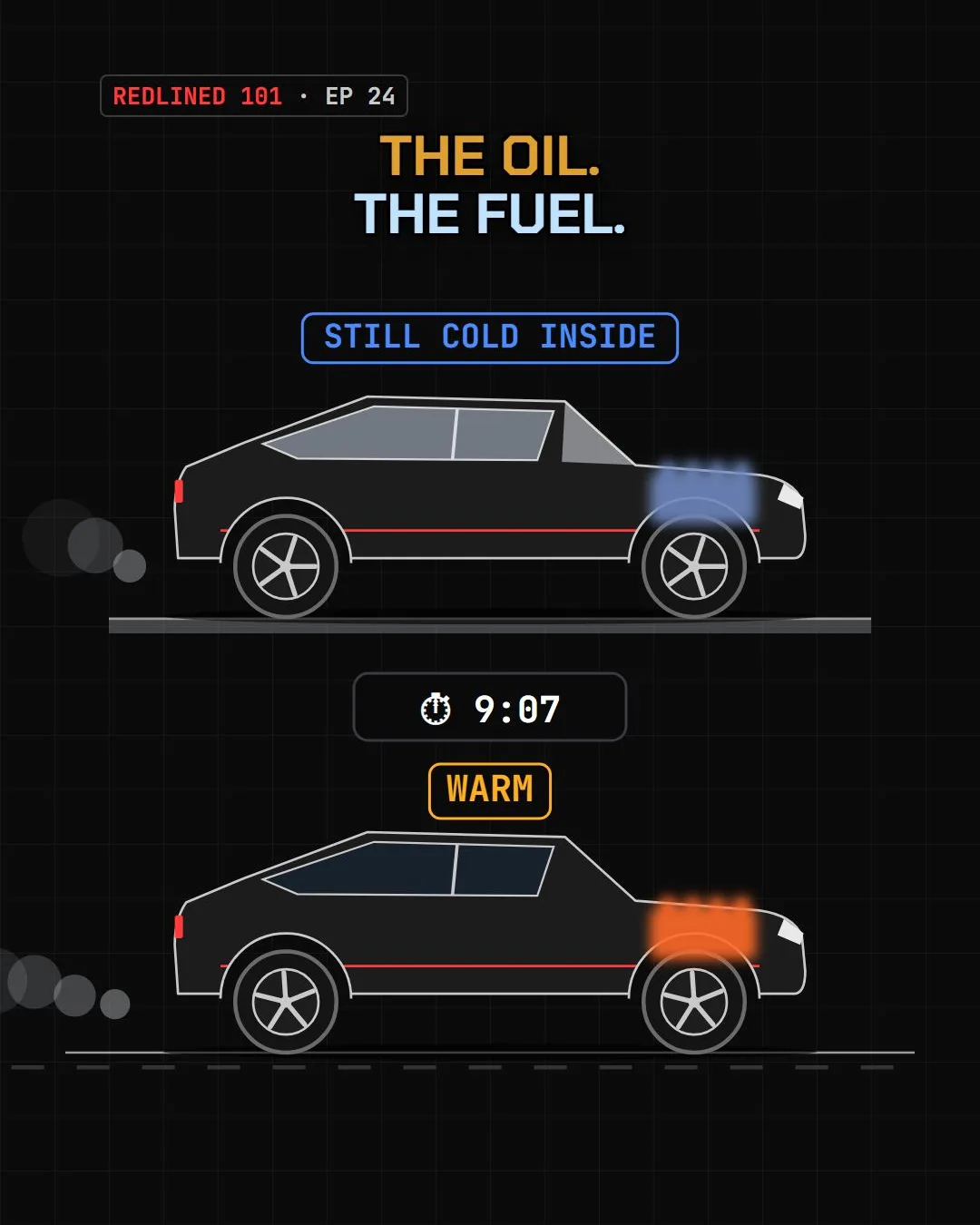
Should You Warm Up Your Car in Winter? Idling vs Driving Off (Redlined 101, Ep 24)
How long to warm up your car on a cold morning, why driving gently warms the engine faster than idling, how a cold idle washes fuel into your oil, why built engines need longer, and what the W in 5W-30 means.
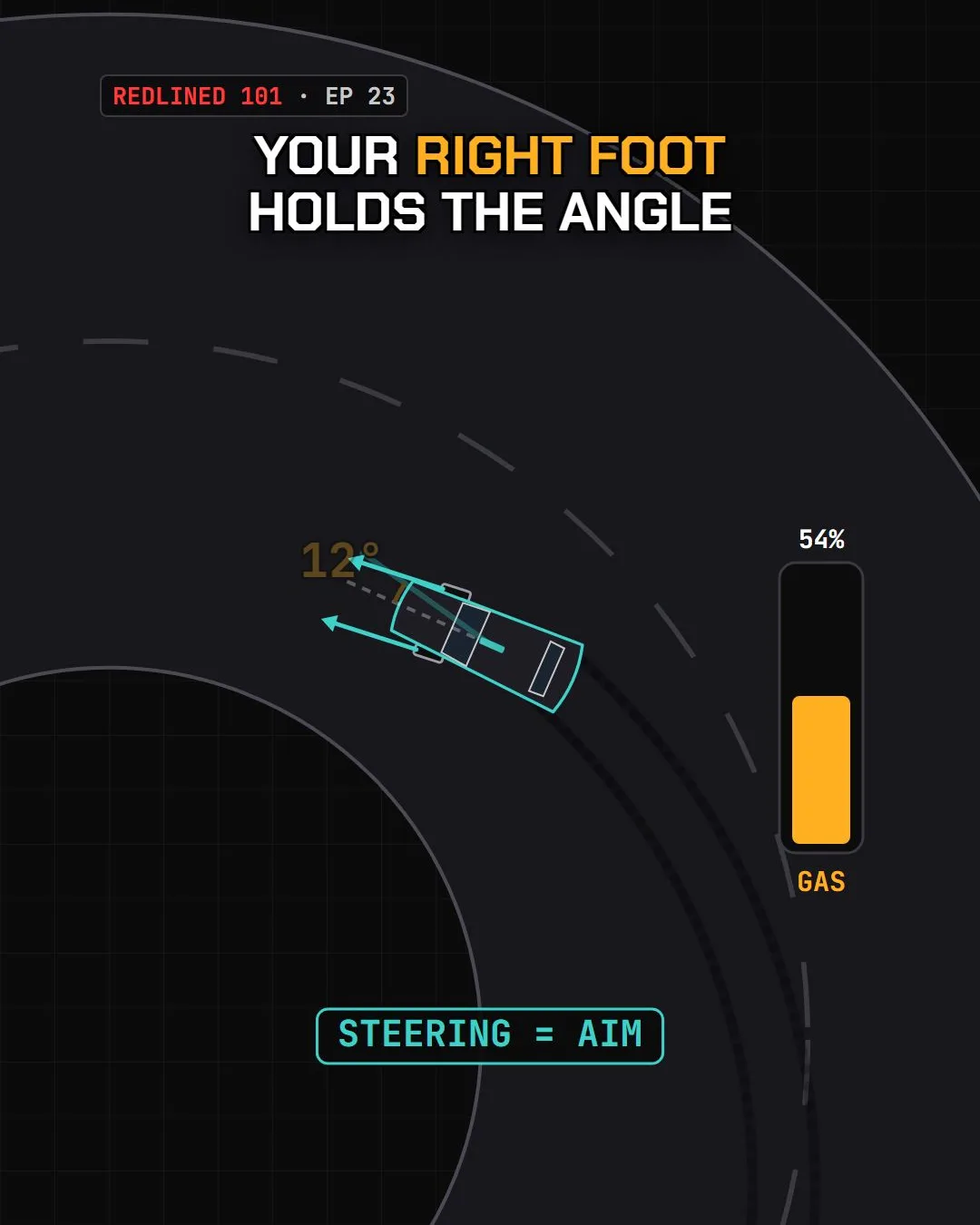
How Drifting Works: Throttle, Steering, Handbrake and Clutch Kick (Redlined 101, Ep 23)
Why a sliding tire wants to stay loose, why lifting off the gas snaps the car the other way, how the throttle holds the drift angle, clutch kick vs handbrake, and why steering lock and angle kits set the limit.