Tires Explained: Reading the Sidewall, Size, Pressure, Balancing and Road Force (Redlined 101, Ep 04)
Your tires are the only thing touching the road. Here's how to read them, pick them, and keep them from getting wrecked at the shop. Last episode ended on a sidewall code; this one starts there.
Watch Redlined 101, Ep 04 on Instagram →
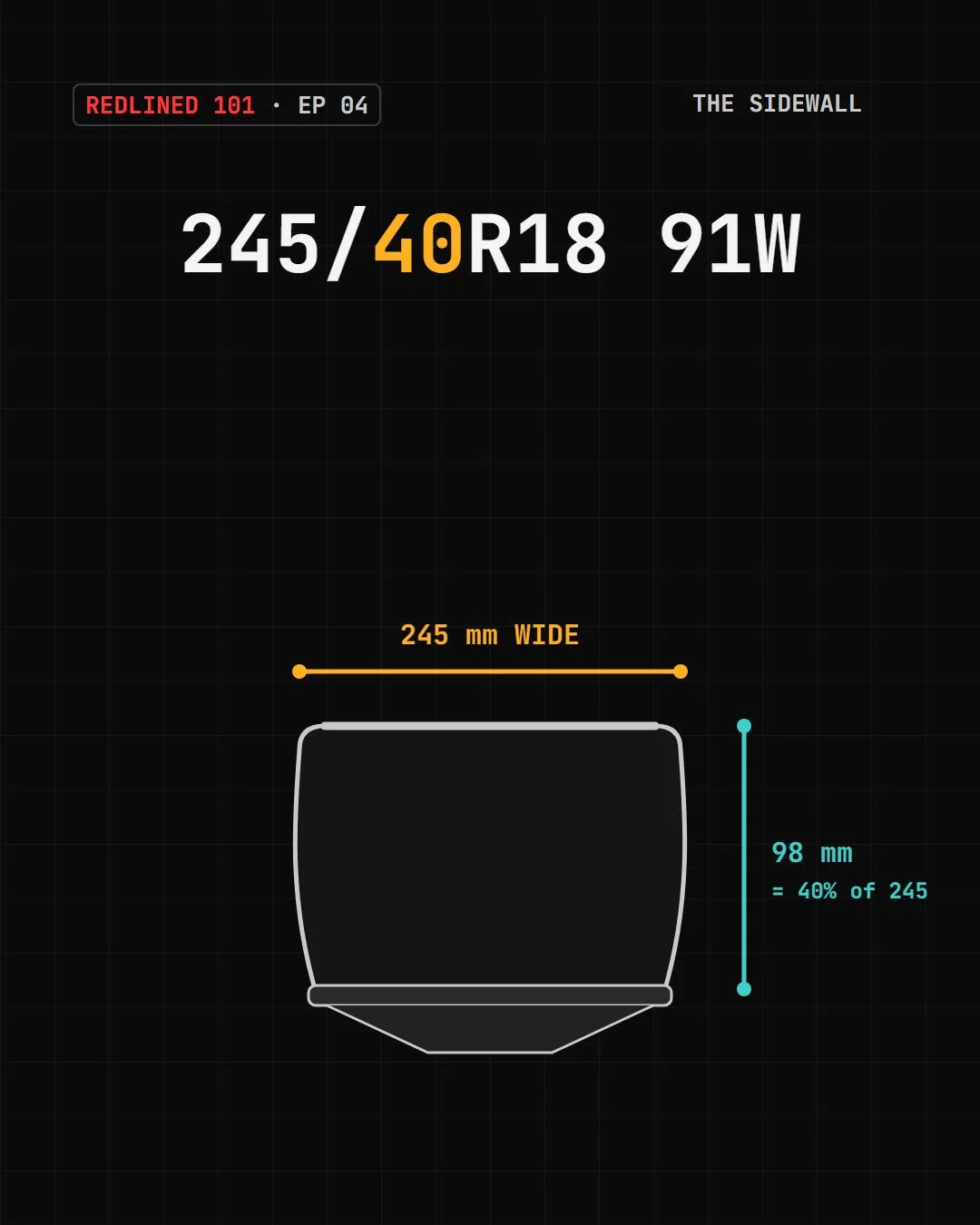
Reading the sidewall: 245/40R18 91W
- 245 is the tire's width in millimeters.
- 40 is the sidewall height, as a percent of that width: 40% of 245 mm is about 98 mm.
- R means radial, the way almost every modern car tire is built.
- 18 is the wheel size in inches.
- 91W is the load and speed rating: a load index of 91 (about 1,356 lb per tire) and a W speed rating (up to 168 mph).
Size changes look, fit and feel
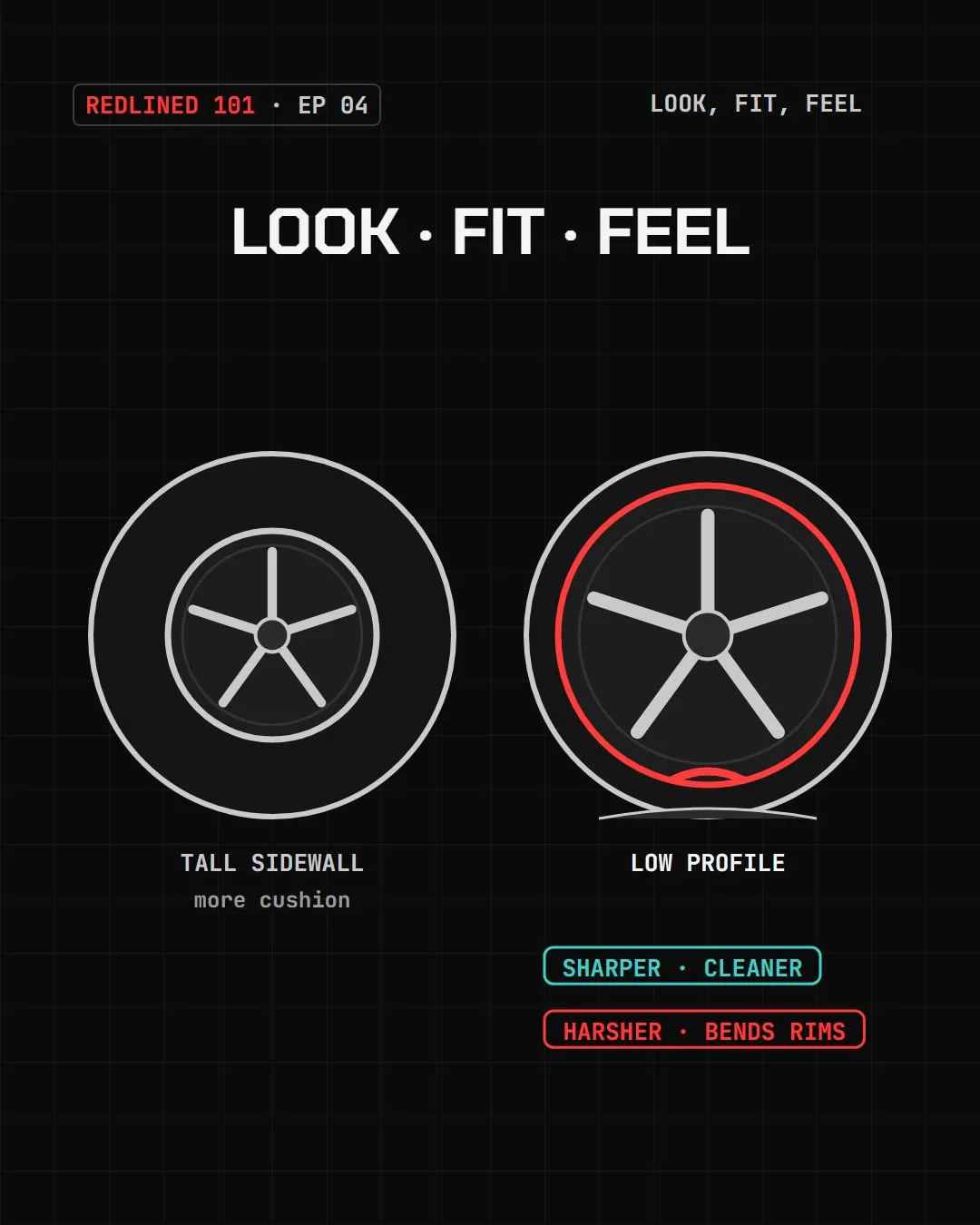
A low profile (a small sidewall number) steers sharper and looks cleaner, but it rides harsher, and with less rubber between the rim and a pothole, it bends rims more easily. A tall sidewall gives you more cushion.
Width has to suit the wheel. Too wide for the rim and the tire bulges and can rub the fender. Too narrow and it stretches. And whatever you change, keep the overall diameter near stock, or your speedometer reads wrong: a tire about 9% taller has the dash showing 60 while you're doing about 65.
Tire types
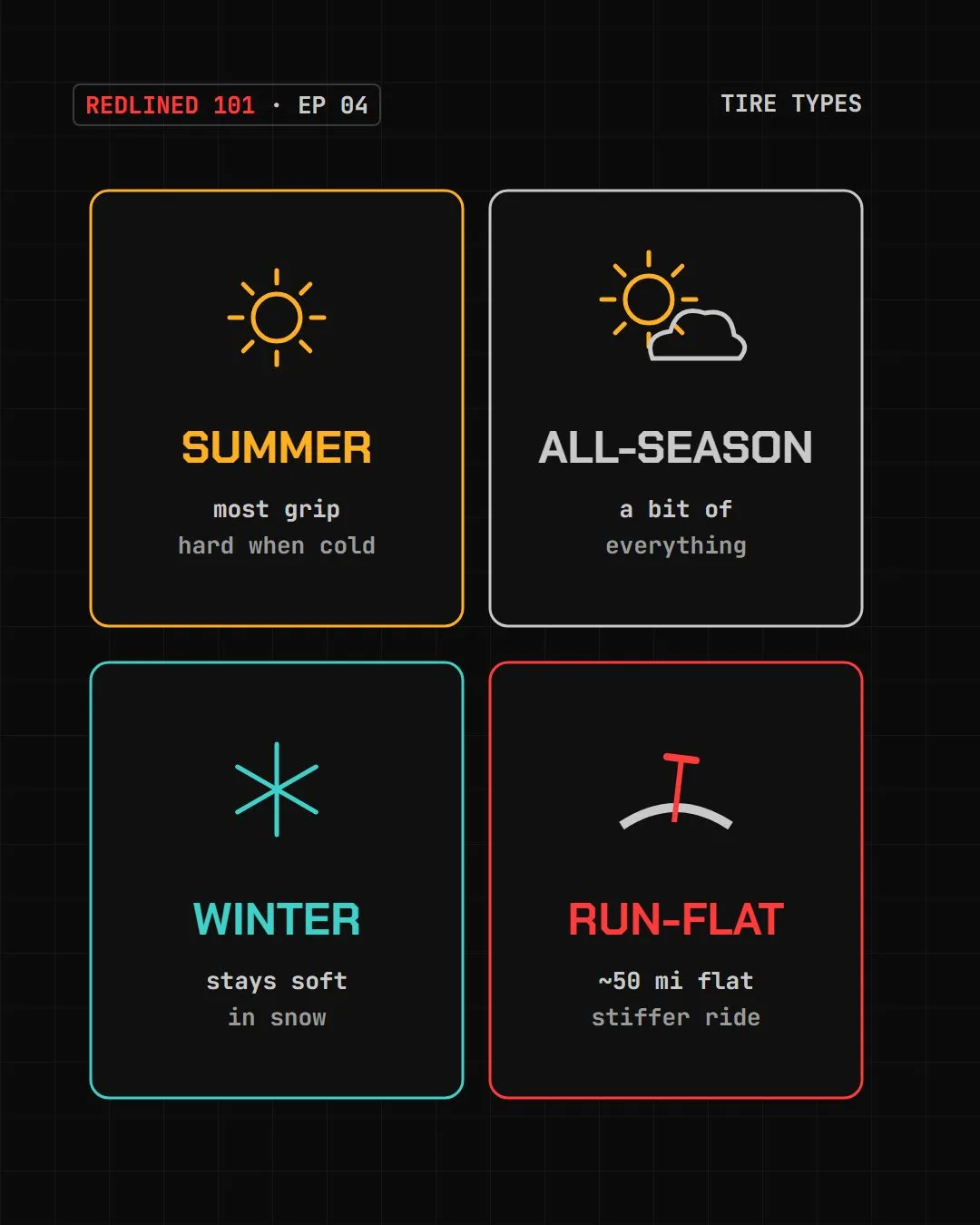
- Summer tires grip hardest, but the rubber goes hard in the cold.
- All-seasons do a bit of everything.
- Winters stay soft in snow and cold.
- Run-flats have stiff sidewalls that can carry the car for about fifty miles after a puncture, at the cost of a stiffer ride.
Tire pressure: the door, not the sidewall
The door-jamb sticker gives the pressure for the factory tire, checked cold (before you've driven). If you've changed the size, or moved to a tire with a different load index, that number may not apply: have the shop check the load tables for your new tire. The number on the sidewall is the maximum, not the target.
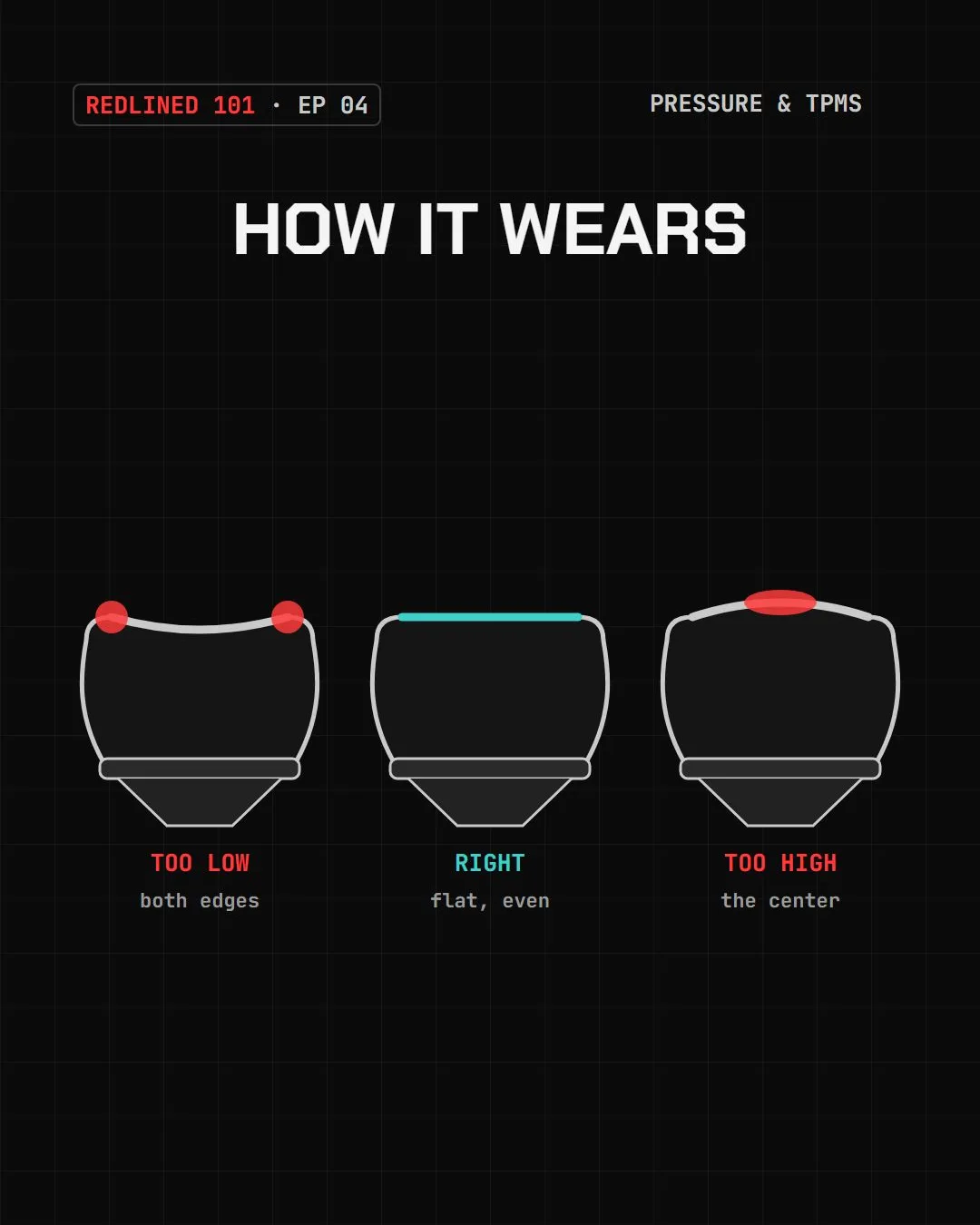
Get it wrong and the tire tells you. Too low wears both edges and runs hot. Too high wears the center and cuts grip.
TPMS sensors
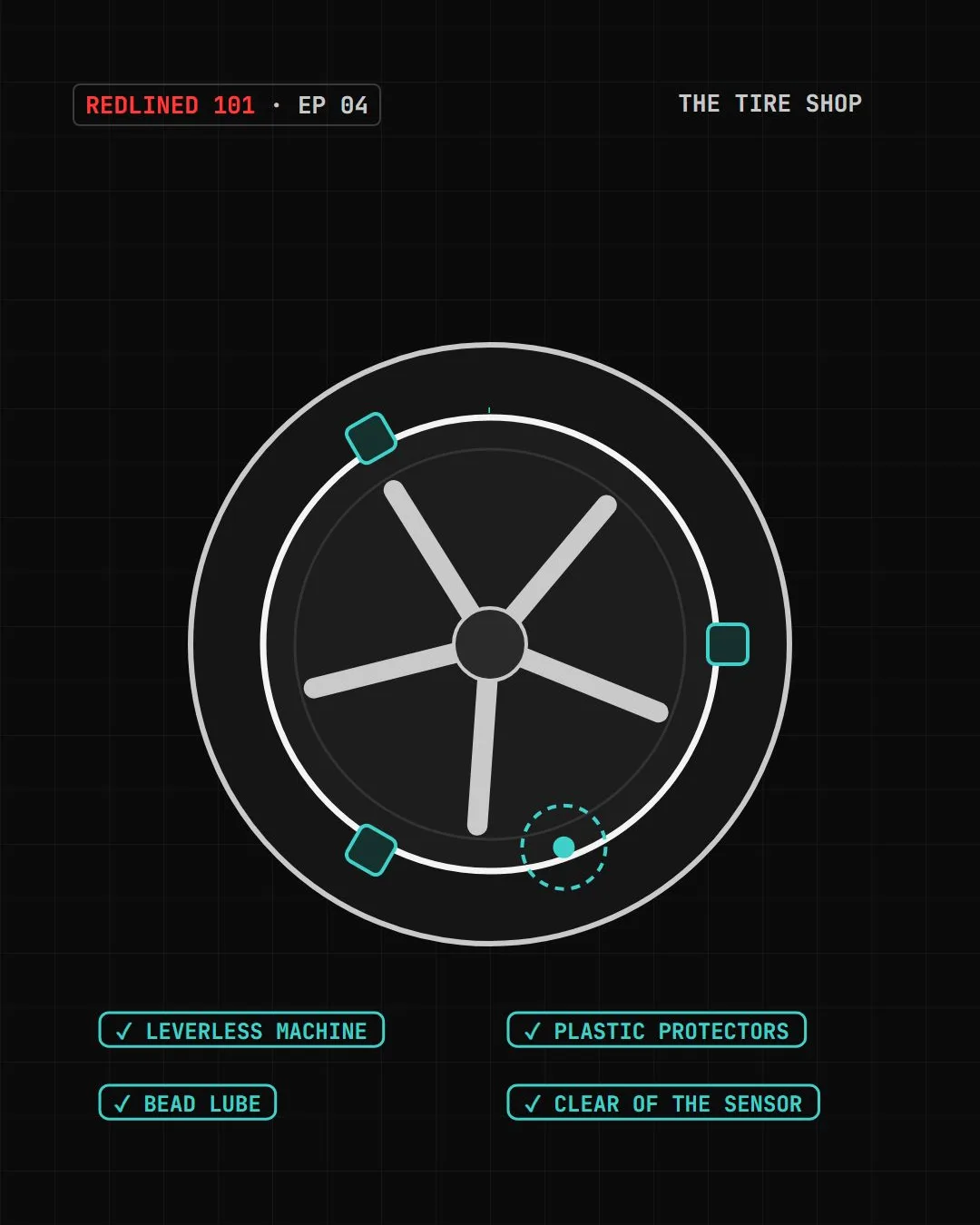
Most modern cars watch that pressure with TPMS sensors inside the wheel, usually mounted on the valve stem. They're easy to break: a careless tire change that pushes the bead down in the wrong spot can snap one.
Why the tire shop matters
Most wheel damage doesn't happen on the road; it happens at the tire machine. A metal bar levered against the lip, or a mounting head scraping the finish, can ruin a fresh set of wheels in seconds.
A good shop uses a leverless machine, soft plastic protectors at every point that touches the wheel, plenty of bead lube, and keeps its tools clear of the sensor. A bad shop uses a pry bar and confidence. Please don't. (More in our post on damage-free tire mounting.)
Balancing and road force
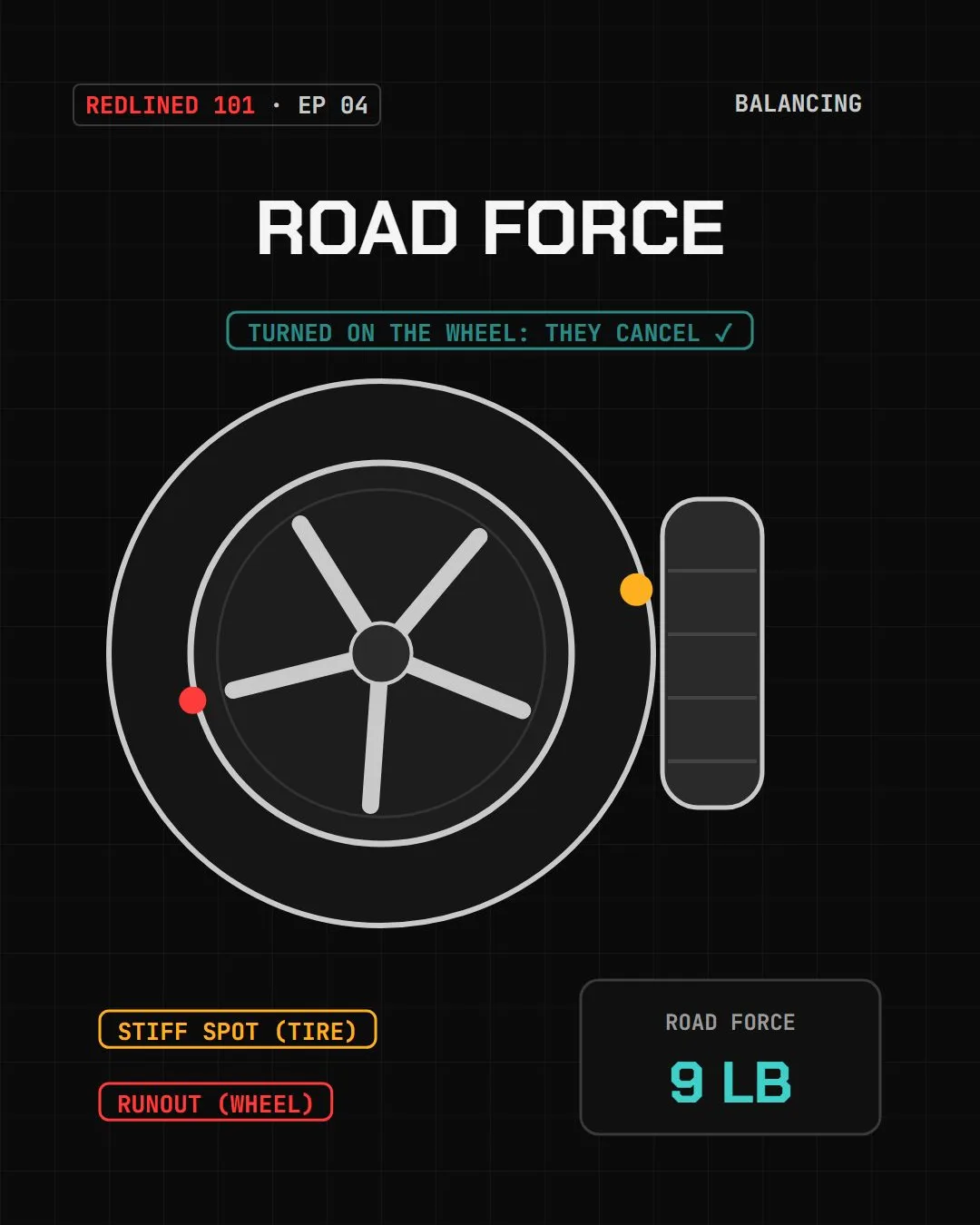
No wheel and tire is perfectly even. A heavy spot shakes the steering wheel at highway speed, so a balancer spins the assembly and shows where to add small weights.
Still shaking after a balance? A road force balancer presses a roller against the tire, like the road does, to find stiff spots in the tire and runout in the wheel. Then the tire is turned on the wheel so the two cancel out.
Bent and cracked wheels
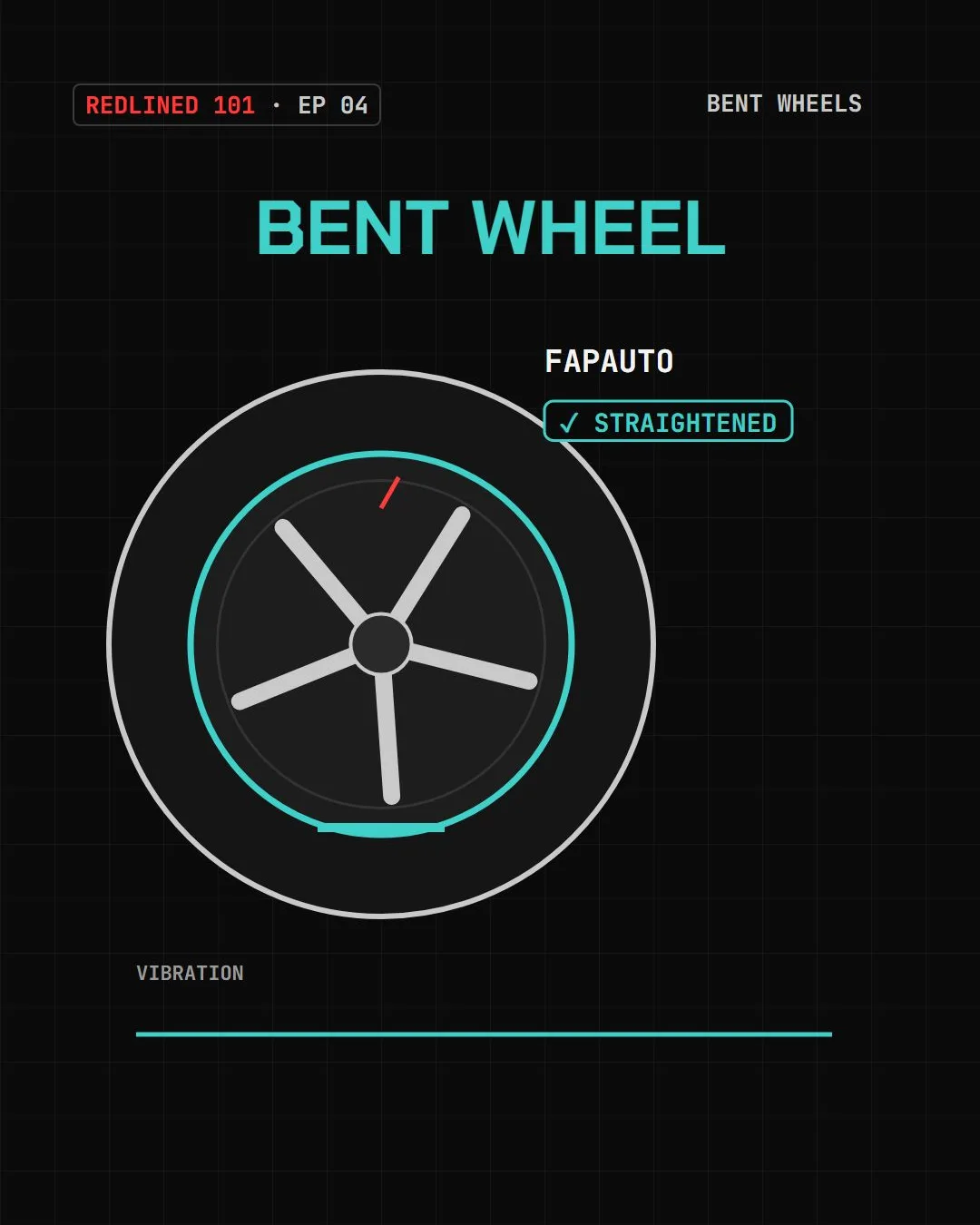
New Jersey potholes don't damage wheels, they collect them. A bent wheel throws the balance off, and no amount of weights fixes it. It needs straightening, and a crack needs proper welding, before the wheel will run true. FAPAUTO straightens bent wheels and welds cracks.
Beadlocks
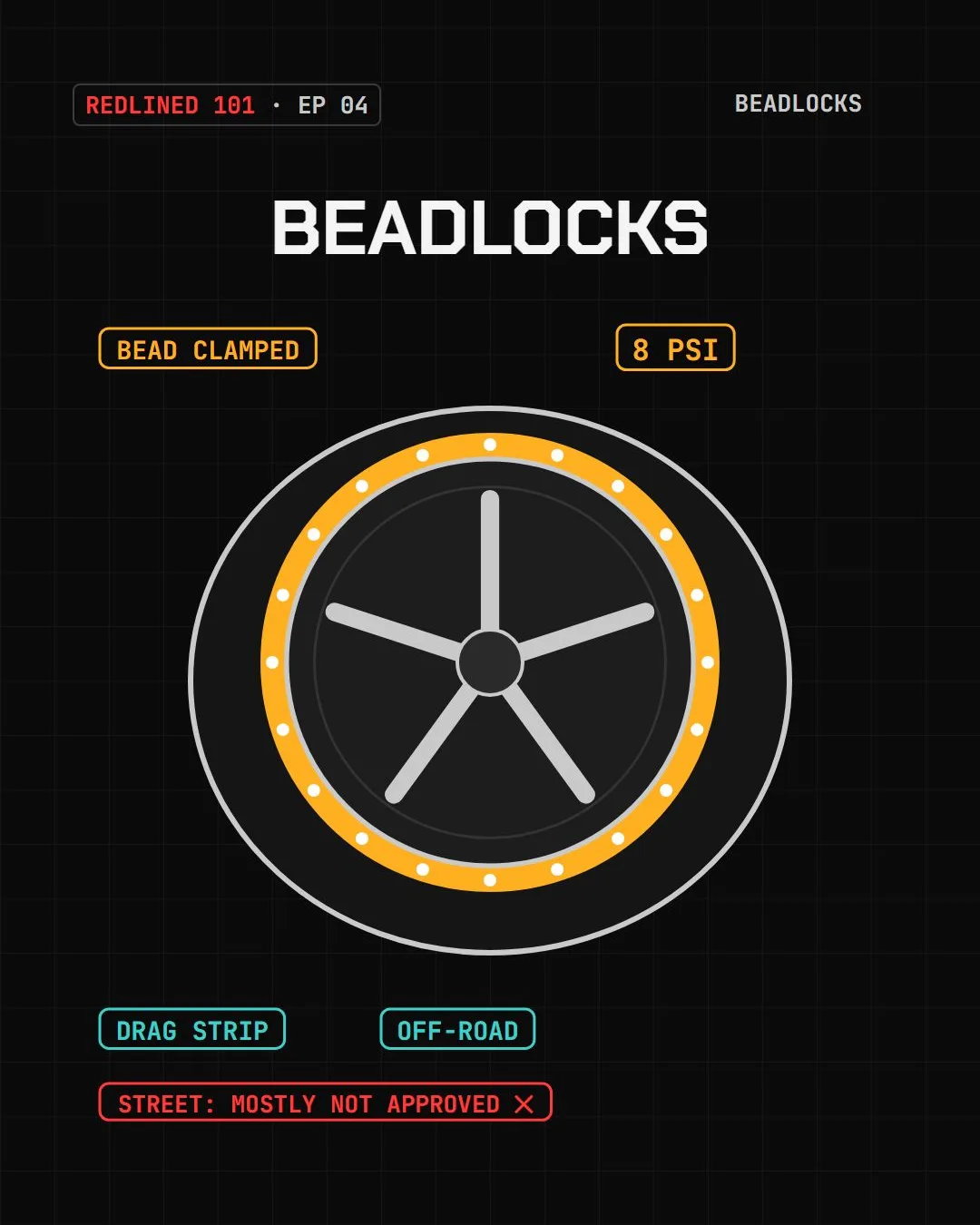
A beadlock bolts a ring over the tire's bead so it can't slip on the wheel at very low pressure. That's for drag strips and off-road. Most true beadlocks aren't approved for the street; street versions are usually just cosmetic rings.
Recap: the tire checklist
- Read the sidewall: width, sidewall %, wheel size, load and speed.
- Size it to fit: keep the overall diameter near stock.
- Pick for your weather: summer, all-season or winter.
- Set pressure from the door, checked cold, and re-check after a size change.
- Pick a shop that protects your wheels: leverless machine, protectors, a proper balance.
Next episode: what wears out in your suspension, and what to upgrade first.
Previous: ← Camber, toe and caster explained · Next: Suspension clunks: what wears out first →
Frequently asked questions
What does 245/40R18 91W mean?
The tire is 245 mm wide, its sidewall is 40 percent of that width (about 98 mm), R means radial construction, it fits an 18-inch wheel, 91 is the load index (about 1,356 lb per tire) and W is the speed rating (up to 168 mph).
Should I use the tire pressure on the door jamb or on the tire?
The door-jamb sticker is the target for the factory tire size, checked cold. The number on the sidewall is the maximum the tire can hold, not the target. If you change tire size or load index, have the shop check the load-inflation tables for the right pressure.
What is road force balancing?
A balancer that presses a roller against the tire, like the road does, to find stiff spots in the tire and runout in the wheel. The tire is then turned on the wheel so the two cancel out. It is the usual fix for vibrations that a standard balance does not cure.
Can you balance out a bent wheel?
No. A bent wheel throws the balance off and no amount of weights fixes it. The wheel needs straightening, and cracks need proper welding, before it will balance and run true.
Are beadlock wheels street legal?
Most true beadlocks are sold for drag racing and off-road use and are not approved for the street. Street versions are usually cosmetic rings.
Official merch
Shop the club merch
3 Pedals 0 F*cks Manual Transmission on a Unisex Oversized Heavyweight T-Shirt, black
Unisex Oversized Heavyweight T-Shirt
from $38.49
Pork Roll, Egg, Cheese & Boost – Jersey Breakfast on a Unisex Oversized Heavyweight T-Shirt, black
Unisex Oversized Heavyweight T-Shirt
from $32.99
My Toxic Trait: One More Project Car on a Unisex Oversized Heavyweight T-Shirt, black
Unisex Oversized Heavyweight T-Shirt
from $32.99
+1000 Aura – Exhaust Flames Car Shirt on a Unisex Oversized Heavyweight T-Shirt, white
Unisex Oversized Heavyweight T-Shirt
from $32.99
Unc Can Still Heel-Toe – Manual Driver Shirt on a Unisex Oversized Heavyweight T-Shirt, black
Unisex Oversized Heavyweight T-Shirt
from $32.99
But Officer The Sign Said Slide It on a Unisex Oversized Heavyweight T-Shirt, white
Unisex Oversized Heavyweight T-Shirt
from $32.99
Redlined Car Club Est. 2023 Brushmark on a Unisex Oversized Heavyweight T-Shirt, black
Unisex Oversized Heavyweight T-Shirt
from $32.99
Car Guy By Definition on a Unisex Oversized Heavyweight T-Shirt, black
Unisex Oversized Heavyweight T-Shirt
from $32.99
Tokyo Retro Vibes on a Unisex Oversized Heavyweight T-Shirt, black
Unisex Oversized Heavyweight T-Shirt
from $32.99
BOSOZOKU CARSPANK ボ — ソ — 族 — 車 の ス パ ン ク on a Unisex Oversized Heavyweight T-Shirt, black
Unisex Oversized Heavyweight T-Shirt
from $32.99
Coilovers > 401K – Funny Car Guy on a Unisex Oversized Heavyweight T-Shirt, black
Unisex Oversized Heavyweight T-Shirt
from $32.99
Can't Pump Gas, Can Swap A Motor – NJ Car Guy on a Unisex Oversized Heavyweight T-Shirt, black
Unisex Oversized Heavyweight T-Shirt
from $32.99


More from the club
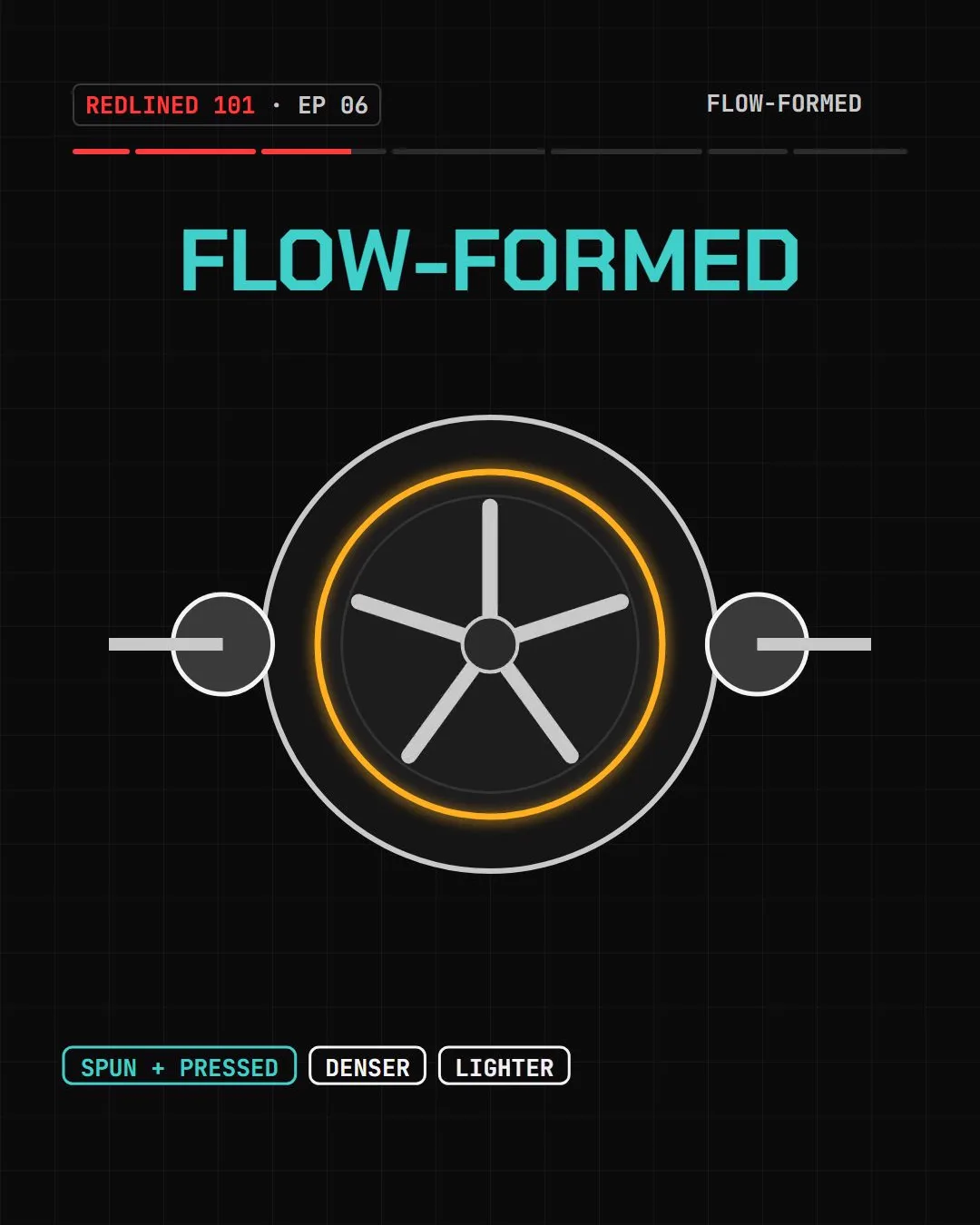
Cast vs Flow-Formed vs Forged Wheels: What You Are Actually Paying For (Redlined 101, Ep 06)
How cast, flow-formed and forged wheels are made, why they differ in weight, strength and price, why unsprung weight matters, how to spot a cheap replica (JWL and VIA stamps), and which one to buy for a daily, best value or the track.
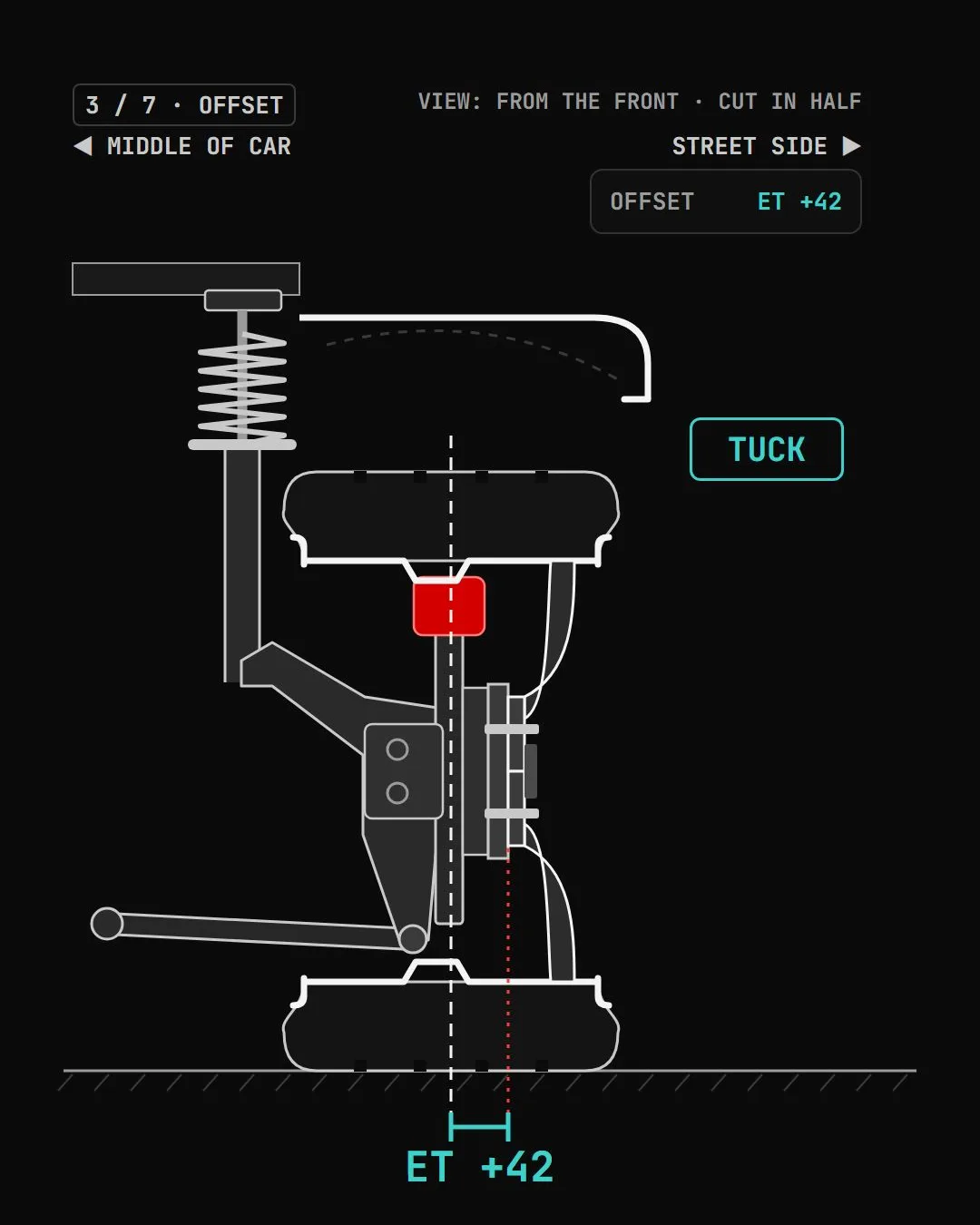
Wheel Offset Explained: ET, Poke, Flush and Tuck (Redlined 101, Ep 01)
What wheel offset (ET) is, why a higher number tucks the wheel and a lower one pokes, how camber and fender rolling change what fits, and what gets respect in the car community.
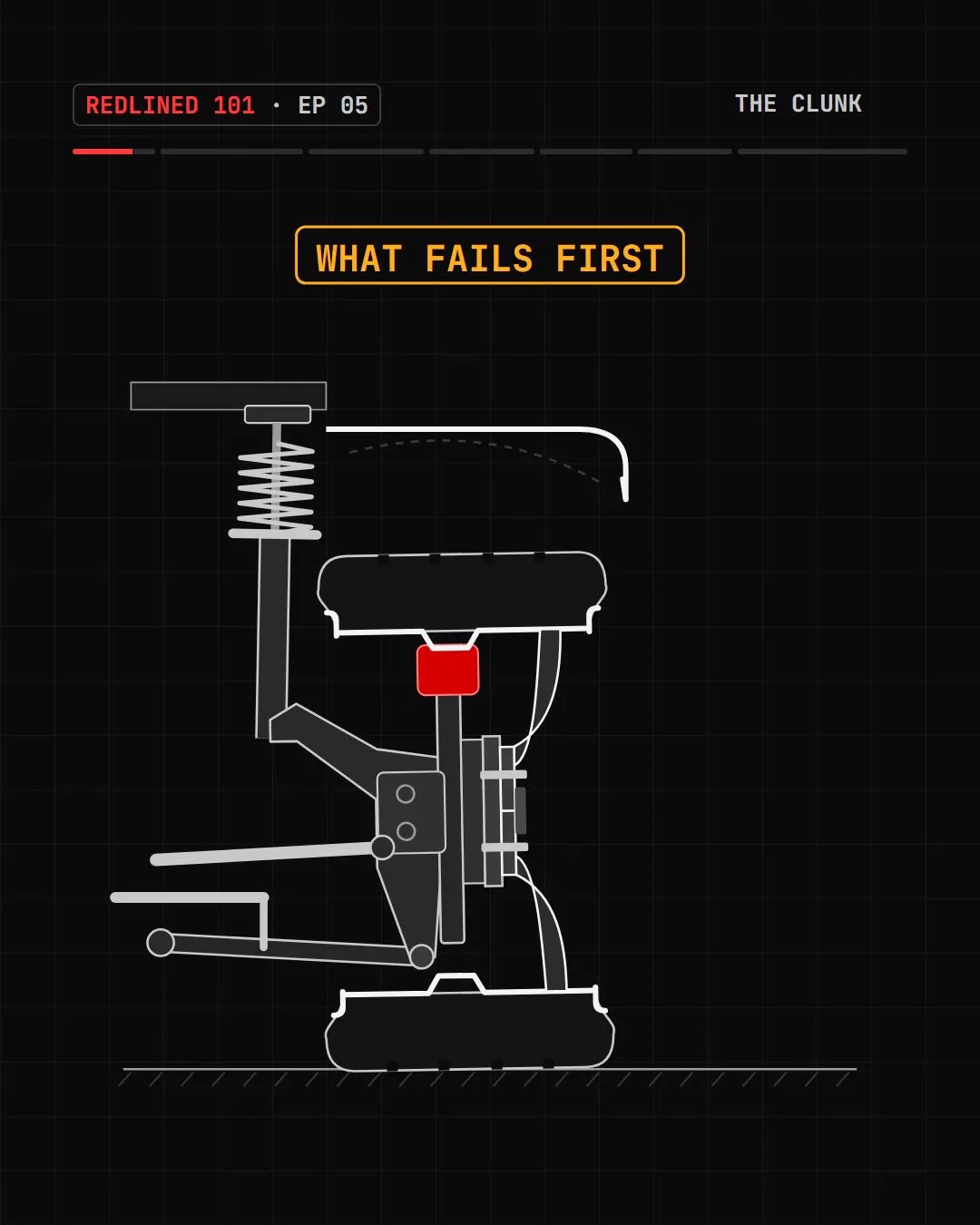
Suspension Clunks: What Wears Out First and What to Upgrade First (Redlined 101, Ep 05)
That clunk over bumps, explained: how to check bushings, ball joints, tie rod ends, shocks, end links and top mounts, the signs each one gives, and the order to upgrade a worn or lowered suspension.