Horsepower vs Torque: What's the Difference and Which Matters More? (Redlined 101, Ep 15)
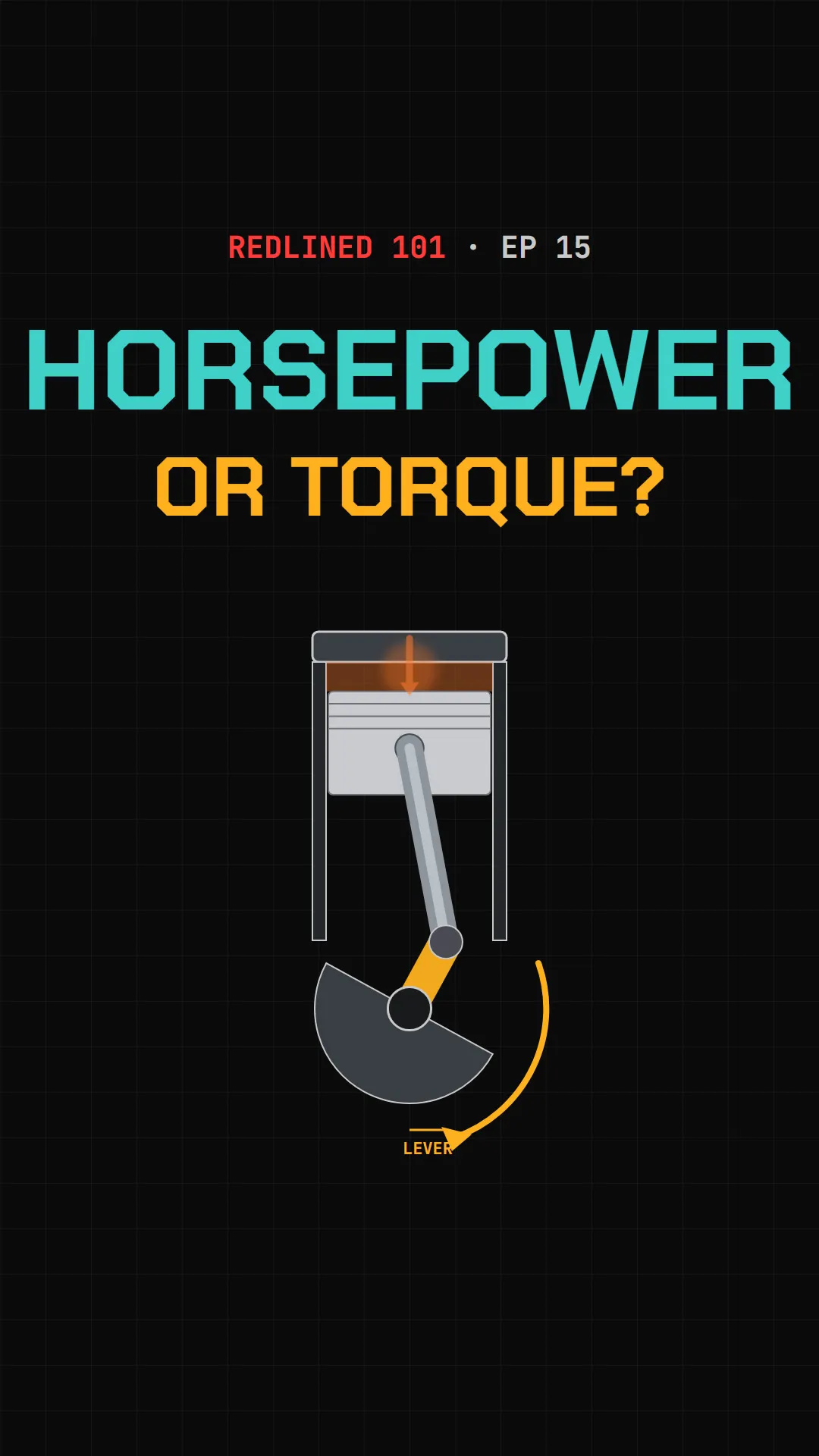
Horsepower or torque? Line up a torque monster and a horsepower car in the same race and you get both answers: the torque monster jumps ahead, then the horsepower car reels it in and walks away. The gearbox explains both. Last episode was about which wheels get the power; this one is about the power itself.
 Watch on Instagram
The race: why torque jumps ahead and horsepower walks away
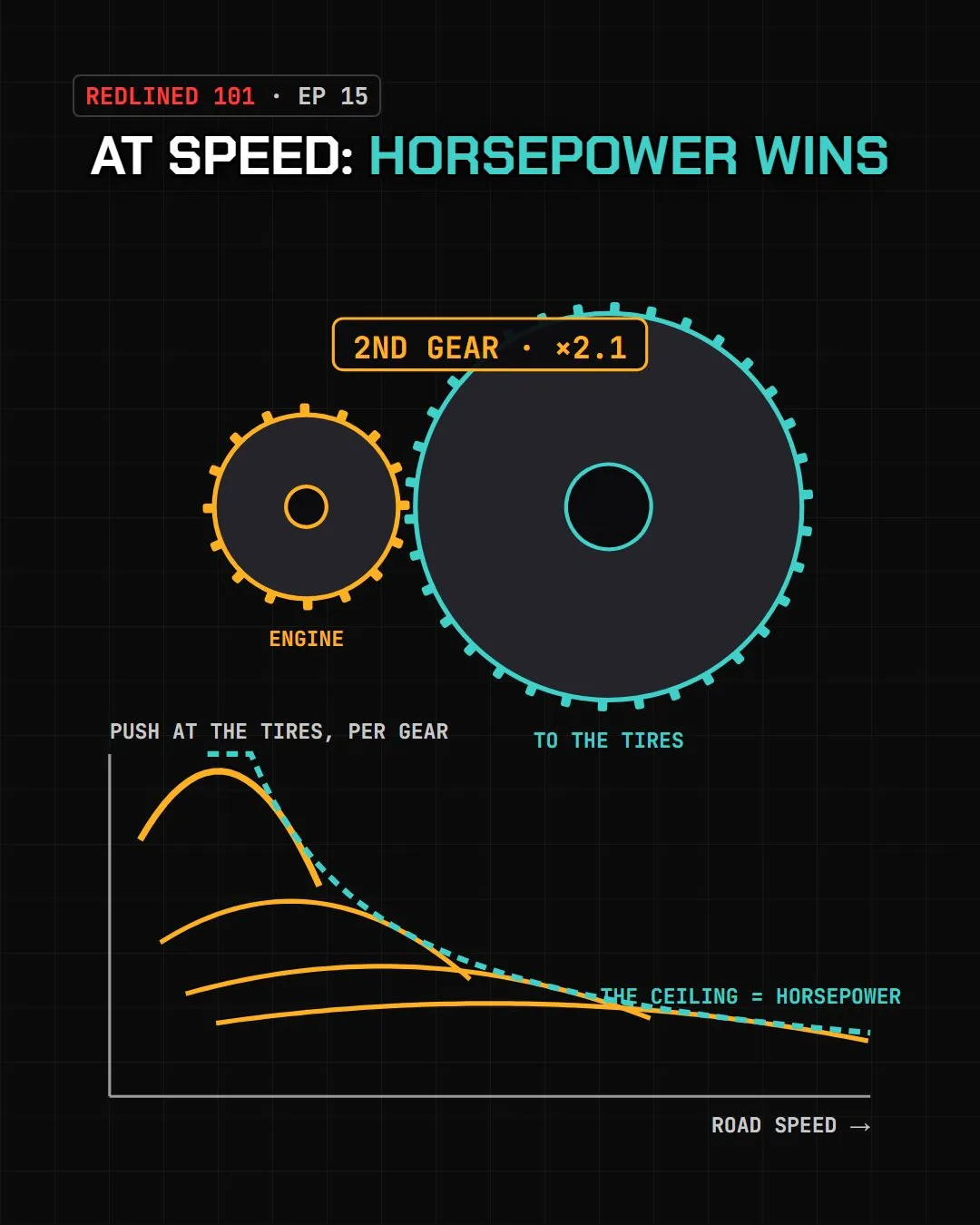
Off the line, the car is in first gear, and first gear is a torque multiplier. In this example it multiplies the engine's twist three and a half times before it ever reaches the wheels. So the engine with the most twist shoves hardest and jumps ahead.
Then you shift up. Every higher gear has a smaller multiplier, so the extra shove shrinks with each shift. At speed, the gearbox isn't helping much any more, and the only way to keep pulling is more horsepower. That's when the horsepower car reels the torque monster in and walks away.
Draw the push at the tires for each gear against road speed and you see it: first gear's curve towers over the rest, and each higher gear sits lower. Across the top of all of them runs one ceiling that no gear can break through, and that ceiling is set by horsepower.
That's the whole debate in one race. Torque wins the first few car lengths. Horsepower wins everything after.
What torque actually is: twist
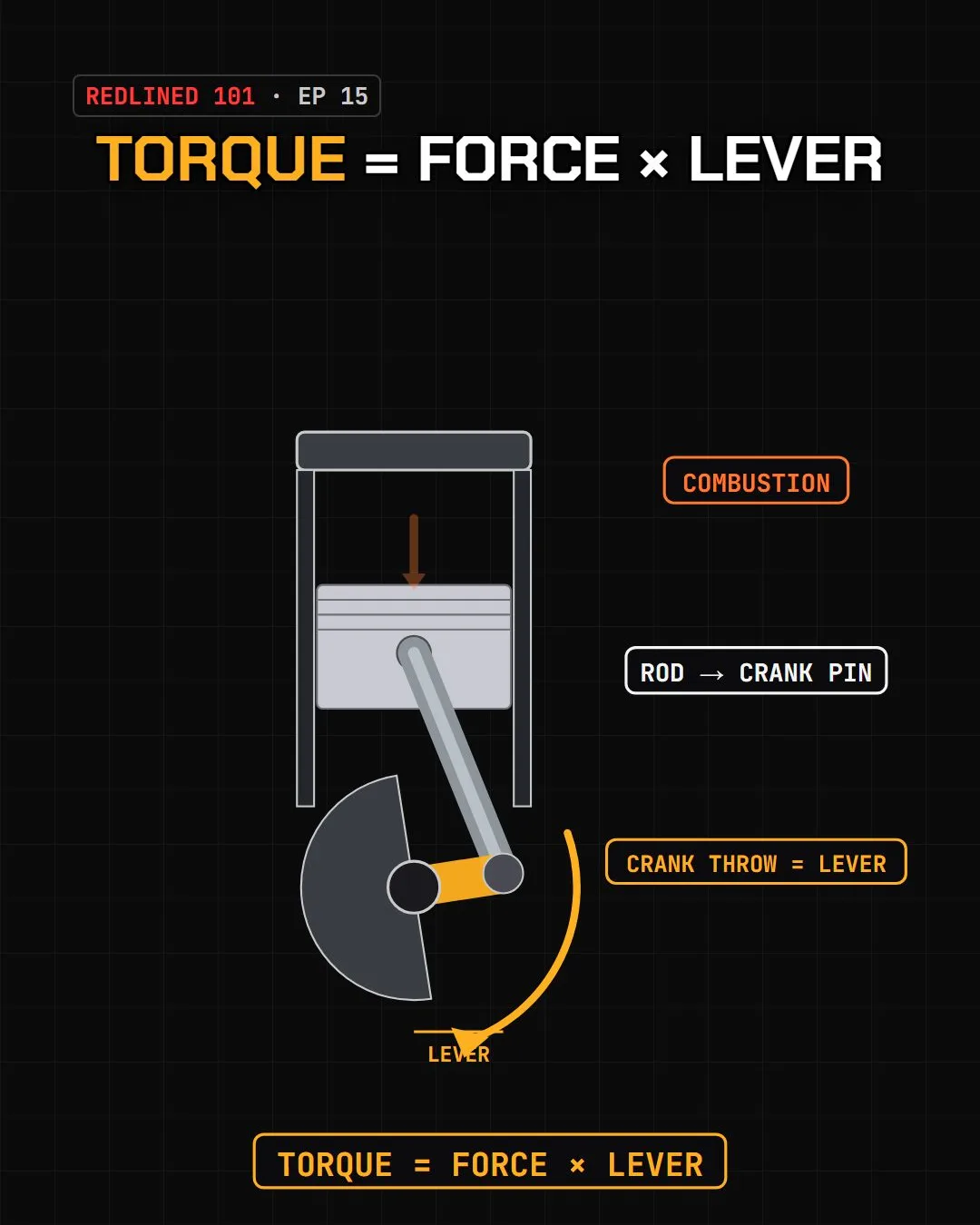
Underneath, torque is twist. Here's where it comes from, one firing at a time:
- Combustion slams the piston down the bore.
- The connecting rod shoves on the crank pin.
- The crank throw, the offset between the crank pin and the crankshaft's center, acts as a lever.
Force times that lever is torque. It's the same as a wrench on a bolt: push harder, or use a longer wrench, and you get more twist. In an engine, a bigger bang pushes harder, and a longer stroke means a longer lever.
In the US, torque is quoted in pound-feet (lb-ft): one pound of force on a lever one foot long. Elsewhere it's newton-meters (Nm).
What horsepower actually is: how often
Torque tells you how hard each push is. Horsepower tells you how often it happens. It's torque times rpm.
So the same torque at twice the revs is twice the power. An engine that makes 150 lb-ft at 4,000 rpm and still makes 150 lb-ft at 8,000 rpm has doubled its horsepower on the way up, without twisting any harder.
The formula, if you want it:
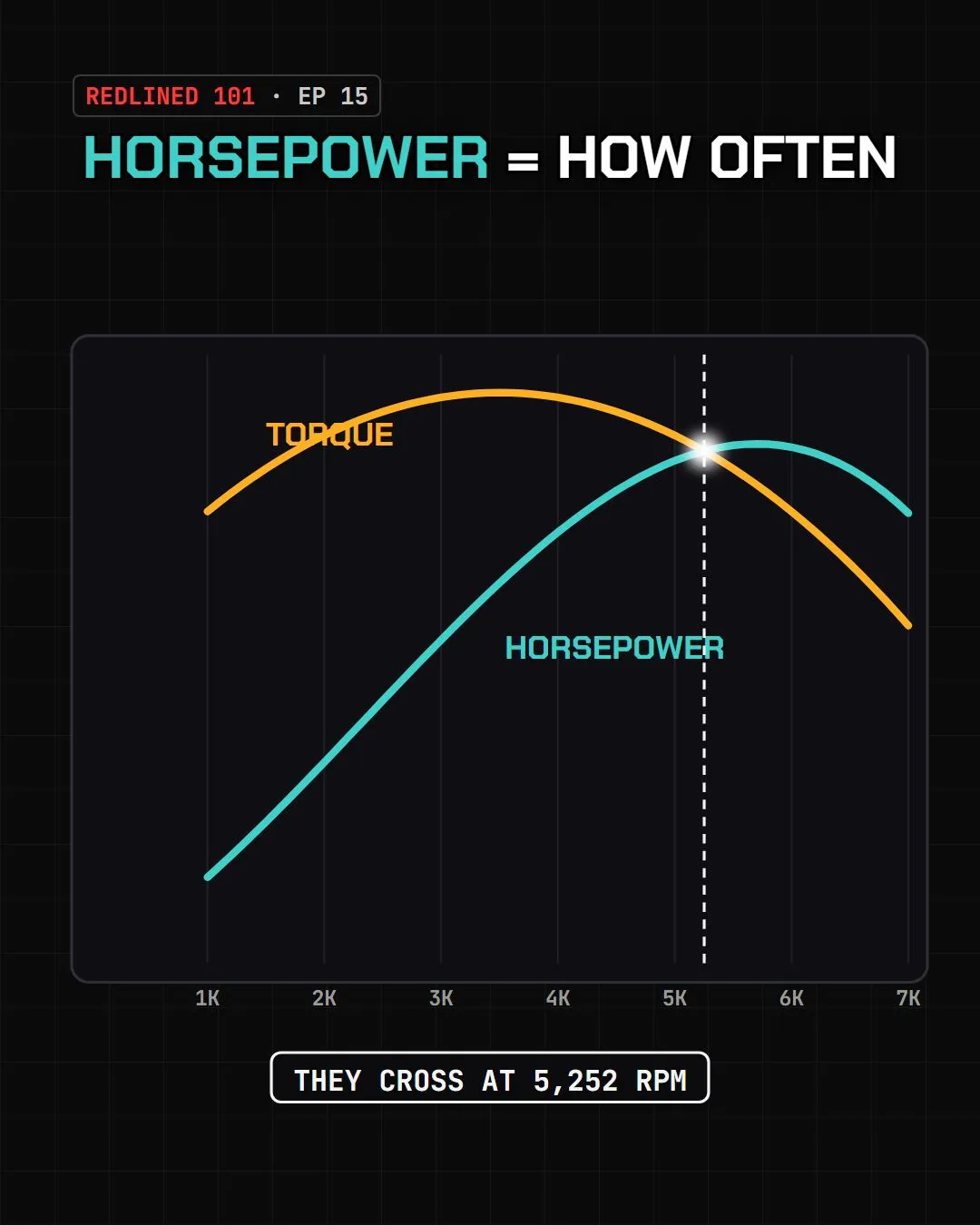
horsepower = torque (lb-ft) × rpm ÷ 5,252
That 5,252 is just the conversion number that falls out of how a horsepower was defined. And it has a neat side effect: at exactly 5,252 rpm, horsepower and torque are the same number. That's why, on any dyno chart that plots horsepower and pound-feet on the same scale, the two curves always cross at 5,252 rpm. Below that, the torque number is bigger. Above it, horsepower is.
If you ever see a chart where they don't cross there, the axes use different scales or different units.
The proof: a diesel truck vs an S2000
Two engines show the split perfectly.
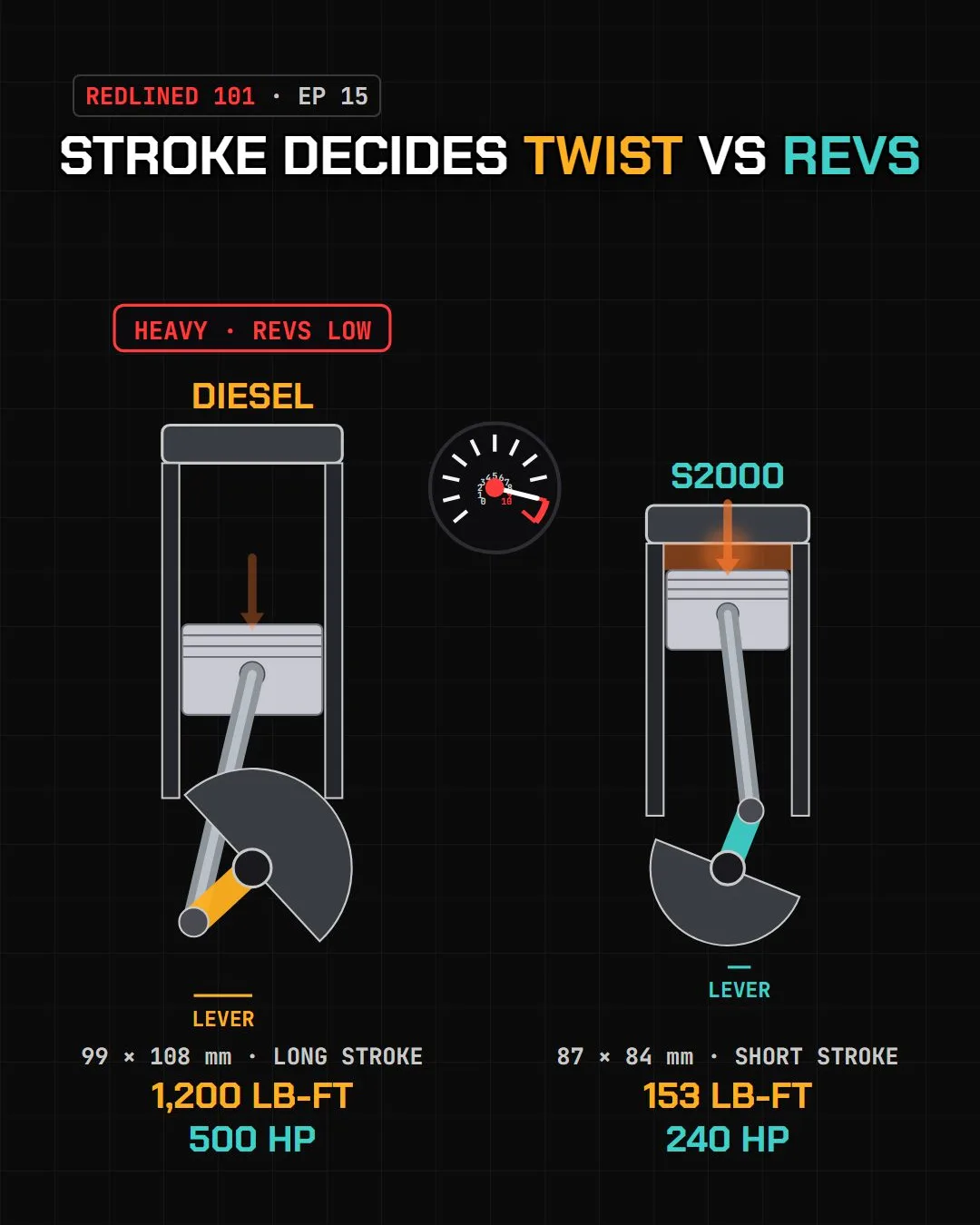
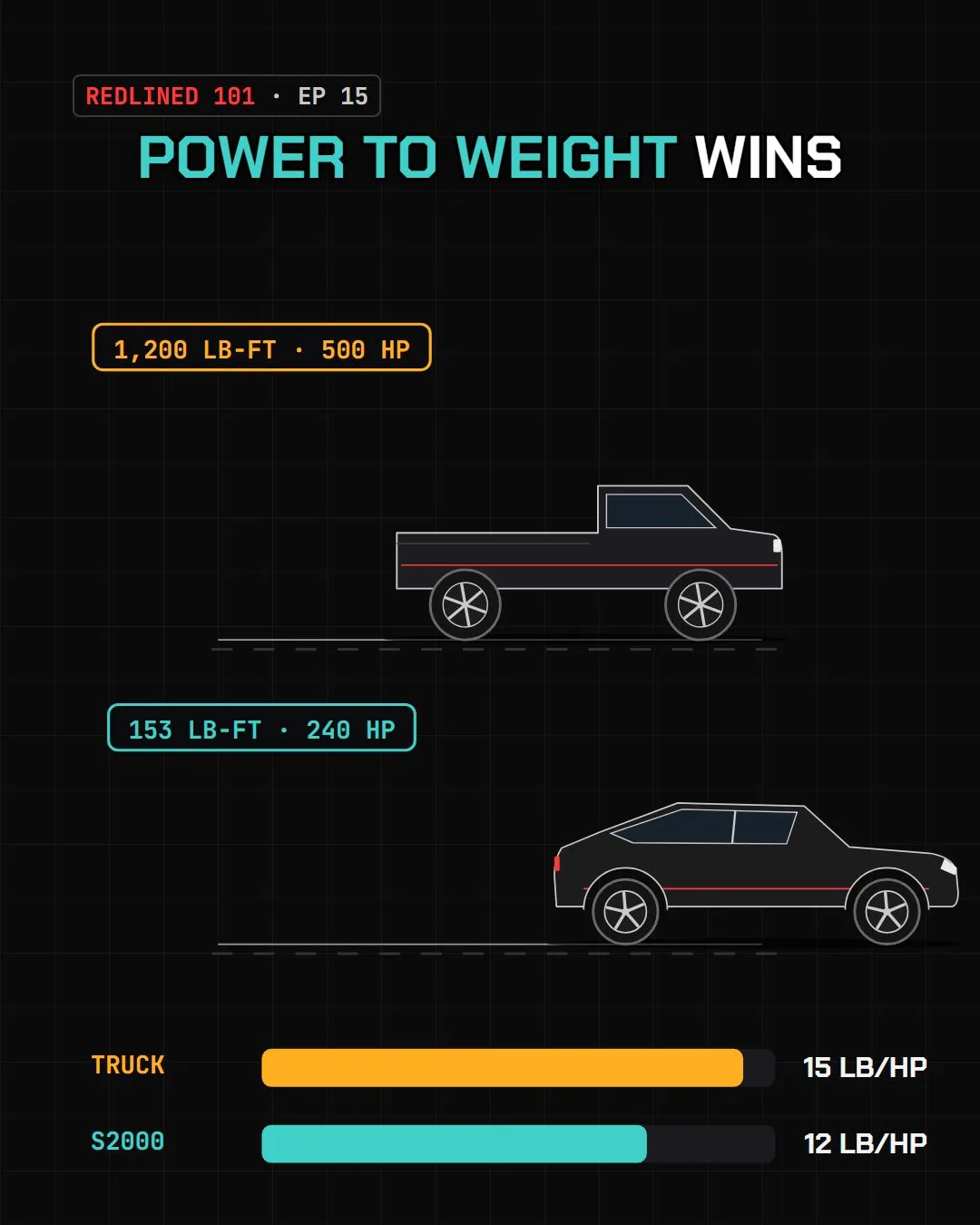
The diesel truck makes about 1,200 pound-feet of torque, but only about 500 horsepower. A long stroke and big boost make huge twist, but long strokes need heavy, strong parts, and heavy parts can't spin fast. Low revs cap the horsepower.
The S2000 is the opposite. It has a short stroke and revs to nine thousand rpm, and it makes 240 horsepower from just 153 pound-feet. Short stroke means a short lever and modest twist, but light parts that can spin fast. High revs turn modest torque into big power.
- Diesel truck: about 1,200 lb-ft and about 500 hp. Long stroke (in the video, a 99 mm bore with a 108 mm stroke), big boost, heavy parts.
- S2000: 153 lb-ft and 240 hp. Short stroke (87 mm bore, 84 mm stroke), 9,000 rpm.
So who's quicker?
The 1,200 pound-foot truck, or the 240 horsepower S2000?
The S2000. The truck hauls about fifteen pounds for every horsepower. The S2000 carries about twelve. Every horsepower in the S2000 has less car to move, and power to weight wins.
Pounds per horsepower is simple to work out for any car: divide its weight by its horsepower. Lower is quicker. It's not the only thing that matters (traction, gearing and aero all play a part), but it's the number that predicts acceleration far better than a torque figure on its own.
Why doesn't the truck's torque save it? Because of the gearbox. Gears trade revs for twist: the S2000 spins its engine much faster at the same road speed and gears that down to the wheels, multiplying its smaller torque. What gearing can't change is the power, the rate the engine does work. That's the number that ends up at the tires.
Torque is still what you feel
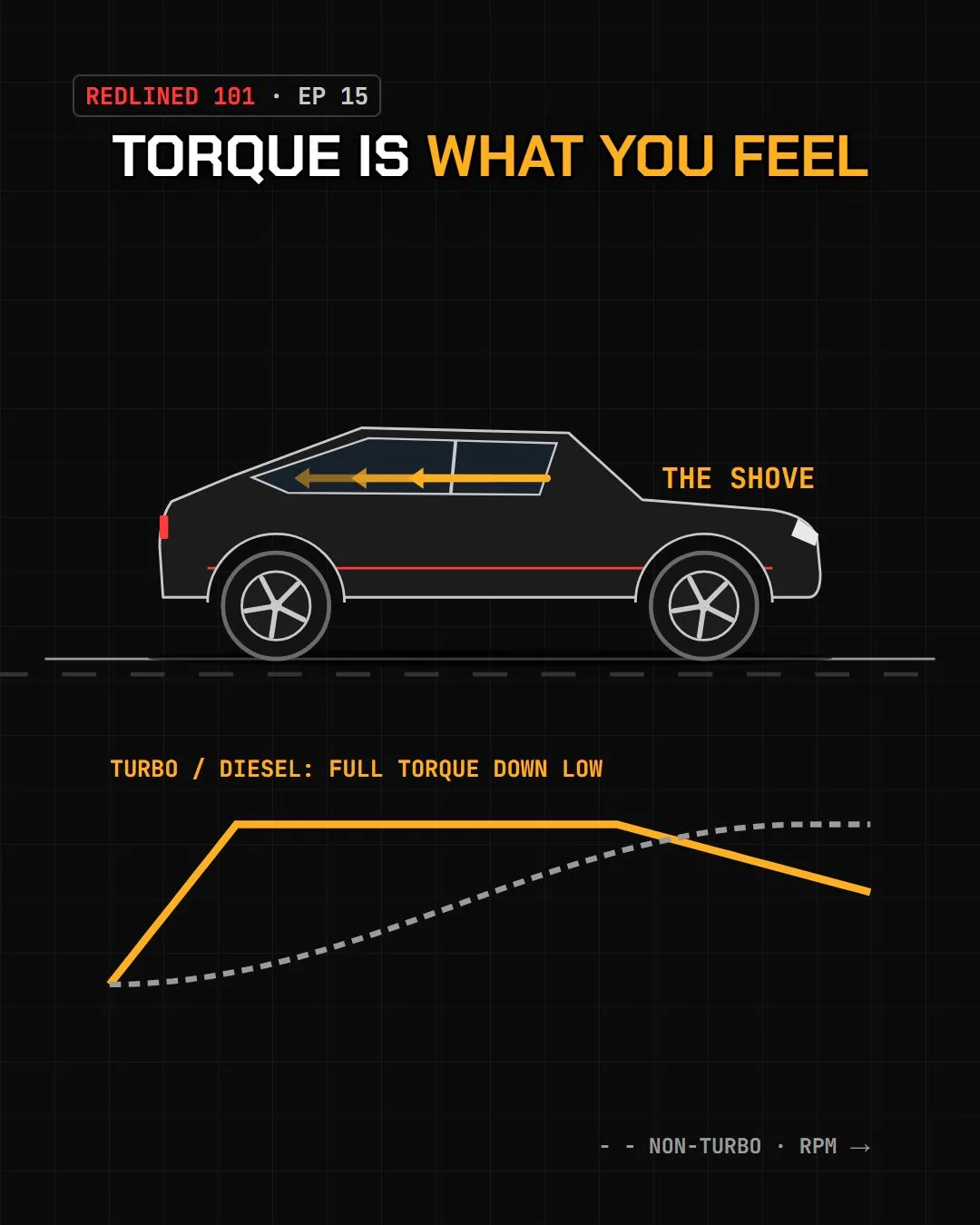
None of this makes torque useless. Torque is what you feel: the shove off idle, the push in the back when you squeeze the pedal at 2,000 rpm without downshifting. That's why turbo and diesel engines feel so strong around town. They make their twist low in the rev range, right where you drive every day.
A high-revving engine can feel flat at low rpm, then come alive near redline. It may be quicker flat out, but you have to rev it to find out. A torquey engine gives it to you right away. Different feel, different job. (If you want that low-rev shove from boost, our turbo vs supercharger post covers how each one makes it.)
So next time your buddy flexes his truck's torque numbers, ask him about pounds per horsepower.
The verdict
Torque sells trucks. Horsepower wins races.
Torque is the twist, and it's what moves heavy loads and what you feel off the line. Horsepower is twist times speed, and it's what decides how fast you go once the gearbox has done its job.
Recap: horsepower vs torque
- Torque is twist: combustion force through the rod, times the lever of the crank throw.
- Horsepower is how often: torque times rpm. Same torque at twice the revs, twice the power.
- The curves cross at 5,252 rpm when plotted in horsepower and pound-feet.
- First gear multiplies torque, so torque wins off the line. At speed, horsepower keeps pulling.
- Power to weight decides who's quicker: about 12 lb per horsepower beats about 15.
- Torque is what you feel around town, which is why turbo and diesel engines feel so strong.
What does yours make, in horsepower and in torque? Now you know which number to brag about.
Next episode: V6 vs V8 vs inline-six.
Frequently asked questions
What is the difference between horsepower and torque?
Torque is how hard the engine twists the crankshaft. Horsepower is how fast it does that work: torque multiplied by rpm. A short-stroke engine that revs high can make big horsepower from modest torque.
Is torque or horsepower better for acceleration?
Horsepower, measured against the car's weight. The gearbox multiplies torque in every gear, so what you can actually put to the wheels at a given speed comes down to power. Power to weight is the number that predicts who's quicker.
Why do horsepower and torque cross at 5,252 rpm?
Horsepower equals torque in pound-feet times rpm, divided by 5,252. At exactly 5,252 rpm that division cancels out, so the two numbers are equal and the curves cross on a dyno chart.
Why do diesels have so much torque but less horsepower?
A long stroke and big boost make huge twist, but the heavy parts can't spin fast. Low rpm caps the horsepower, which is why a diesel can make 1,200 lb-ft but only about 500 hp.
Why does a high-torque car feel faster?
Torque is the shove you feel off idle and at low revs. A turbo or diesel engine makes it early, so it feels strong around town, even if a high-revving engine with more horsepower is quicker flat out.
Official merch
Shop the club merch
3 Pedals 0 F*cks Manual Transmission on a Unisex Oversized Heavyweight T-Shirt, black
Unisex Oversized Heavyweight T-Shirt
from $38.49
Pork Roll, Egg, Cheese & Boost – Jersey Breakfast on a Unisex Oversized Heavyweight T-Shirt, black
Unisex Oversized Heavyweight T-Shirt
from $32.99
My Toxic Trait: One More Project Car on a Unisex Oversized Heavyweight T-Shirt, black
Unisex Oversized Heavyweight T-Shirt
from $32.99
+1000 Aura – Exhaust Flames Car Shirt on a Unisex Oversized Heavyweight T-Shirt, white
Unisex Oversized Heavyweight T-Shirt
from $32.99
Unc Can Still Heel-Toe – Manual Driver Shirt on a Unisex Oversized Heavyweight T-Shirt, black
Unisex Oversized Heavyweight T-Shirt
from $32.99
But Officer The Sign Said Slide It on a Unisex Oversized Heavyweight T-Shirt, white
Unisex Oversized Heavyweight T-Shirt
from $32.99
Redlined Car Club Est. 2023 Brushmark on a Unisex Oversized Heavyweight T-Shirt, black
Unisex Oversized Heavyweight T-Shirt
from $32.99
Car Guy By Definition on a Unisex Oversized Heavyweight T-Shirt, black
Unisex Oversized Heavyweight T-Shirt
from $32.99
Tokyo Retro Vibes on a Unisex Oversized Heavyweight T-Shirt, black
Unisex Oversized Heavyweight T-Shirt
from $32.99
BOSOZOKU CARSPANK ボ — ソ — 族 — 車 の ス パ ン ク on a Unisex Oversized Heavyweight T-Shirt, black
Unisex Oversized Heavyweight T-Shirt
from $32.99
Coilovers > 401K – Funny Car Guy on a Unisex Oversized Heavyweight T-Shirt, black
Unisex Oversized Heavyweight T-Shirt
from $32.99
Can't Pump Gas, Can Swap A Motor – NJ Car Guy on a Unisex Oversized Heavyweight T-Shirt, black
Unisex Oversized Heavyweight T-Shirt
from $32.99




More from the club
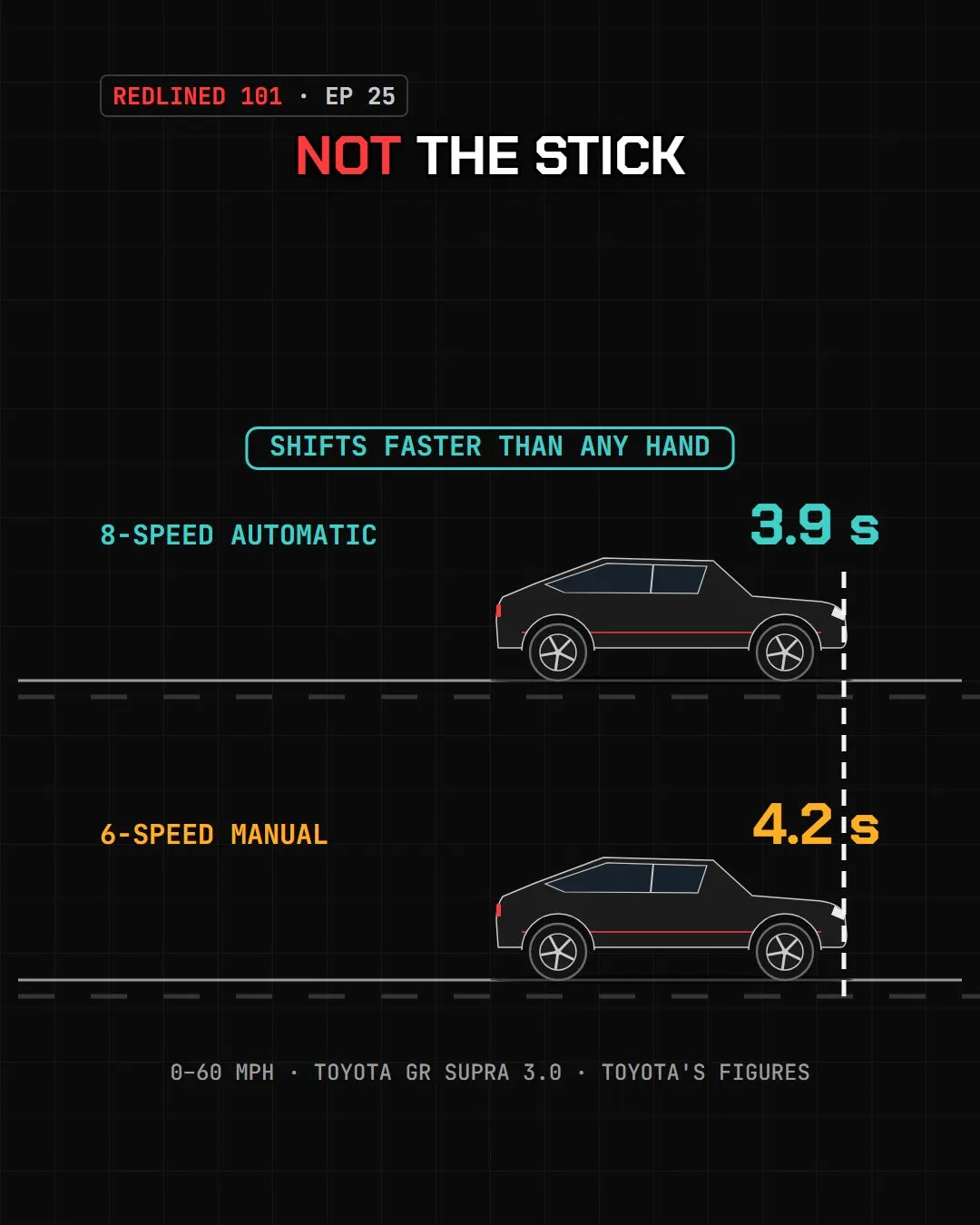
Manual vs Automatic vs CVT vs Dual-Clutch: Which Is Fastest? (Redlined 101, Ep 25)
How a manual, a torque-converter automatic, a CVT and a dual-clutch each work, which one gets to 60 first (Toyota's Supra figures), the catch with each, and which to pick for speed, fun, towing or fuel.
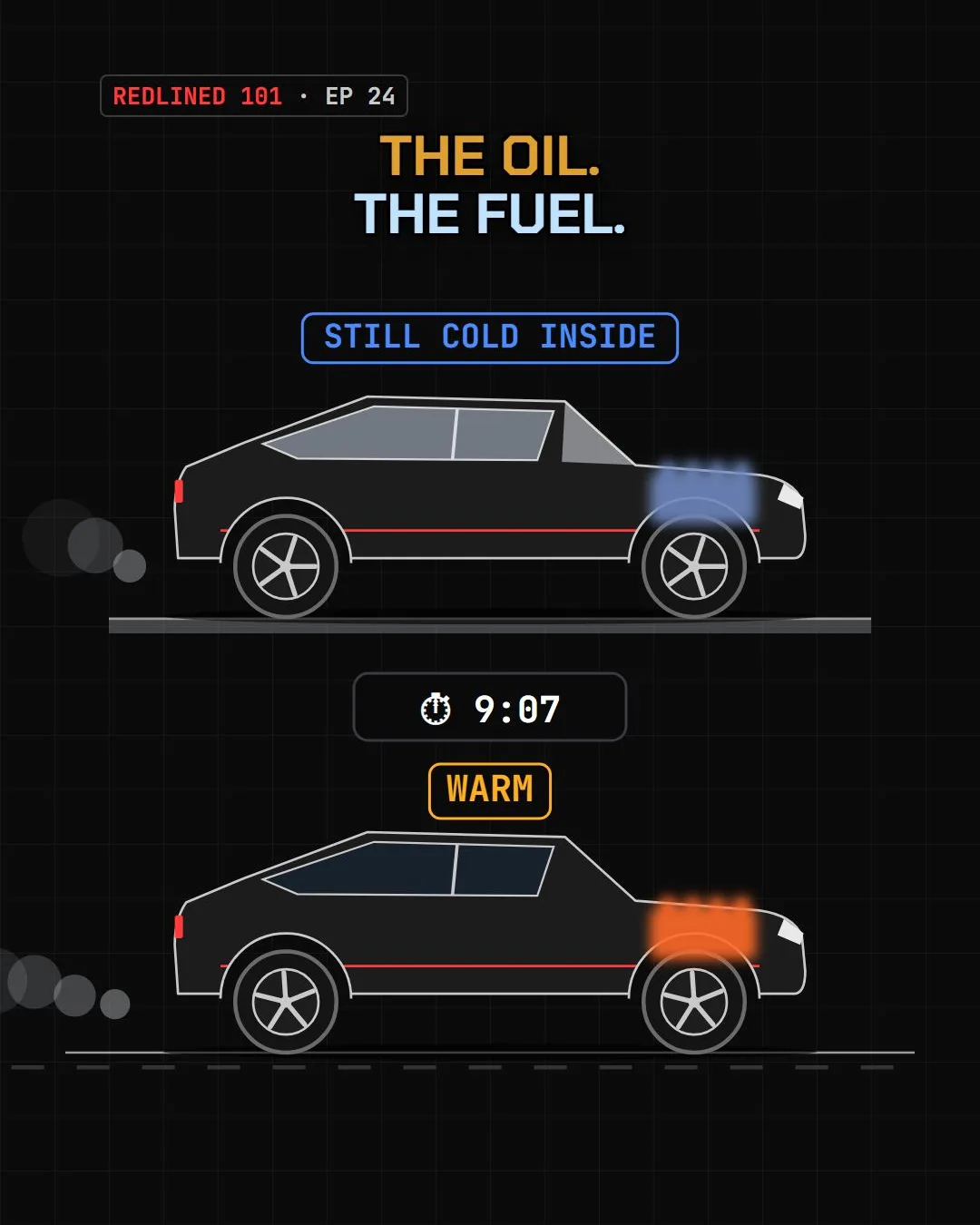
Should You Warm Up Your Car in Winter? Idling vs Driving Off (Redlined 101, Ep 24)
How long to warm up your car on a cold morning, why driving gently warms the engine faster than idling, how a cold idle washes fuel into your oil, why built engines need longer, and what the W in 5W-30 means.
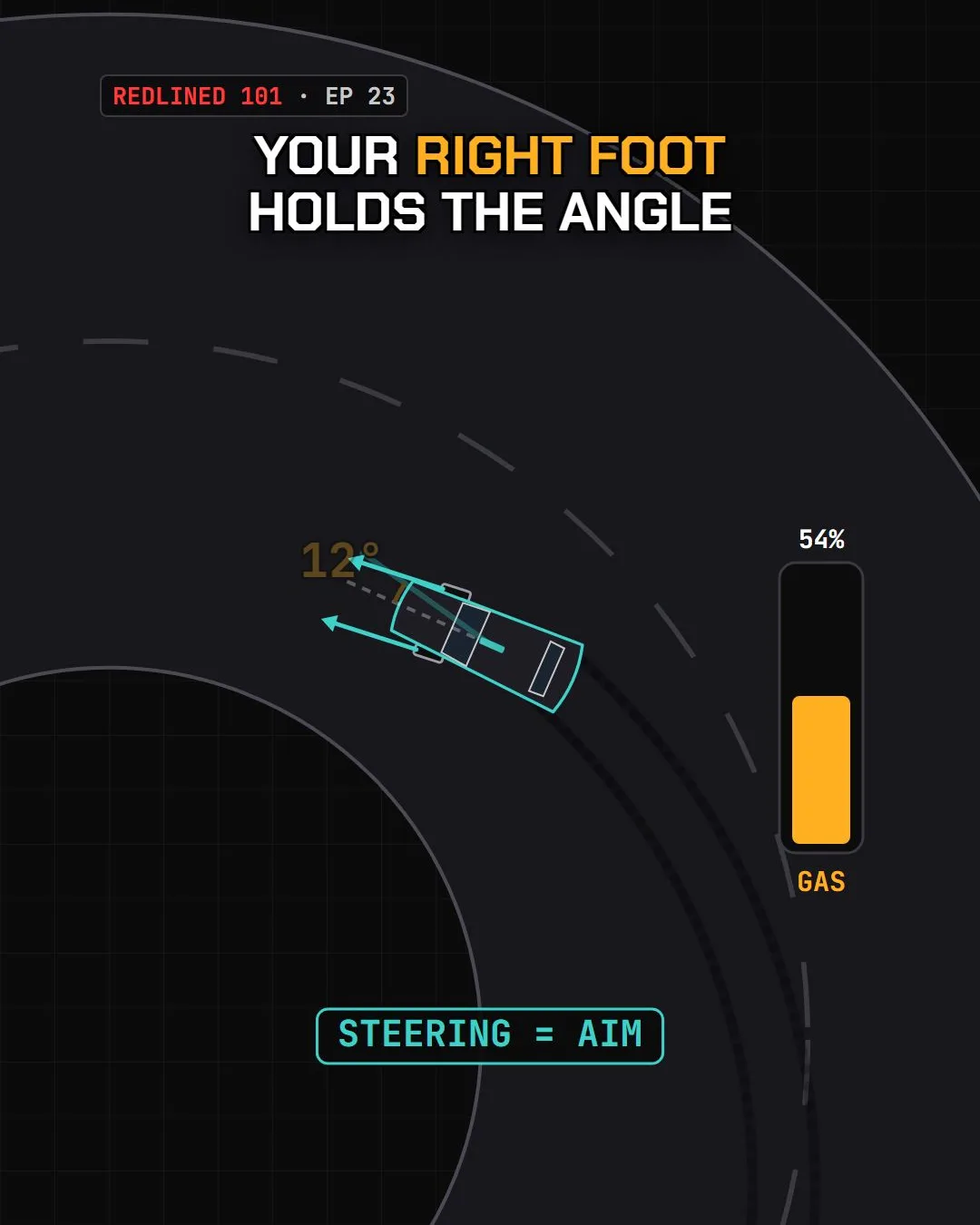
How Drifting Works: Throttle, Steering, Handbrake and Clutch Kick (Redlined 101, Ep 23)
Why a sliding tire wants to stay loose, why lifting off the gas snaps the car the other way, how the throttle holds the drift angle, clutch kick vs handbrake, and why steering lock and angle kits set the limit.