How to Read Wheel Specs: What 18x8.5 ET35 5x120 Means (Redlined 101, Ep 00)
Ever looked at a build and wondered why it sits like that, sounds like that, or pulls like that? Redlined 101 is the club's answer: car culture, explained from the ground up, one short lesson at a time. This is episode zero. It covers the plan for the series, then the first lesson: the code stamped on the back of every wheel.
 Watch on Instagram
The plan
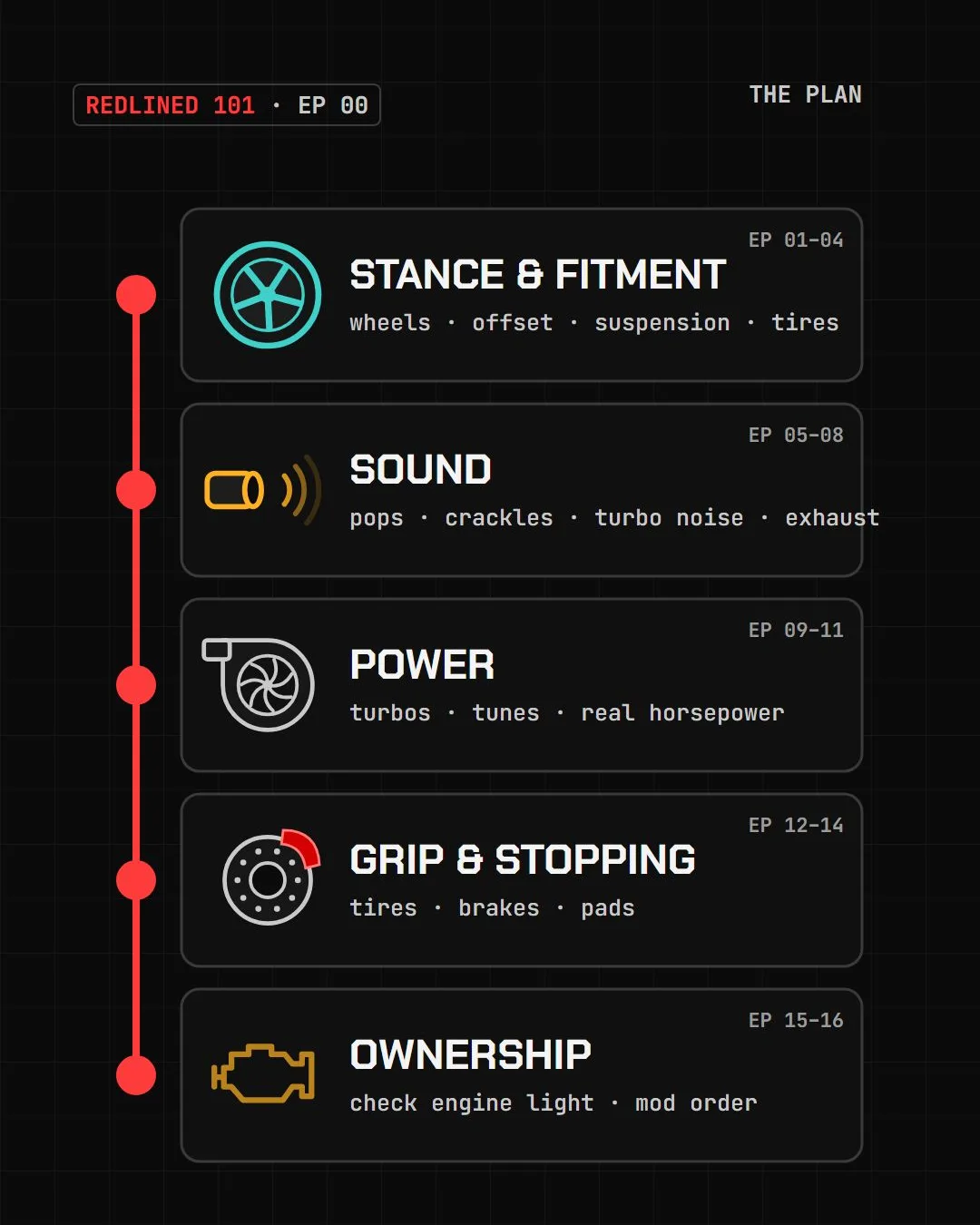
The series runs in five sections, and each episode sets up the next one.
- Stance and fitment. Wheels, offset, suspension, and how your car sits.
- Sound. Why some cars pop and crackle.
- Power. Turbos, tunes, and what actually makes horsepower.
- Grip and stopping. Tires and brakes.
- Ownership. What every owner should know, like what that check engine light really means.
Lesson zero: the code on the back of your wheel
Flip any wheel over and you'll find something like this stamped on the back: 18 x 8.5 ET35 5x120. Four numbers, and every one of them matters when you buy wheels.
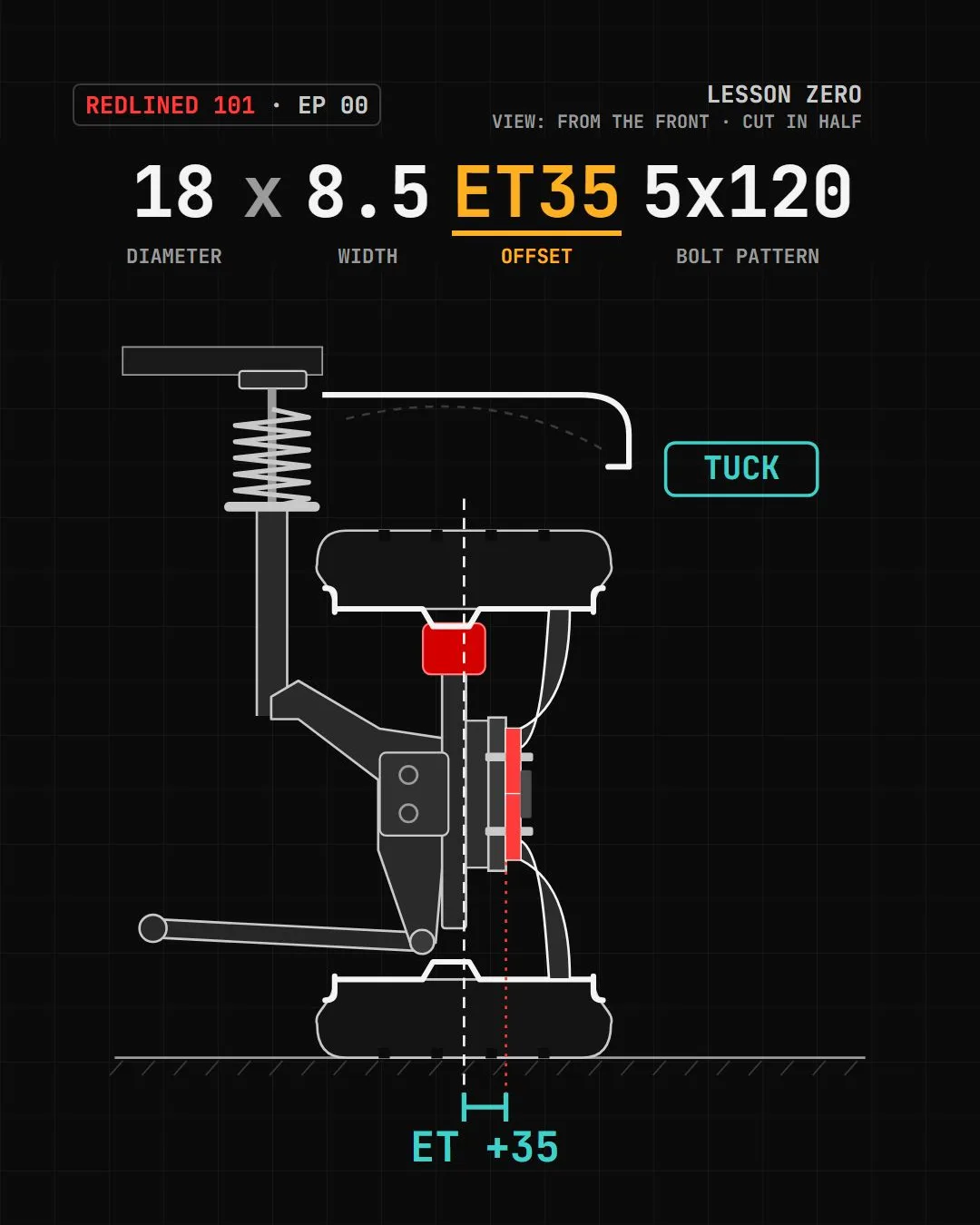
Diameter: 18
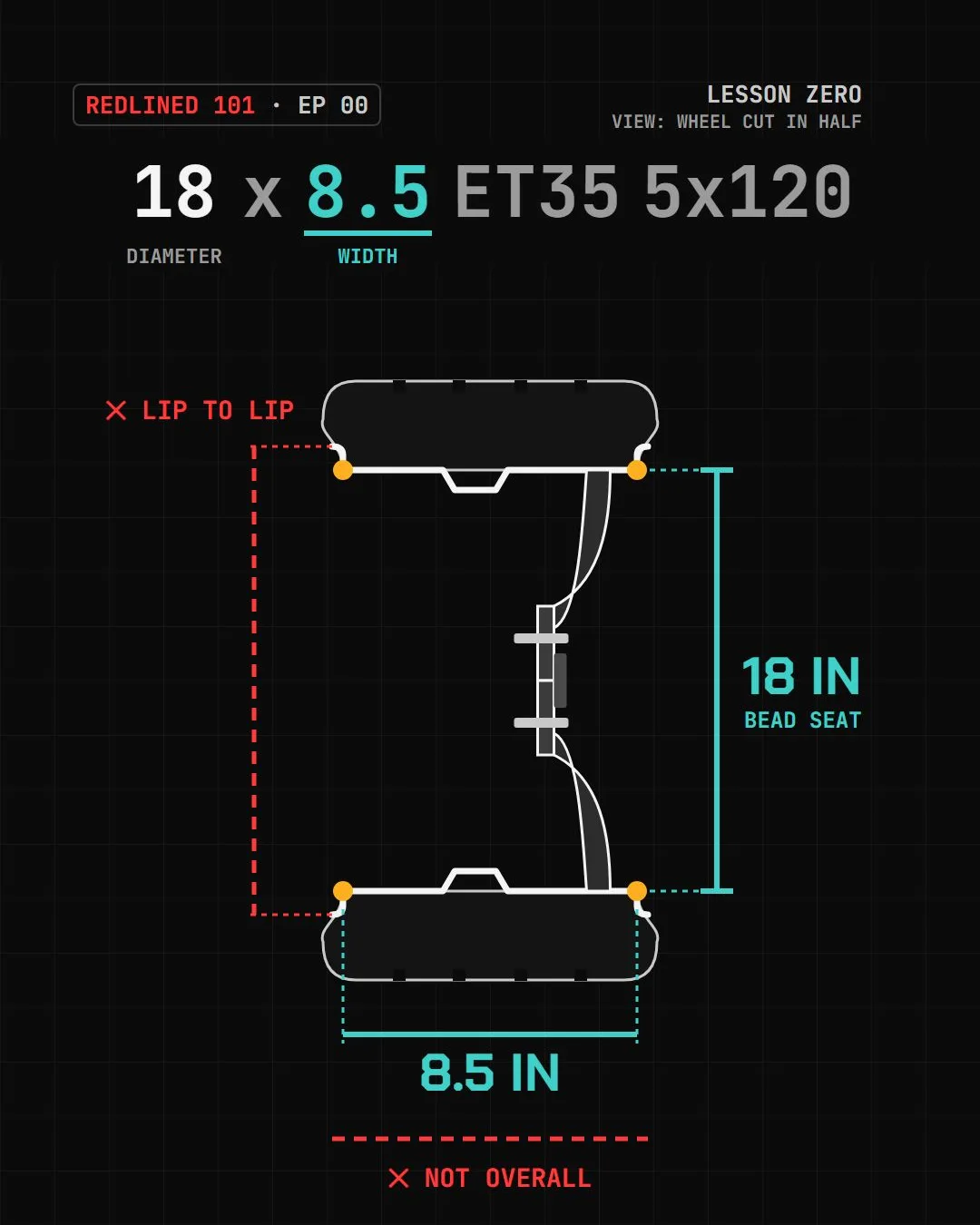
The first number is the diameter in inches. It's measured where the tire sits on the rim (the bead seat), not across the outer lip. That's why an "18-inch" wheel looks bigger than 18 inches when you put a tape measure across the face.
Width: 8.5
The second number is the width, also in inches. It's measured between the bead seats, inside the lips, not across the overall wheel. Measure lip to lip and you'll get a bigger number that doesn't match the stamp.
Bolt pattern: 5x120
The last one is the bolt pattern: five lugs, on a circle 120 millimeters across. It has to match your hub, or the wheel won't go on. A 5x120 wheel bolts to a 5x120 hub. A 4x100 wheel won't, however close it looks.
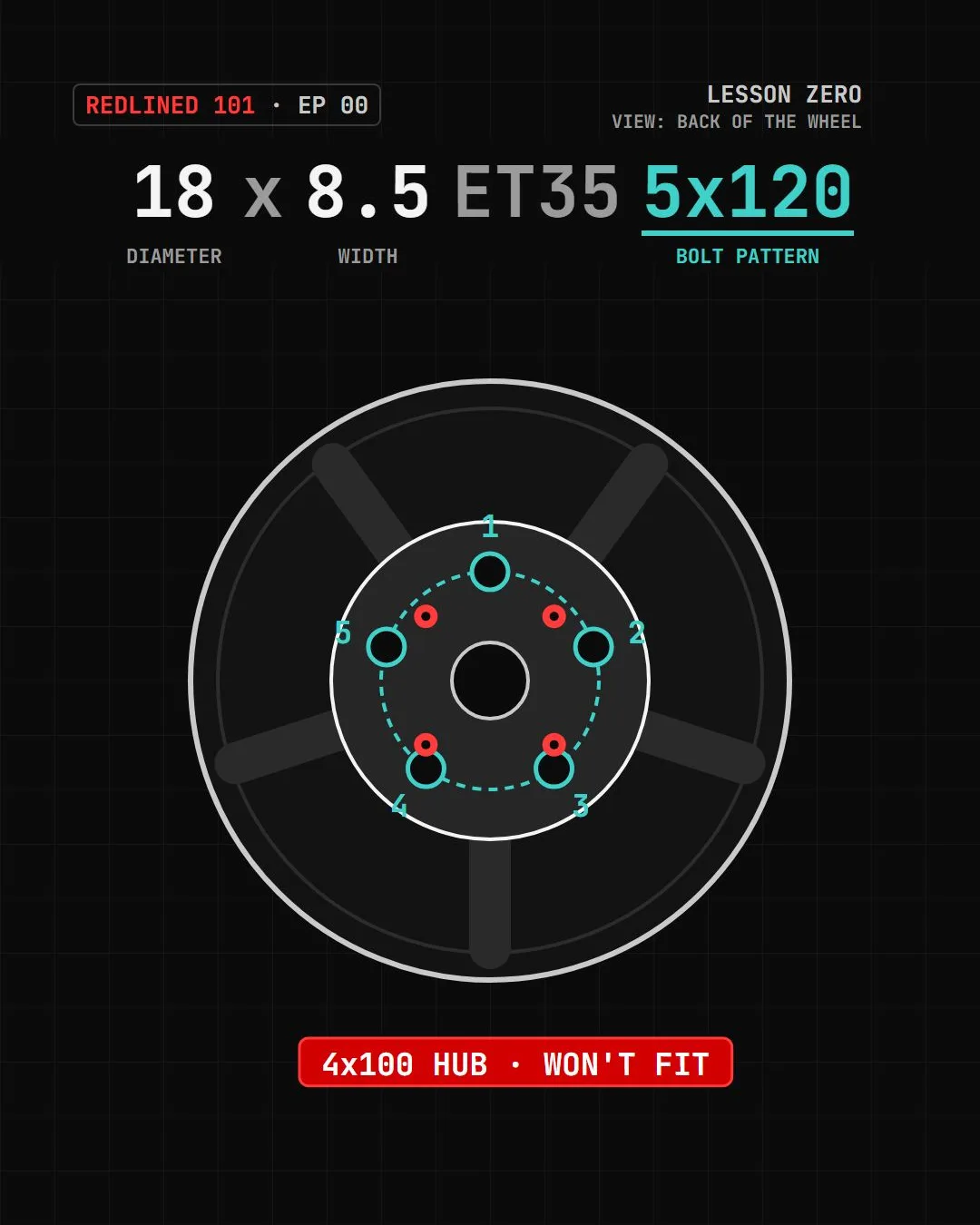
Offset: ET35
The one in the middle, ET35, is the offset. It decides whether your wheels poke out past the fender or tuck in under it, and it's the one people get wrong the most. That's exactly where episode one picks up.
The other markings on the back of a wheel
The four numbers are the headline, but most wheels carry more. It's worth knowing what you're looking at before you buy used:
- Center bore. The size of the hole in the middle of the wheel, in millimeters (for example 72.6 or 66.1). On a hub-centric fit the bore matches the car's hub exactly, so the hub carries the wheel's weight and the lug nuts only clamp it. Many aftermarket wheels have a larger bore so they fit many cars; a pair of plastic or aluminum hub-centric rings fills the gap. Skip them and the wheel can sit slightly off-center, which shows up as a vibration you can't balance out.
- Load rating. The maximum weight the wheel is designed to carry, usually in kilograms or pounds. It matters most on heavy cars, SUVs and anything that tows.
- JWL and VIA. Japanese wheel standards, stamped on many Japanese-market and quality aftermarket wheels to show the design passed strength testing. A missing stamp isn't proof of a bad wheel, but it's a reason to ask questions about a cheap replica.
- Part number and date code. Useful for finding the exact model and year, and for spotting a wheel that's been refinished or repaired.
How to find what your car needs
Start with what the car came with. The driver's door jamb or the owner's manual lists the factory tire size, and the factory wheel specs are easy to find for any common model. Those numbers are your baseline: anything you change from there is a deliberate choice, not a guess.
To check a bolt pattern yourself on a five-lug hub, measure from the center of one stud to the outer edge of the stud furthest from it. It isn't perfectly precise, but it's enough to tell 5x114.3 from 5x120. On a four-lug hub, measure center to center across two opposite studs.
Common mistakes
- Buying by diameter alone. An 18-inch wheel can be anything from 7 to 10+ inches wide with almost any offset. Diameter is the least of it.
- Ignoring the lug seat. Lug nuts and bolts seat against a cone (60°), a ball (radius) or a flat face, and the seat on the nut has to match the wheel. Many factory wheels use ball seats while most aftermarket wheels use cones. The wrong seat can let a wheel work loose.
- Forgetting the tire. A wider wheel needs a tire made for that rim width. Tire makers publish an approved rim-width range for each size; stay inside it.
How the series works
- Drop your questions in the comments. We answer the best one at the start of every episode, and the most requested topics move up the list.
- Save the ones you'll need later, and send them to the friend who still calls every wheel a rim.
- Follow @redlined.cc so you don't miss the next one.
Next: Wheel offset explained: ET, poke, flush and tuck →
Frequently asked questions
What does 18x8.5 mean on a wheel?
An 18-inch diameter and an 8.5-inch width, both measured at the bead seats where the tire sits, not across the outer lips.
What does 5x120 mean?
Five lug studs on a circle 120 millimeters across. The wheel has to match the bolt pattern of your hub exactly or it will not mount properly.
What is ET on a wheel?
ET is the wheel's offset in millimeters: the distance from the wheel's centerline to the mounting pad. Higher ET tucks the wheel in, lower ET pushes it out.
Do I need hub-centric rings?
If the wheel's center bore is larger than your car's hub, yes. The rings center the wheel on the hub and prevent vibrations that balancing can't fix.
Official merch
Shop the club merch
Car Guy By Definition on a Unisex Oversized Heavyweight T-Shirt, black
Unisex Oversized Heavyweight T-Shirt
from $32.99
Tokyo Retro Vibes on a Unisex Oversized Heavyweight T-Shirt, black
Unisex Oversized Heavyweight T-Shirt
from $32.99
BOSOZOKU CARSPANK ボ — ソ — 族 — 車 の ス パ ン ク on a Unisex Oversized Heavyweight T-Shirt, black
Unisex Oversized Heavyweight T-Shirt
from $32.99
But Officer The Sign Said Slide It on a Unisex Oversized Heavyweight T-Shirt, black
Unisex Oversized Heavyweight T-Shirt
from $32.99
Coilovers > 401K – Funny Car Guy on a Unisex Oversized Heavyweight T-Shirt, black
Unisex Oversized Heavyweight T-Shirt
from $32.99
3 Pedals 0 F*cks – Manual Transmission on a Unisex Oversized Heavyweight T-Shirt, black
Unisex Oversized Heavyweight T-Shirt
from $32.99
Can't Pump Gas, Can Swap A Motor – NJ Car Guy on a Unisex Oversized Heavyweight T-Shirt, black
Unisex Oversized Heavyweight T-Shirt
from $32.99
Check Engine Light Has Seen Things on a Unisex Oversized Heavyweight T-Shirt, black
Unisex Oversized Heavyweight T-Shirt
from $32.99
REDLINED 3 on a Unisex Oversized Heavyweight T-Shirt, black
Unisex Oversized Heavyweight T-Shirt
from $32.99
R32 Legend – JDM Icon on a Unisex Oversized Heavyweight T-Shirt, black
Unisex Oversized Heavyweight T-Shirt
from $32.99


More from the club
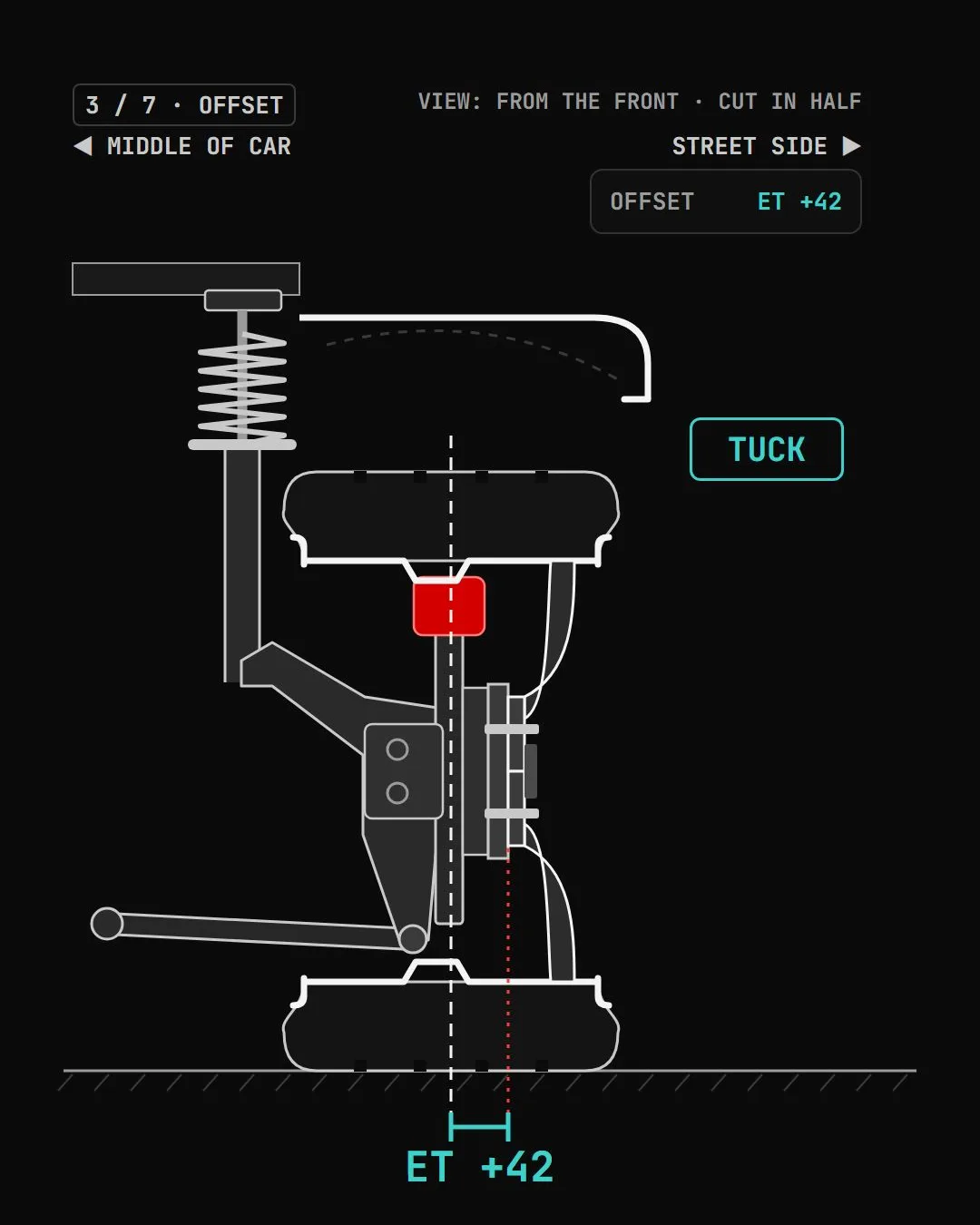
Wheel Offset Explained: ET, Poke, Flush and Tuck (Redlined 101, Ep 01)
What wheel offset (ET) is, why a higher number tucks the wheel and a lower one pokes, how camber and fender rolling change what fits, and what gets respect in the car community.
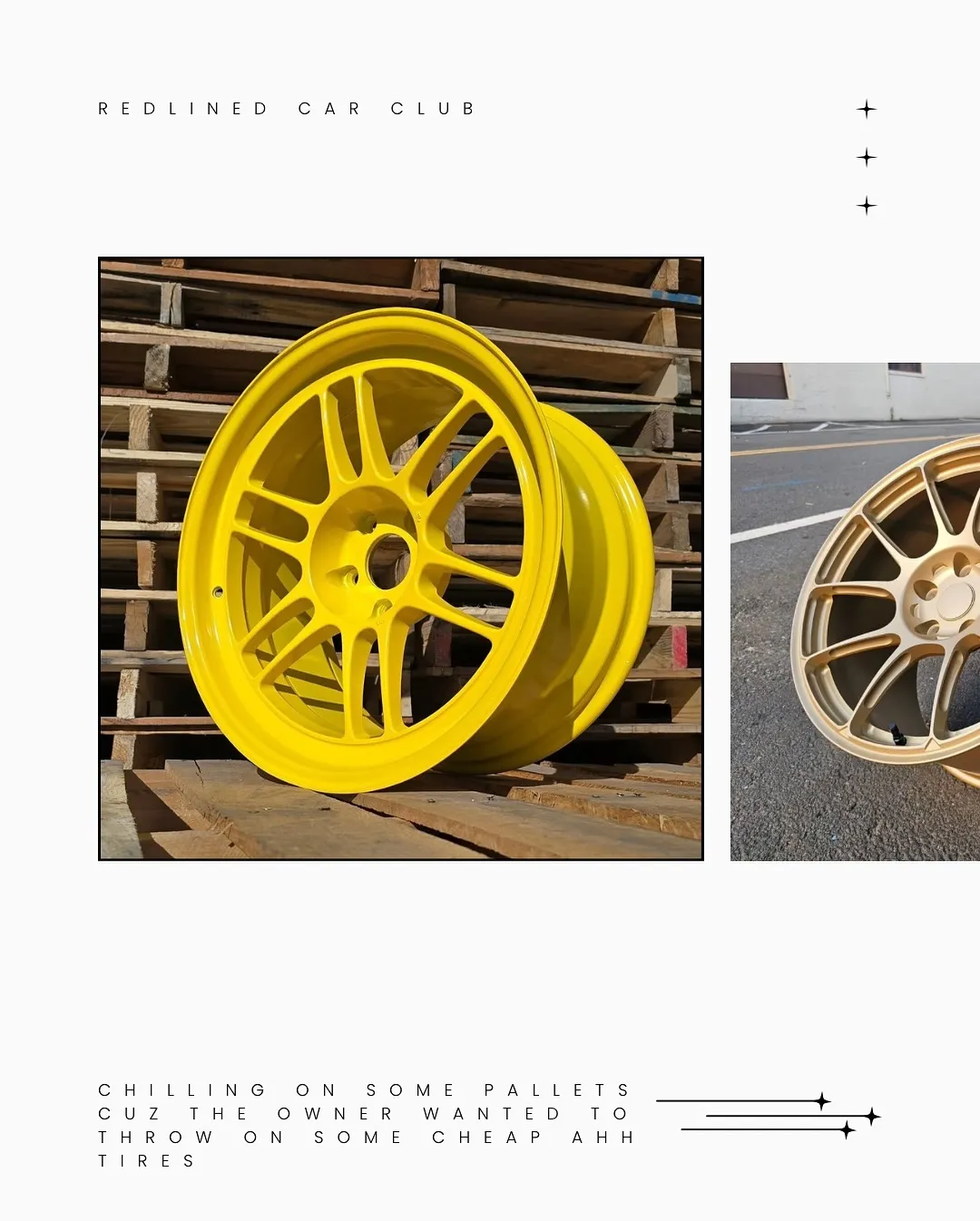
Powder-Coated Wheels: Why the Club Swears by It (and What FAPAUTO Has Been Coating)
Why powder coating beats paint on wheels and calipers, how the work gets done at FAPAUTO in New Jersey, and a look at the wheels and Brembo calipers that have come out of the booth.
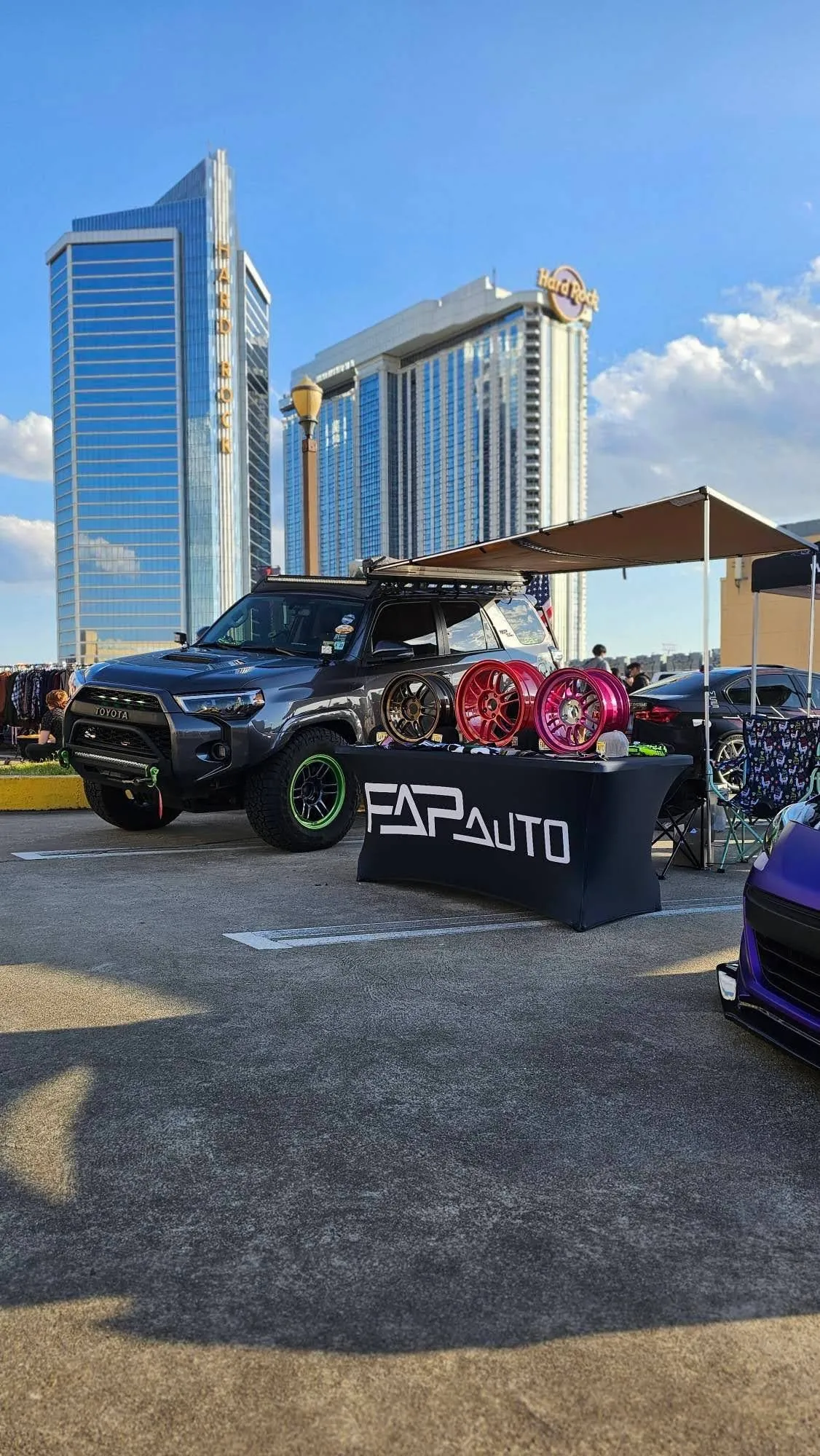
Damage-Free Tire Mounting, and Why Enthusiasts Love Enkei
Why the machine that mounts your tires matters as much as the tires, how FAPAUTO handles wheels with care, and what the club says about Enkei wheels.