Wheel Alignment Explained: Camber, Toe, Caster, Scrub Radius and Ackerman (Redlined 101, Ep 03)
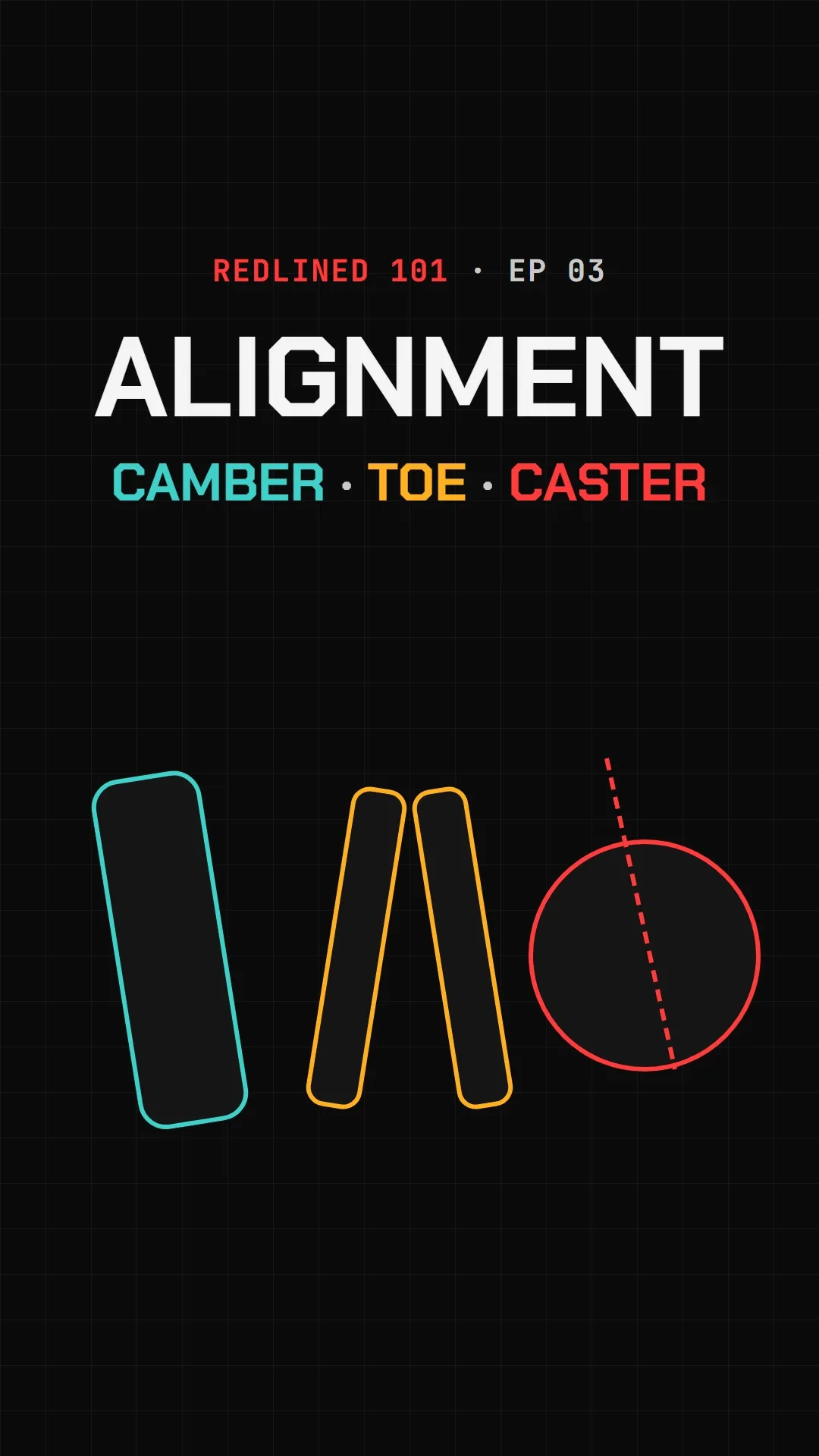
Lowered it? Your tires are about to pay for it. Last episode we lowered the car, and lowering knocks your alignment out. Three angles decide how your tires meet the road: camber, toe and caster. Get them wrong, and you'll chew through tires. Along the way we answer two questions from the comments: scrub radius and Ackerman.
 Watch on Instagram
Camber: the tilt, seen from the front
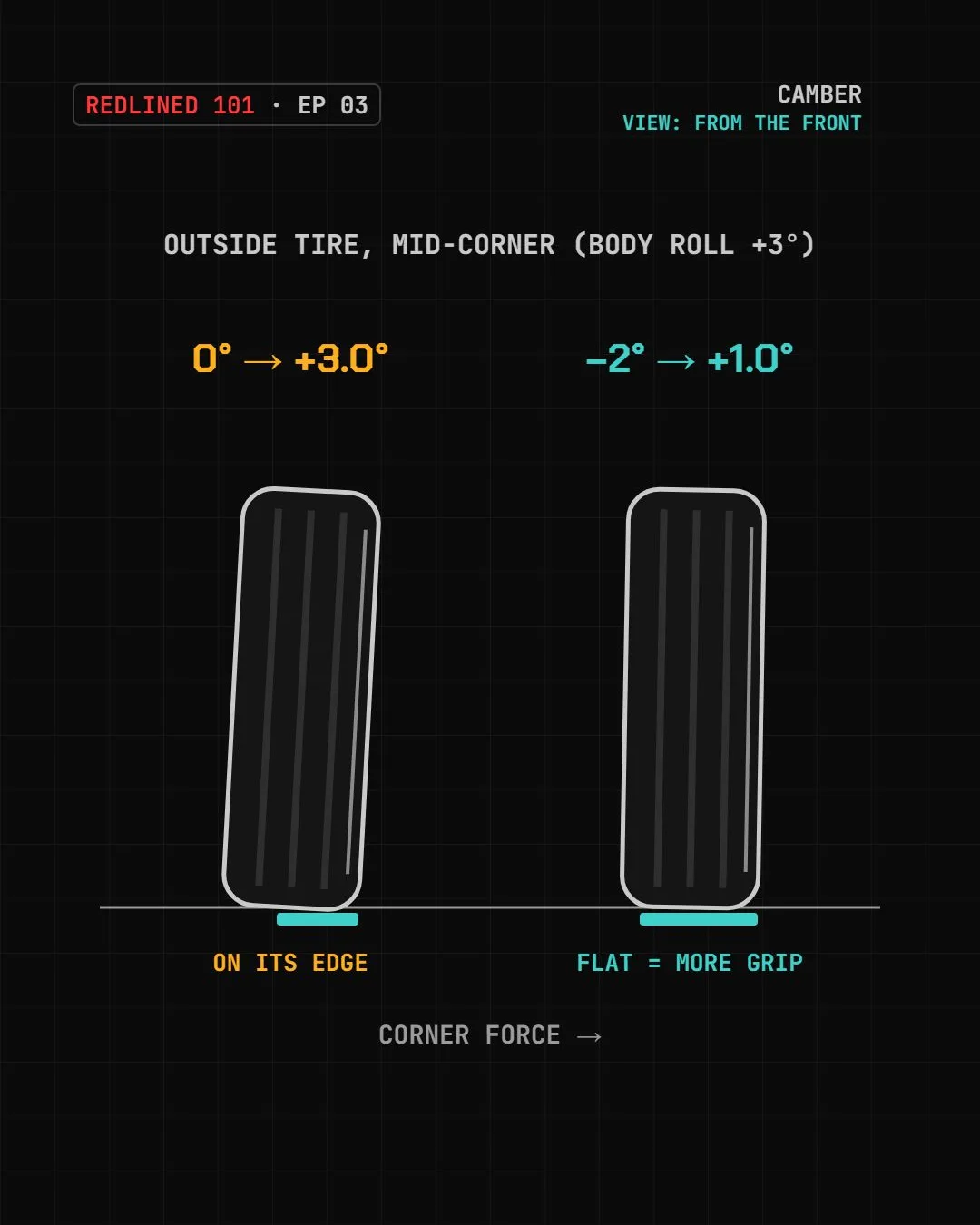
Look at the car from the front. Camber is how much the wheel tilts in or out at the top.
Tilted in at the top is negative camber. A little keeps the tire flat when the car leans in a corner, for more grip. Too much, and the tire rides its inner edge. You lose braking grip, and the inside wears out first.
Toe: the angle, seen from above
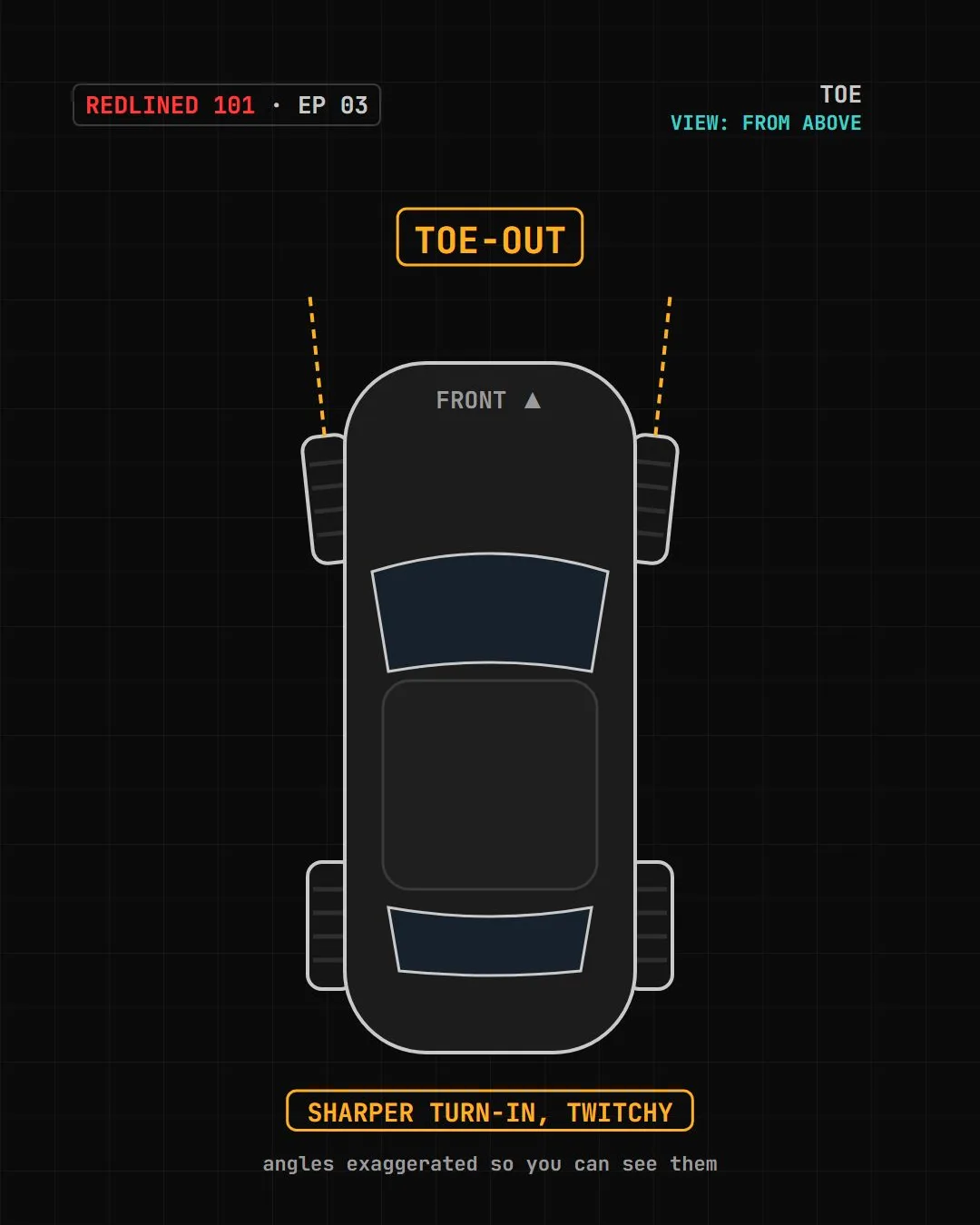
Now look from above. Toe is whether the fronts of the tires point toward each other, or away.
- Toe-in (pointing in) is stable in a straight line.
- Toe-out (pointing out) gives sharper turn-in, but it's twitchy.
Toe is the real tire killer. A little too much drags the tire sideways every mile, and feathers the tread.
Ackerman: why the inside wheel steers more
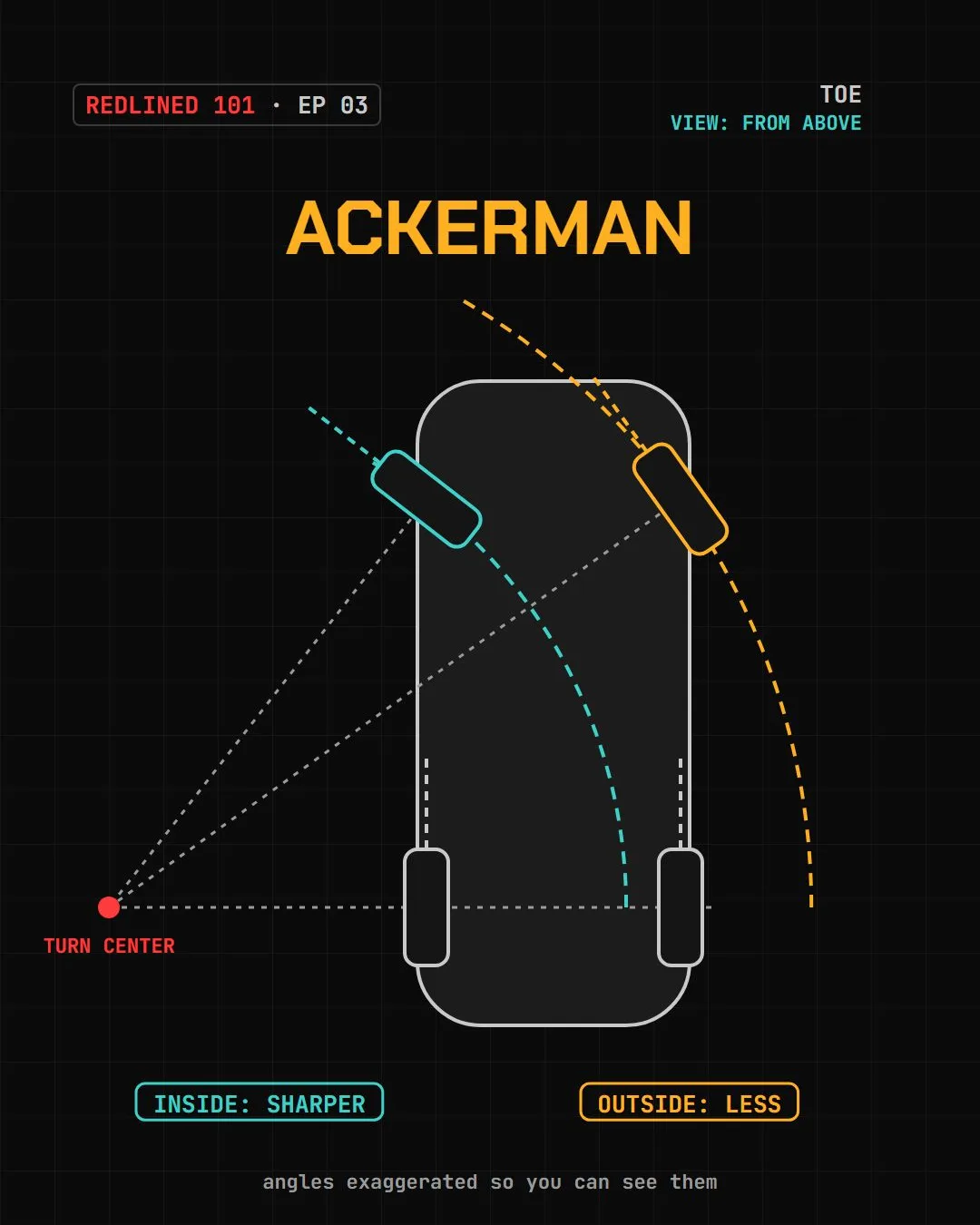
One more from above. In a turn, the two front wheels don't follow the same circle: the inside wheel runs a tighter one. So it has to steer at a sharper angle than the outside wheel, or one of the tires would be dragged sideways through the corner.
That's Ackerman. It's built into the angle of the steering arms, so that a line through each front wheel's axle meets at a single turn center, out on the line of the rear axle.
Caster: the steering axis, seen from the side
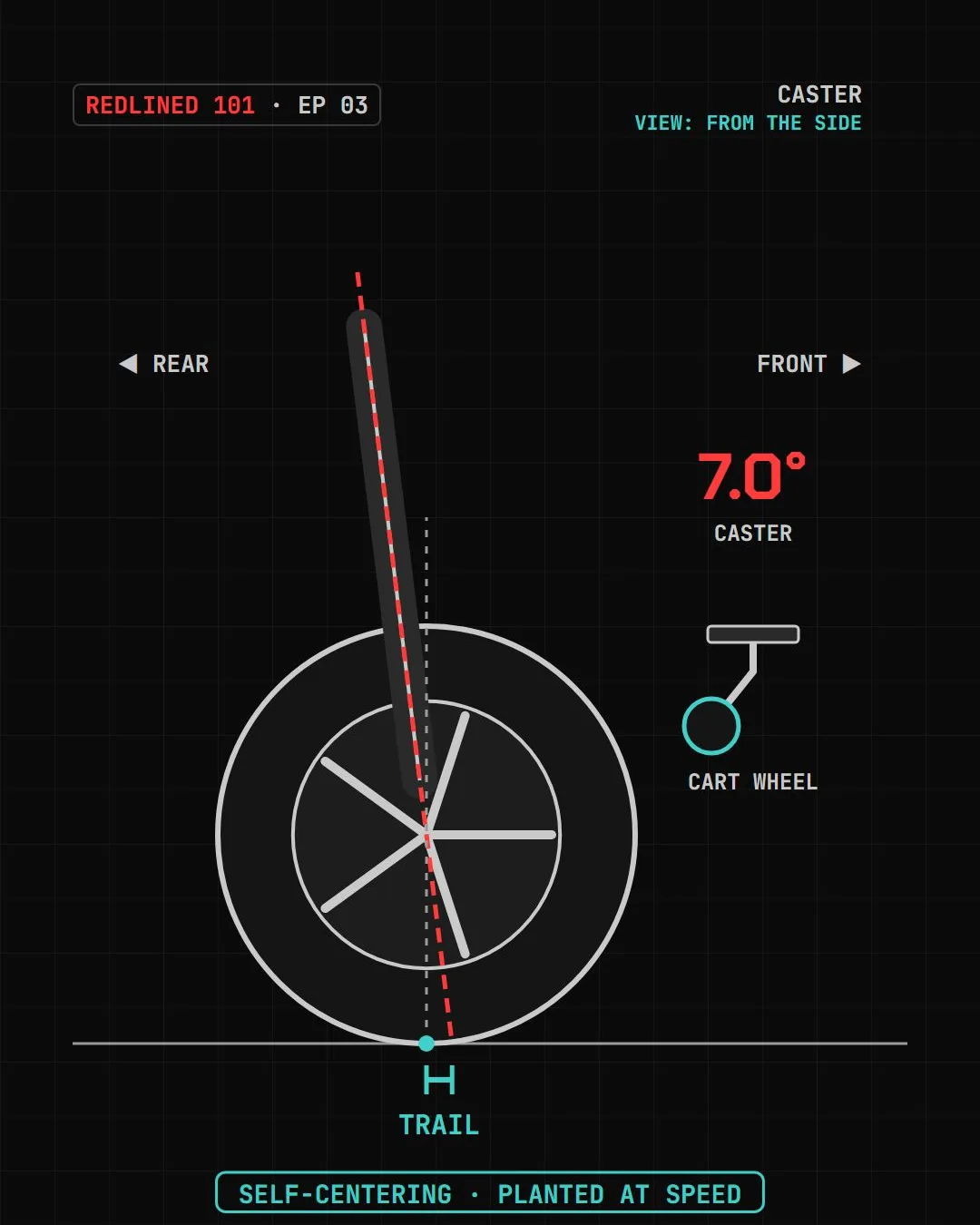
Look from the side. Caster is the tilt of the steering axis, the line the wheel turns around.
Tilt the top of that line back, and the tire trails behind it, like a shopping cart wheel. That's what snaps the steering back to center after a turn, and why more caster feels planted at speed (with heavier steering when parking).
Scrub radius: where offset meets steering
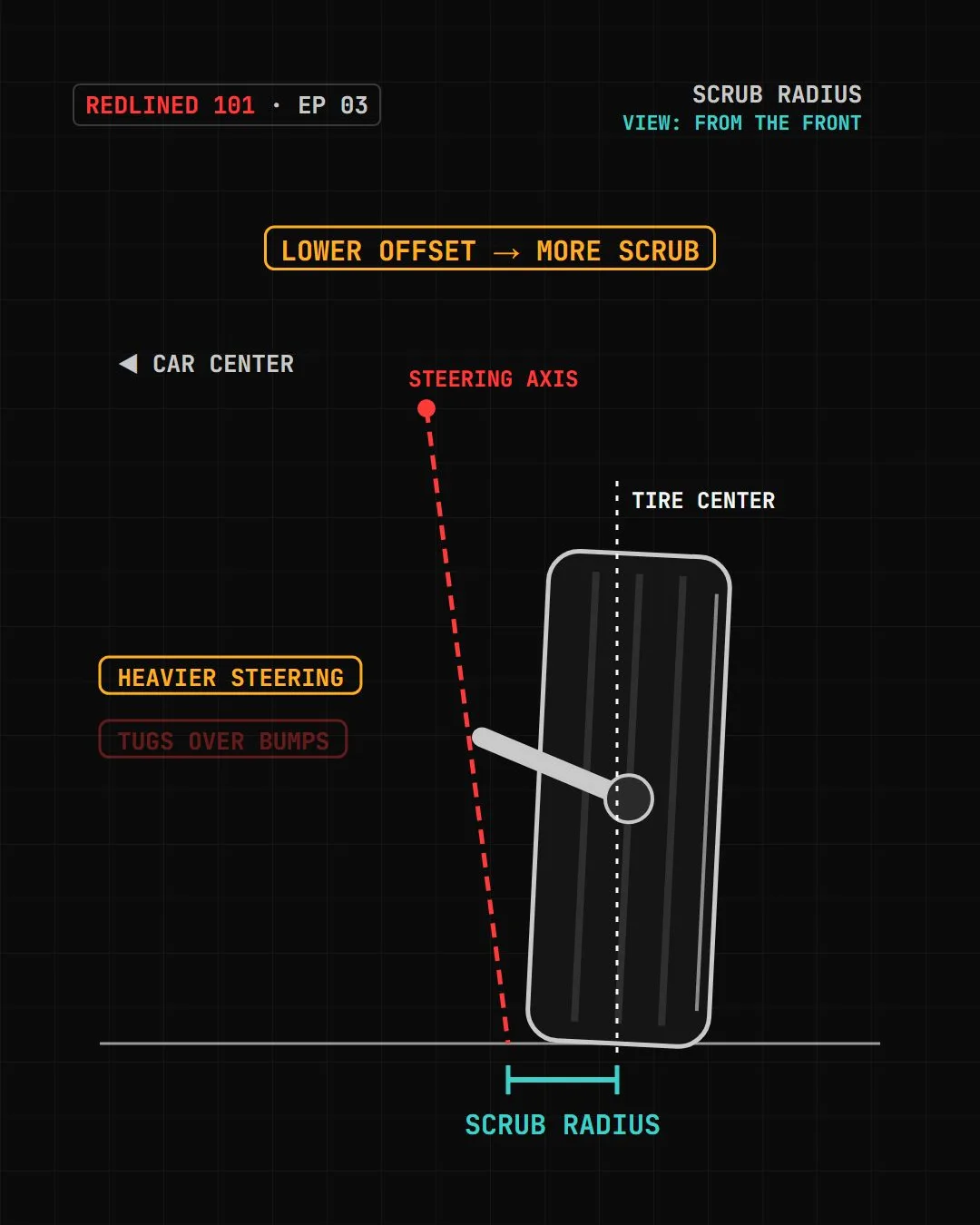
Back to the front view. The steering axis doesn't run straight down the middle of the tire: it's tilted, and it meets the road at a point. The distance at the road between that point and the middle of the tire is the scrub radius.
Change your wheel offset and you change it. A lower offset pushes the wheel outward while the steering axis stays put, so the scrub radius grows. More scrub means heavier steering that tugs over bumps and under braking. Small changes are rarely noticeable; big jumps in offset or thick spacers can be. (More on offset in Redlined 101, Ep 01.)
Why lowering throws it off
As the suspension compresses, the geometry changes. Most cars gain negative camber, and the toe moves too. Lower the car and you've moved both before you've driven a mile.
How a shop adjusts each angle
- Toe is set at the tie rods. Spin the tie rod end, and the rod gets longer or shorter, turning the wheel in or out.
- Camber is set with cam bolts where the strut meets the knuckle, camber plates up top, or adjustable control arms.
- Caster, if it's adjustable, is set with caster plates, or arms that move the lower ball joint forward or back.
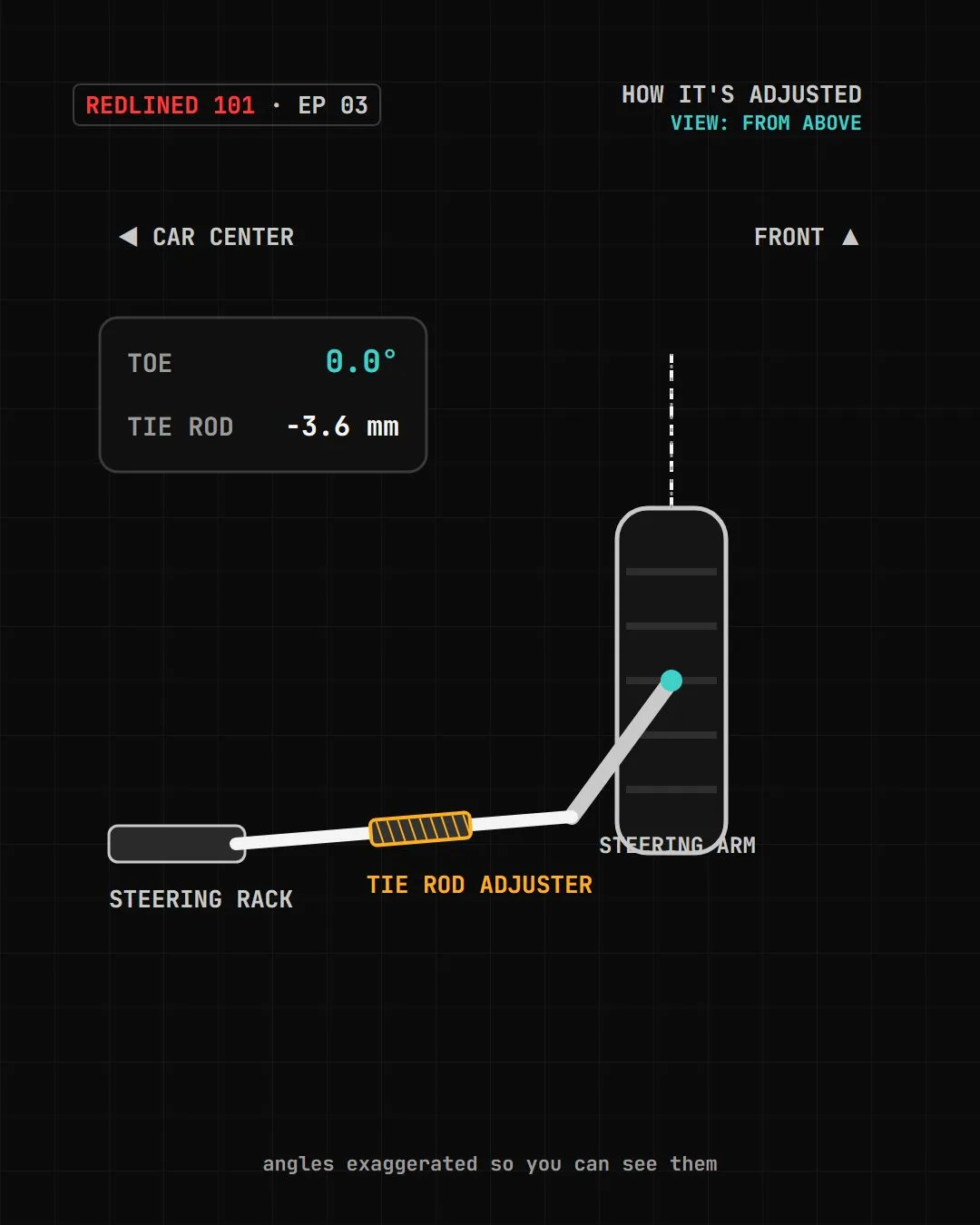
Toe: the tie rod adjuster lengthens or shortens the rod. 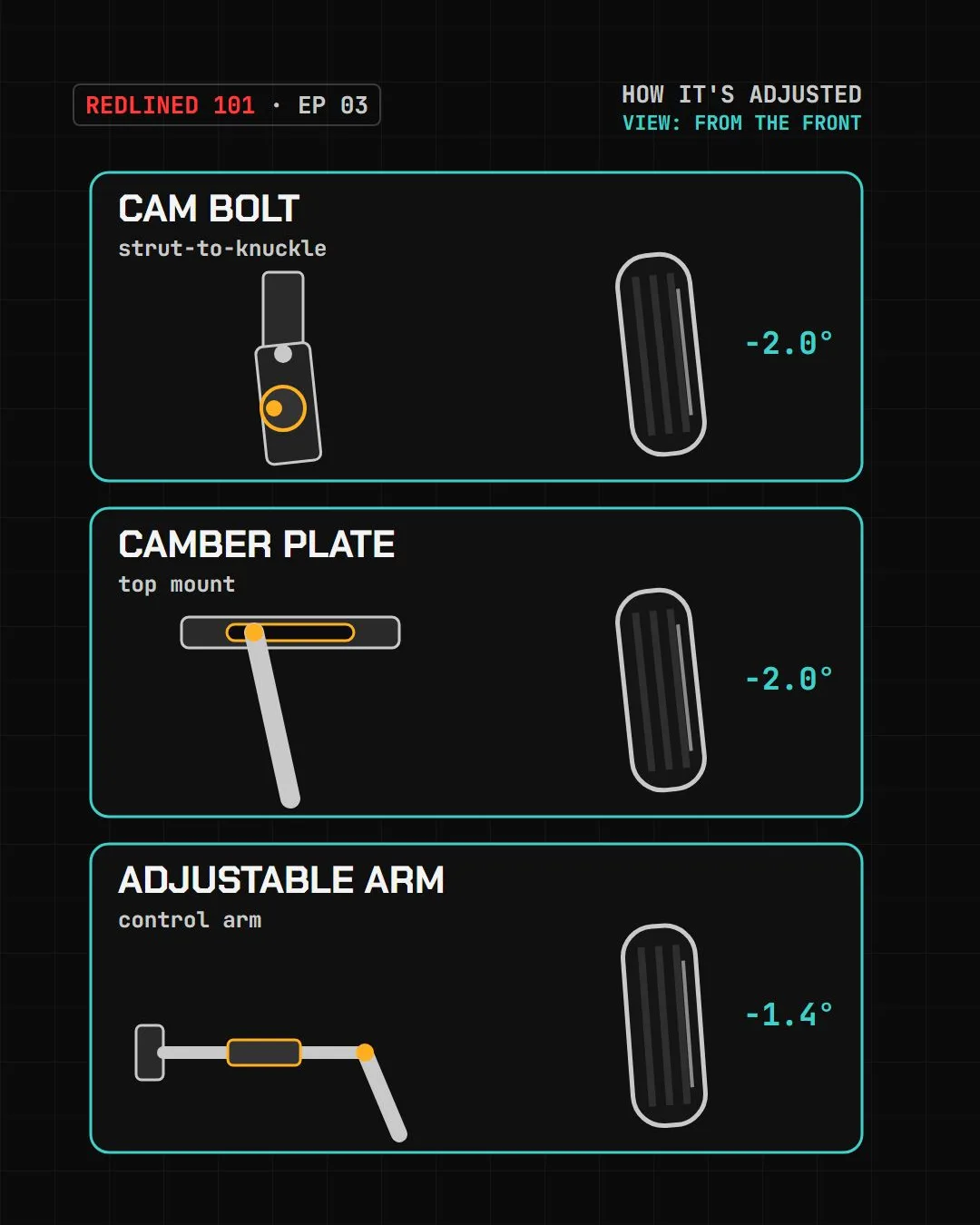
Camber: cam bolt, camber plate, or adjustable arm.
The order matters: caster first, then camber, then toe last, because every change moves the toe.
What it does to fit and feel
- Fitment: more negative camber tucks the top of the tire away from the fender, which is how lower offsets fit. (That's the link back to wheel offset.)
- Feel: more caster snaps the wheel back to center and feels planted at speed, but parking gets heavier.
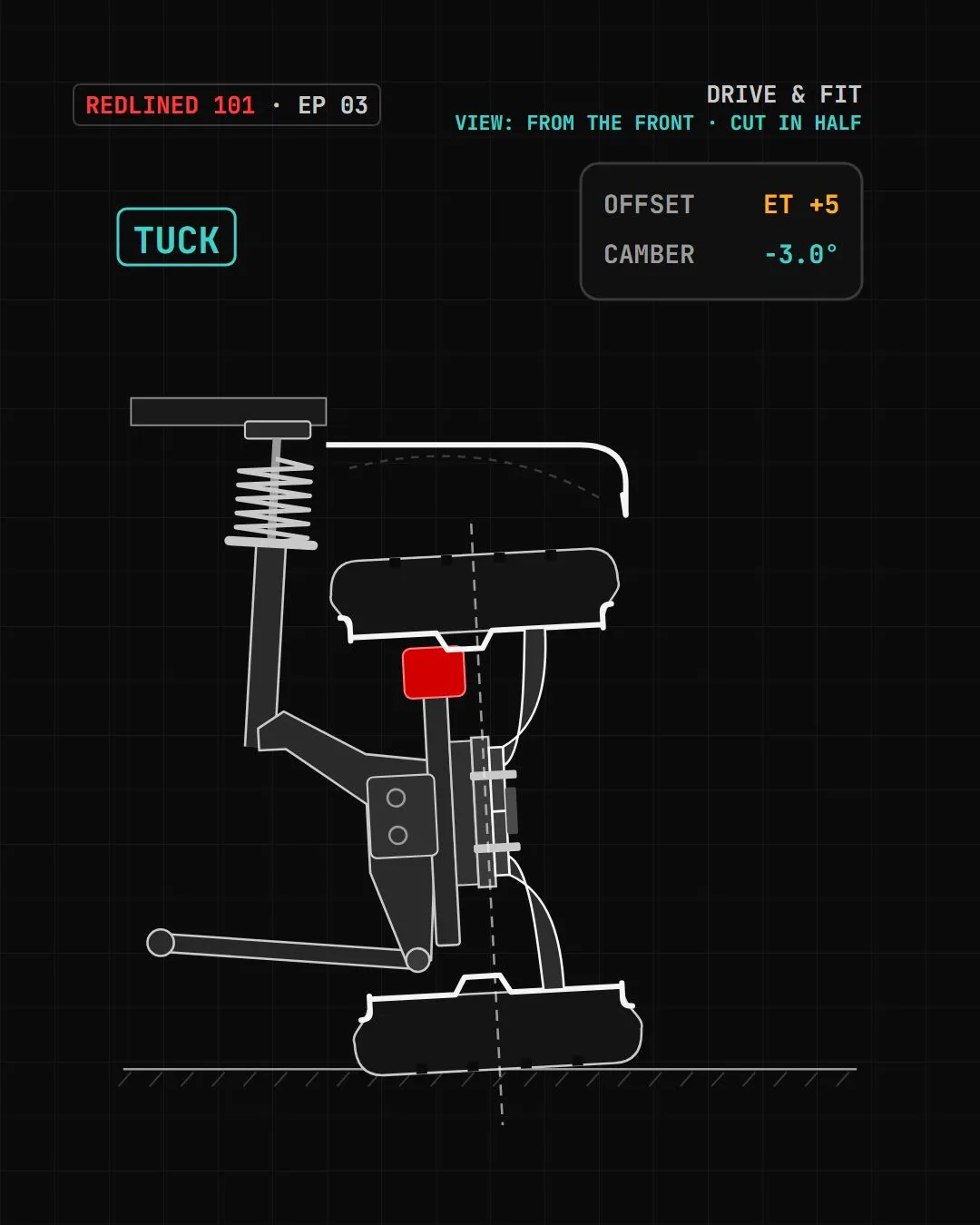
A starting point: for a lowered street car, a degree or two of negative camber and toe near zero is common. Your alignment shop will set the final numbers for your car and how you drive it.
Signs your alignment is off
You don't need a machine to suspect a problem. Watch for:
- The car pulls to one side on a flat, straight road.
- The steering wheel sits off-center when you're driving straight.
- Uneven tire wear. Wear on the inner edge points to too much negative camber or toe; a feathered, saw-tooth feel across the tread usually means toe is off.
- Squealing tires at low-speed turns in parking lots, which can mean too much toe.
What happens at an alignment
The car goes on an alignment rack, and sensors or targets are mounted on each wheel. The machine measures camber, toe and caster against the specification for your car, the technician adjusts what's adjustable, and the machine measures again. Ask for the before-and-after printout. It shows exactly what changed and gives you a baseline for next time. If your car is lowered, tell the shop before they start: some will align to the middle of the factory range, which may not be what a lowered car on wider wheels needs.
How often to get one
After lowering or any suspension work, after replacing steering parts like tie rods, after a hard hit on a pothole or curb, and whenever you buy a new set of tires, so they start life square. Otherwise, a yearly check is cheap insurance against wearing out a set of tires early.
Recap
Camber is the tilt from the front. Toe is the angle from above. Caster is the steering axis from the side. Lower it, then align it.
Next episode: all three of these end at the tire, so we read a sidewall, like 245/40R18.
Official merch
Dialed in
Can't Pump Gas, Can Swap A Motor – NJ Car Guy on a Unisex Oversized Heavyweight T-Shirt, black
Unisex Oversized Heavyweight T-Shirt
from $39.49
Can't Pump Gas, Can Swap A Motor – NJ Car Guy on a Washed Unisex T-Shirt, mineral navy
Washed Unisex T-Shirt
from $27.99
Can't Pump Gas, Can Swap A Motor – NJ Car Guy on a Men's Premium T-Shirt, black
Men's Premium T-Shirt
from $27.99
Can't Pump Gas, Can Swap A Motor – NJ Car Guy on a Women's Cropped T-Shirt, black
Women's Cropped T-Shirt
from $28.49
Can't Pump Gas, Can Swap A Motor – NJ Car Guy on a Champion Women’s Cropped T-Shirt, black
Champion Women’s Cropped T-Shirt
from $26.99
Can't Pump Gas, Can Swap A Motor – NJ Car Guy on a Stanley/Stella Blaster Oversized T-Shirt, black
Stanley/Stella Blaster Oversized T-Shirt
from $27.49
Can't Pump Gas, Can Swap A Motor – NJ Car Guy on a Women's Oversized Organic Cropped T-Shirt, black
Women's Oversized Organic Cropped T-Shirt
from $23.99
Can't Pump Gas, Can Swap A Motor – NJ Car Guy on a Women's Heavyweight Cropped T-Shirt, anthracite grey
Women's Heavyweight Cropped T-Shirt
from $25.99
Can't Pump Gas, Can Swap A Motor – NJ Car Guy on a Heavyweight Unisex Hoodie by Gildan, black
Heavyweight Unisex Hoodie by Gildan
from $49.99
Can't Pump Gas, Can Swap A Motor – NJ Car Guy on a Unisex Crewneck Sweatshirt, black
Unisex Crewneck Sweatshirt
from $42.99
Can't Pump Gas, Can Swap A Motor – NJ Car Guy on a Oversized Hooded Sweatshirt, black
Oversized Hooded Sweatshirt
from $59.49
Can't Pump Gas, Can Swap A Motor – NJ Car Guy on a Oversized Unisex Short Sleeve Sweatshirt, black
Oversized Unisex Short Sleeve Sweatshirt
from $42.49










Previous: ← Coilovers vs lowering springs · Next: Tires explained →
Frequently asked questions
What is scrub radius?
Seen from the front, scrub radius is the distance at the road between where the steering axis meets the ground and the middle of the tire. A lower wheel offset pushes the wheel outward and increases it, which makes steering heavier and more sensitive to bumps and braking.
What is Ackerman steering?
In a turn the inside front wheel follows a tighter circle than the outside one, so it has to steer at a sharper angle. Ackerman geometry, built into the steering arms, makes that happen so both tires roll around the same turn center instead of scrubbing.
What is camber?
Camber is how much the top of the wheel tilts in or out when you look at the car from the front. Tilted in at the top is negative camber.
What does toe mean in an alignment?
Toe is whether the fronts of the tires point toward each other (toe-in) or away from each other (toe-out) when seen from above. Small amounts of toe wear tires quickly.
Why do I need an alignment after lowering my car?
Lowering changes the suspension geometry, adding negative camber and moving toe. Without an alignment the car can handle oddly and wear its tires out early.
How often should I get an alignment?
After any suspension or steering work, after a hard pothole or curb hit, when you fit new tires, and otherwise about once a year.
More from the club
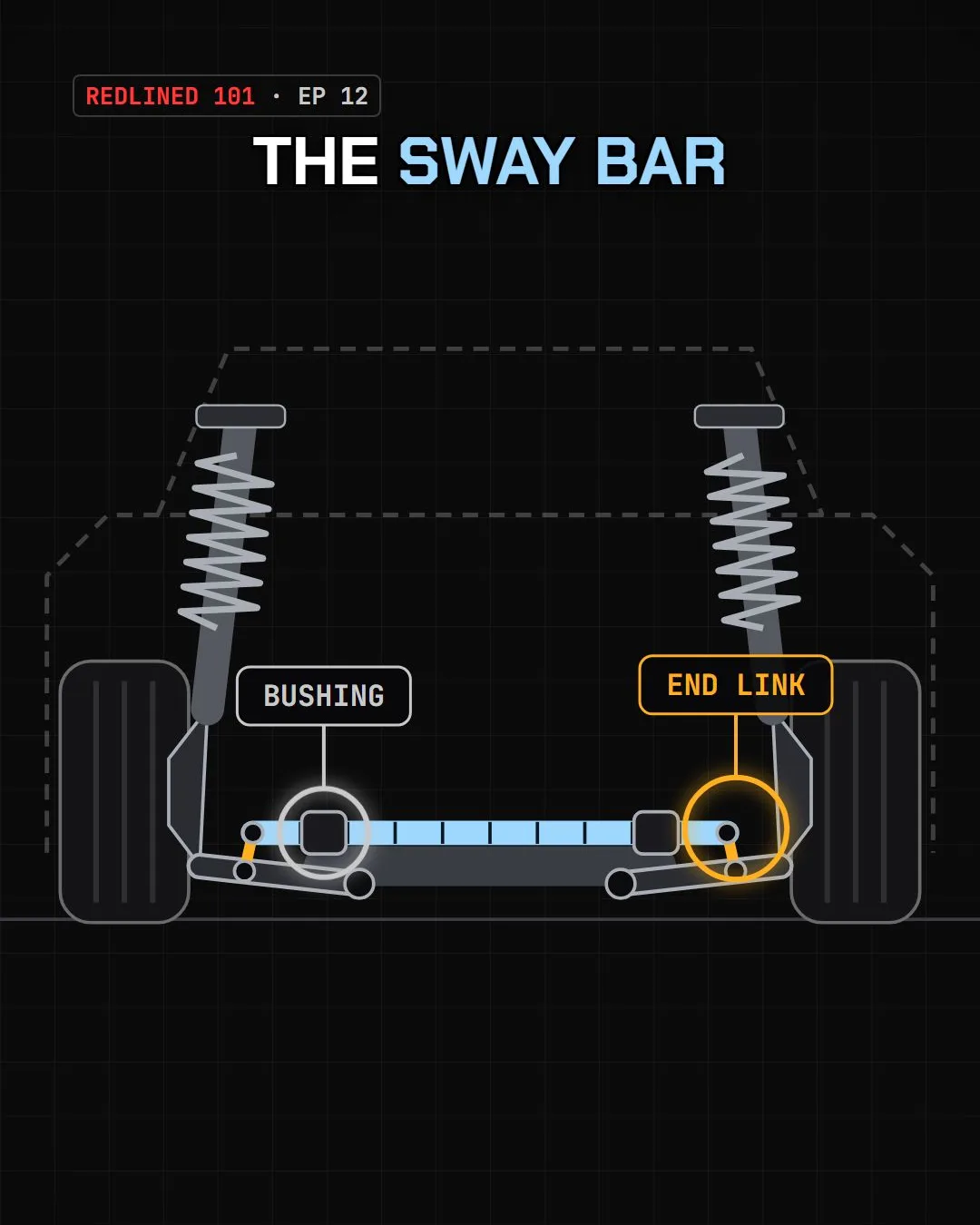
Sway Bars Explained: Why Your Lowered Car Still Leans (Redlined 101, Ep 12)
Why a lowered car still rolls in corners, how a sway bar works, why a slightly thicker bar is much stiffer, adjustable bars, front vs rear bar balance, end links after lowering, and the cost of going too stiff.
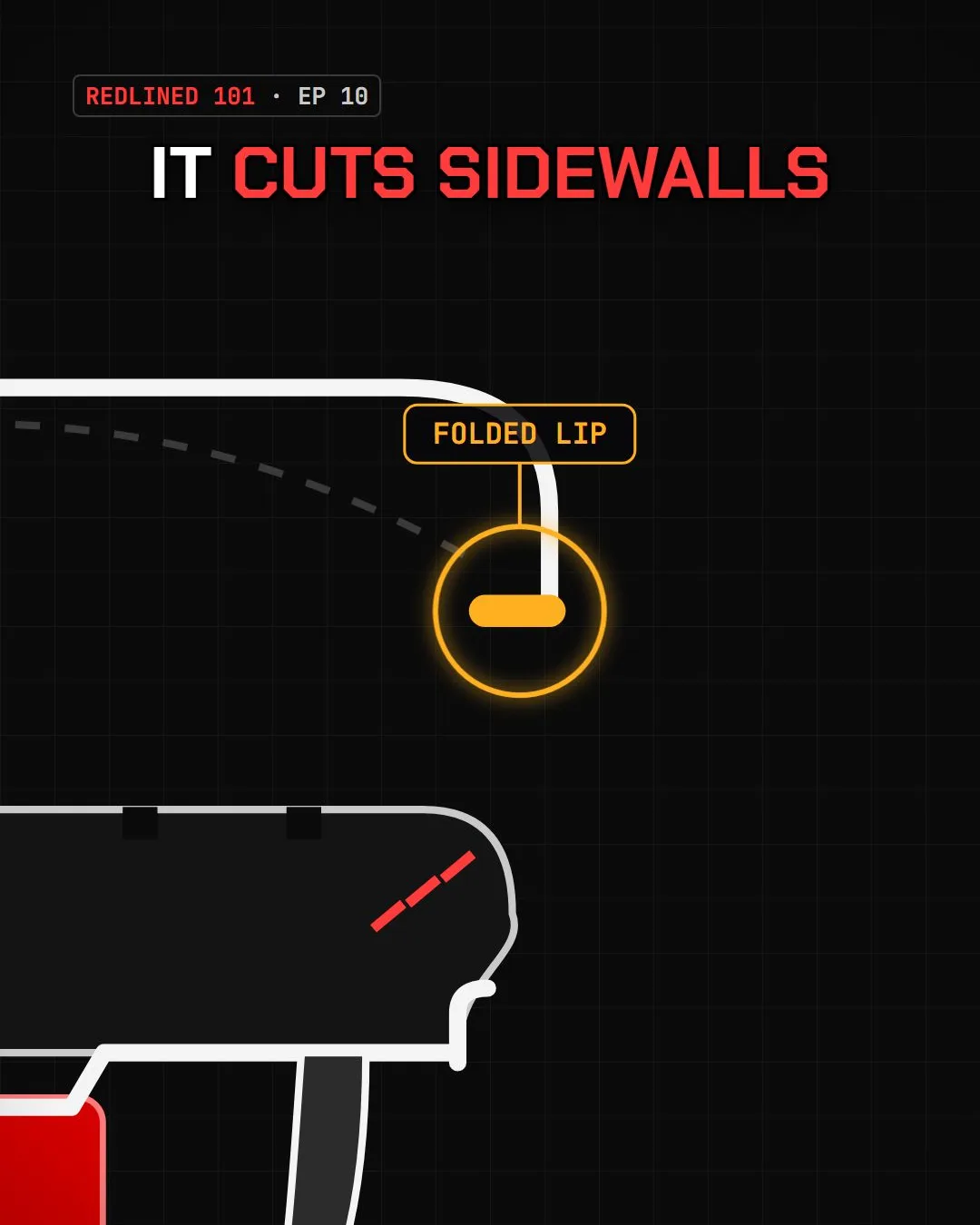
Rolled vs Pulled vs Flared Fenders: How to Stop Tire Rub (Redlined 101, Ep 10)
Why lowered cars rub, the folded fender lip that cuts tires, how to find where it rubs, rolling vs pulling, front vs rear fenders, flares and widebody, and the cheap fixes to try before any bodywork.
Are Wheel Spacers Safe? Hubcentric, Bolt Length, Seats and Torque (Redlined 101, Ep 09)
Are wheel spacers safe? What a spacer does to offset, slip-on vs bolt-on, why hubcentric billet matters, how long your bolts must be, thread engagement, matching seats, stud conversions, torque, and the trade-offs.