Cast vs Flow-Formed vs Forged Wheels: What You Are Actually Paying For (Redlined 101, Ep 06)
A $300 wheel and a $3,000 wheel can look the same. The difference is how they're made, and it decides the weight, the strength, and what happens when you hit a Jersey pothole.
Watch Redlined 101, Ep 06 on Instagram →
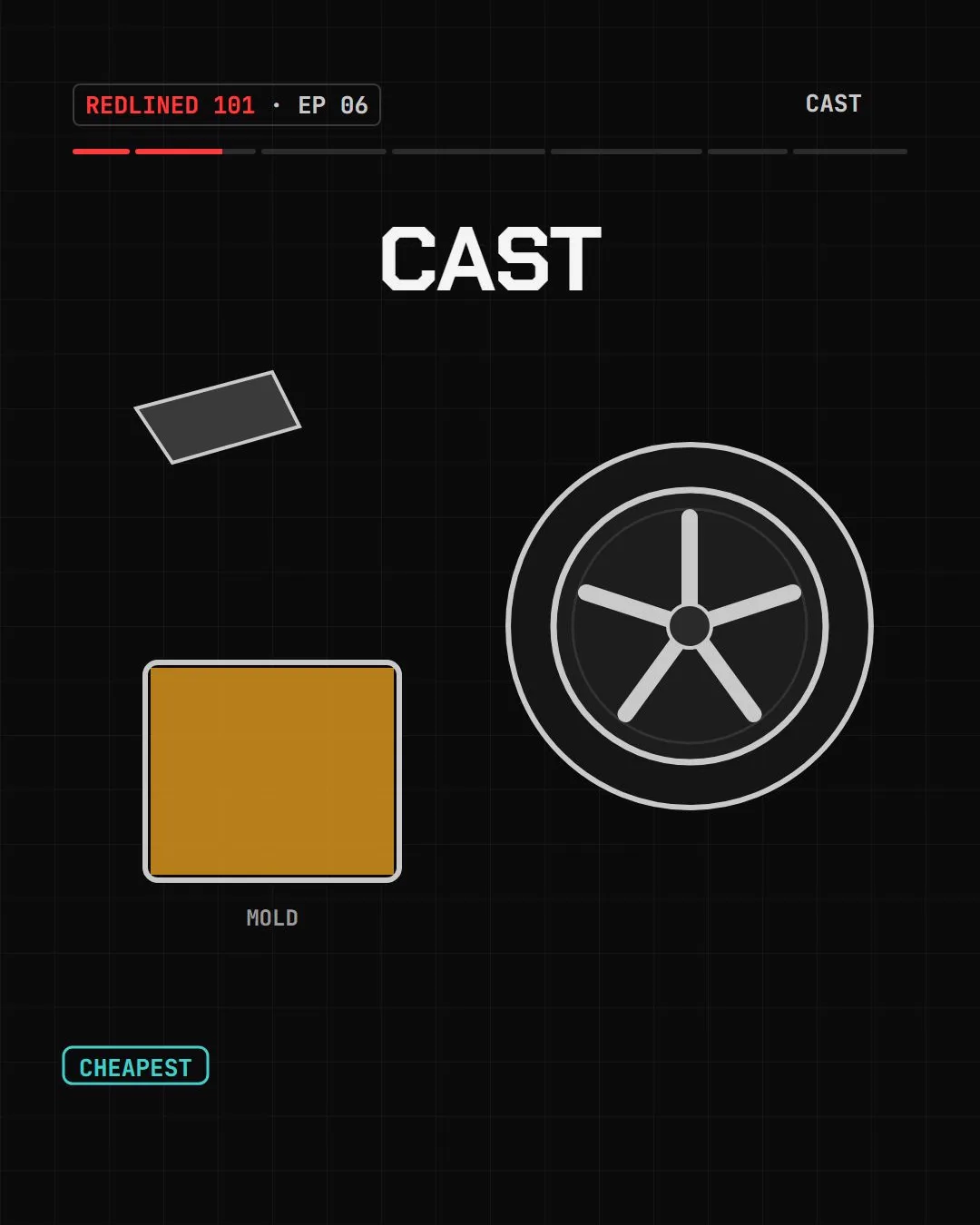
Cast
Cast wheels are molten aluminum poured into a mold. They're the cheapest to make, but cast metal needs more material to be strong, so they're heavier, and a hard hit can crack them instead of bending.
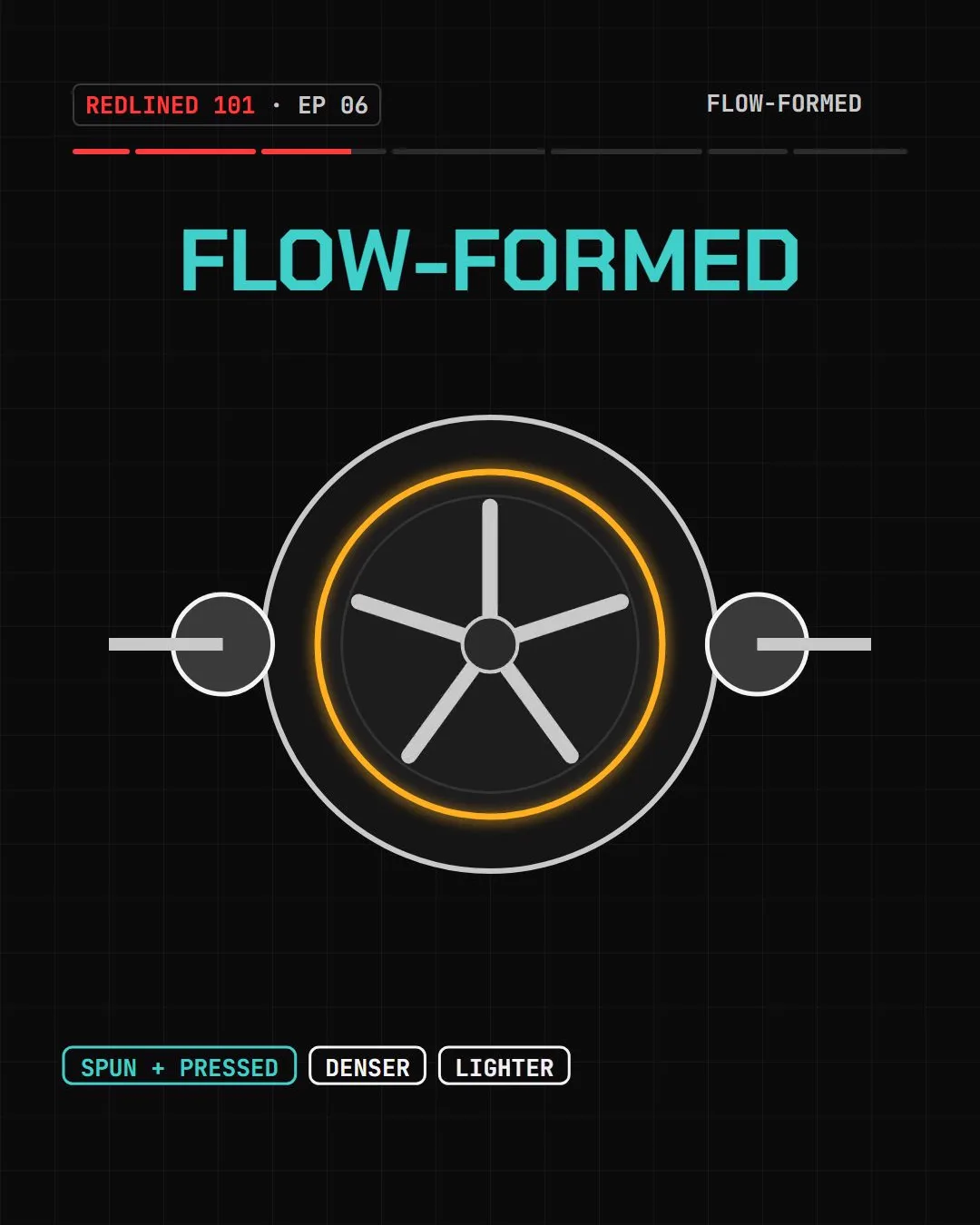
Flow-formed
Flow-formed starts as a cast wheel. Then the barrel is spun and pressed with rollers under heat, which stretches and compresses the metal. The result is denser, lighter and stronger, for not much more money. That's why flow-formed is usually the best value.
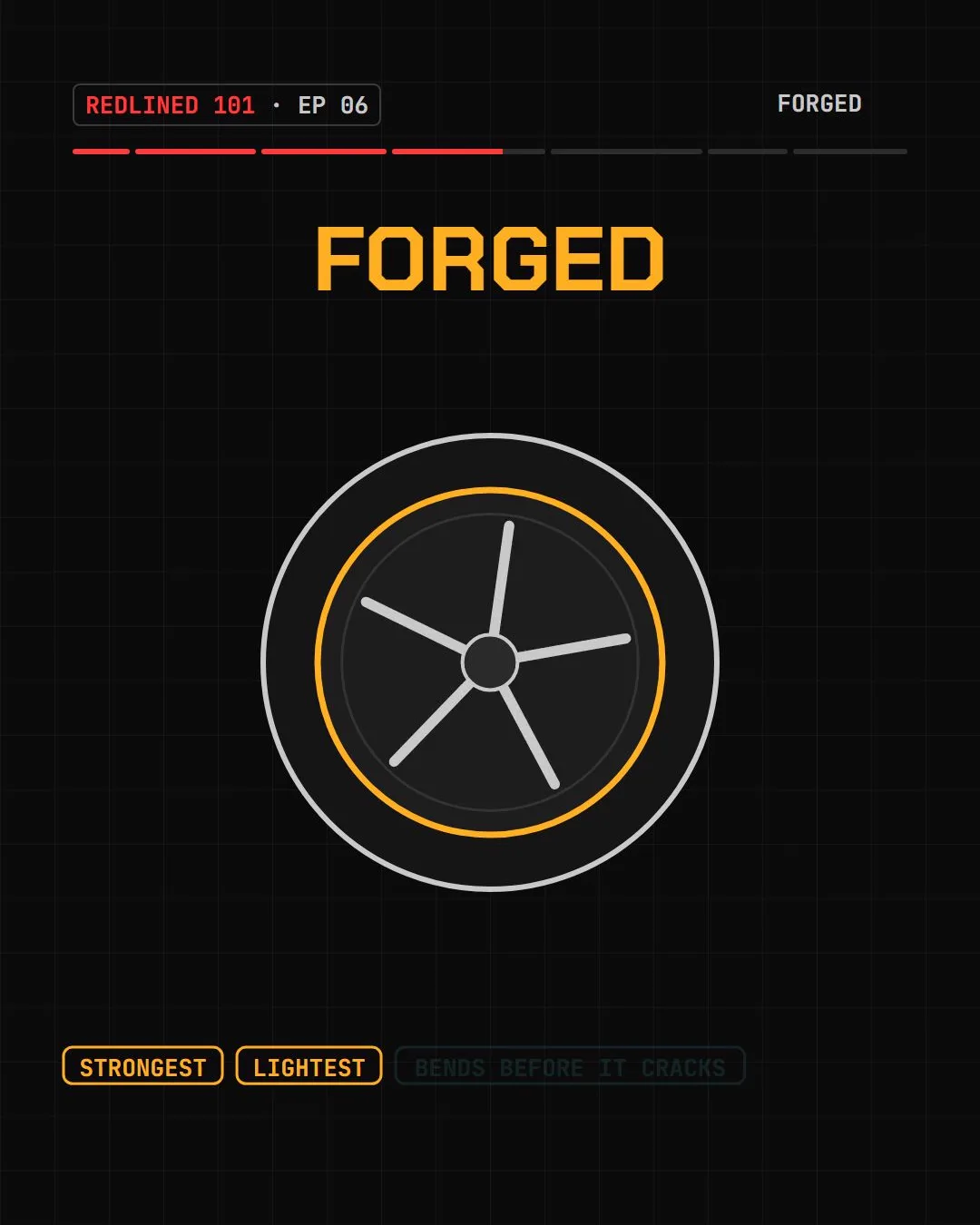
Forged
Forged wheels are pressed from a solid block of aluminum under thousands of tons, then machined to shape. They're the strongest and lightest, and they bend before they crack. They're also the most expensive.
Why weight matters
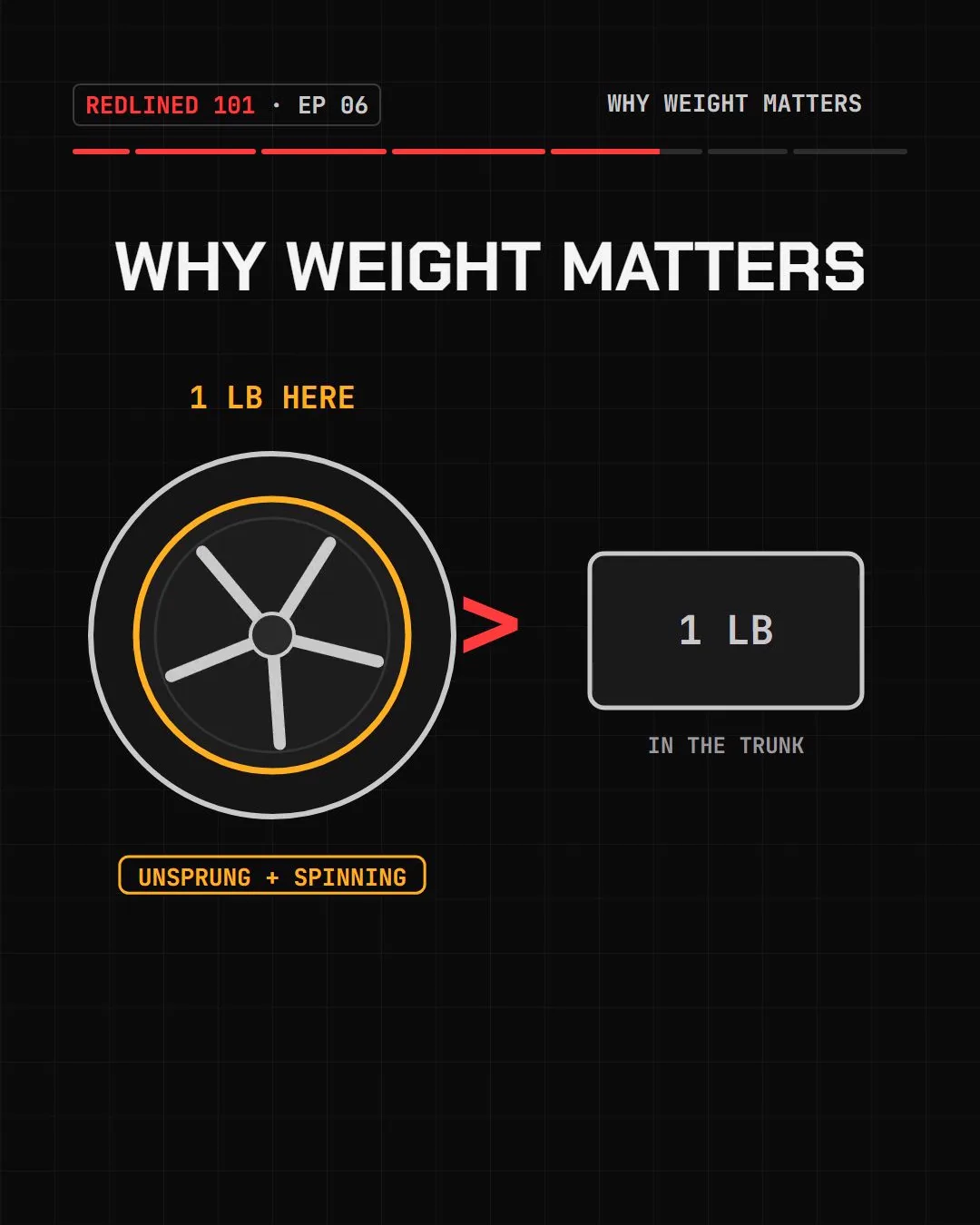
Wheel weight is unsprung (the suspension has to control it) and spinning (the engine and brakes have to speed it up and slow it down). So a pound saved at the wheel does more than a pound saved in the trunk. Lighter wheels accelerate, brake and ride better.
Spot the cheap replica
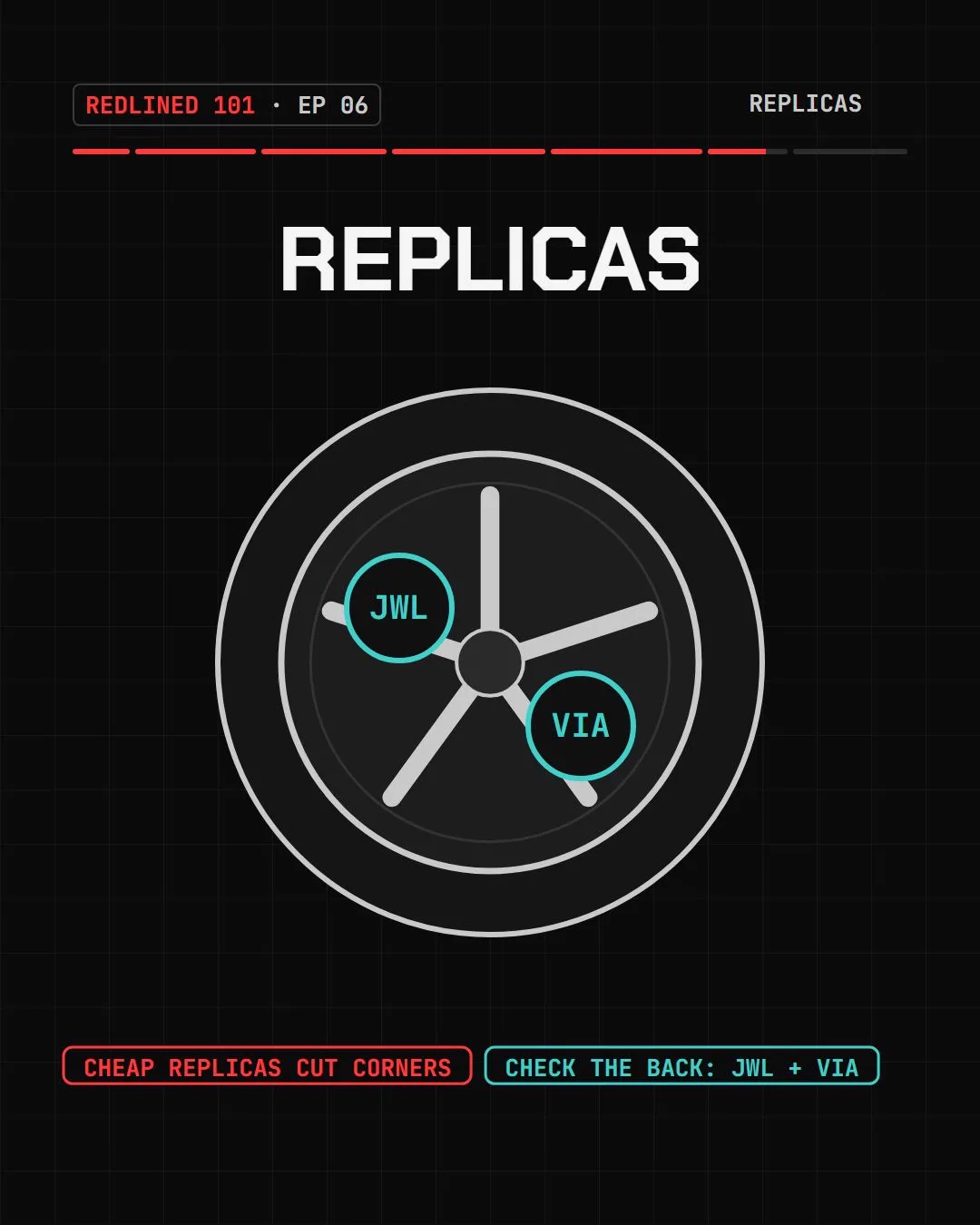
Cheap replicas cut corners on material and testing. Flip the wheel over and look for JWL and VIA stamps on the back. They show it was tested to a recognized strength standard.
Which one to buy
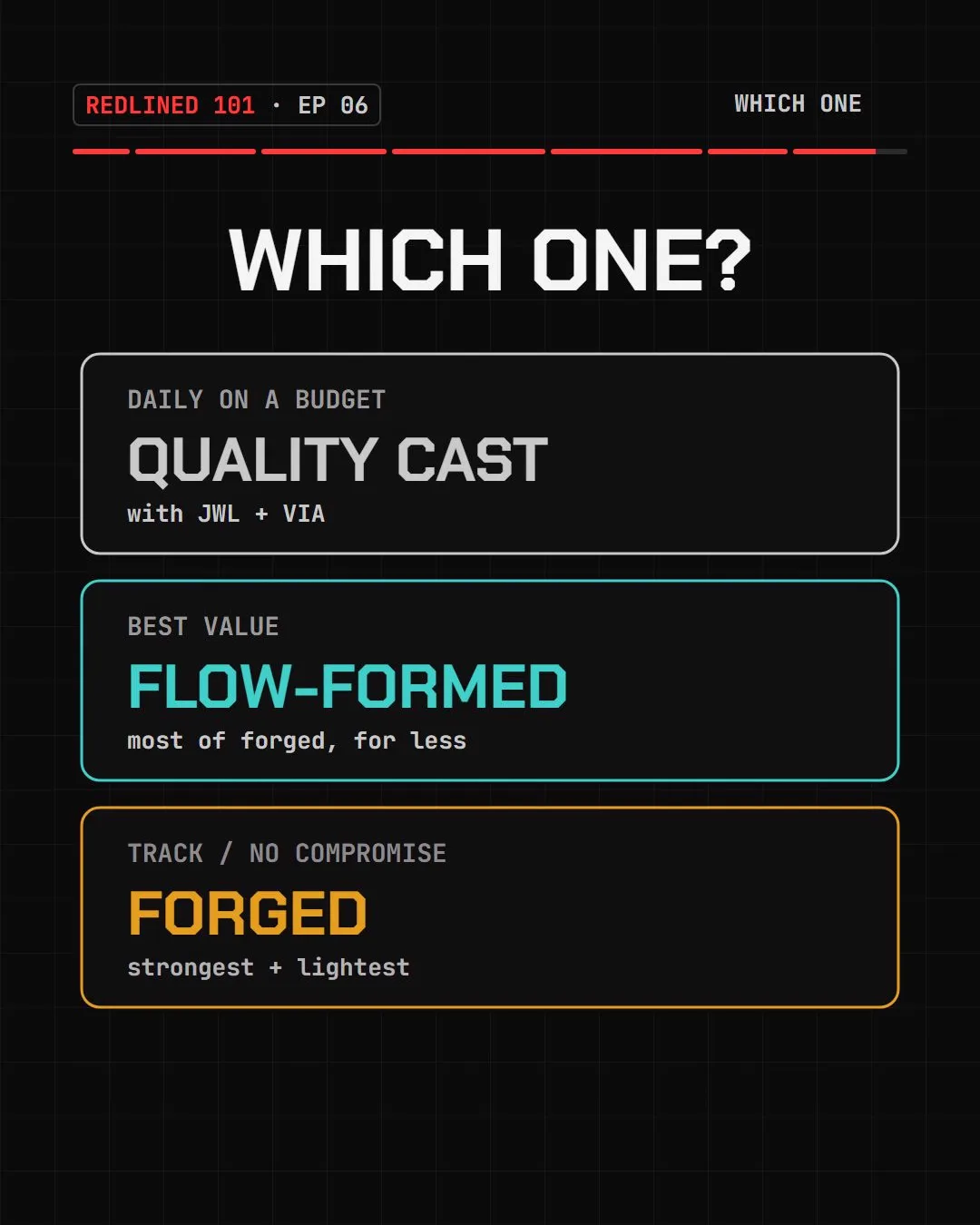
- Daily on a budget: a quality cast wheel, with the stamps.
- Best value: flow-formed.
- Track or no compromise: forged.
Picking a size too? Start with how to read wheel specs and wheel offset.
Which camp are you in: cast, flow-formed or forged? Tell us on the reel.
Official merch
Dialed in
Coilovers > 401K – Funny Car Guy on a Unisex Oversized Heavyweight T-Shirt, black
Unisex Oversized Heavyweight T-Shirt
from $32.99
Can't Pump Gas, Can Swap A Motor – NJ Car Guy on a Unisex Oversized Heavyweight T-Shirt, black
Unisex Oversized Heavyweight T-Shirt
from $32.99
Coilovers > 401K – Funny Car Guy on a Washed Unisex T-Shirt, mineral navy
Washed Unisex T-Shirt
from $27.99
Can't Pump Gas, Can Swap A Motor – NJ Car Guy on a Washed Unisex T-Shirt, mineral navy
Washed Unisex T-Shirt
from $27.99
Can't Pump Gas, Can Swap A Motor – NJ Car Guy on a Men's Premium T-Shirt, black
Men's Premium T-Shirt
from $27.99
Coilovers > 401K – Funny Car Guy on a Women's Cropped T-Shirt, black
Women's Cropped T-Shirt
from $28.49
Can't Pump Gas, Can Swap A Motor – NJ Car Guy on a Women's Cropped T-Shirt, black
Women's Cropped T-Shirt
from $28.49
Coilovers > 401K – Funny Car Guy on a Champion Women’s Cropped T-Shirt, black
Champion Women’s Cropped T-Shirt
from $26.99
Can't Pump Gas, Can Swap A Motor – NJ Car Guy on a Champion Women’s Cropped T-Shirt, black
Champion Women’s Cropped T-Shirt
from $26.99
Coilovers > 401K – Funny Car Guy on a Stanley/Stella Blaster Oversized T-Shirt, black
Stanley/Stella Blaster Oversized T-Shirt
from $27.49
Can't Pump Gas, Can Swap A Motor – NJ Car Guy on a Stanley/Stella Blaster Oversized T-Shirt, black
Stanley/Stella Blaster Oversized T-Shirt
from $27.49


Previous: ← Suspension clunks: what wears out first · Next: Turbo vs supercharger →
Frequently asked questions
Are flow-formed wheels worth it?
For most street cars, yes. They cost a little more than cast but are noticeably lighter and stronger, which is why they are usually the best value.
Why do forged wheels cost so much?
They start as a solid block of aluminum pressed under enormous force and are then machined to shape. The process takes more equipment and time, and produces the densest, strongest wheel.
How can I tell if a wheel is a cheap replica?
Check the back of the wheel for JWL and VIA stamps, which show it was tested to a recognized strength standard, and buy from a known manufacturer or dealer.
Can a cracked or bent wheel be repaired?
Bends can often be straightened and some cracks welded by a specialist, depending on where the damage is. A wheel shop will tell you if it is safe to repair or needs replacing.
More from the club
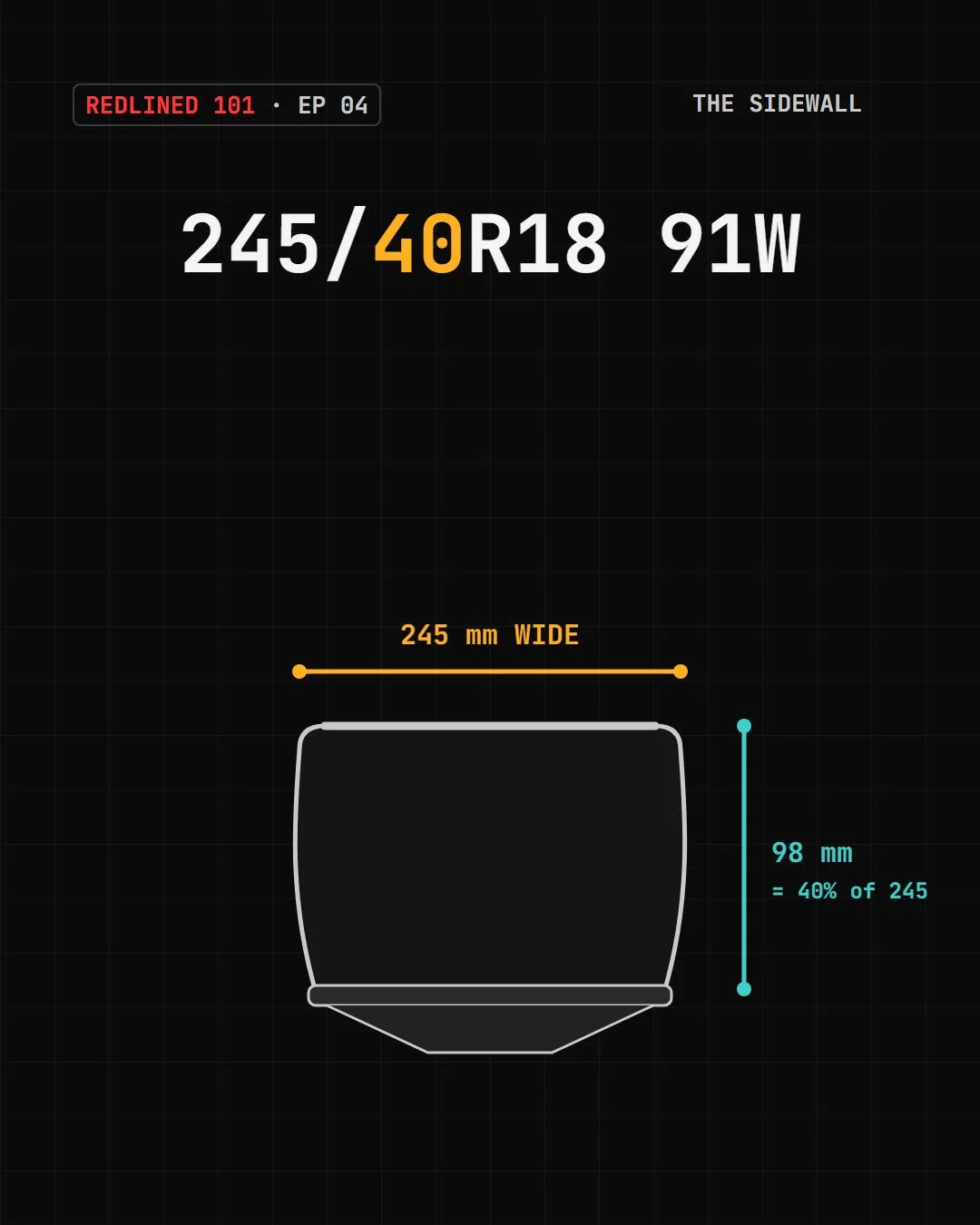
Tires Explained: Reading the Sidewall, Size, Pressure, Balancing and Road Force (Redlined 101, Ep 04)
How to read 245/40R18 91W, how tire size changes look, fit and feel, summer vs all-season vs winter vs run-flat, why the door-jamb pressure is for the factory tire, TPMS, what a careful tire shop does, balancing vs road force, bent wheels, and beadlocks.
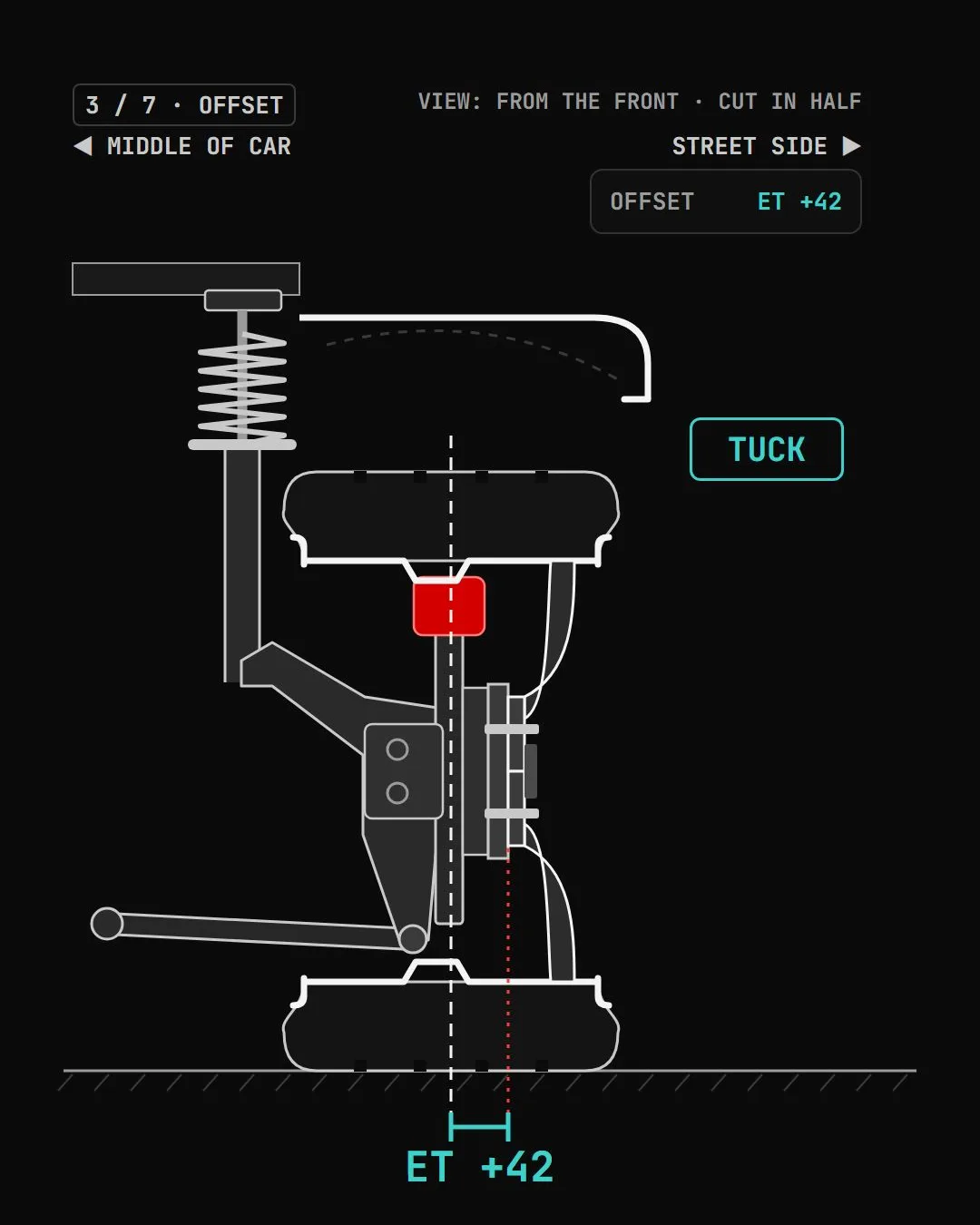
Wheel Offset Explained: ET, Poke, Flush and Tuck (Redlined 101, Ep 01)
What wheel offset (ET) is, why a higher number tucks the wheel and a lower one pokes, how camber and fender rolling change what fits, and what gets respect in the car community.
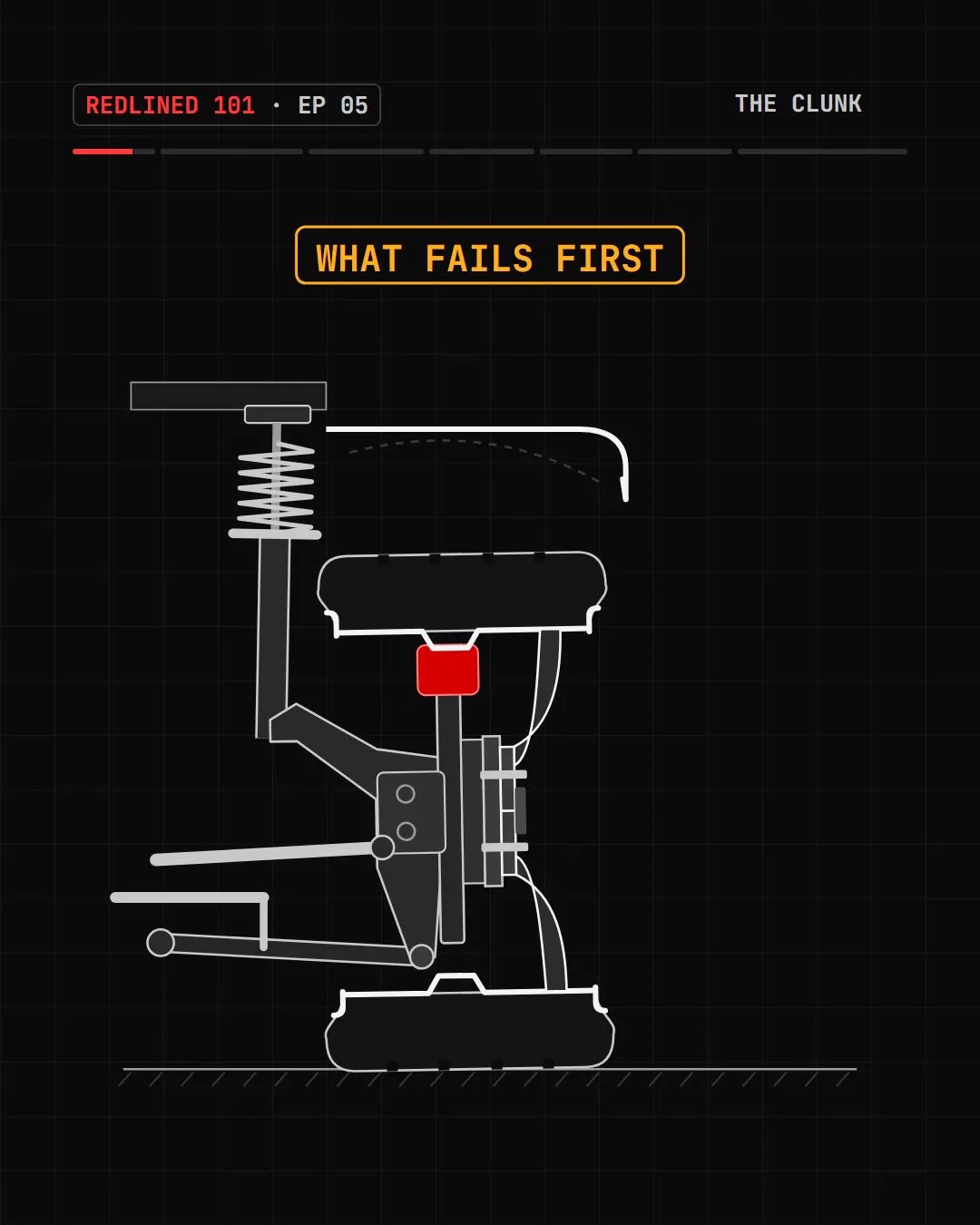
Suspension Clunks: What Wears Out First and What to Upgrade First (Redlined 101, Ep 05)
That clunk over bumps, explained: how to check bushings, ball joints, tie rod ends, shocks, end links and top mounts, the signs each one gives, and the order to upgrade a worn or lowered suspension.