Suspension Clunks: What Wears Out First and What to Upgrade First (Redlined 101, Ep 05)
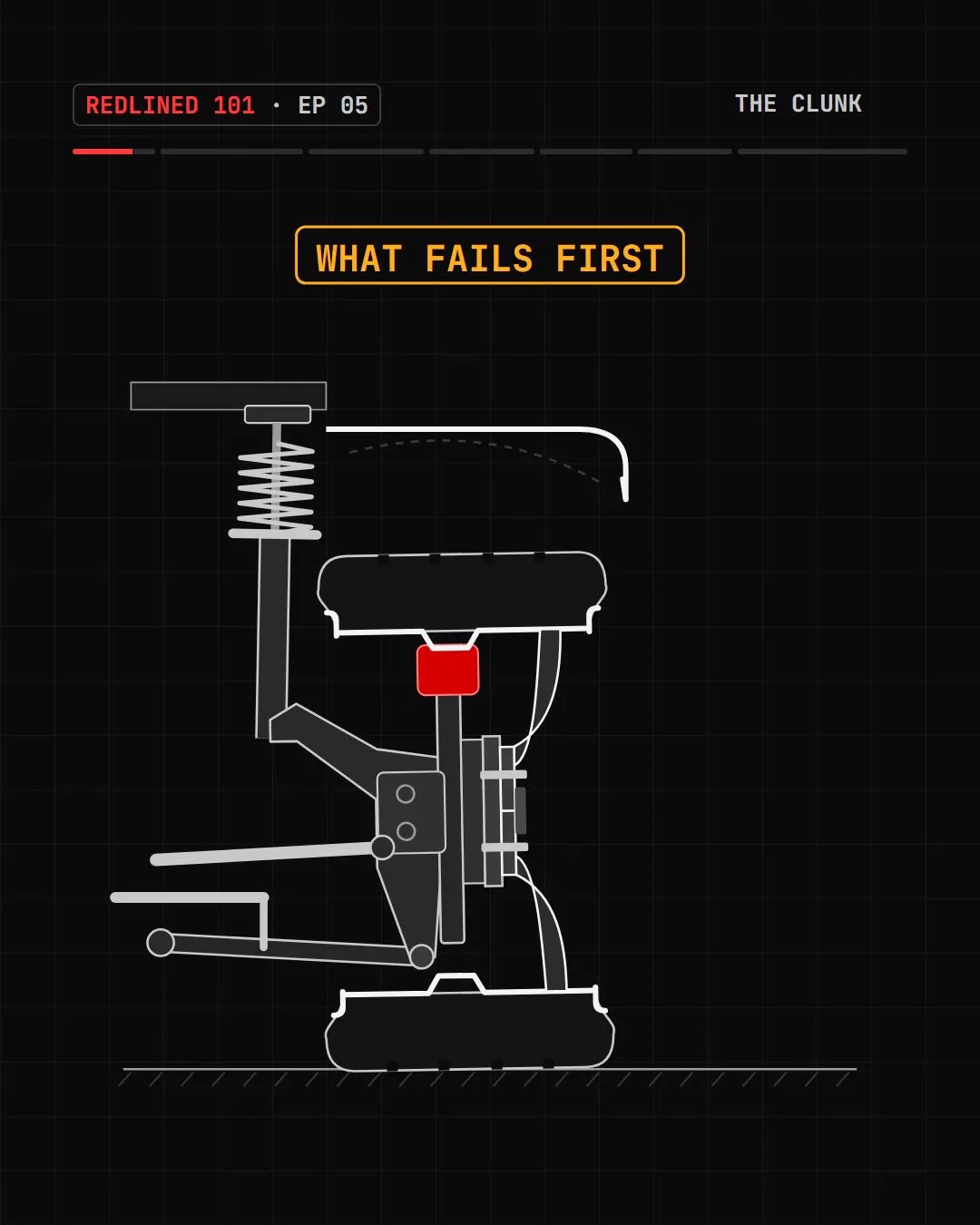
That clunk over bumps? Something in your suspension is worn out. Here's what fails first, how to check each part yourself, and what to upgrade first.
Watch Redlined 101, Ep 05 on Instagram →
Bushings
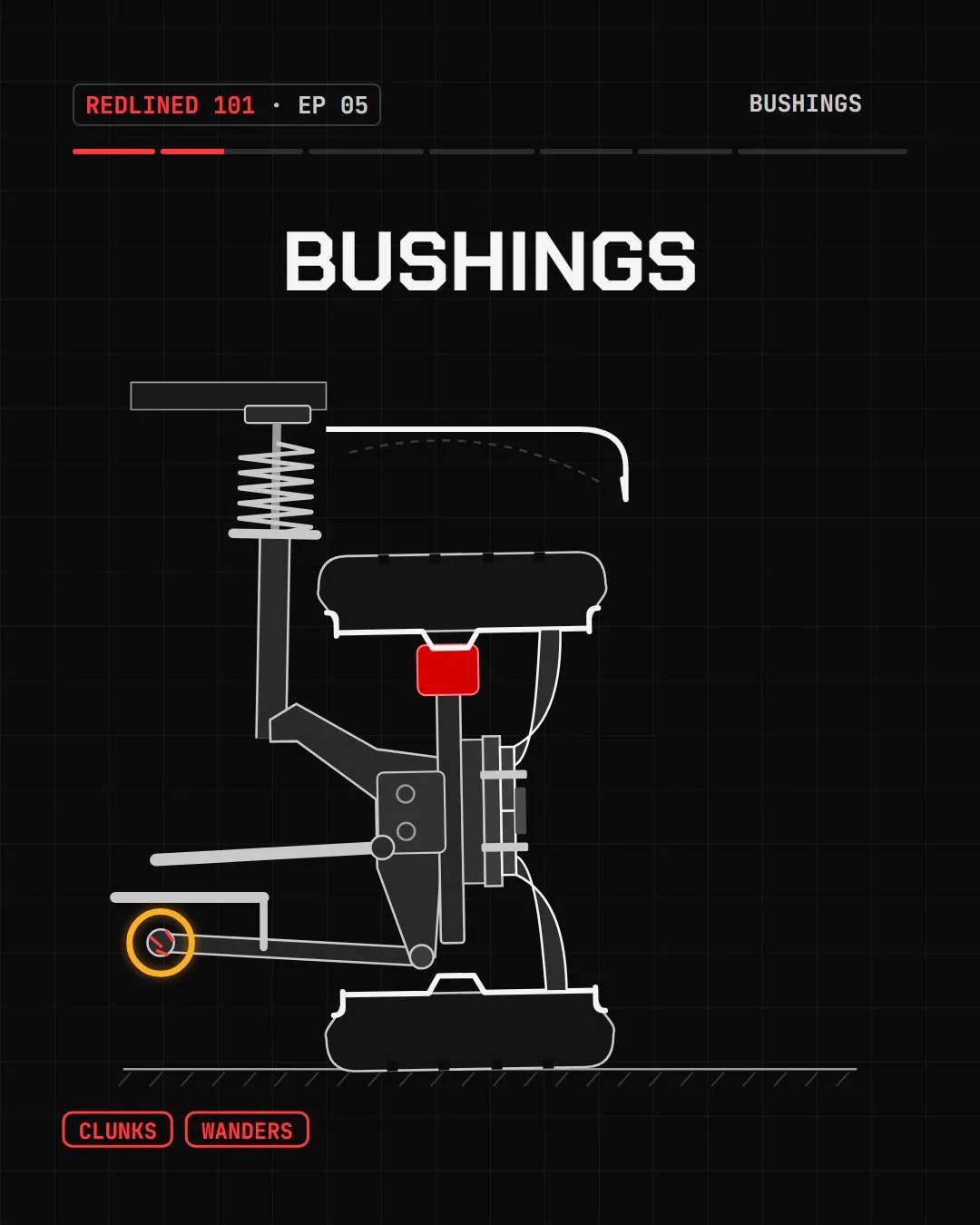
Bushings are the rubber pieces where your control arms meet the car. Over time they crack and go soft. Worn bushings clunk, make the car wander on the highway, and wear your tires unevenly.
The upgrade is polyurethane: it flexes less than rubber, so steering gets sharper and more direct, with a little more vibration coming through.
Ball joints
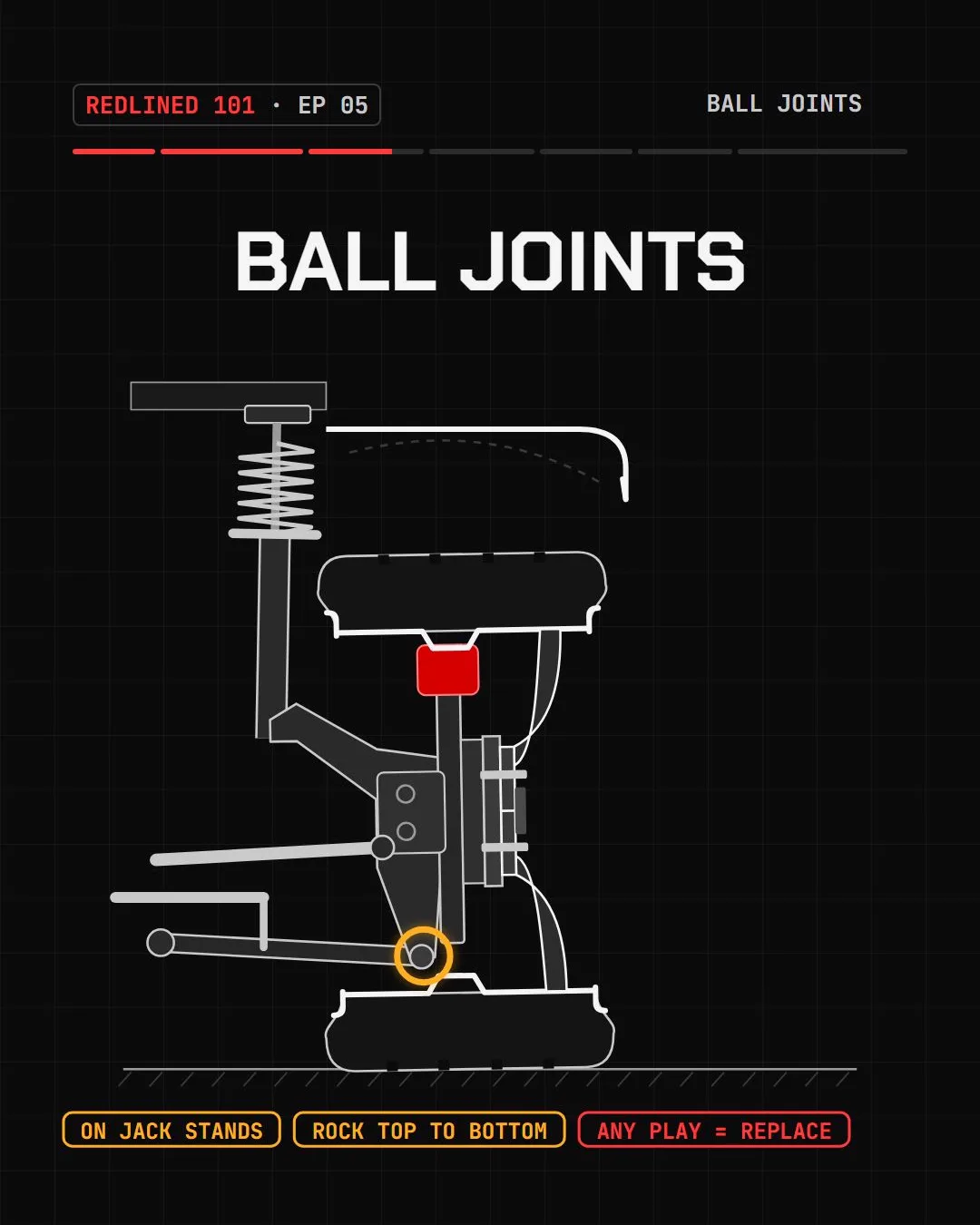
Ball joints hold the knuckle to the control arm. To check them, get the car safely on jack stands, grab the tire at the top and bottom, and rock it top to bottom. Any play? Replace it. This one isn't optional: a ball joint that fails completely can collapse the wheel.
Tie rod ends
Tie rod ends steer the wheel. Check them the same way, but grab the tire at 9 and 3 o'clock and rock it side to side. Play here means wandering and bad toe, and bad toe eats tires. Get an alignment after you replace them, because new tie rod ends change toe (here's why toe matters).
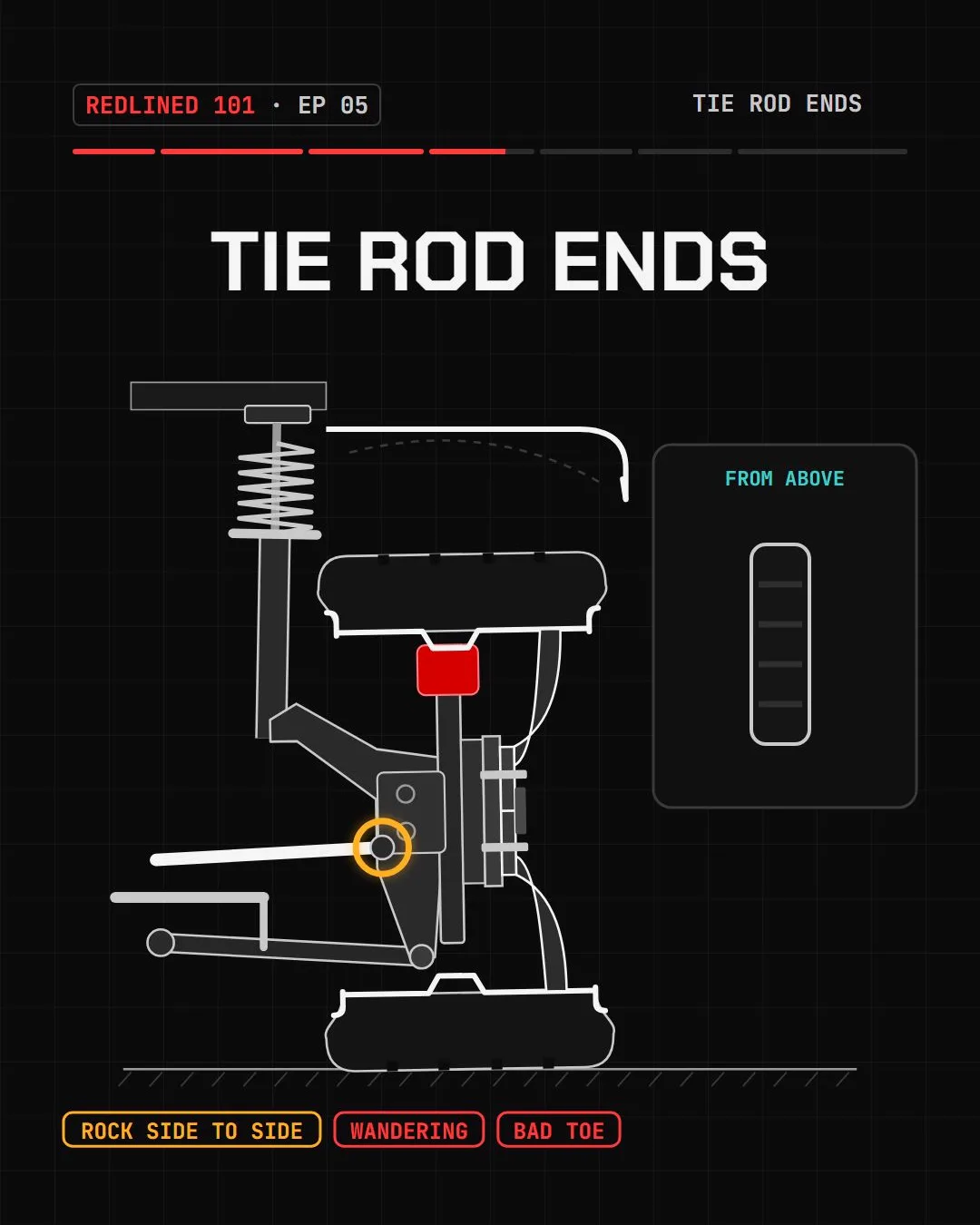
Shocks
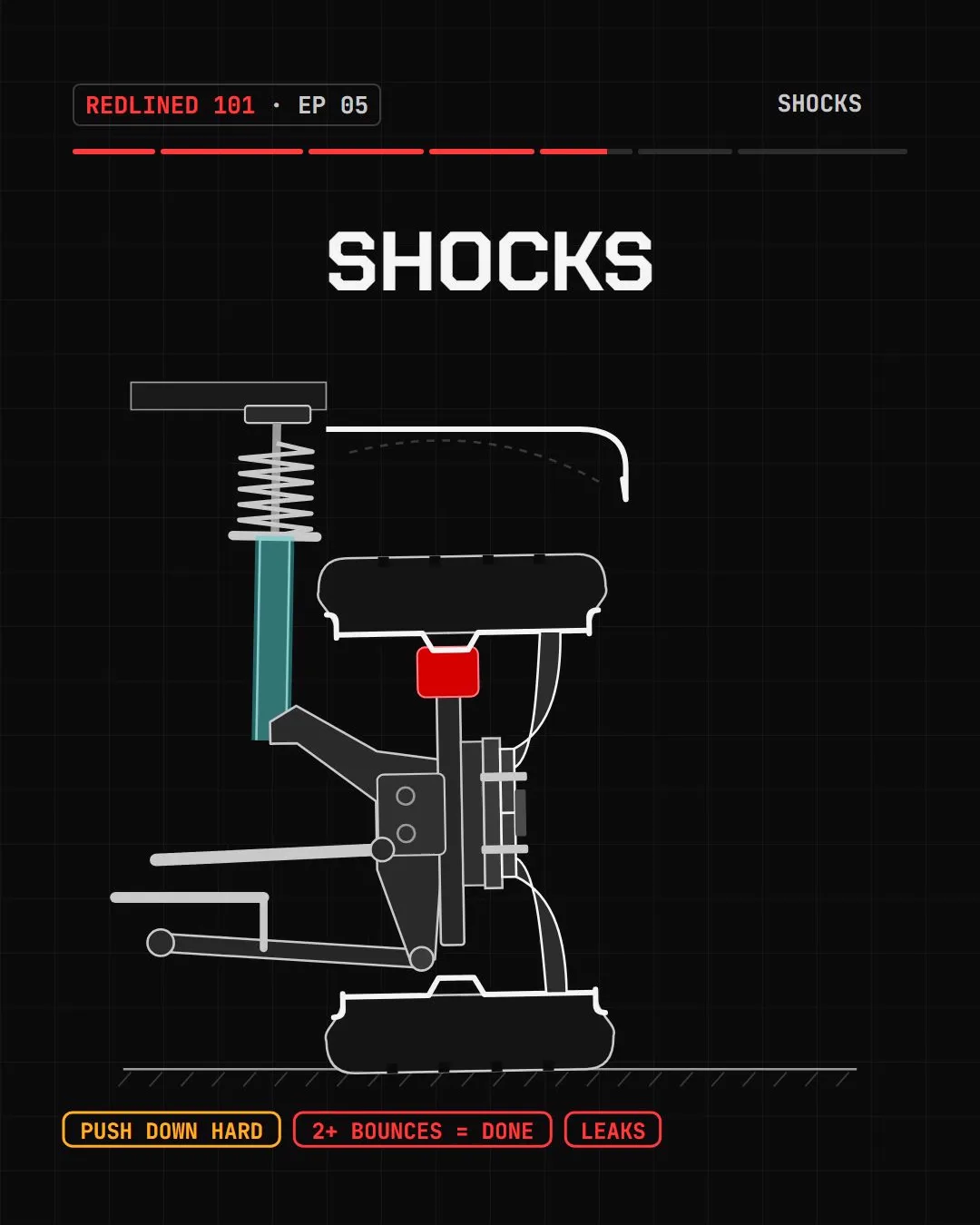
Push down hard on one corner of the car and let go. A healthy shock settles it in about one movement. If it bounces more than once, the shock is done. The other signs are oil leaking down the body and the nose diving hard under braking.
End links and top mounts
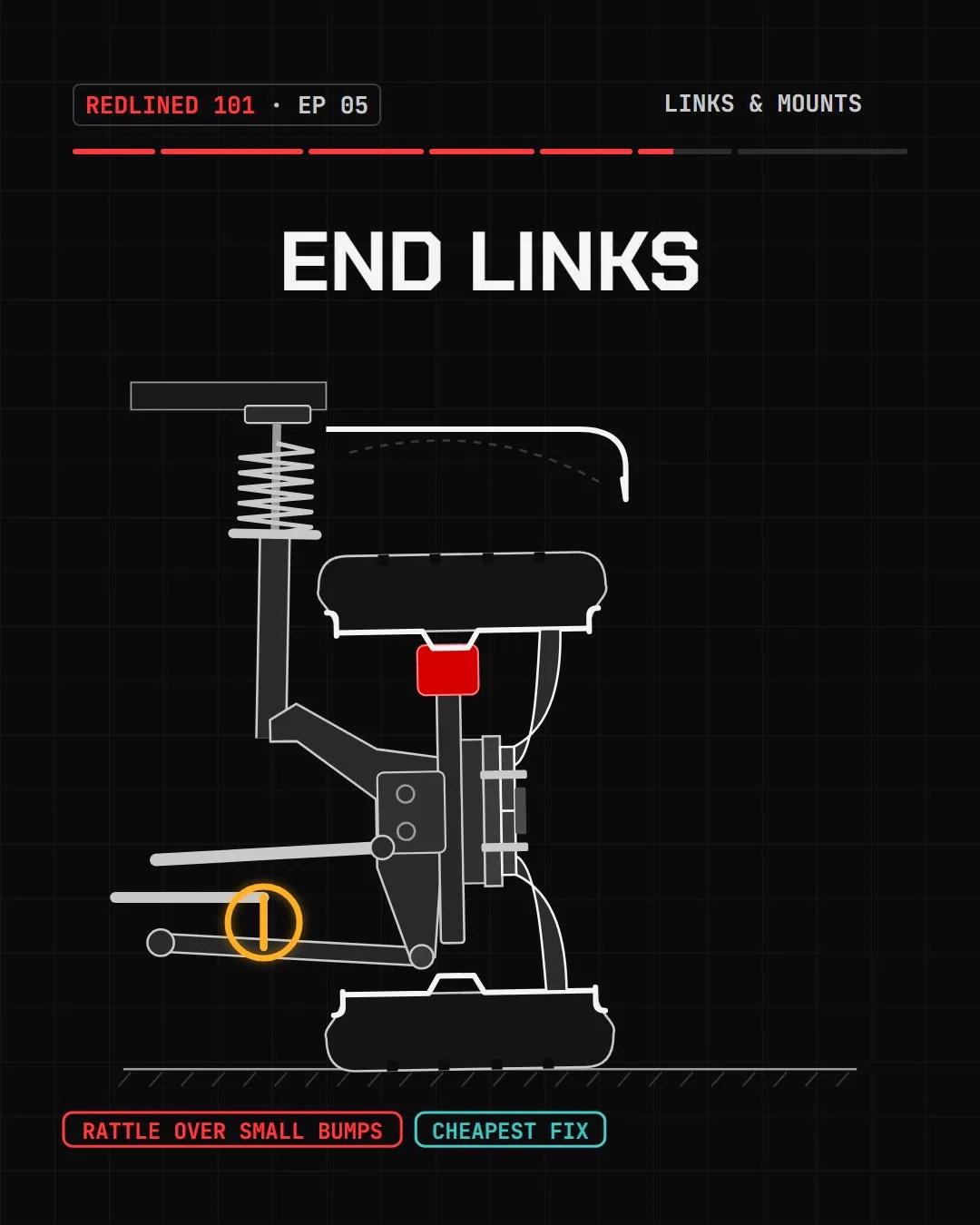
- End links connect the sway bar to the suspension. Worn ones rattle over small bumps, and they're the cheapest fix on this list.
- Top mounts sit at the top of the strut. A clunk when you turn the wheel while parked usually points here.
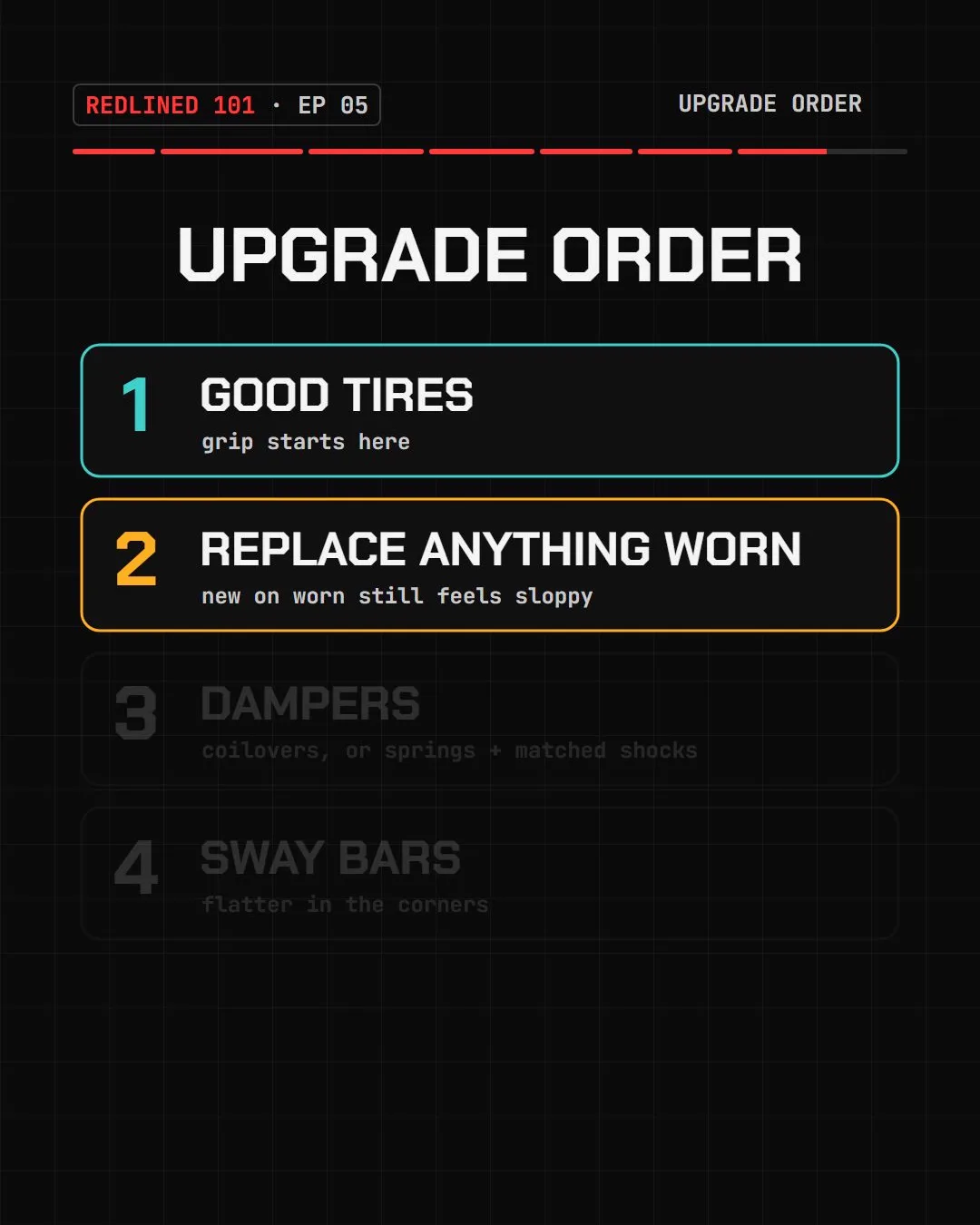
What to upgrade first
- Good tires. Every other part works through them.
- Replace anything worn. New performance parts bolted to worn ones still feel sloppy.
- Dampers. Quality shocks or coilovers (coilovers vs lowering springs).
- Sway bars. Flatter cornering, once everything else is tight.
Lowered? Add adjustable control arms to bring your camber back into spec, so the inside of your tires survives.
Recap
- Clunk over bumps: bushings, ball joints, shocks.
- Rattle over small bumps: end links.
- Clunk turning while parked: top mounts.
- Wandering: bushings or tie rod ends, then an alignment.
- Jersey potholes wear all of this out faster. Check it every spring.
What's clunking on your car? Tell us in the comments on the reel.
Official merch
Dialed in
Coilovers > 401K – Funny Car Guy on a Unisex Oversized Heavyweight T-Shirt, black
Unisex Oversized Heavyweight T-Shirt
from $32.99
Can't Pump Gas, Can Swap A Motor – NJ Car Guy on a Unisex Oversized Heavyweight T-Shirt, black
Unisex Oversized Heavyweight T-Shirt
from $32.99
Coilovers > 401K – Funny Car Guy on a Washed Unisex T-Shirt, mineral navy
Washed Unisex T-Shirt
from $27.99
Can't Pump Gas, Can Swap A Motor – NJ Car Guy on a Washed Unisex T-Shirt, mineral navy
Washed Unisex T-Shirt
from $27.99
Can't Pump Gas, Can Swap A Motor – NJ Car Guy on a Men's Premium T-Shirt, black
Men's Premium T-Shirt
from $27.99
Coilovers > 401K – Funny Car Guy on a Women's Cropped T-Shirt, black
Women's Cropped T-Shirt
from $28.49
Can't Pump Gas, Can Swap A Motor – NJ Car Guy on a Women's Cropped T-Shirt, black
Women's Cropped T-Shirt
from $28.49
Coilovers > 401K – Funny Car Guy on a Champion Women’s Cropped T-Shirt, black
Champion Women’s Cropped T-Shirt
from $26.99
Can't Pump Gas, Can Swap A Motor – NJ Car Guy on a Champion Women’s Cropped T-Shirt, black
Champion Women’s Cropped T-Shirt
from $26.99
Coilovers > 401K – Funny Car Guy on a Stanley/Stella Blaster Oversized T-Shirt, black
Stanley/Stella Blaster Oversized T-Shirt
from $27.49
Can't Pump Gas, Can Swap A Motor – NJ Car Guy on a Stanley/Stella Blaster Oversized T-Shirt, black
Stanley/Stella Blaster Oversized T-Shirt
from $27.49


Previous: ← Tires explained · Next: Cast vs flow-formed vs forged wheels →
Frequently asked questions
What usually causes a clunk over bumps?
Most often worn sway bar end links, control arm bushings or ball joints, and sometimes tired shocks or top mounts. The type of clunk is a clue: a rattle over small bumps points at end links, a clunk when you turn the wheel while parked points at the top mounts.
Is a worn ball joint dangerous?
Yes. A ball joint holds the knuckle to the control arm, and one that fails completely can let the wheel collapse. If you find play, replace it before driving it hard.
Should I get polyurethane bushings?
If you want sharper steering and more feedback, yes. Polyurethane flexes less than rubber, so the car feels tighter, at the cost of a little more vibration and noise in the cabin.
Do I need an alignment after replacing suspension parts?
After tie rod ends, control arms or anything that moves the wheel, yes. New tie rod ends in particular change toe, and bad toe wears tires fast.
More from the club
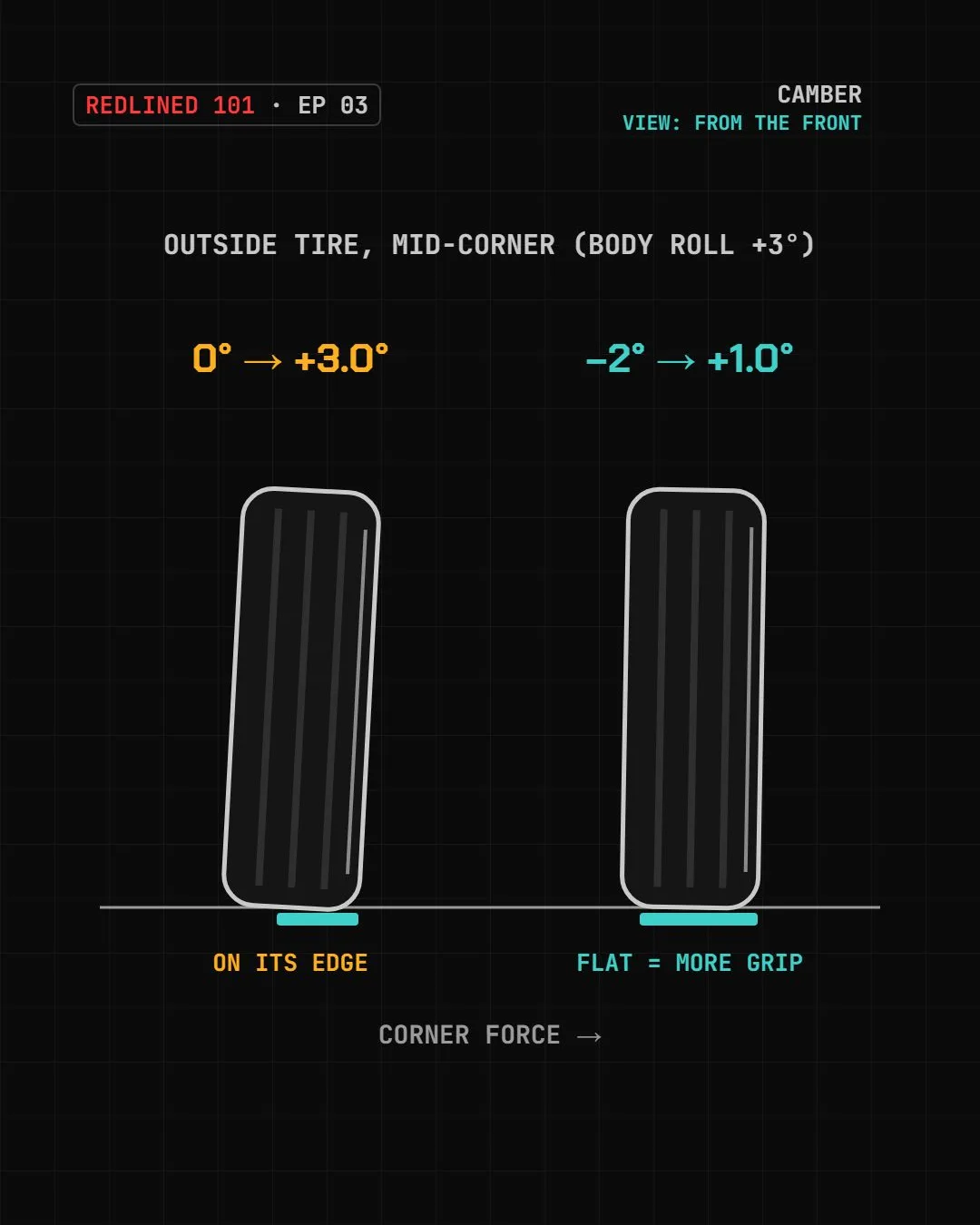
Wheel Alignment Explained: Camber, Toe, Caster, Scrub Radius and Ackerman (Redlined 101, Ep 03)
Why lowering knocks your alignment out, what camber, toe and caster each do, what scrub radius and Ackerman mean, how a shop adjusts them (tie rods, cam bolts, camber plates, arms), the order they’re set in, and a starting point for a lowered street car.
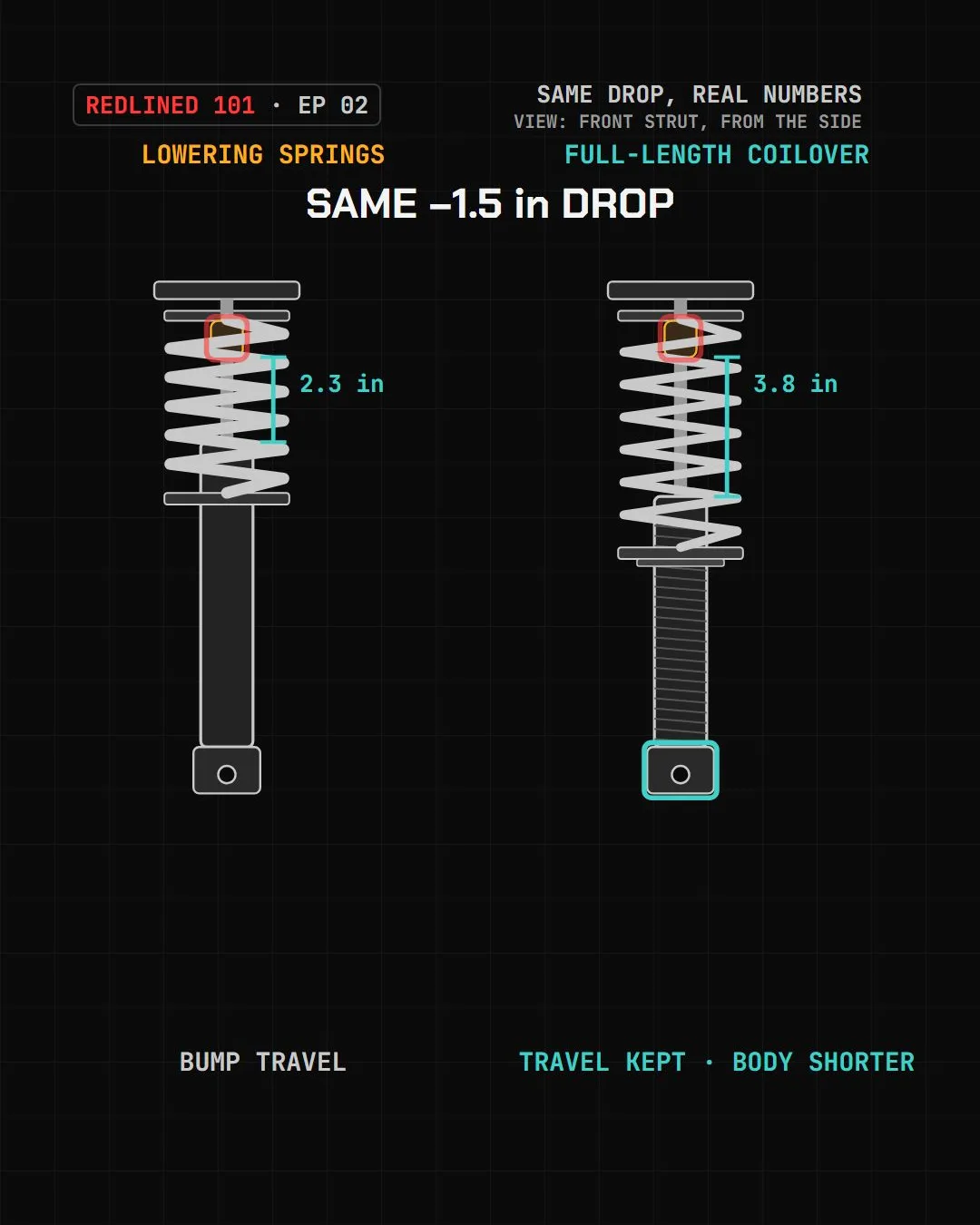
Lowering Springs vs Coilovers vs Air Suspension: Which Should You Run? (Redlined 101, Ep 02)
Lowering springs, coilovers or air? How springs and dampers split the work, why springs on factory shocks ride bouncy, static vs air, what each costs, and why controlled beats stiff.
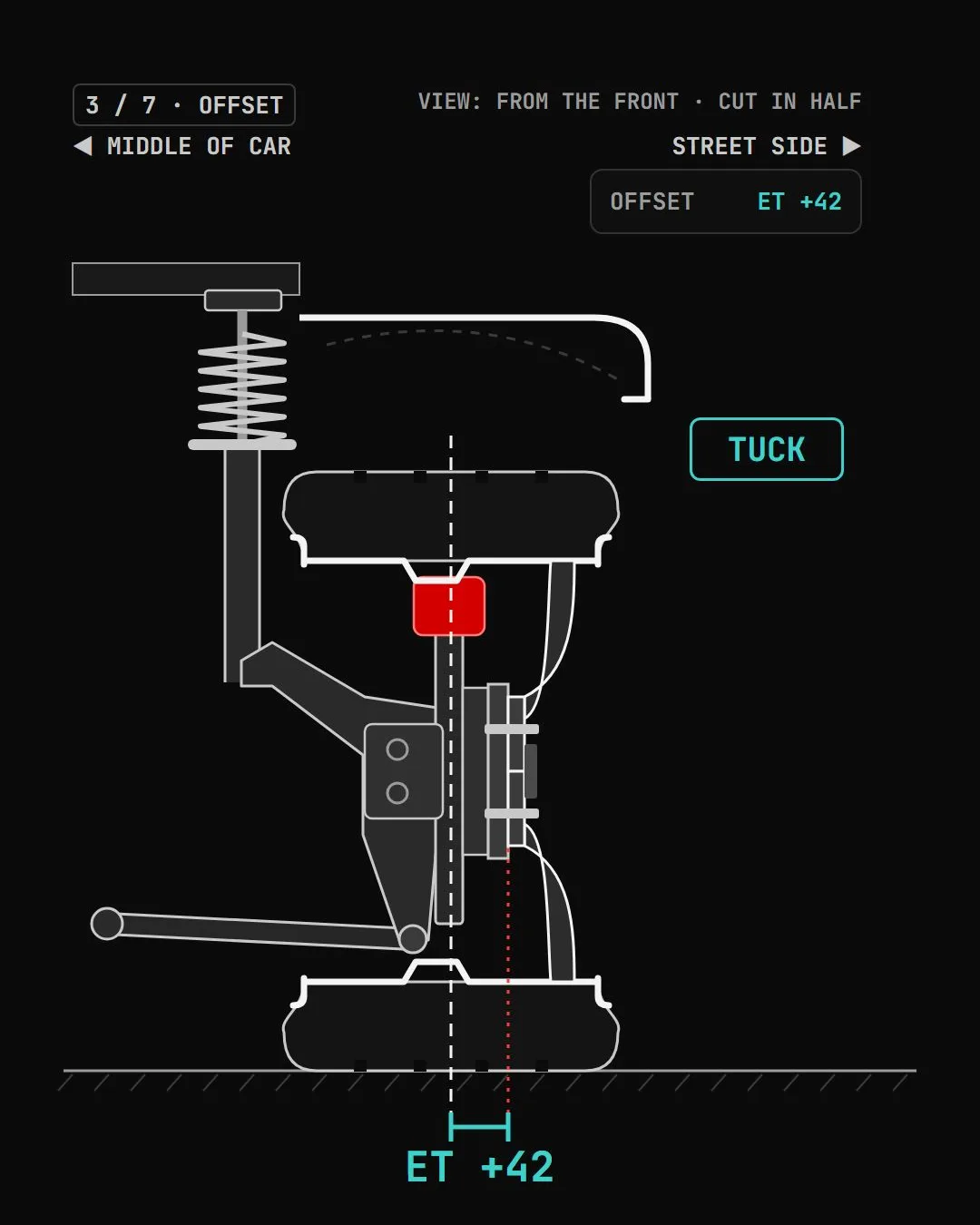
Wheel Offset Explained: ET, Poke, Flush and Tuck (Redlined 101, Ep 01)
What wheel offset (ET) is, why a higher number tucks the wheel and a lower one pokes, how camber and fender rolling change what fits, and what gets respect in the car community.