Sway Bars Explained: Why Your Lowered Car Still Leans (Redlined 101, Ep 12)
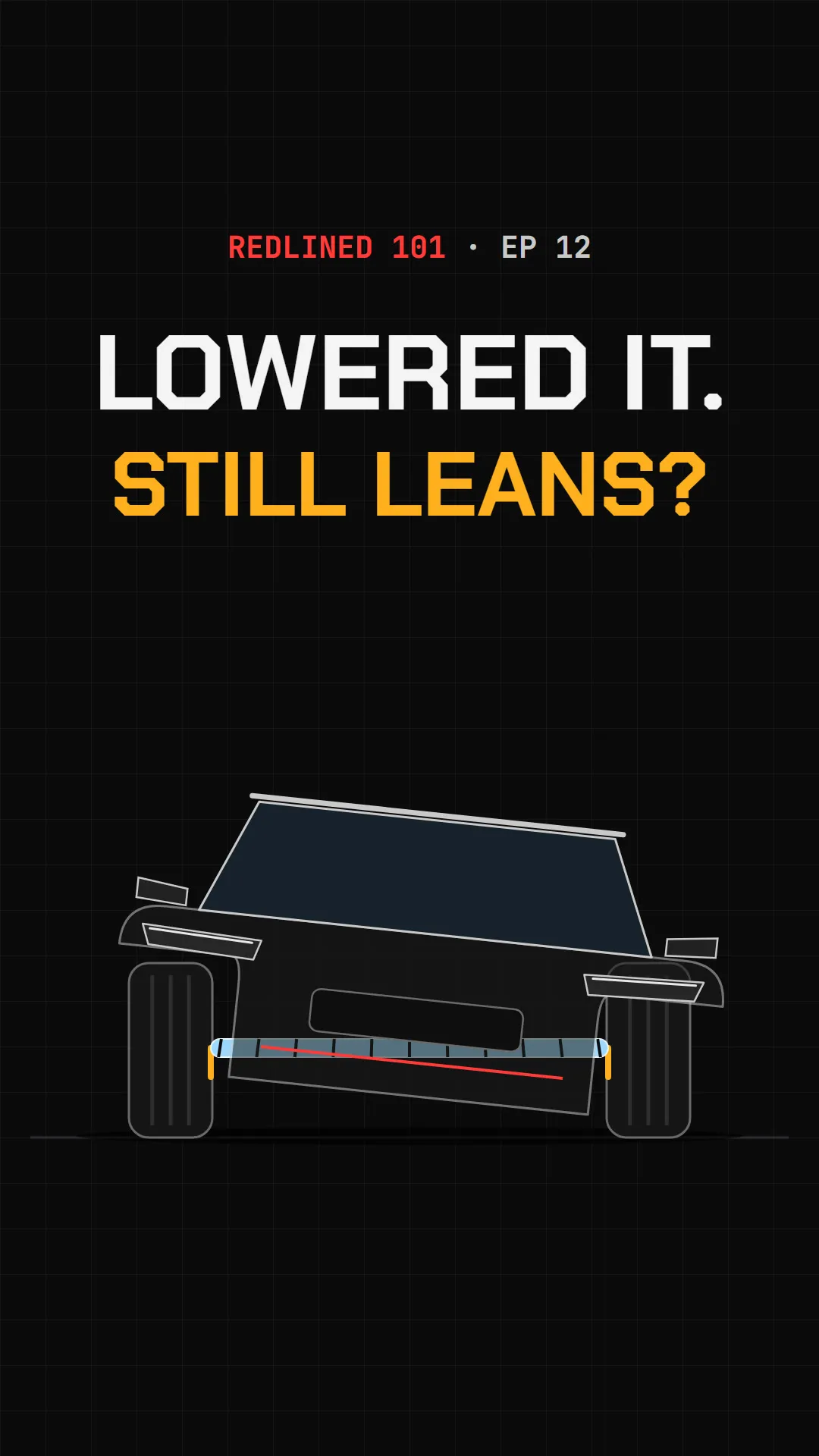
Lowered it, and it still leans? Same drop, same coilovers. One car takes the on-ramp flat. The other rolls like a boat. It comes down to one bar. If you went the coilover route expecting a flat car, this is the part that finishes the job.
 Watch on Instagram
Why it still leans
In a corner, the car's weight shifts toward the outside of the turn. The outside springs compress, the inside ones extend, and the body rolls. That's the lean you feel on an on-ramp.
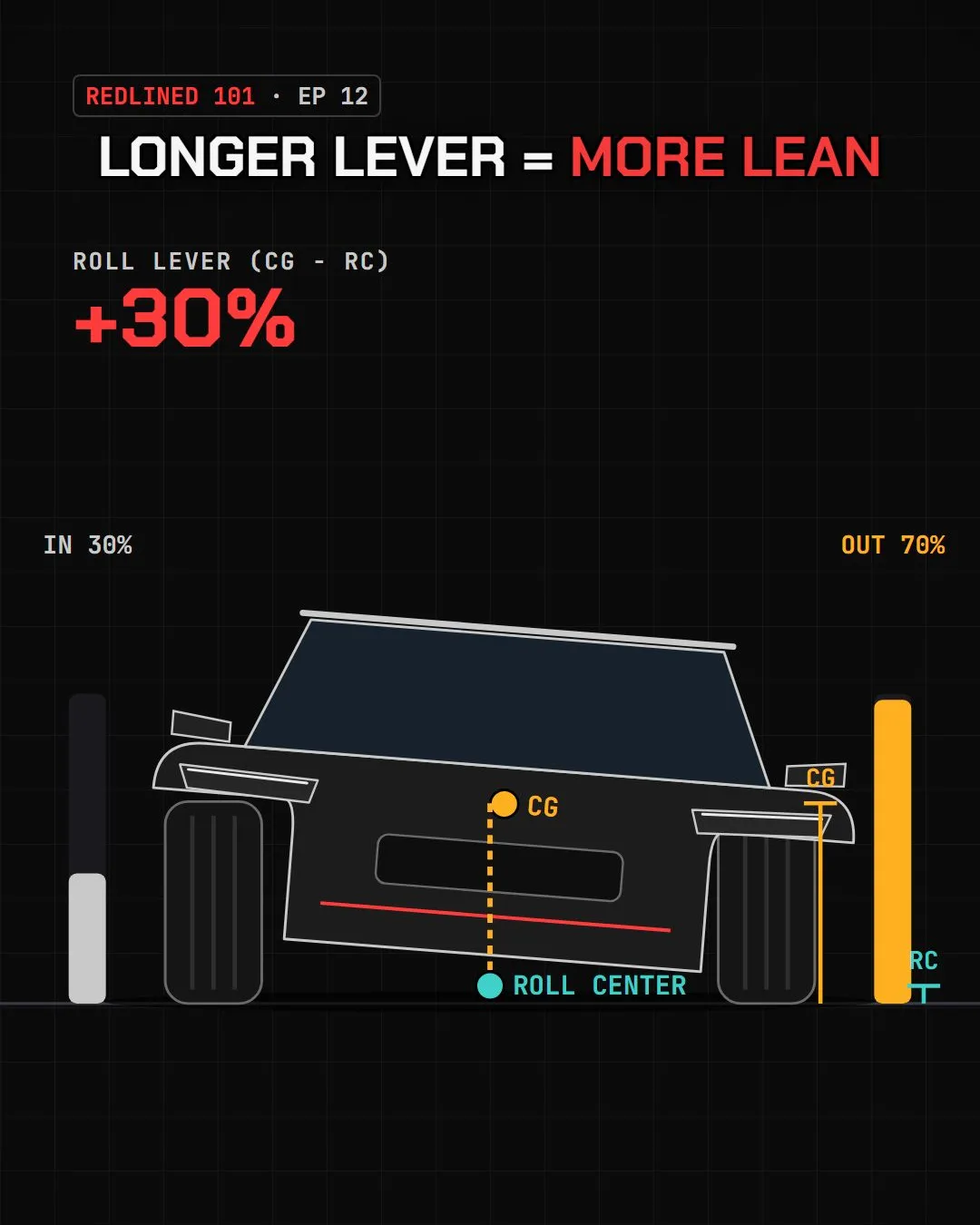
Lowering the car helps a little: the weight sits lower, so it has less leverage. But there's a catch hiding in the geometry. The body rolls around an imaginary point called the roll center, set by where the suspension arms point. On strut cars, lowering drops that roll center faster than the car itself. The gap between the center of gravity and the roll center is the lever the body leans on, and it just got longer. So the body gets more leverage to lean, not less.
So what flattens it: stiffer springs, or a thicker bar?
Enter the sway bar
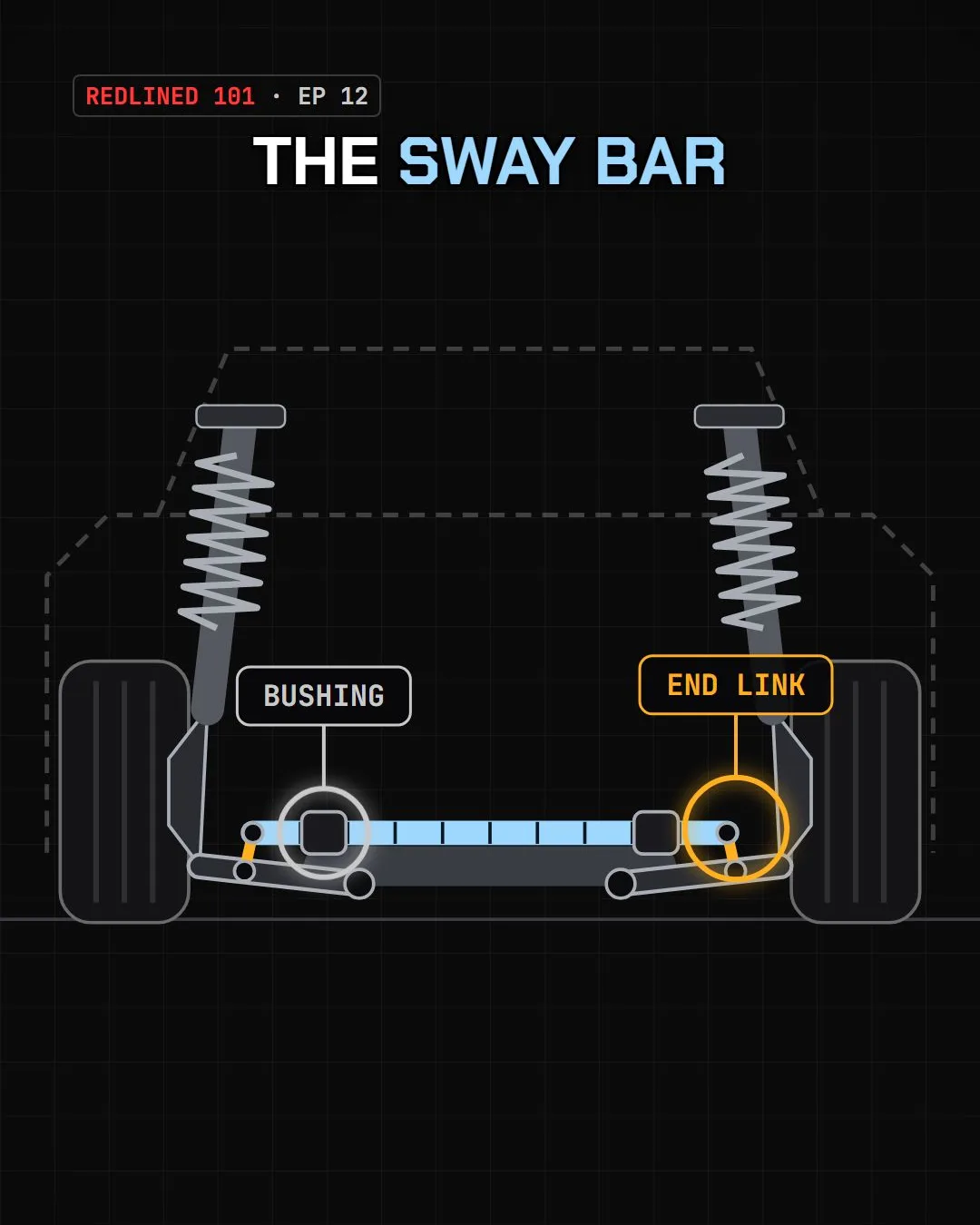
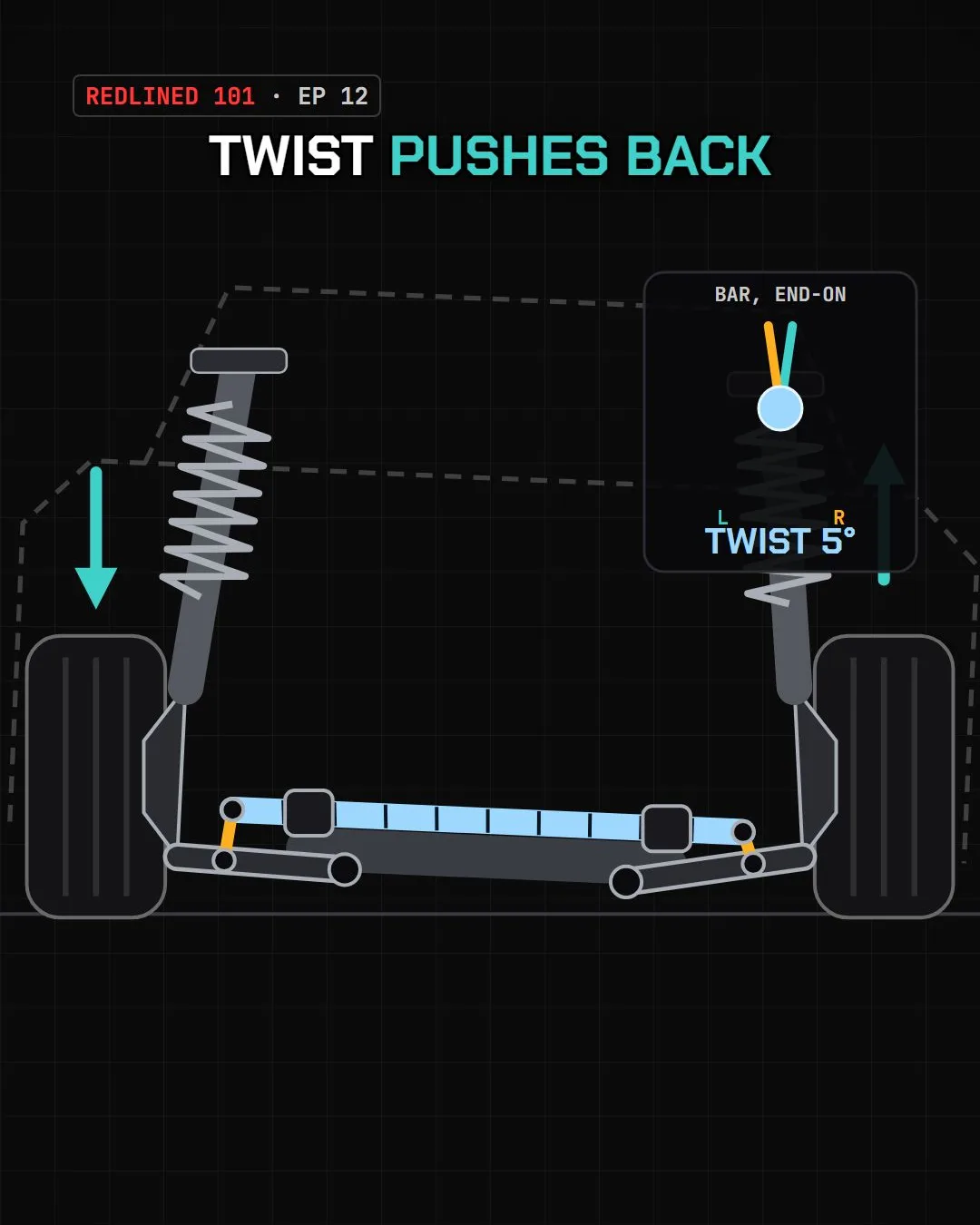
A sway bar (also called an anti-roll bar or stabilizer bar) is one steel bar that links the left and right wheels across the car. The middle of the bar is held to the body or subframe in rubber bushings, so it can rotate. Each end connects to the suspension on its side, usually through a short rod called an end link.
How it works
The trick is that the bar only cares about the difference between the two sides.
- Both wheels hit a bump together? Both ends move up the same amount, so the bar just rotates in its bushings. It doesn't twist, and you feel nothing.
- In a corner, one side compresses and the other extends. Now the two ends move in opposite directions, so the bar twists, and that twist pushes back against the lean: it lifts the outside of the body and pulls down the inside.
That's the answer to the question above. Stiffer springs resist every bump, including the ones that hit both wheels at once. The bar targets roll specifically, which is why it's the tool for flattening a car.
Thickness is everything
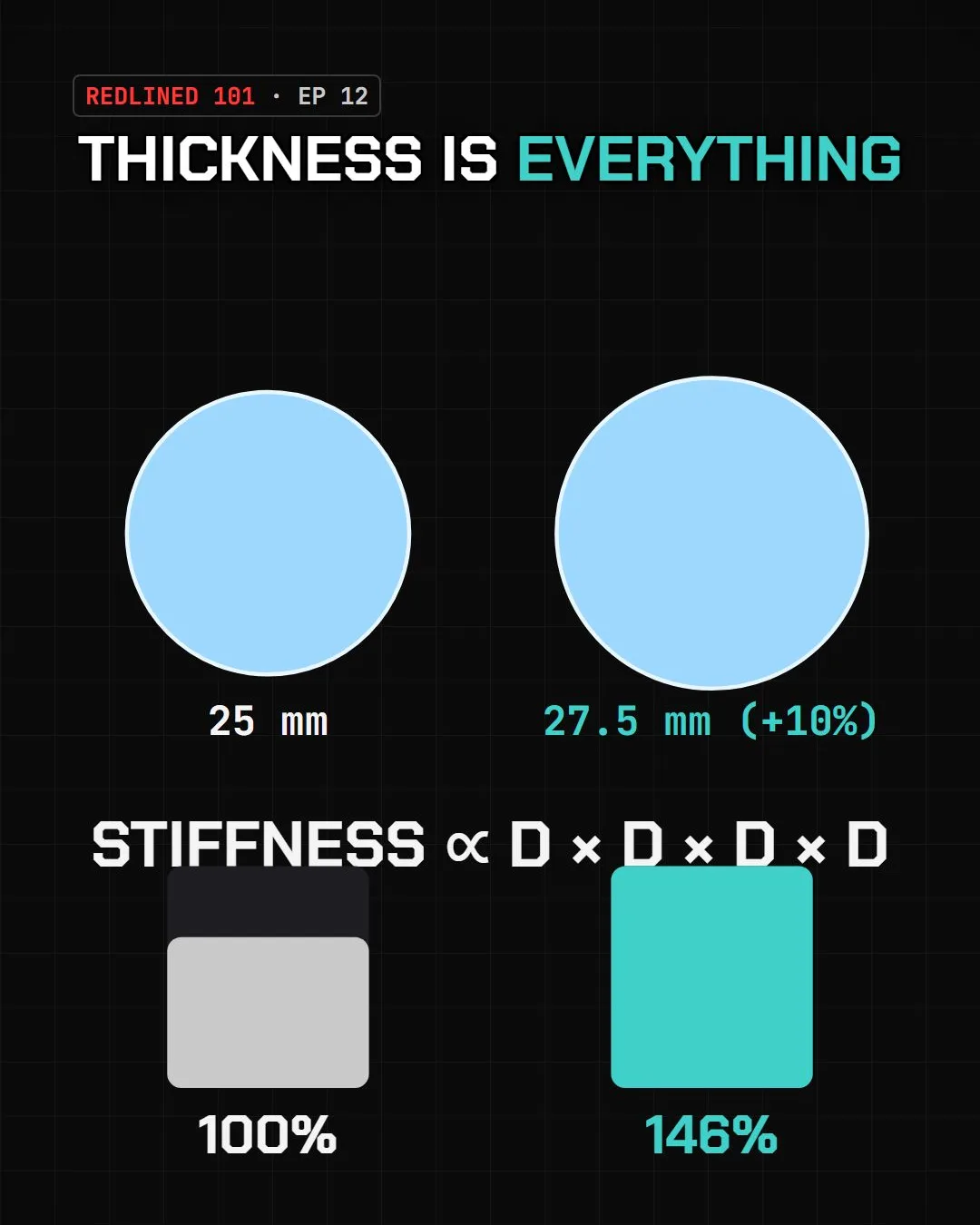
The size of the bar matters more than you'd think. A bar's stiffness goes up with its diameter to the fourth power. That means a small change in thickness is a big change in stiffness: a bar just ten percent thicker is almost fifty percent stiffer (1.1 × 1.1 × 1.1 × 1.1 is about 1.46).
You know the one: slammed on coilovers, and it still corners like a minivan. Now you know why. The drop and the springs changed; the bars didn't.
Adjustable bars
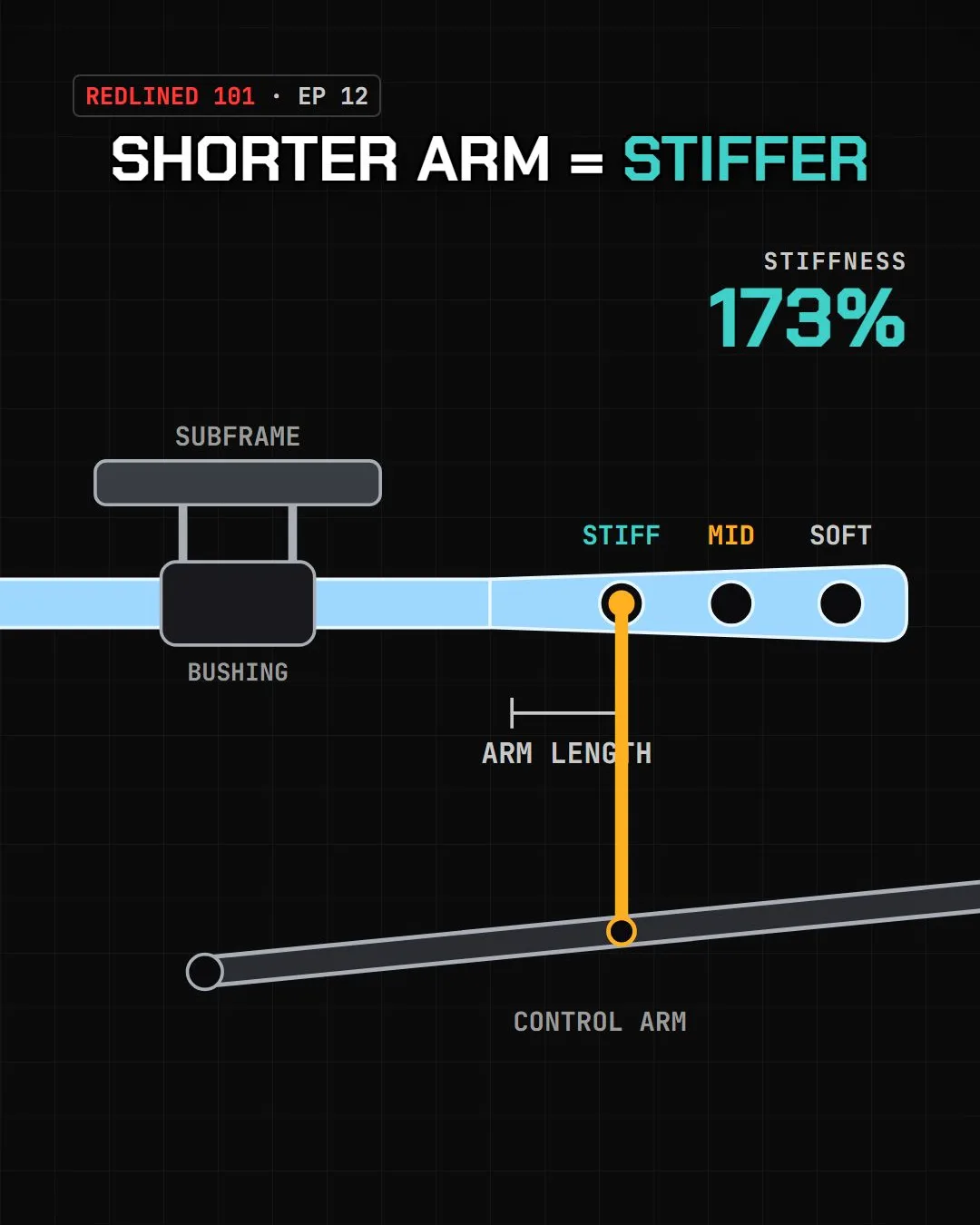
Adjustable bars have several holes in the arms where the end link can attach. The rule is simple: shorter arm, stiffer bar. With the end link closer to the bar's body, the same wheel movement twists the bar further, so it pushes back harder. Moving the link out to a longer arm softens it. That lets you tune the bar without buying another one.
Front or rear changes the balance
Where you add stiffness changes how the car turns.
- A stiffer front bar makes the car push wide. The front tires take more of the load in the corner and give up grip first. That's understeer.
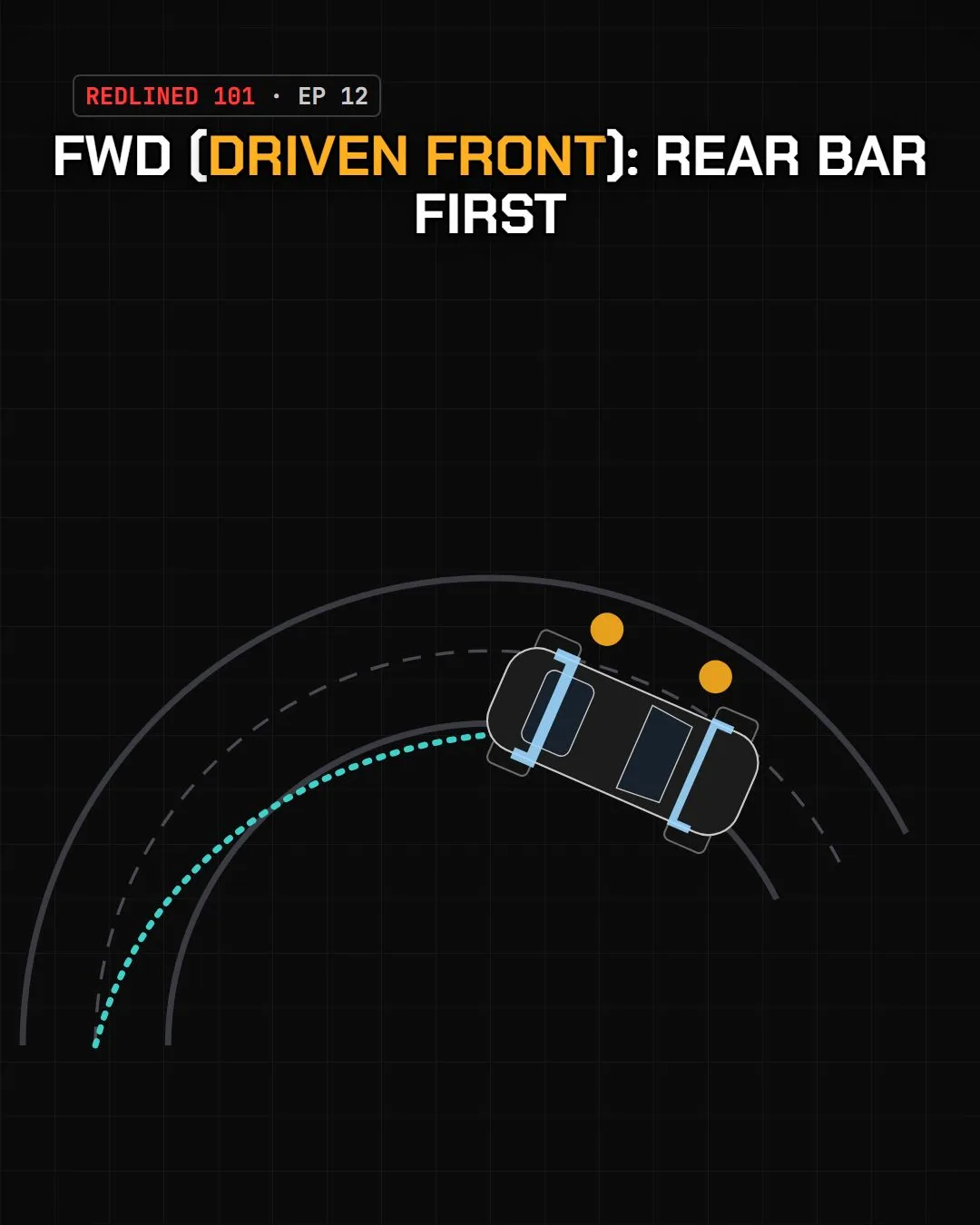
- A stiffer rear bar helps it turn in. Now the rear carries more of the load, and the nose tucks into the corner more willingly.
That's why front-wheel-drive builds add a bigger rear bar first. Front-wheel-drive cars already tend to push wide, and a bigger rear bar is a direct way to balance that out. (Why front-drive cars push in the first place is covered in FWD vs RWD vs AWD.)
The lowered-car catch: end links
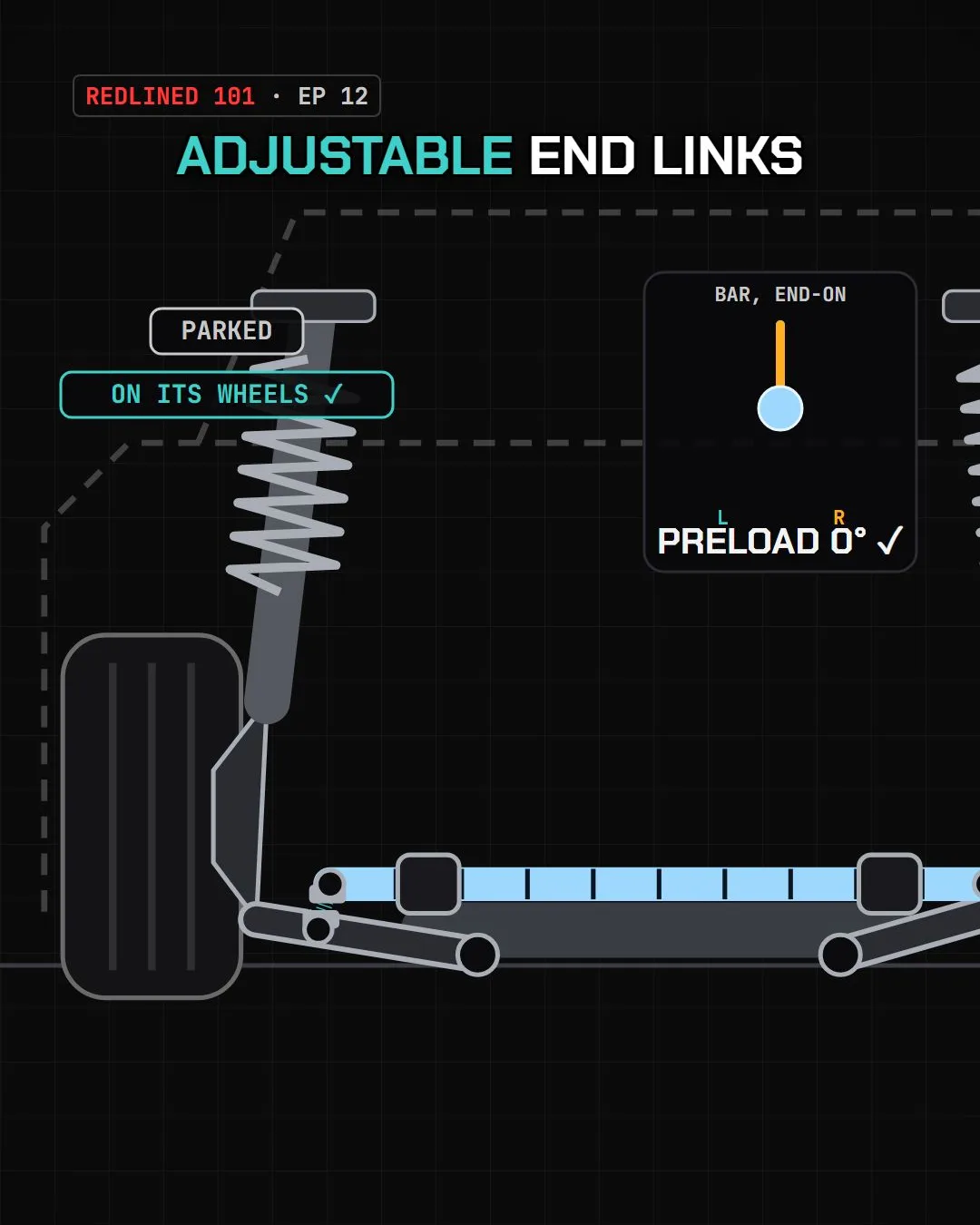
Here's the one people miss after lowering: end links. Stock end links are a fixed length, made for the stock ride height. Lower the car, and they can leave the bar twisted while the car is just parked. That's called preload: the bar is already loaded, pushing on the suspension, before you've turned a wheel.
Adjustable end links fix it. Set them at ride height, with the car on its wheels (not up on a lift with the suspension hanging), so the bar sits with no twist. That takes the preload out.
Don't overdo it
More bar isn't always better. Remember that the bar works whenever the two sides move differently, and a bump under just one wheel does exactly that. Too stiff, and every one-wheel bump kicks the cabin, because the bar passes the hit across to the other side.
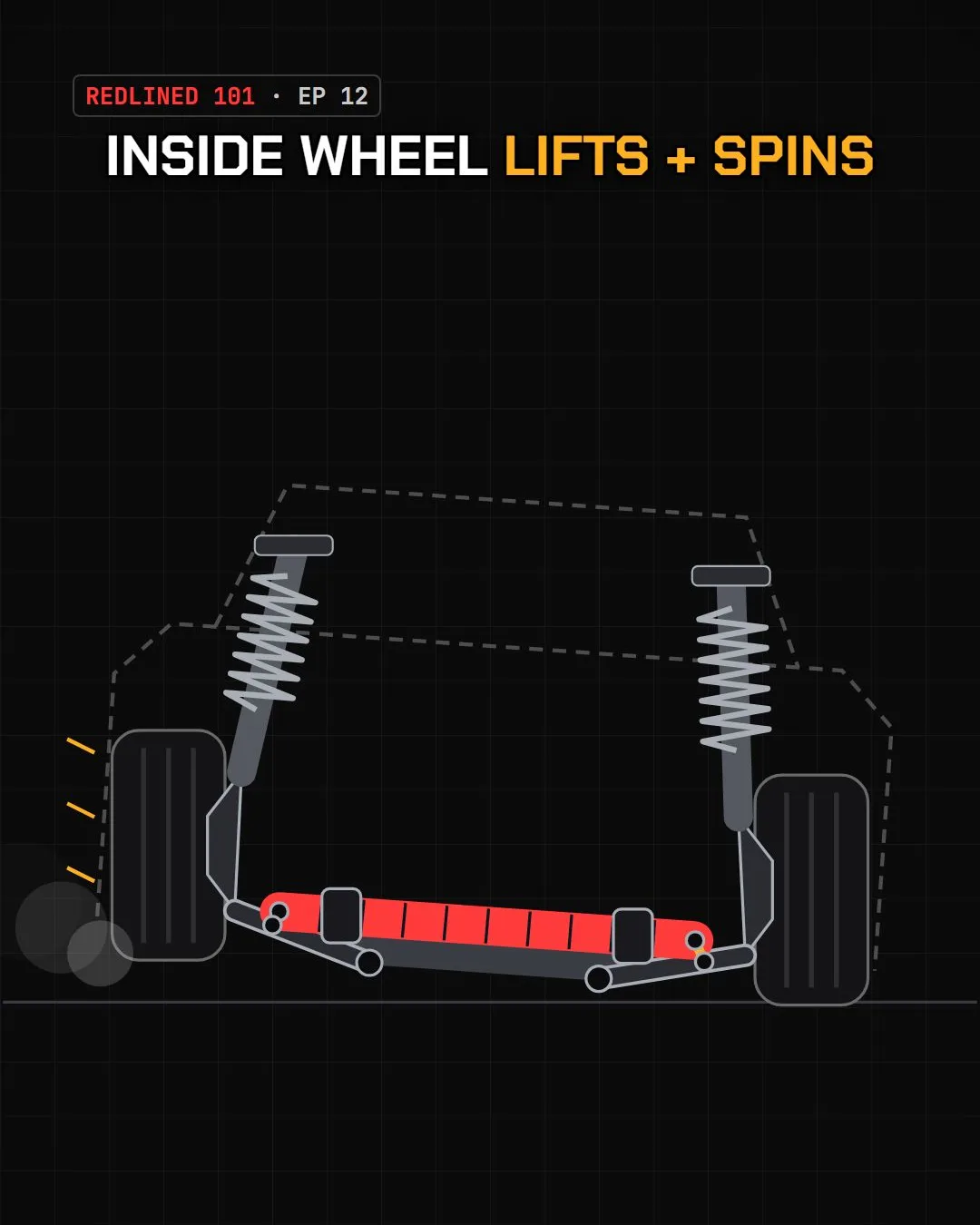
And in hard corners, a very stiff bar can hold the body so firmly that the inside wheel lifts off the ground and spins, wasting power instead of putting it down. (What happens to a spinning inside wheel depends on your differential, covered in open vs limited-slip vs welded diffs.)
Recap: the sway bar cheat sheet
- Lowering alone won't stop the lean, and on strut cars it adds leverage to roll.
- The bar works only when the two sides move differently, so it flattens corners without stiffening every bump.
- Thickness is everything: ten percent thicker is almost fifty percent stiffer.
- Adjustable bars: shorter arm, stiffer bar.
- Front bar pushes wide, rear bar turns in. Front-wheel-drive builds go bigger at the rear first.
- After lowering, adjustable end links set at ride height on the wheels.
- Don't overdo it.
Flat isn't stiff springs, it's the right bars.
Next episode: blow-off valve vs turbo flutter.
Frequently asked questions
Why does my car still lean after lowering it?
Lowering only helps a little. On strut cars it drops the roll center faster than the car's center of gravity, which gives the body more leverage to roll. The sway bars are what actually resist the lean.
Is a bigger sway bar better than stiffer springs?
For flattening body roll, the bar is the targeted fix. It only works when the left and right wheels move differently, as they do in a corner, so it leaves bumps that hit both wheels together alone. Stiffer springs resist every bump, not just the lean.
Should I upgrade the front or rear sway bar?
It depends on the balance you want. A stiffer front bar makes the car push wide (understeer); a stiffer rear bar helps it turn in. Front-wheel-drive builds usually add a bigger rear bar first.
Do I need adjustable end links after lowering?
Often, yes. Stock end links can leave the bar twisted while the car is just parked. Adjustable end links, set at ride height with the car on its wheels, take that preload out.
Can a sway bar be too stiff?
Yes. Too stiff, and every bump that hits one wheel kicks the cabin, and in corners the inside wheel can lift and spin.
Official merch
Shop the club merch
3 Pedals 0 F*cks Manual Transmission on a Unisex Oversized Heavyweight T-Shirt, black
Unisex Oversized Heavyweight T-Shirt
from $38.49
Pork Roll, Egg, Cheese & Boost – Jersey Breakfast on a Unisex Oversized Heavyweight T-Shirt, black
Unisex Oversized Heavyweight T-Shirt
from $32.99
My Toxic Trait: One More Project Car on a Unisex Oversized Heavyweight T-Shirt, black
Unisex Oversized Heavyweight T-Shirt
from $32.99
+1000 Aura – Exhaust Flames Car Shirt on a Unisex Oversized Heavyweight T-Shirt, white
Unisex Oversized Heavyweight T-Shirt
from $32.99
Unc Can Still Heel-Toe – Manual Driver Shirt on a Unisex Oversized Heavyweight T-Shirt, black
Unisex Oversized Heavyweight T-Shirt
from $32.99
But Officer The Sign Said Slide It on a Unisex Oversized Heavyweight T-Shirt, white
Unisex Oversized Heavyweight T-Shirt
from $32.99
Redlined Car Club Est. 2023 Brushmark on a Unisex Oversized Heavyweight T-Shirt, black
Unisex Oversized Heavyweight T-Shirt
from $32.99
Car Guy By Definition on a Unisex Oversized Heavyweight T-Shirt, black
Unisex Oversized Heavyweight T-Shirt
from $32.99
Tokyo Retro Vibes on a Unisex Oversized Heavyweight T-Shirt, black
Unisex Oversized Heavyweight T-Shirt
from $32.99
BOSOZOKU CARSPANK ボ — ソ — 族 — 車 の ス パ ン ク on a Unisex Oversized Heavyweight T-Shirt, black
Unisex Oversized Heavyweight T-Shirt
from $32.99
Coilovers > 401K – Funny Car Guy on a Unisex Oversized Heavyweight T-Shirt, black
Unisex Oversized Heavyweight T-Shirt
from $32.99
Can't Pump Gas, Can Swap A Motor – NJ Car Guy on a Unisex Oversized Heavyweight T-Shirt, black
Unisex Oversized Heavyweight T-Shirt
from $32.99




More from the club
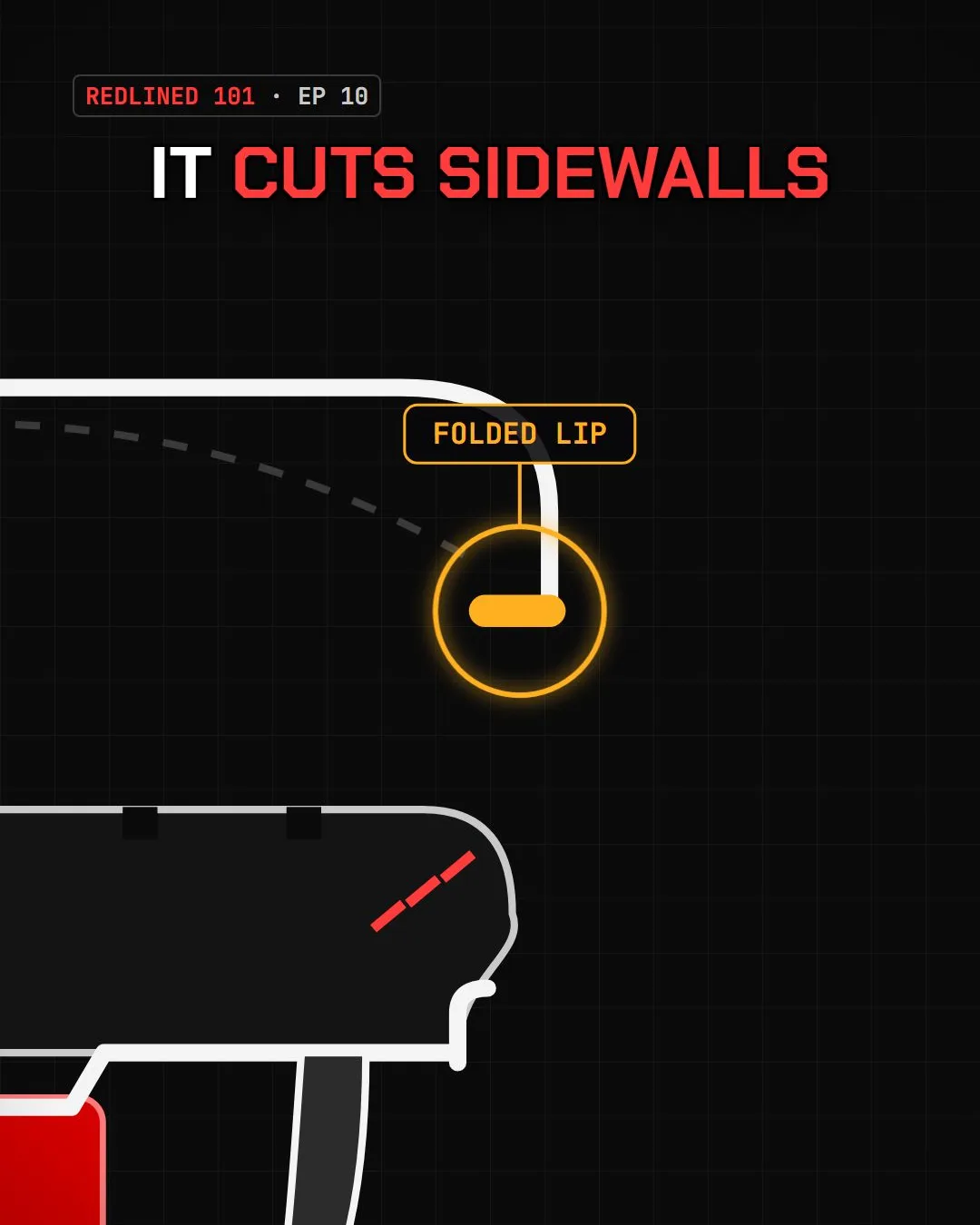
Rolled vs Pulled vs Flared Fenders: How to Stop Tire Rub (Redlined 101, Ep 10)
Why lowered cars rub, the folded fender lip that cuts tires, how to find where it rubs, rolling vs pulling, front vs rear fenders, flares and widebody, and the cheap fixes to try before any bodywork.
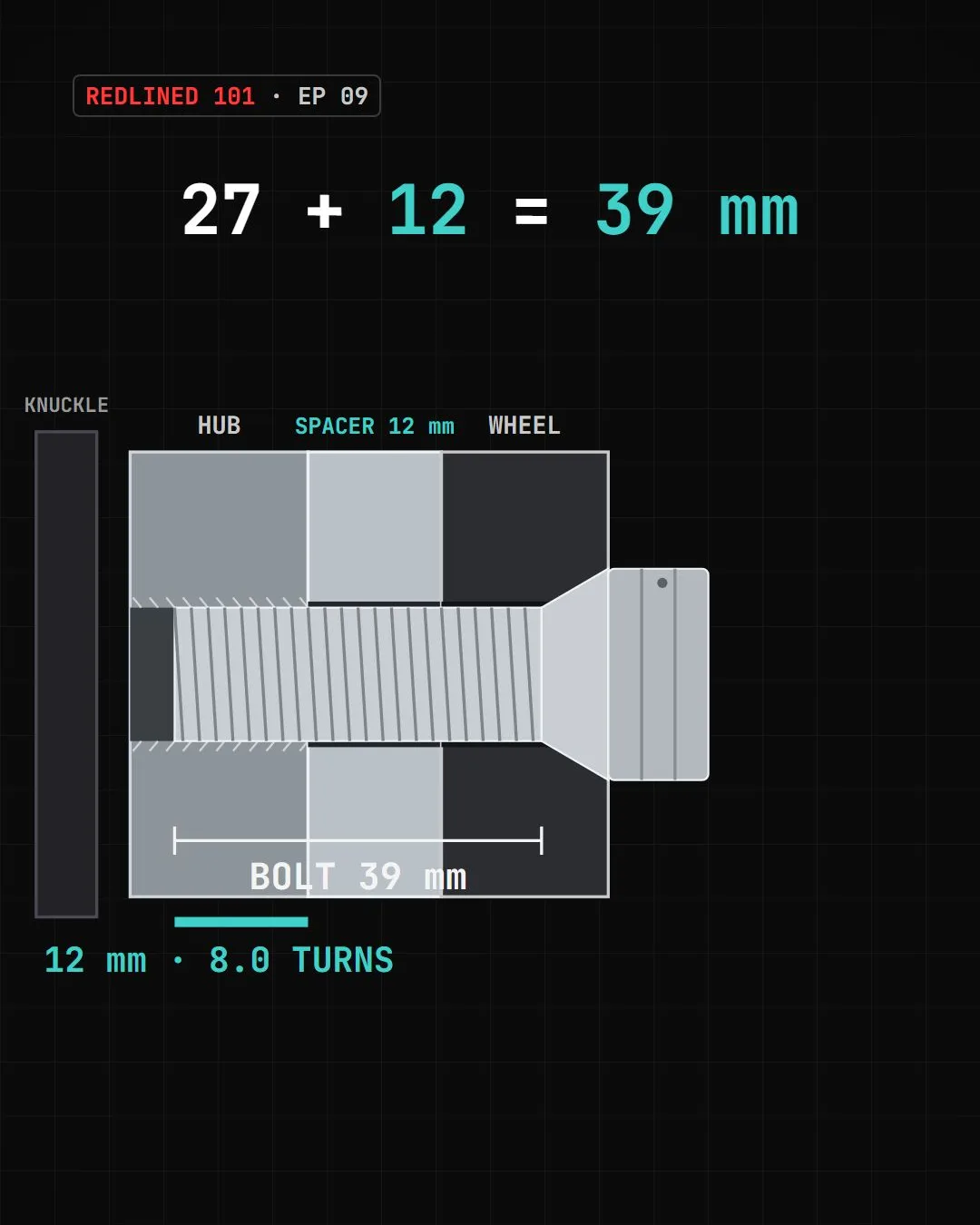
Are Wheel Spacers Safe? Hubcentric, Bolt Length, Seats and Torque (Redlined 101, Ep 09)
Are wheel spacers safe? What a spacer does to offset, slip-on vs bolt-on, why hubcentric billet matters, how long your bolts must be, thread engagement, matching seats, stud conversions, torque, and the trade-offs.
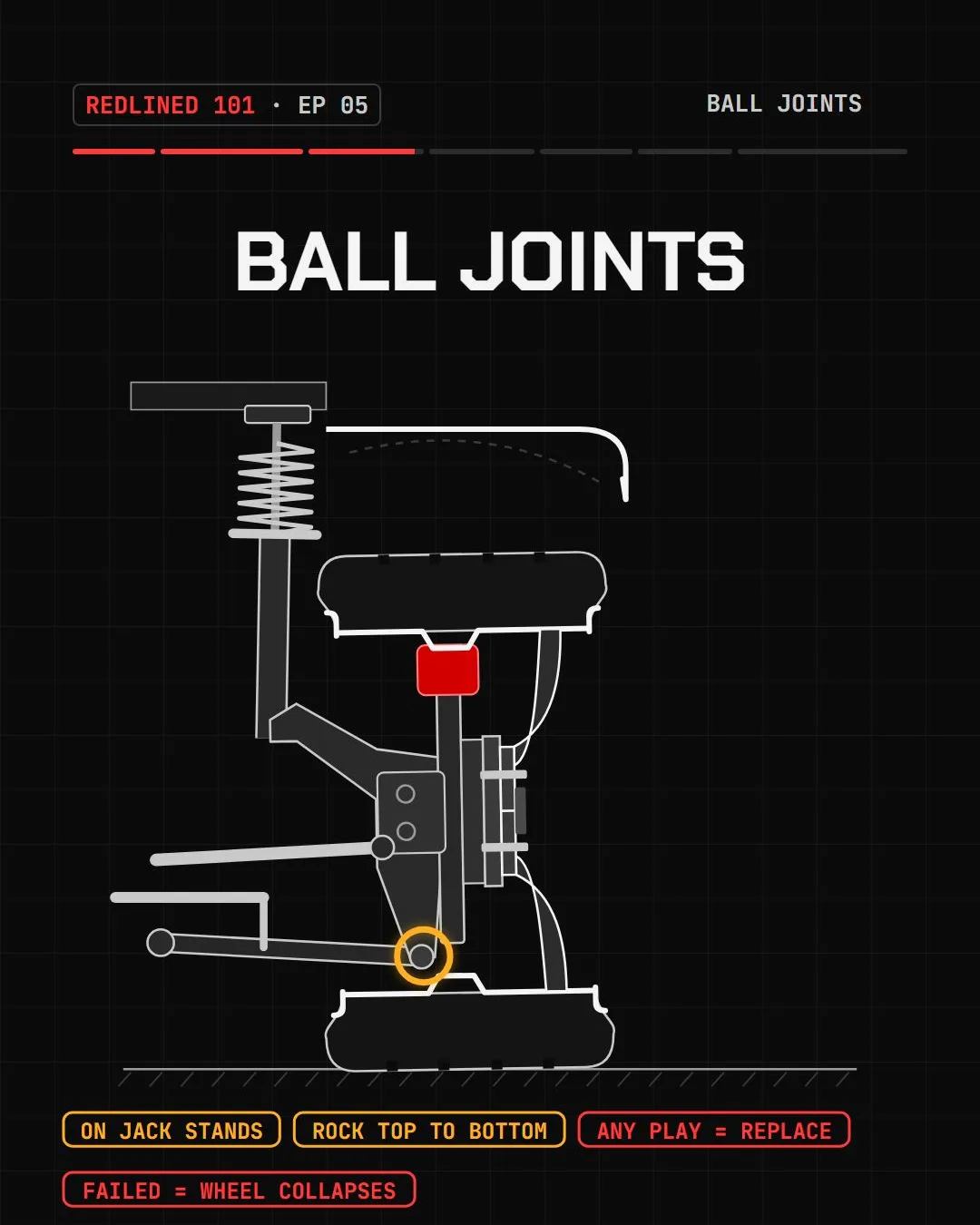
Suspension Clunk? What Wears Out First and What to Upgrade First (Redlined 101, Ep 05)
What fails first in your suspension: bushings, ball joints, tie rod ends, shocks, end links and top mounts, how to check each one for play, and the order to upgrade in: tires, worn parts, dampers, sway bars.